BUILD26
BUILD26 Seminars: Skills, AI, Strategy
Seminars tackle AI, labor, safety and steel framing performance for contractors at BUILD26.
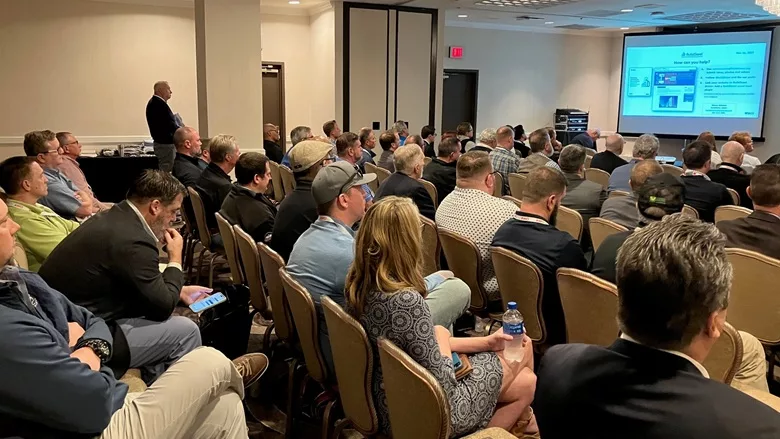
Seminars at BUILD26 are focused on helping contractors navigate immediate field challenges while preparing for long-term structural, economic and workforce shifts affecting interior finishing and structural framing work. The program blends business strategy, technical installation guidance, safety psychology, and emerging technology applications that directly impact project margins, productivity, and quality control. The event returns to New Orleans after a decade.
Economic uncertainty remains a dominant theme across several sessions. In strategic planning discussions, presenters address tariffs, inflation, interest rates and persistent labor shortages that continue driving up gypsum board installation and steel framing costs. Contractors are encouraged to treat software, training and workflow optimization as productivity tools rather than overhead expenses. Successful firms are focusing on implementation discipline when deploying project management and estimating platforms, since poorly executed technology rollouts often extend project timelines instead of improving them. Leaders are being advised to align software selection with field usability, not just office analytics.
Cold-formed steel framing and assembly performance receive significant technical focus, especially as projects demand tighter tolerances and higher seismic resilience. Sessions examine composite wall assemblies, shaftwall design details and opening framing methods that can influence bid accuracy and field productivity. Estimators and project managers are reminded that early design review is critical for avoiding change orders tied to improper detailing or missed code requirements. Understanding structural interface conditions between steel framing, drywall systems and building structure is essential for reducing rework and schedule delays.
Environmental conditions remain a practical risk factor for drywall finishing operations. Presentations addressing wet or cold jobsite environments reinforce that many finishing failures occur when contractors are forced to work outside manufacturer-recommended temperature and humidity ranges. Documentation of site conditions is emphasized as a risk management strategy during preconstruction meetings. Contractors who can demonstrate compliance with industry standards are better positioned to defend schedule impacts caused by weather-related productivity losses.
Workforce development is another major focus area. Sessions examine generational workforce management, succession planning, and recruitment strategies as experienced workers retire. Industry leaders are being challenged to move beyond traditional hiring approaches by building stronger training and mentorship structures. Empathy-driven leadership models are presented as tools for improving retention and communication across multigenerational crews working in fast-paced project environments.
Artificial intelligence is emerging as a major productivity accelerator. Rather than replacing skilled labor, AI tools are framed as cognitive assistants that reduce administrative workload, improve coordination, and help workers make faster decisions in the field. Contractors are exploring how AI can assist with schedule analysis, specification review, and communication across project stakeholders. Adoption success depends heavily on training and integration with existing workflows.
Safety discussions expand beyond physical hazards into cognitive performance and mental fitness. Presenters discuss how stress, anxiety and fatigue can directly affect worker awareness and hazard recognition. Mental fitness training, breathing techniques and mindfulness tools are being explored as potential additions to safety programs, particularly for high-risk trade environments.
Overall, the BUILD26 seminar lineup reflects a shift toward integrated business and technical education. Contractors are encouraged to think of construction performance as a combination of material science, workforce management, digital technology and economic awareness. Firms that can balance these factors are expected to maintain stronger backlogs, more predictable margins and higher quality outcomes across project portfolios.
For up-to-date information on the seminars, visit here.
Looking for a reprint of this article?
From high-res PDFs to custom plaques, order your copy today!