The Power of Soft Architecture: Managing Noise Through Visual and Acoustic Zoning
How acoustic textiles and PET screens improve zoning, comfort and flexibility in open plans.
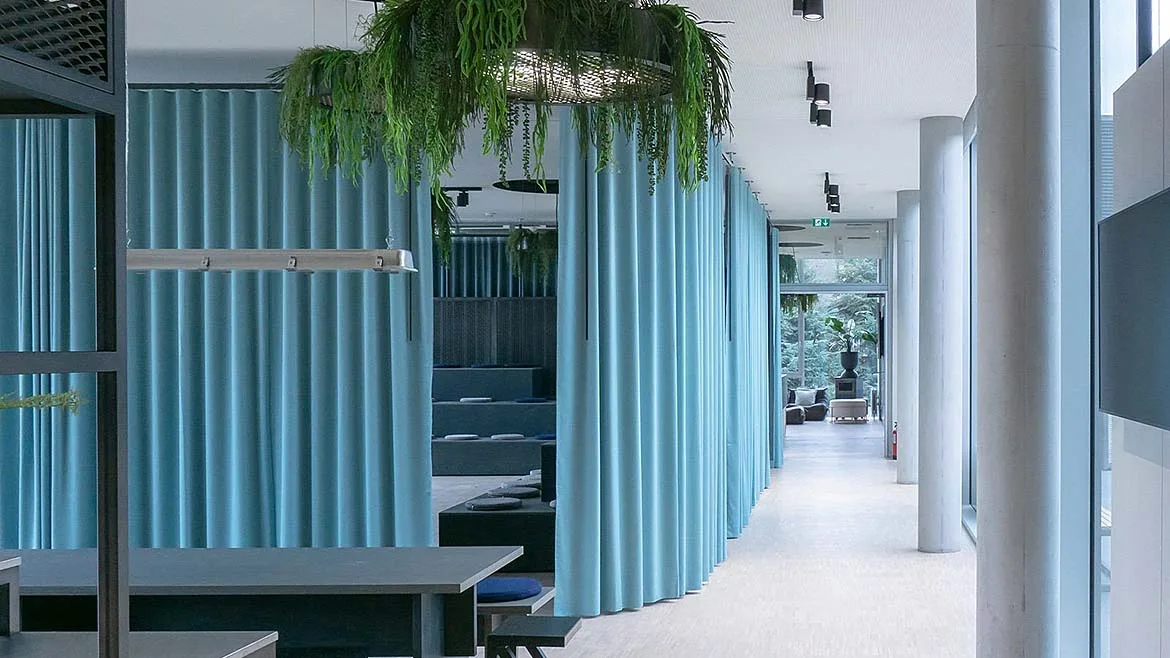
Key Takeaways
- Open-plan spaces need thoughtful acoustic zoning to balance focus, collaboration, and well-being while maintaining openness.
- Soft architectural elements like drapery and acoustic PET screens offer flexible, cost-effective ways to divide space and improve sound control without permanent walls.
- High-performance acoustic materials help reduce noise, support adaptable layouts, and create more comfortable, human-centered interiors.
Open-plan environments aren’t going anywhere—but the way we use them is changing. In workplaces, educational settings, hospitality spaces, and public interiors, designers are rethinking how to create environments that support focus, connection and well-being simultaneously.
One of the most persistent challenges in open-plan environments is poor acoustics. Research has shown that excessive noise and reverberation can negatively affect productivity, learning outcomes, and even patient recovery in healthcare settings. While the role of textiles in sound control has long been recognized historically through the use of heavy drapery, new textile technologies now offer more flexible, visually lightweight solutions.
In spaces where floor plans must adapt quickly to changing needs, textile and acoustic solutions allow designers to divide space without constructing walls, increasing costs, or blocking natural light. Visual and acoustic zoning strategies can transform how environments function and feel. By thoughtfully integrating acoustic tools into open-plan layouts, soft architectural elements become not just decorative but strategic.
Controlling acoustics is not only about reducing noise. It is about shaping how people feel, interact with, and move through a space. Designers ultimately create the auditory landscape through thoughtful decisions about where and how surfaces are treated.
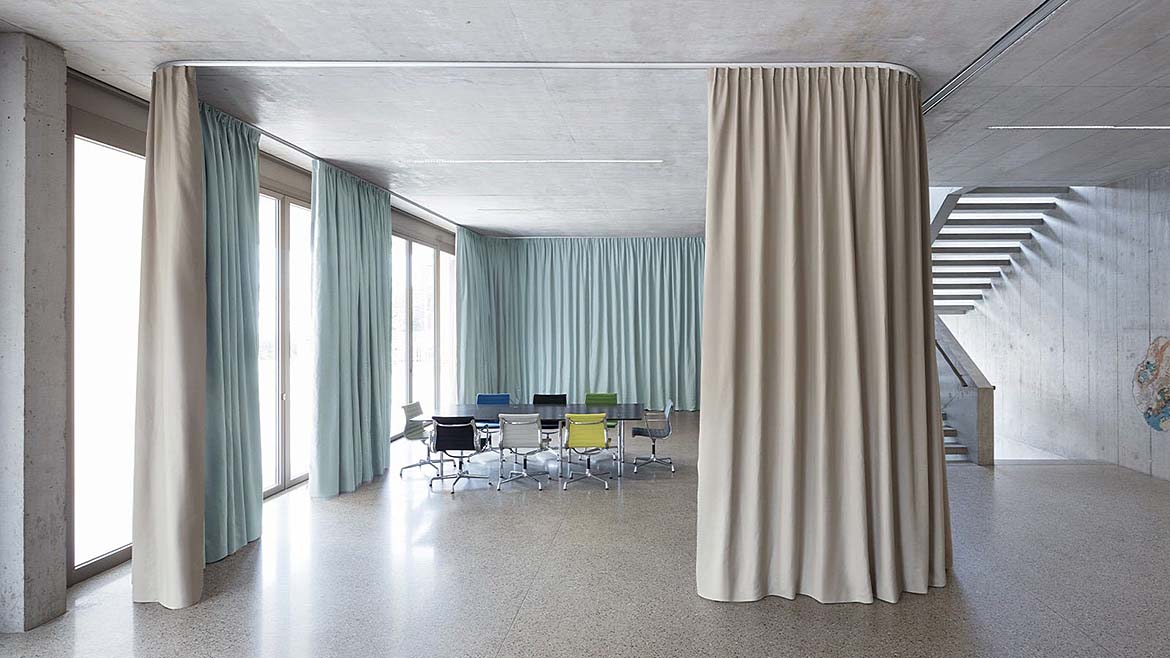
Création Baumann Acoustic Divider Vario
Photo: Photography by Kami Blusch
Design Tools for Soft Architecture
Soft architecture refers to design strategies that prioritize adaptability, flexibility, and environmental responsiveness over rigid or permanent structures. This approach allows designers to do more with less—an advantage in commercial environments that frequently shift in use and occupancy.
Soft architectural solutions can reduce the need for permanent construction, helping to lower costs, minimize disruption, and decrease material waste.
Why Zoning Matters in Modern Interiors
Today’s spaces are expected to support multiple modes of use (heads-down focus, hybrid collaboration, quiet study and social gathering) often within the same footprint. Without intentional zoning, these needs can collide, creating environments that feel distracting or overwhelming.
Zoning introduces clarity and creates a sense of harmony in how a space is used, without the permanence or rigidity of fixed construction. Soft architectural elements like drapery and hanging PET screens offer:
1. Gentle Boundaries That Maintain Connection: Room-height textiles, sheer curtains, and perforated acoustic screens establish soft divisions that remain light, welcoming, and permeable.
2. Sound Control That Improves Comfort: Excess noise remains one of the most frequent frustrations in open-plan settings. Heavy drapery and acoustic PET screens help absorb sound, reduce echo, and support quieter, more focused micro-environments.
3. Adaptable Spaces That Support Changing Needs: Spaces shift and adapt throughout the day, opening, dividing, expanding, or contracting to support collaborative mornings, focused afternoon work, or evening gatherings.
4. Materials That Bring Warmth and Ease: Soft materials help large, open spaces feel more comfortable and grounded, creating environments that feel intuitive and easy to move through.
Two tools, in particular, have emerged as especially effective strategies for acoustic zoning: drapery and acoustic PET screens.
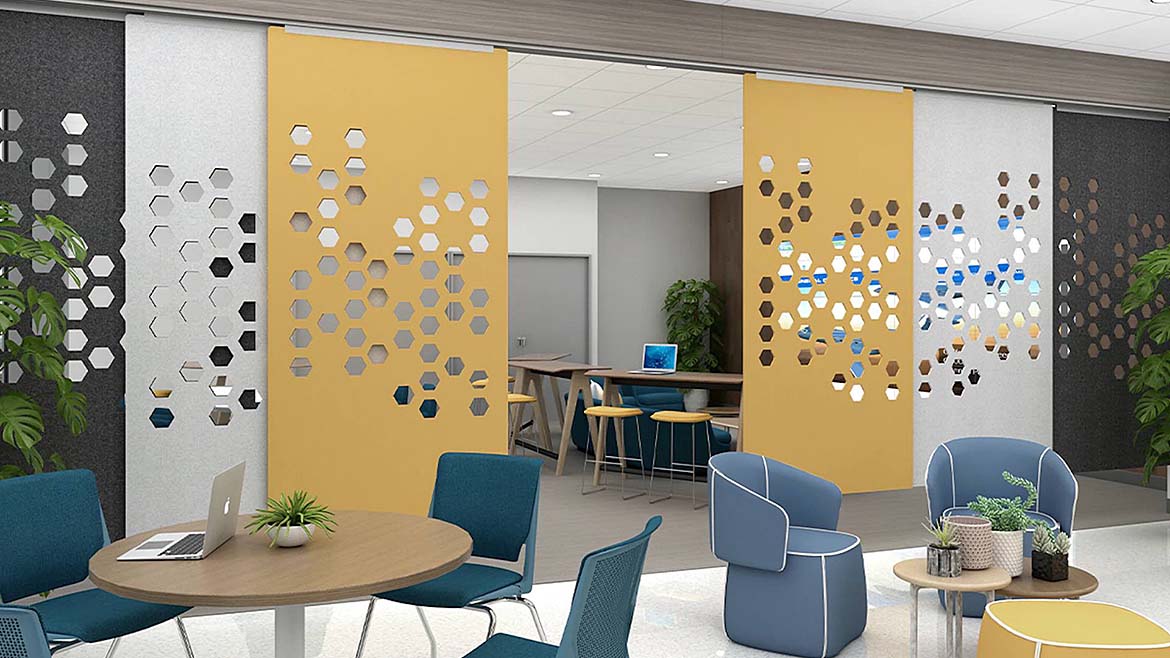
Open layouts encourage collaboration but can also create visual and acoustic distractions that affect productivity and well-being. Acoustic screens divide spaces and diffuse sound with designs ranging from sleek and professional to playful and inspiring.
Photo: Photo courtesy of Carnegie
Drapery as Dynamic Space-Makers
Drapery is one of the simplest ways to introduce flexibility and movement to interior spaces. When used strategically, textiles can shape space while also improving acoustic performance. Designers often use drapery to:
- Divide large rooms into smaller “territories” or zones.
- Create temporary meeting areas or breakout spaces.
- Soften the edges of glass partitions and reduce glare.
- Manage daylight to support productivity and comfort.
Material selection plays a critical role in how the drapery will perform in a space. When specifying textiles for acoustic applications, it’s important to distinguish between acoustically absorbent and acoustically transparent fabrics.
Acoustically absorbent textiles capture and reduce sound reflection, improving overall acoustic comfort. Acoustically transparent textiles, on the other hand, allow sound to pass through the fabric. These are often used to wrap acoustic panels, where sound passes through the textile and is absorbed by the material behind it.
There are a few technical factors to consider when specifying acoustic textiles:
- Noise Reduction Coefficient rates the amount of sound that a material absorbs. Fabric must be acoustically absorbent: Acoustically absorbent fabrics have an NRC between .45 -1.
- Fabric must pass NFPA 701. This test measures the flammability of fabric when it is exposed to specific sources of ignition. NFPA 701 testing measures the ignition resistance of a fabric after it is exposed to a flame for 12 seconds. The flame, char length, and flaming residue are recorded. Fabrics certified as flame-retardant have been tested and passed the NFPA 701 test, a requirement for hanging textiles such as draperies in all commercial spaces.
- Fabric woven with Trevira CS polyester is inherently flame-retardant, meeting international fire safety standards without chemical treatments. Because the fibers are modified at the molecular level, the flame-retardant properties won’t wear off or wash out over time. The fabric is also easy to clean, bleach-safe, quick-drying, and resistant to stains and abrasion, making it ideal for commercial applications.
Using textiles that meet these criteria helps ensure the space is safe, comfortable, and acoustically effective.
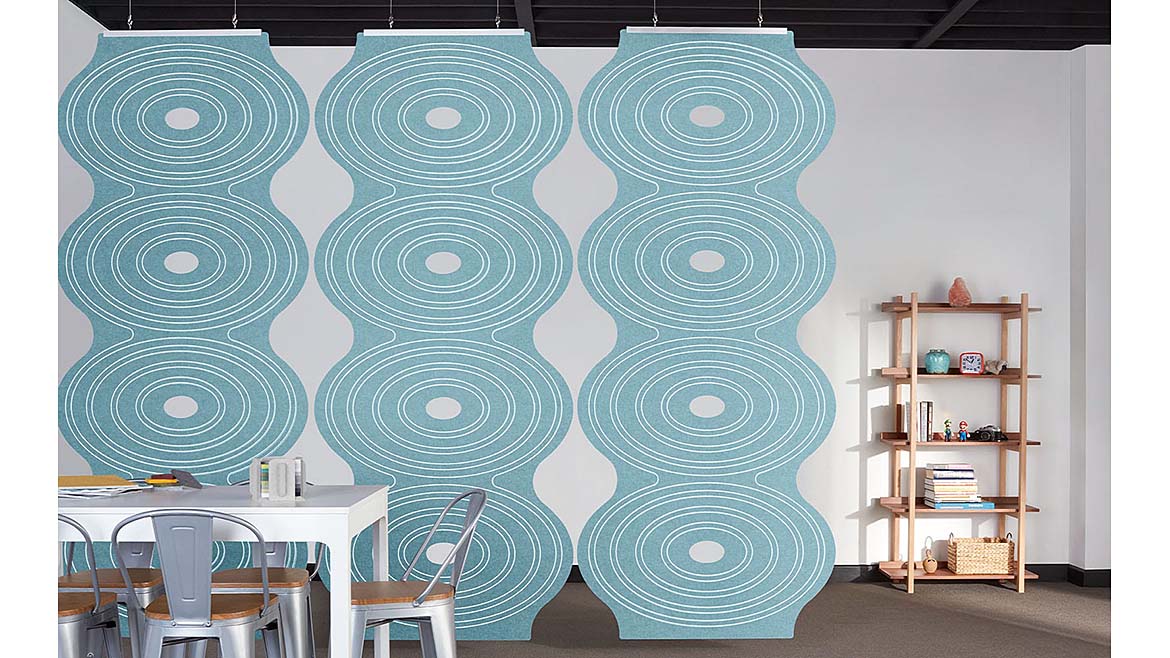
Ellipse Screens acoustic privacy partitions.
Photo courtesy of Kirei.
Acoustic PET Screens as Vertical Sound Control
Hanging acoustic PET screens (sometimes called acoustic partitions or ceiling-suspended baffles) provide structure and acoustic clarity without altering the built environment. Suspended PET panels are especially effective because they:
- Reduce acoustic spillover between zones.
- Filter sightlines while maintaining openness.
- Increase acoustic surface area without adding bulk.
- Install easily within standard ceiling systems.
These screens act as soft dividers, adding both sound control and visual texture. When paired with drapery or other textile elements, they help create layered zones that feel intentional and cohesive rather than improvised.
A More Adaptable Future
Designers are increasingly rediscovering the potential of soft architecture as a strategy for addressing the evolving demands of contemporary interiors. Through thoughtful zoning strategies that incorporate textiles and acoustic materials, spaces can adapt more easily to changing needs.
These solutions support focus, collaboration, and well-being within the same environment. When combined with high-performance materials, soft architectural elements enhance both the functionality and comfort of open-plan spaces, creating interiors that feel more human-centered and adaptable.
Ultimately, these strategies offer a compelling alternative to permanent construction, allowing spaces to evolve over time while reducing both cost and environmental impact.
Looking for a reprint of this article?
From high-res PDFs to custom plaques, order your copy today!





