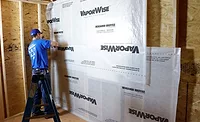
Control Moisture in Sidewall Systems
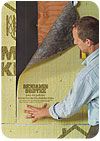
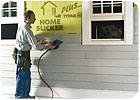
Especially in areas that experience heavy, wind-driven rain or high temperatures and humidity, moisture management solutions are now routinely installed to help protect and preserve the life of residential siding that might otherwise succumb to the effects of moisture-related problems. Even in more arid environments, builders seeking to optimize sidewall drying and drainage capability are installing such building envelope products as added insurance against expensive remediation later on. And, they can help builders comply with growing federal requirements – widely interpreted on a local basis – for the use of a water resistive barrier behind facades.
But how do building professionals make sense of the bewildering choice of moisture management solutions available for residential sidewalls, particularly with a general lack of standards-based methods to evaluate them? And, more importantly, how can they understand when and where to use each solution?
A recent study conducted by Benjamin Obdyke Inc. concluded that the biggest factors in selecting the right moisture management system are the amounts of rainfall and wind-driven rain where the home will be built, as well the choice of siding, because each type of cladding responds differently to moisture. Project budgets and timetable obviously are also considerations. Following are some basic guidelines to assist in determining when, where, and how to make the best selections for each job.
First, it’s important to define terms, as not all moisture management products are created equal even though product names like housewraps, building paper, water or weather resistive barriers, and rainscreens are used interchangeably.
WATER RESISTIVE BARRIERS
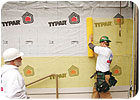
Water resistive barriers are part of an exterior wall system, designed to prevent air and water from entering the stud wall cavity from the outside. They also allow the free passage of water vapor to the outside of the building so that the framing and wall cavity can dry, reducing the threat of mold and rot.There are three basic types:
- Building Paper: A paper sheet or felt material coated or impregnated with asphalt to increase its strength and water resistance, it is primarily used as a drainage barrier to protect against moisture. Rated based on the amount of time it takes to wet its opposite side, the most common types are 10, 20, 30 and 60 minute, with the higher rating being the higher the moisture resistance.
- Housewraps: Engineered plastic sheet membranes typically .005 to 0.015 inches thick, housewraps are sheets of varying sizes that are wrapped around a house. They are specifically meant to resist the movement of water on the outside but also allow water vapor to pass through the building envelope.
- Drainable Housewraps: Drainable barriers offer all the features of a housewrap or building paper but also include a drainage system. They promote bulk water drainage in wall systems by channeling moisture to the outside through channels engineered into the housewrap sheet. They also are designed to maintain a more constant drain rate despite repeated wetting and drying cycles experienced in extremely wet and/or humid climates.
RAINSCREENS
Water resistive barriers may not solve the problem of drying moisture that remains behind cladding. This moisture can seep into interior assemblies, especially in regions prone to excessive moisture, high temperatures, and humidity and sometimes even in climates that receive low or average rainfall. When a more robust water management solution is called for, a rainscreen wall system may be the answer.A rainscreen system controls rain entry in an exterior wall by creating a pressure-equalized air space immediately behind exterior cladding along with a water resistive barrier. The 1/4- to 3/4-inch space between the back of the cladding and the face of the water resistive barrier neutralizes the forces that draw water into the assembly, managing water entry by allowing it to enter and exit. The water resistive barrier, in turn, drains away any bulk water that manages to seep in behind cladding. A rainscreen also aids in the drying of any moisture in the interior wall assembly by moving air in a convective fashion throughout the cavity.
There are two ways to construct a rainscreen system airspace-nailing wood furring strips over wall studs after applying a building paper or housewrap, or using a “void space” product that achieves the same effect by using a three-dimensional plastic matrix to create a vented continuous rainscreen. Builders can choose from several different manufactured varieties-a plastic matrix that can be applied directly over a water resistive barrier or special bonded products that combine the plastic matrix with a water resistive barrier for a one-step installation.
The chief advantage of strapping is the savings in material costs-furring strips are much less expensive than manufactured rainscreen systems. However, installing these strips is labor-intensive and therefore strapping can be more costly than using void space products. While strapping continues to be the preferred method of some builders, manufactured products are growing in popularity. In Canada, for example, the National Building Code now mandates the use of a rainscreen system in geographical areas that exceed a certain rainfall threshold.
SELECT THE RIGHT PRODUCT FOR THE JOB
Because experts say rain is the single most important factor to control in promoting sidewall durability, local climate conditions are key to selecting the most appropriate building envelope product. A wall assembly that performs trouble-free in one part of the country may not be up to the job in another locale.Wind-driven rain is a major culprit, forcing its way into small penetrations in cladding at joints, settlement cracks, vents, utility cut-outs, electrical outlets, and nail holes. Wind also can blow rain horizontally into cracks and holes in the exterior walls. Once wet, wood can become a food source for mold and mildew spores; it is estimated that 90 percent of all mold cases are related to water penetration.
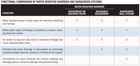
The main rule, therefore, in selecting a moisture management strategy is that the amount of rain determines the amount of rain control needed. In areas of low rainfall (less than 20 inches annually), a housewrap or building paper should offer sufficient water resistance. In climates that experience moderate rainfall (20 to 40 inches annually), protection against rain penetration should include a drainable housewrap. And for extremely wet and/or humid climates, coastal areas and hilltop exposures receiving high (40 to 60 inches annually) or extreme (60 inches or more annually) rainfall, a ventilated rainscreen assembly is recommended. A rainscreen system is also advised for areas that experience high winds in addition to rain.
CLADDING MUST ALSO BE A CONSIDERATION
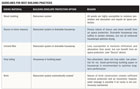
The chart on the left offers suggests guidelines from building science experts for selecting a water resistive barrier or rainscreen depending on the type of siding that will be used.Whichever product is selected, it should be carefully evaluated before use so building components are not compromised. When in doubt, it is probably better to err on the side of applying a higher level of protection for a small incremental cost, compared to the cost of solving a problem in the future.
As the state of building science progresses, more standards will be developed to assist building professionals in the decision-making process. But in the meantime, with a solid understanding of the differences in the roles and performance characteristics of rainscreen systems and the distinct types of water resistive barriers, building professionals are much more likely to make the right choice.
Looking for a reprint of this article?
From high-res PDFs to custom plaques, order your copy today!