Understand Insulation Permeability to Prevent Moisture Damage and the Dreaded Call-back
Understanding the implications caused by moisture and the best practices to prevent damage will allow for the moisture to escape.
Today’s homeowners can choose from a variety of exterior cladding options to reflect their personal style and taste. They assume that their home’s veneer will not only look great, but also perform well and stand up against the harsh elements.
But despite the best installation efforts of trained craftsmen, exterior claddings can only offer so much protection and have a tendency to leak. This can leave a home vulnerable to moisture and damage.
Without a moisture-repelling wall system between the outside conditions and the home’s interior, the house is rendered virtually defenseless. It is crucial to use the right materials and proper installation techniques to avoid fails and callbacks.
Moisture’s Damaging Impact
Moisture damage within a wall primarily comes from two sources: water vapor from inside a home and outside bulk moisture.
Virtually everything done inside a home creates water vapor. In fact, the average family of four produces four to six gallons of water vapor each day through activities such as showering, cleaning and cooking. Water vapor naturally diffuses through permeable building materials from areas of high pressure to areas of low pressure. For example, during the winter, warm interior moisture vapor travels through a wall to the cold, dry air outside. The opposite happens during the summer. If that moisture has nowhere to go, it may condense and become trapped in the wall cavity causing major damage.
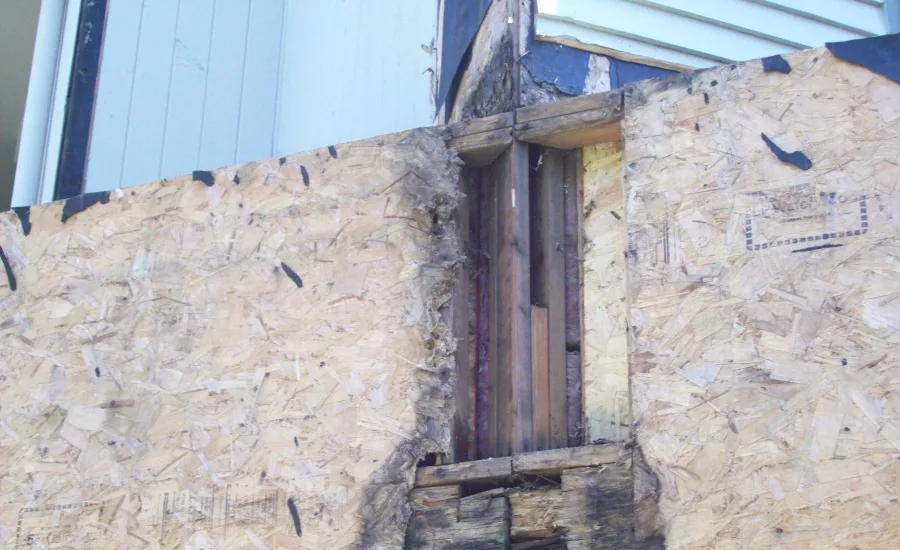
Not only is water vapor created inside a home a big concern, but bulk moisture caused by Mother Nature also can wreak moisture-damaging havoc. When moisture from rain and snow seeps into the crevices of a home, staining, mildew and rot can take root in the walls resulting in unhealthy and costly damage.
Both sources cause moisture to accumulate, creating ideal conditions for toxic mold. Mold is a biological contaminant that can grow undetected inside the wall cavity over time and make a home’s inhabitants seriously ill. In addition to health concerns, mold and mildew can cause major structural damage, destroying the property value. In many cases, home insurance companies do not cover mold-related damage, which can mean an expensive clean-up for homeowners.
Because moisture damage may cause disastrous effects, it is advised to take preventative action by installing the proper wall components to help eliminate these problems before they ever begin.
Managing Moisture
Proactive contractors who are mindful of the implications of trapped moisture should use the right products and materials to prevent damage by allowing moisture to escape.
There is much debate within the building industry regarding moisture management best practices. While some believe that the best option is sealing the entire home with insulation, caulk and tape to make it impenetrable and installing a moisture ventilation system, it is nearly impossible to completely seal off a home. Others argue for the use of permeable building products that allow a wall to dry when it’s exposed to water from the outside and also allow water vapor from inside the home to escape.
Permeability, the measure of air or moisture that flows through a material, is a critical performance factor to consider when selecting the appropriate barrier type. There are many components in a wall system that serve different purposes and offer varying levels of moisture protection and permeability.
- Exterior cladding: Whether vinyl siding, fiber cement or steel siding, this is the first line of defense against outside moisture because it protects a home from wind-driven rain and snow.
- Weather-resistive barrier: It is recommended that weather-resistive barrier house wrap be applied underneath exterior insulation or siding to help keep bulk moisture off of the structural sheathing.
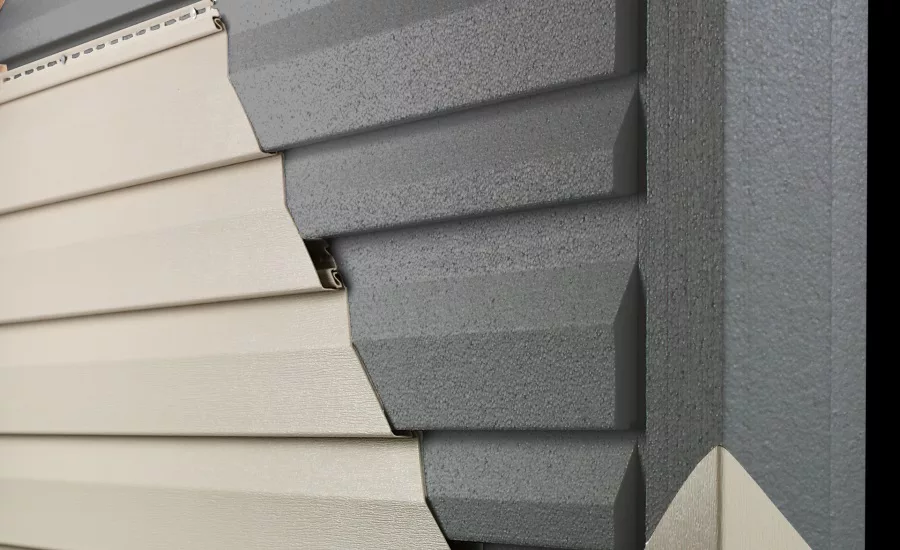
- Exterior Insulation: This is applied between the house wrap and the exterior cladding. While siding insulation is optional, it serves as a supplemental moisture screen that reduces the amount of water that reaches the WRB and also minimizes moisture penetration from the exterior into the wall assembly.
When contractors use insulation to create a moisture barrier, it’s important to ensure that they are not creating a moisture problem in the process. Insulation should have the appropriate perm rating, a calculated measure of breathability.
Product perm ratings are determined through third-party testing. ASTM E96, Standard Test Methods for Water Vapor Transmission of Materials, subjects products to rigorous absorption trials in a temperature and humidity-controlled chamber over a one-week period. The test evaluates the water vapor transfer through semi-permeable and permeable samples. The amount of moisture that diffuses through the product determines its perm rating; less moisture means a lower perm rating and more moisture means a high perm rating. Insulation with a permeability rating anywhere between two and five is the desired range because it will protect against moisture and still allow the home to breath.
However, climate also has a major impact on the product type and application that should be used to manage moisture. The International Energy Conservation Code in collaboration with the U.S. Department of Energy developed a map that splits the country into eight climate zones, with higher zone numbers representing colder climates. The climate zones are further divided into moist, dry, and marine regions.
The best position for the permeable water vapor barrier may vary depending on climate conditions. In warmer climates, the barrier will be on the exterior and in colder climates it may be on the interior.
While considering product perm ratings and the building climate zone are significant success factors, it comes down to proper installation techniques to safeguard against moisture issues.
Proper Installation is Critical
Controlling water by making sure there is a path for moisture to escape is a top priority for building professionals. When installing moisture-control barriers, contractors should consider these best practices to eliminate costly installation fails and callbacks.
Understand the products being used for the job, their perm rating and adhere to local building codes.
Apply a house wrap. It is recommended to always use a WRB to keep direct water away from the oriented strand board.
Use an insulation product with a perm rating greater than one. The ideal insulation layer should have a perm rating between two and five because it provides the moisture management and adequate insulation.
Being educated about the various types of available building products, how they control moisture and proper application techniques will give contractors the tools to do a quality installation job and ensure a home’s integrity.
Contractors are encouraged to review the 2015 IECC Determination of Energy Savings: Preliminary Technical Analysis for the most up-to-date climate zone data to inform product selection and to check out Building Science Corporation for construction resources and best practices.
Looking for a reprint of this article?
From high-res PDFs to custom plaques, order your copy today!