Walls & Ceilings logo
search
cart
facebook twitter linkedin youtube youtube Spotify Podcasts Apple Podcasts Spotify Podcasts Apple Podcasts
  • Sign In
  • Create Account
  • Sign Out
  • My Account
Walls & Ceilings logo
  • NEWS
  • TOPICS
    • Drywall
    • Stucco/EIFS
    • Ceilings
    • Steel Framing
    • Fireproofing
    • Interior Plaster
    • Building Envelope
    • Insulation
    • Technology
    • Interior
    • Exterior
    • Women In Construction
  • COLUMNS
    • Up Front
    • All Things Gypsum
    • Art & Craft of Plastering
    • Stucco Stop
    • Steel Deal
    • Industry Voices
  • PRODUCTS
    • Buzz Guide
  • EVENTS
    • Industry Events
    • Webinars
    • BUILD Expo
  • MEDIA
    • Videos
    • Podcasts
    • Photo Galleries
    • BUILD26 Videos
    • Take our Quiz!
    • Infographics
  • EXCLUSIVE
    • Newsletters
    • Top 50 Contractors
    • Contractor of the Year
    • State of the Industry
    • W&C Store
    • Market Research
    • CEUs
    • Sponsor Insights
    • Custom Content & Marketing Services
  • DIRECTORY
  • EMAGAZINE
    • eMagazine
    • Advertise
    • Archive Issues
  • SIGN UP!
Building EnvelopeExteriorInsulation

Dismantling Mineral Wool Myths

Performance and compressive strength combine to make mineral wool a good choice for rainscreen systems.
By Tiffany Coppock
Dismantling Mineral Wool Myths
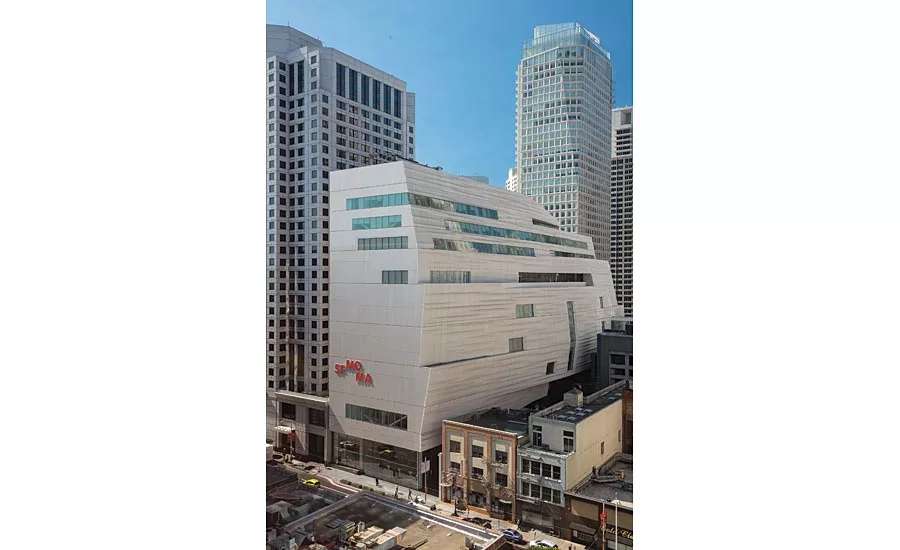
Museum-of-the-Moving
Museum-of-Modern-Art
Dismantling Mineral Wool Myths
Museum-of-the-Moving
Museum-of-Modern-Art
October 1, 2019

By maintaining a space between a building’s cladding and exterior wall, rainscreen systems help protect the enclosure against the ravages of rain and moisture infiltration. While the visible aesthetics of a building’s cladding often receive all of the attention, a rainscreen’s performance is contingent upon a system of components working behind the scenes to protect against a common enemy—moisture. An important element of a rainscreen system is continuous insulation installed behind the cladding and in front of the actual water barrier. In addition to helping manage moisture, the continuous insulation in a rainscreen system also delivers other performance benefits including supporting energy efficiency, sustainability goals and more.

Contractors have many choices when it comes to the type of continuous insulation used in rainscreen systems. Among this array of options, mineral wool offers a number of benefits. Often favored for its non-combustible properties in perimeter fire containment systems, when used as a continuous insulation in rainscreen systems, mineral wool delivers several benefits that contribute to the system’s goals. These attributes include:


Hygrothermal Properties

As the function of a rainscreen is to protect a building from water infiltration in liquid and vapor form, mineral wool is well-suited to address both moisture and thermal challenges in the rainscreen system. Evaluation using WUFI hygrothermal analysis and expert interpretation shows that as continuous insulation helps move the dew point closer to the outer cavity of the wall; the potential for condensation to form inside the wall cavity is reduced.

As a vapor permeable material, mineral wool supports the movement of vapor through the cavity wall. This protects against moisture becoming trapped and helps avoid other concerns such as mold or mildew growth into the enclosure’s walls.

From a thermal perspective, pervading myths about mineral wool’s performance when it comes into contact with water can be misleading. While the insulating value of mineral wool is reduced when it becomes saturated (very unlikely given the defensive functions of the cladding and location in the rainscreen system), once dried, mineral wool’s thermal properties return to their original levels. Mineral wool delivers an R-value of up to 4.3 per inch (k-value 0.25) which makes it an efficient material by providing high thermal resistance and reducing thermal bridging when used in the rainscreen system. Because it reduces these thermal bridges which are a potential location for condensation, it also reduces the risk of mold and mildew, as well as associated poor indoor air quality.


Sustainability

“Consider the source and how it’s made” is good advice to follow when selecting building materials that will meet sustainability goals. Both the ingredients used in the manufacture of mineral wool and the process used to make it contribute to its sustainability. The Life Cycle Assessment represents an aggregate evaluation of a material’s inputs, outputs and potential environmental impact across its life cycle. As an example, Thermafiber mineral wool continuous insulation uses the third-party documented ICC-ES report to verify recycled materials content. Beyond ingredients, the energy impact of mineral wool is also environmentally friendly. For example, within one month a pound of mineral wool saves the same amount of energy as was consumed in its manufacture. Finally, mineral wool continuous insulation used in rainscreen systems can contribute points to various LEED credit categories particularly based on its content.


Fire Resistance

Mineral wool may be best known for its fire resistant properties. Non-combustible mineral wool will neither burn nor release smoke. Given the increase in non-traditional claddings (i.e. metal panels and plastic laminates), mineral wool provides a non-combustible material for compliance with International Building Code requirements for non-combustible wall construction such as NFPA 285 assemblies.


Jobsite Considerations

Before mineral wool is covered by construction in a rainscreen system it may be exposed to the elements on the jobsite. The durability that makes mineral wool well-suited for open-joint assemblies also makes it a good choice for this inevitable exposure. Mineral wool can be subjected to UV light for extended periods of time, as well as extreme temperatures and weather conditions without sacrificing its condition or losing R-Value.

Safety will always be priority number one on the jobsite. Given today’s tight labor market, it should be noted that mineral wool is quick and easy to work with. Installers can measure and use a serrated knife to cut the insulation. Its flexible properties allow it to conform to irregular surfaces and easily cut to accommodate penetrations.

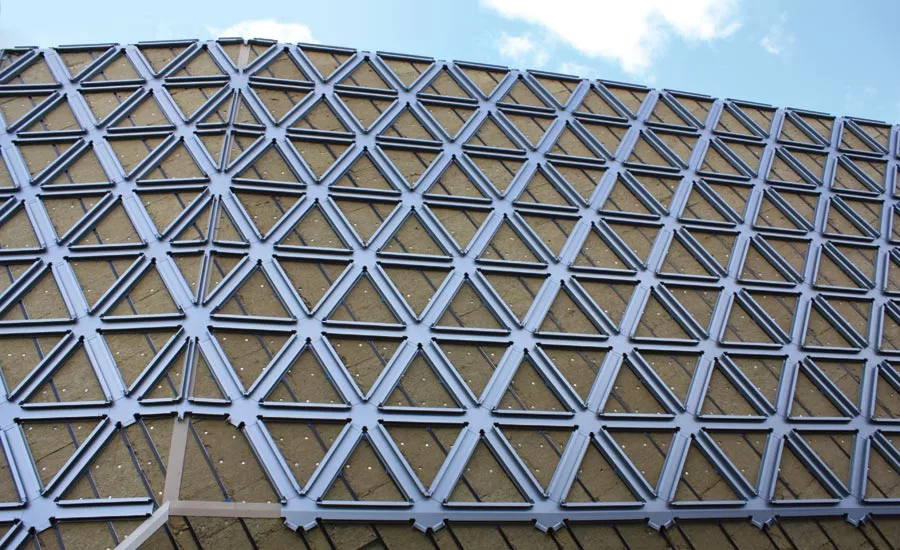
At the end of the day, insulation’s performance in the rainscreen system is reliant upon proper installation. And when installing continuous insulation, contractors need to give thought to securing the insulation limiting the additional penetrations in air and water barriers. Insulation may be attached via a wide variety of fasteners. Some cladding systems are equipped with proprietary attachment systems. Other approaches include compression fitting into the wall, impaling pins, or using a system of girts or rails to attach the mineral wool to the cladding system.

To reduce thermal bridging and create more continuity, some attachment systems may be secured on the insulation outside after it has been installed. These applications require a semi-rigid product with higher compressive strength to ensure the cladding system stays under compression with little deflection over its lifetime. This type of mineral wool application was initially identified by density. However, it is actually the material’s compressive strength—its ability to resist deflection under load—that is critical to the performance of mineral wool in cladding attachment systems. Selecting the proper compressive strength to correspond with the requirements of the wall assembly is necessary for a successful installation and optimizing building performance.


A Mineral Wool Guide

Given the breadth of hanger and fastener systems available to install mineral wool continuous insulation, Owens Corning has developed a mineral wool attachment guide. The guide explains how insulation products are installed in various applications (including rainscreens) and how they interact with other attachment mechanisms in the assembly.

Specifying mineral wool as a continuous insulation in rainscreen applications can help support hygrothermal performance, energy goals, sustainability and of course, fire resistance. Selecting the proper compressive strength for the job allows building professionals to balance performance, economics and proper installation. Bringing together the benefits of material performance with the ease of mechanical installation, mineral wool provides a practical continuous insulation for rainscreen applications. W&C

KEYWORDS: cladding energy efficiency fire resistance mineral fiber rainscreen sustainability WRB (weather resistant barrier)

Share This Story

Looking for a reprint of this article?
From high-res PDFs to custom plaques, order your copy today!

Wc1019 feat mineral wool p4 author tiffany coppock

Tiffany Coppock, AIA, NCARB, CSI, CDT, LEED AP, ASTM, RCI, EDAC is the commercial building systems specialist at Owens Corning where she provides leadership in building science, system development, testing, and documentation. Formerly, she was a building science manager answering technical questions on hundreds of projects, reviewing drawings and specifications, and presenting educational sessions. Prior to manufacturing, Coppock worked several years at an architecture firm in Durham, N.C., designing healthcare and preservation projects. She is a registered architect with specialization in healthcare and historic preservation. She is also a former CSI leader and voting member on several ASTM committees.

Recommended Content

JOIN TODAY
To unlock your recommendations.

Already have an account? Sign In

  • Abercrombie & Fitch

    EIFS in 2026: How Specialty Finishes Are Redefining Exterior Wall Systems

    As building codes, owner expectations, and design demands...
    Stucco/EIFS
    By: Regi Mendoza
  • proper air and vapor control

    From Energy Efficiency to Moisture Management: Why Air and Vapor Control Matter

    How proper air and vapor control within building...
    Building Envelope
    By: Benjamin Meyer AIA, LEED AP
  • Linear Metal Ceiling Beam Baffles

    Top 25 Ceiling Contractors of 2026

    Suspended ceilings demand precision, code compliance and...
    Ceilings
    By: John Wyatt and Tanja Kern
You must login or register in order to post a comment.

Report Abusive Comment

Manage My Account
  • eMagazine Subscription
  • Newsletters
  • Online Registration
  • Manage My Preferences
  • Subscription Customer Service

More Videos

Sponsored Content

Sponsored Content is a special paid section where industry companies provide high quality, objective, non-commercial content around topics of interest to the Walls & Ceilings audience. All Sponsored Content is supplied by the advertising company and any opinions expressed in this article are those of the author and not necessarily reflect the views of Walls & Ceilings or its parent company, BNP Media. Interested in participating in our Sponsored Content section? Contact your local rep!

close
  • medical professionals moving a patient on a stretcher through the halls of a medical building
    Sponsored byNational Gypsum Company

    What Does High Performance Mean When It Comes To Gypsum Boards?

Popular Stories

Linear Metal Ceiling Beam Baffles

Top 25 Ceiling Contractors of 2026

Wichita Biomedical Campus

Wichita Drywall Worker Dies After Scaffolding Fall

QXO Just Changed the Game-Here's What Contractors Are Asking

QXO Just Changed the Game-Here's What Contractors Are Asking

Less compound

Joint Compound Market to Reach $9.7B by 2033

Events

June 24, 2026

The Bright Side & Benefits of Designing with Integrated Lighting

Credits 1 AIA LU/HSW; 0.1 ICC CEU

This course will explore the pivotal role architects and lighting design play in creating safer, more sustainable spaces. Learn how to avoid common lighting mistakes and make informed decisions that create the best visual environment for occupants. 

January 1, 2030

Webinar Sponsorship Information

For webinar sponsorship information, visit www.bnpevents.com/webinars or email webinars@bnpmedia.com.

See our full library of webinars

View All Submit An Event

Products

2026 National Painting Cost Estimator

2026 National Painting Cost Estimator

See More Products

Related Articles

  • mineral wool

    Designing a High-Performance Building Envelope with Mineral Wool

    See More
  • Mineral wool attachment

    Optimizing Thermal and Air Barriers for Mineral Wool Attachment

    See More
  • All Weather Insulated Panels Minerall Wool Fire-Rated Wall Panels

    All Weather Insulated Panels Announces New Mineral Wool Fire-Rated Wall Panels

    See More

Related Products

See More Products
  • bim 3e.jpg

    BIM Handbook: A Guide to Building Information Modeling for Owners, Designers, Engineers, Contractors, and Facility Managers, 3rd Edition

  • barrys.jpg

    Barry's Advanced Construction of Buildings, 4th Edition

  • 2021 ibc.jpeg

    2021 International Building Code® Illustrated Handbook

See More Products

Events

View AllSubmit An Event
  • November 5, 2025

    RAiNA Conference 2025: Rainscreen Proficiency – The Parts, Precision and Performance

    If you’re passionate about the future of sustainable architecture and resilient construction, the RAiNA Conference 2025: Rainscreen Proficiency – The Parts, Precision and Performance is a must-attend event. This conference offers a unique opportunity to hear from top industry experts about the crucial role of rainscreens in modern construction. Attendees have the opportunity to be among the first to learn about pioneering ideas and groundbreaking projects, keeping them at the forefront of their field.
  • November 2, 2026

    FCIA Firestop Industry Conference & Trade Show

    FIC ’26, the FCIA Firestop Industry Conference & Trade Show, is the leading educational firestop conference in the world. The event brings together Specialty Firestop Installation Contractors, Special Inspection Agency personnel, AHJs, Manufacturers, and industry leaders for three collaborative days focused on educating, developing, and improving the firestop industry.
View AllSubmit An Event
×

Connect with the industry’s leading resource for unparalleled insights and education.

Join thousands of industry professionals today. Shouldn’t you know what they know?

JOIN NOW
  • RESOURCES
    • Advertise
    • Contact Us
    • Directories
    • Store
    • Want More
  • SIGN UP TODAY
    • Create Account
    • eMagazine
    • Newsletters
    • Customer Service
    • Manage Preferences
  • SERVICES
    • Marketing Services
    • Reprints
    • Market Research
    • List Rental
    • Survey/Respondent Access
  • STAY CONNECTED
    • LinkedIn
    • Facebook
    • Instagram
    • YouTube
    • X
  • PRIVACY
    • PRIVACY POLICY
    • TERMS & CONDITIONS
    • DO NOT SELL MY PERSONAL INFORMATION
    • PRIVACY REQUEST
    • ACCESSIBILITY

Copyright ©2026. All Rights Reserved BNP Media, Inc. and BNP Media II, LLC.

Design, CMS, Hosting & Web Development :: ePublishing