Walls & Ceilings logo
search
cart
facebook twitter linkedin youtube youtube Spotify Podcasts Apple Podcasts Spotify Podcasts Apple Podcasts
  • Sign In
  • Create Account
  • Sign Out
  • My Account
Walls & Ceilings logo
  • NEWS
  • TOPICS
    • Drywall
    • Stucco/EIFS
    • Ceilings
    • Steel Framing
    • Fireproofing
    • Interior Plaster
    • Building Envelope
    • Insulation
    • Technology
    • Interior
    • Exterior
    • Women In Construction
  • COLUMNS
    • Up Front
    • All Things Gypsum
    • Art & Craft of Plastering
    • Stucco Stop
    • Steel Deal
    • Industry Voices
  • PRODUCTS
    • Buzz Guide
  • EVENTS
    • Industry Events
    • Webinars
    • BUILD Expo
  • MEDIA
    • Videos
    • Podcasts
    • Photo Galleries
    • BUILD26 Videos
    • Take our Quiz!
    • Infographics
  • EXCLUSIVE
    • Newsletters
    • Top 50 Contractors
    • Contractor of the Year
    • State of the Industry
    • W&C Store
    • Market Research
    • CEUs
    • Sponsor Insights
    • Custom Content & Marketing Services
  • DIRECTORY
  • EMAGAZINE
    • eMagazine
    • Advertise
    • Archive Issues
  • SIGN UP!
ExteriorInsulation

Western Specialty Contractors on Rainscreen Systems
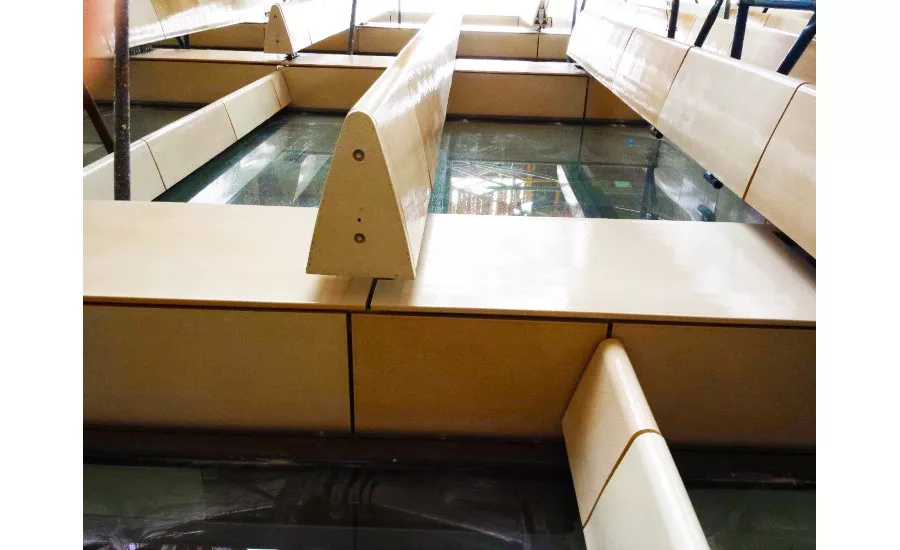
rainscreen on building facade
Rainscreen on a building facade.
June 10, 2020

One of the most successful technologies used today to deter rainwater intrusion into a building's exterior wall and protect its envelope is the rainscreen system. Introduced more than 20 years ago in the United States, rainscreen technology has continued to advance, along with its popularity among building owners who desire a "stylish raincoat" for their structure.

Walls with rainscreen systems tend to be more durable and are less prone to costly repairs resulting from water damage. In addition to water infiltration, rainscreen systems are also effective at managing air infiltration, negative wind pressures, heat transfer and vapor transmission into and out of a building. The only real drawback to a rainscreen system is the added cost associated with its more complex design and installation, according to Michael Radigan, Western Specialty Contractors Building Facade - Rainscreen Division.

What Exactly is a Rainscreen System?

Numerous terms have been used in the past to describe rainscreen systems, which has caused some confusion as to what a rainscreen really is. According to Radigan, a rainscreen system is the attachment of an outer skin of rear-ventilated cladding to a new or existing building. The system is a form of double-wall construction that uses an outer layer to keep out the rain and an inner layer to provide thermal insulation, prevent excessive air leakage and carry wind loading. Cladding that does not stand off from the wall sheathing to create a cavity is not considered a rainscreen, said Radigan. However, a masonry veneer can be called a rainscreen wall if it is ventilated.

"The purpose in using an insulation in the exterior cavity is this moves the dew point to outside the air/vapor barrier in rainscreen systems, virtually eliminating moisture from the interior wall construction, unlike conventional construction," he said. "This reduces the chance of mold developing within the interior wall. These systems are nicknamed 'healthy wall systems' and increase the R-value due to the addition of an exterior insulation board within the cavity."

The exposed outer layers of a rainscreen facade may consist of many different materials such as terra cotta, fiber cement, metal, GFRC, wood, fiberglass and concrete, among others.

What Types of Rainscreen Systems are Available?

There are essentially three types of rainscreen systems available on the market today - vented, drained and vented, and pressure equalized.

Vented Systems - This type of rainscreen cladding system is not recommended for buildings more than four stories high. It utilizes a warm cavity, and no ventilation, that is open only at the bottom. The warm cavity provides a dew point similar to the outside, therefore reducing the chance of moisture entering the system.

Drained and Vented Systems - This type of system is also not recommended for use on buildings more than four stories high to prevent a build-up of condensation.  Not watertight, this system requires a cavity opening at the top and bottom that provides drainage and promotes convection ventilation. An overhang is generally used to protect the cavity from the elements.

Pressure Equalized Systems - This type of system allows for ventilation openings large enough for air pressure to nearly equalize on both sides of the cladding. This type of system requires extensive design to balance the amount of air flowing into and out from behind the rainscreen panels.

Which Buildings are Ideal for a Rainscreen System?

If a building is located in a relatively wet climate with an average annual rainfall of 60 inches or more, it is a good candidate for a rainscreen system. Conversely, in some cities, a rainscreen system is required by local building codes.

In general, most structures could benefit from a rainscreen system, which provides greater durability and moisture protection to an otherwise ordinary wall. A compromise in a rainscreen system will result in far less damage than a wall facing the elements without one, according to Radigan.

Who Can Install a Rainscreen System?

Rainscreen systems can be complex. It is always recommended that a facility manager or owner work with a reputable specialty contractor, such as Western Specialty Contractors, that is experienced in rainscreen system installation.

For more information about rainscreens, contact the Western Specialty Contractors branch location nearest you.

KEYWORDS: building façade insulation moisture rainscreen Western Specialty Contractors

Share This Story

Looking for a reprint of this article?
From high-res PDFs to custom plaques, order your copy today!

Recommended Content

JOIN TODAY
To unlock your recommendations.

Already have an account? Sign In

  • Abercrombie & Fitch

    EIFS in 2026: How Specialty Finishes Are Redefining Exterior Wall Systems

    As building codes, owner expectations, and design demands...
    Stucco/EIFS
    By: Regi Mendoza
  • proper air and vapor control

    From Energy Efficiency to Moisture Management: Why Air and Vapor Control Matter

    How proper air and vapor control within building...
    Building Envelope
    By: Benjamin Meyer AIA, LEED AP
  • Linear Metal Ceiling Beam Baffles

    Top 25 Ceiling Contractors of 2026

    Suspended ceilings demand precision, code compliance and...
    Ceilings
    By: John Wyatt and Tanja Kern
You must login or register in order to post a comment.

Report Abusive Comment

Manage My Account
  • eMagazine Subscription
  • Newsletters
  • Online Registration
  • Manage My Preferences
  • Subscription Customer Service

More Videos

Sponsored Content

Sponsored Content is a special paid section where industry companies provide high quality, objective, non-commercial content around topics of interest to the Walls & Ceilings audience. All Sponsored Content is supplied by the advertising company and any opinions expressed in this article are those of the author and not necessarily reflect the views of Walls & Ceilings or its parent company, BNP Media. Interested in participating in our Sponsored Content section? Contact your local rep!

close
  • medical professionals moving a patient on a stretcher through the halls of a medical building
    Sponsored byNational Gypsum Company

    What Does High Performance Mean When It Comes To Gypsum Boards?

Popular Stories

Linear Metal Ceiling Beam Baffles

Top 25 Ceiling Contractors of 2026

Wichita Biomedical Campus

Wichita Drywall Worker Dies After Scaffolding Fall

QXO Just Changed the Game-Here's What Contractors Are Asking

QXO Just Changed the Game-Here's What Contractors Are Asking

An interior drywalling work in progress

Boost Profits with AI Scheduling

Events

June 24, 2026

The Bright Side & Benefits of Designing with Integrated Lighting

Credits 1 AIA LU/HSW; 0.1 ICC CEU

This course will explore the pivotal role architects and lighting design play in creating safer, more sustainable spaces. Learn how to avoid common lighting mistakes and make informed decisions that create the best visual environment for occupants. 

January 1, 2030

Webinar Sponsorship Information

For webinar sponsorship information, visit www.bnpevents.com/webinars or email webinars@bnpmedia.com.

See our full library of webinars

View All Submit An Event

Products

2026 National Painting Cost Estimator

2026 National Painting Cost Estimator

See More Products

Related Articles

  • WSC building inspection

    Western Specialty Contractors On Creating a Building Component Inventory Prior to Inspections

    See More
  • Sealants

    Western Specialty Contractors Receives High Praise for Professionalism on Millennia Lakes Sealant Replacement Project

    See More
  • WSC logo

    Western Specialty Contractors to Host FREE Workshop on Navigating Today’s Construction Climate

    See More

Related Products

See More Products
  • 0470872616.jpg

    Sustainable Renovation: Strategies for Commercial Building Systems and Envelope

  • bim 3e.jpg

    BIM Handbook: A Guide to Building Information Modeling for Owners, Designers, Engineers, Contractors, and Facility Managers, 3rd Edition

  • Ceiling Systems Handbook 2012 cover.jpg

    Ceiling Systems Handbook

See More Products

Events

View AllSubmit An Event
  • November 15, 2026

    Specialty Tools & Fasteners Distributors Association (STAFDA) Annual Convention & Trade Show

    The STAFDA Annual Convention will be held at the Anaheim Convention Center this year. The show is open to members only. This annual event will serve its core members of contractors, suppliers and manufacturers in the tool and fastener industry, and brings together over 4,300 industry leaders for education, business and social activities.
  • November 5, 2025

    RAiNA Conference 2025: Rainscreen Proficiency – The Parts, Precision and Performance

    If you’re passionate about the future of sustainable architecture and resilient construction, the RAiNA Conference 2025: Rainscreen Proficiency – The Parts, Precision and Performance is a must-attend event. This conference offers a unique opportunity to hear from top industry experts about the crucial role of rainscreens in modern construction. Attendees have the opportunity to be among the first to learn about pioneering ideas and groundbreaking projects, keeping them at the forefront of their field.
View AllSubmit An Event

Related Directories

  • Western Wall & Ceiling Contractors Assn. (WWCCA)

    Trade association responsible for labor negotiations/relations, administration and member services for southwestern contractors performing signatory framing, drywall, plaster, EIFS, and acoustical ceiling work.
×

Connect with the industry’s leading resource for unparalleled insights and education.

Join thousands of industry professionals today. Shouldn’t you know what they know?

JOIN NOW
  • RESOURCES
    • Advertise
    • Contact Us
    • Directories
    • Store
    • Want More
  • SIGN UP TODAY
    • Create Account
    • eMagazine
    • Newsletters
    • Customer Service
    • Manage Preferences
  • SERVICES
    • Marketing Services
    • Reprints
    • Market Research
    • List Rental
    • Survey/Respondent Access
  • STAY CONNECTED
    • LinkedIn
    • Facebook
    • Instagram
    • YouTube
    • X
  • PRIVACY
    • PRIVACY POLICY
    • TERMS & CONDITIONS
    • DO NOT SELL MY PERSONAL INFORMATION
    • PRIVACY REQUEST
    • ACCESSIBILITY

Copyright ©2026. All Rights Reserved BNP Media, Inc. and BNP Media II, LLC.

Design, CMS, Hosting & Web Development :: ePublishing