Getting Serious About Silica
IT’S TIME FOR CONTRACTORS TO TAKE THE SAFETY RISKS ASSOCIATED WITH THEIR JOB SERIOUSLY. EDUCATE YOURSELF ON THE HAZARDS OF SILICA—YOUR LUNGS WILL THANK YOU.

Every day, thousands of individuals wake up and prepare for work “at the shop” or on the jobsite. They head out to tear-off and install a high-performance slate roof system, or perhaps they make their way into the city to finish off the drywall work for a 2,000 square foot luxury hotel. Whatever their day may have in store for them, contractors need to take some time to get serious about their respiratory safety.
The Occupational Safety and Health Administration and the National Institute for Occupational Safety and Health have identified exposure to silica as a health hazard to workers involved in finishing and installing natural and manufactured stone products, both in fabrication shops and during on-site finishing/installation. This hazard can be mitigated with simple and effective dust controls in most operations.¹
Professionals serious about OSHA compliance, site contamination, and employee safety know how important it is to enforce strict standards relative to airborne hazards like silica or other harmful airborne materials like asbestos. The safest of jobsites are those where every employee is looking out for each other by reporting accidents, maintaining equipment and following regulations.
With the OSHA Silica Standard now in effect, silica education and awareness should be paramount to everyone’s safety plan. It is important for contractors and employers to understand the hazard, what the standard is, and what options are available.
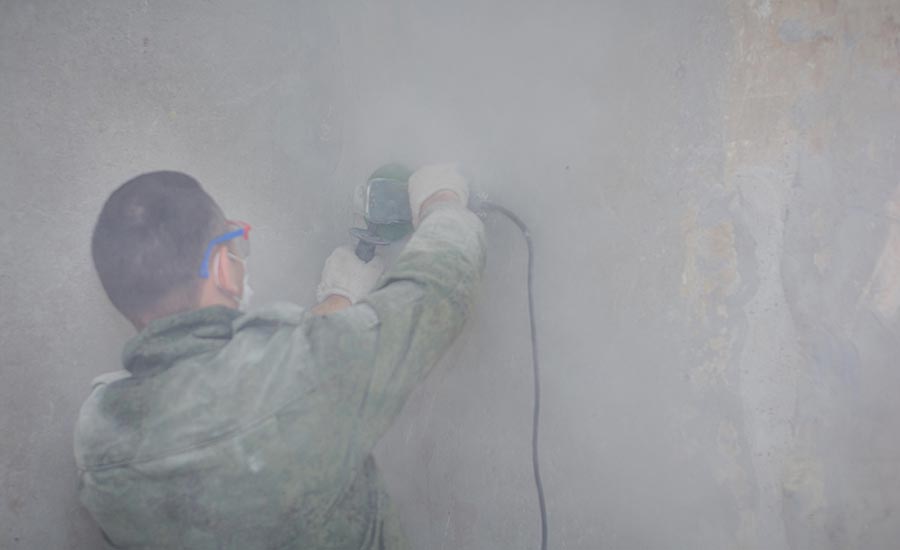
Know the Hazard
Respirable crystalline silica is a dangerous hazard that millions of workers are unknowingly exposed to every year. Of these estimated 2 million workers, 840,000 of them are exposed to an amount of silica that exceeds the permissible exposure limit or the amount of exposure deemed safe. 90 percent of the individuals exposed to this material are employed in the construction industry.
Inhalation of, in particular, respirable crystalline silica can lead to respiratory diseases such as chronic obstructive pulmonary disease or silicosis. Silicosis causes inflammatory damage in areas affected by silica, causing scar tissue to form over critical lung components.
Know the Standard
The 2016 OSHA Silica Standard limits silica exposure to a PEL of 50 micrograms of respirable crystalline silica per cubic meter of air or 50 µg SiO2/m³ over an eight-hour time weighted average. Table 1 identifies occupational exposures to silica along with work practices and specified engineering control methods to limit exposure. OSHA recognizes using tools equipped with a water delivery system that supplies a continuous stream or spray of water at the point of impact or using tools equipped with a commercially available shroud and dust collection system as the work practice control methods that safely limit silica exposure. It is imperative that the contractor read, understand, and apply the standard to their specific needs. They need to be familiar with Table 1 and the options within and around Table 1.
There are alternative exposure control methods available to give contractors more flexibility in their choice of work practices and tools. These methods do require some additional control measures to be in compliance with the OSHA Silica Standard. For alternative control methods, the following applies as explained in the OSHA Silica Standard:
Permissible Exposure Limit: The employer shall ensure that no employee is exposed to an airborne concentration of respirable crystalline silica in excess of 50μg/m3 calculated as an 8-hour TWA.
Exposure Assessment: The employer shall assess the exposure of each employee who is or may reasonably be expected to be exposed to respirable crystalline silica at or above the action level in accordance with either the performance option in paragraph (d)(2)(ii) or the scheduled monitoring option in paragraph (d)(2)(iii) of Table 1.
Performance Option: The employer shall assess the 8-hour TWA exposure for each employee on the basis of any combination of air monitoring data or objective data sufficient to accurately characterize employee exposures to respirable crystalline silica.
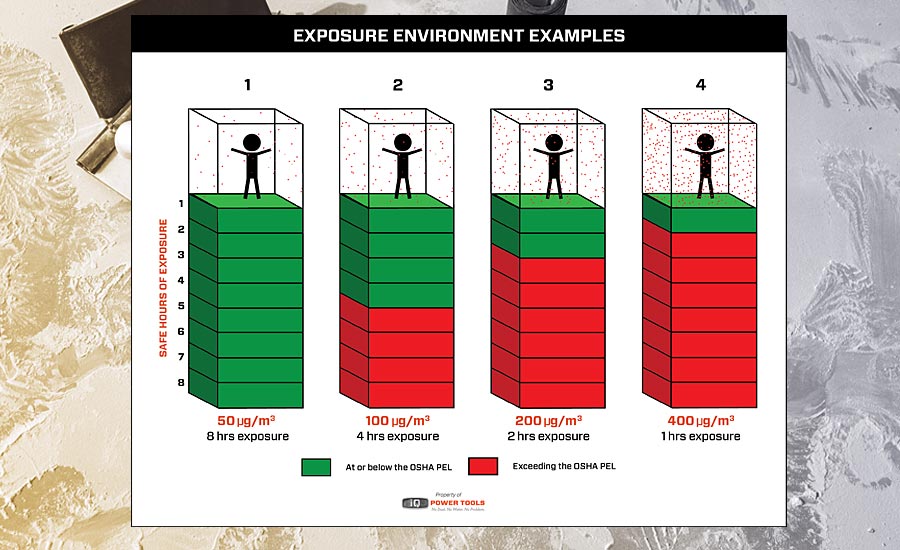
Know Your Exposure
One way to determine silica exposure is through air monitoring. To many, this may seem like a complicated, expensive process. The fact is, it’s really fairly easy once one understands what is involved.
Air monitoring equipment will measure the air quality in a worker’s breathing area to determine silica exposure during a specific work practice. Air monitoring uses a battery-operated vacuum attached to an operator’s shirt collar, collecting air samples right where the operator breathes.
Another way to determine silica exposure is by using objective data provided by tool manufacturers. OSHA defines Objective Data as, “information, such as air monitoring data from industry-wide surveys or calculations based on the composition of a substance, demonstrating employee exposure to respirable crystalline silica associated with a particular product or material or a specific process, task, or activity. The data must reflect workplace conditions closely resembling or with a higher exposure potential than the processes, types of material, control methods, work practices, and environmental conditions in the employer's current operations.” When a manufacturer tests its equipment, if the work practice and materials used match the job site conditions, OSHA will allow this data to be used as objective data as part of a written silica exposure control plan.
Once you learn about exposure levels, you can decide what options are best-suited to control silica exposure on your job sites or in your shop.
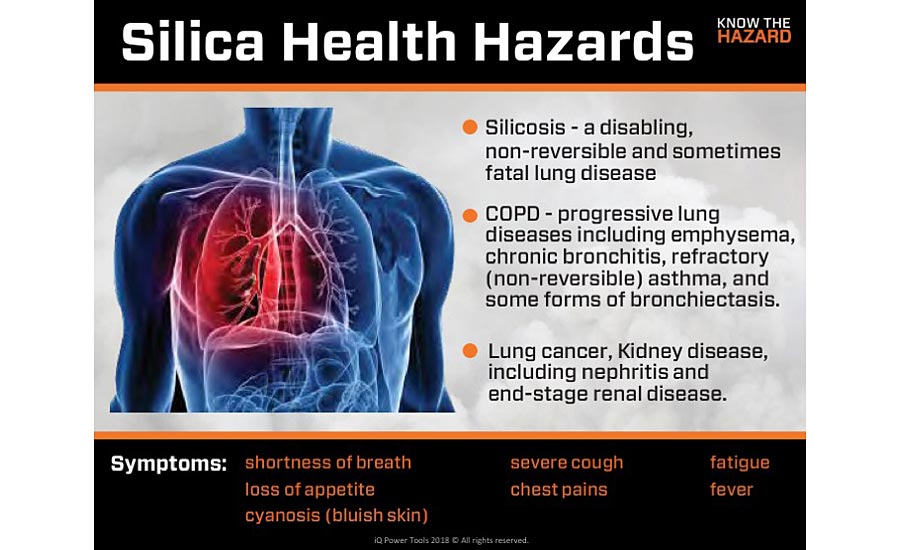
Know Your Material
“Check Twice, Cut Once.” The old saying doesn't just prevent mismeasurement; it’s also a reminder to check exactly what you’re cutting into. Exposure varies by material type. Silica exposure can vary depending on the silica content of the materials being used.
Controlled tests of cutting some roofing tiles show that airborne emissions of crystalline silica and metals are strongly related to their concentrations in the product. If you’re not sure if a product contains crystalline silica, check the manufacturers Safety Data Sheet.
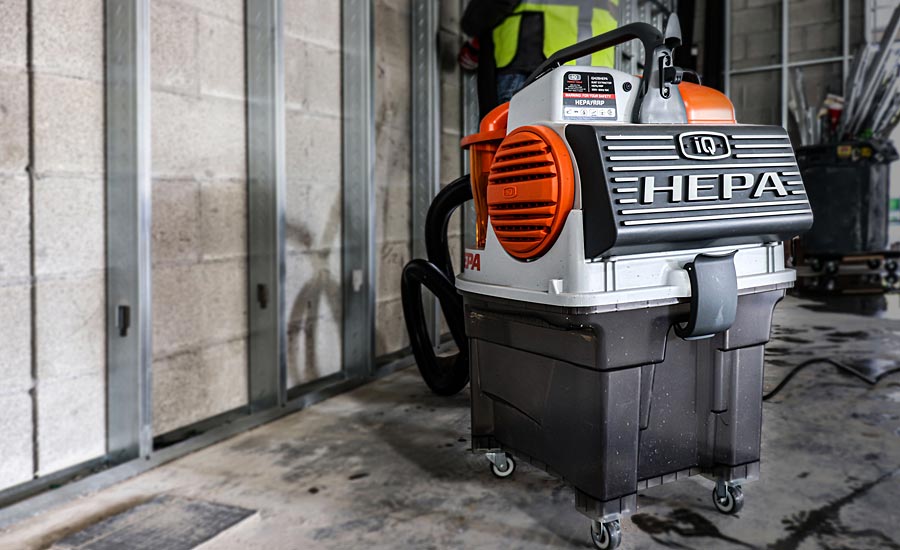
Know Your Options
Wet cutting and dry cutting without a vacuum have been the main applications for cutting harder materials for decades. But that is changing. The team at iQ Power Tools, manufacturer of power tools with integrated dust collection systems, has studied silica for almost 20 years. Seeing the need to reduce silica exposure on job sites led to the development of an innovative line of power tools with integrated dust collection systems. These tools have been objectively tested to capture up to 99.5 percent of the harmful silica dust generated from cutting stone and tile. The manufacturer recently unveiled the iQ426HEPA Dust Extractor, a patent-pending, cyclonic filtration system designed to allow less than 1 percent of incoming dust to ever reach the filter; keeping the filter virtually dust-free and the vacuum airflow strong.
No matter what tool you’re using, saw, grinder or a high-speed polisher, it’s essential to wear personal protective equipment, such as protective eyewear and ear attenuators. You should also know exactly what you’re cutting into so you can implement proper control methods when exposing hazardous materials.
Whether you’re sizing a piece of drywall or cutting blindly into a wall, you should be cautious not to generate airborne contamination that could contain silica dust or even asbestos particles. Whether you’re using hand or power tools, it’s important to follow the necessary precautions to protect against any unknown airborne contamination. Remember, awareness and education ensures prevention and safety, so if you need a refresher course, take one ̶ your lungs will thank you!
1. DHHS (NIOSH) Publication Number 2015-106, OSHA - HA-3768-2015
2. Exposures To Crystalline Silica and Metals in Ceramic and Glass Tile” Report prepared By: Environmental Health & Engineering, Inc. November 2017
Looking for a reprint of this article?
From high-res PDFs to custom plaques, order your copy today!