Walls & Ceilings logo
search
cart
facebook twitter linkedin youtube youtube Spotify Podcasts Apple Podcasts Spotify Podcasts Apple Podcasts
  • Sign In
  • Create Account
  • Sign Out
  • My Account
Walls & Ceilings logo
  • NEWS
  • TOPICS
    • Drywall
    • Stucco/EIFS
    • Ceilings
    • Steel Framing
    • Fireproofing
    • Interior Plaster
    • Building Envelope
    • Insulation
    • Technology
    • Interior
    • Exterior
    • Women In Construction
  • COLUMNS
    • Up Front
    • All Things Gypsum
    • Art & Craft of Plastering
    • Stucco Stop
    • Steel Deal
    • Industry Voices
  • PRODUCTS
    • Buzz Guide
  • EVENTS
    • Industry Events
    • Webinars
    • BUILD Expo
  • MEDIA
    • Videos
    • Podcasts
    • Photo Galleries
    • BUILD26 Videos
    • Take our Quiz!
    • Infographics
  • EXCLUSIVE
    • Newsletters
    • Top 50 Contractors
    • Contractor of the Year
    • State of the Industry
    • W&C Store
    • Market Research
    • CEUs
    • Sponsor Insights
    • Custom Content & Marketing Services
  • DIRECTORY
  • EMAGAZINE
    • eMagazine
    • Advertise
    • Archive Issues
  • SIGN UP!
ColumnsBuilding EnvelopeInsulationInteriorUp Front

Up Front

Best Practices

The best way to do something may differ depending from person to person.
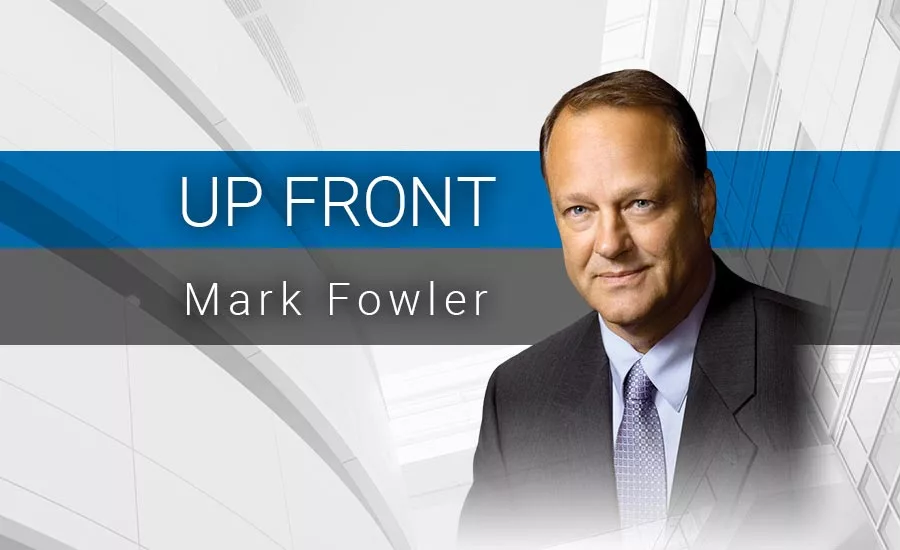
By Mark Fowler
Up Front: A Walls & Ceilings Editorial Column by Mark Fowler
Background Image: uschools / iStock / Getty Images Plus via Getty Images. Composition by James Hoener
October 19, 2023

“Best practices” is a term we hear a lot about, but what does it mean? The better question might be, “Whose best practices?” If you put 10 tradespeople in a room, you can get up to 10 best practices on how to do a task. ASTM standards are defined as consensus standards, but in reality there is little consensus. ASTM stands for American Society for Testing and Materials, and many committee members have never installed the assemblies where they make the rules on installation. There has been a gradual shift to marginalize members with installation experience.

Best practices can be about assembly performance or means and methods to construct that assembly. A means and methods example would be hanging drywall panels. Should you hang the panels and finish screwing off as you go, or go back to put in all the screws at one time? To me, the latter makes the most sense, as it would save a few motions. Since I am not a drywall hanger, it might be best to keep my opinion to myself.

Drywall and Plaster Best Practices?

The term “best practices” should be questioned and not used to ignore the fundamentals of science.

The Carpenters’ Union held a Drywall Olympics a few years ago to validate the fastest hanger in the country. The winner of our region was—as I predicted—hanging the panels and then going back to screw them all off at one time. Then came the day of the final competition—our regional champion was off and running. 

I walked around to watch other contestants. A person from the Midwest was installing his panels in the opposite method, where he would finish screwing off each panel as he went. He seemed to be pretty fast and I was impressed that he was keeping up with our champion. As I went back and watched our person working his way to screwing off all the panels he had hung, the bell rang and the announcement was made: “Contestant Five” had just finished. Yes, he was the Midwest person and he finished first. I was in a bit of shock. I was wrong about the best practices on hanging drywall.

Some experiences with means and methods can be more personal. As an apprentice plasterer, you look to the supervisor for mentorship. My supervisor was a “pro’s pro.” He would cut-in plaster using the toe of his trowel, where I preferred to cut-in using the edge. To be a pro, a change was in order, so I switched to using the toe of my trowel. My supervisor watched me struggle with the change and then asked, “Why did you switch your technique?” I explained my desire to be the best and saw how he did it. He informed me that he once raced a plasterer for paychecks (I guess that was popular back in his day) and he lost to a person who cut-in with the edge of his trowel. His final words on the subject: “Go back to your method.”

Another Meaning

Best practice can also mean going beyond what is standard for the industry. Recently, after reviewing a lath installation, it revealed the lather was applying daubs of sealant over each fastener head used to attach the lath. The reason given was that it was a best practice. This best practice adds material cost and takes extra time. I noted the problem was that self-adhered flashing, while neatly cut and fitted, was reverse-lapped with the water-resistant barrier. In reality, water rarely is found going through the lath fastener in the field of a finished wall, while the reverse-lap is a prime cause of leaks. Is this really a good idea to ignore basics in favor of a perceived best practice? 

The reverse-lap is a common problem on façade installations. Shingle-fashion layering was once a basic in teaching, but that practice did not result in extra fees or sales, so we have moved to more complex and multiple layers of materials. Is this a good idea for our industry in the long-run as costs keep escalating and sequence of installation gets even more complex? Young people are being pushed to take extra steps to comply with someone’s imposed best practices with more expensive materials and extra labor. Since training time is limited, something has to be forsaken, and the basics of proven installations seem to be the casualty. 

The term “best practices” should be questioned and not used to ignore the fundamentals of science. Is the best practice an opinion or used to sell a product or service? It never hurts to ask why this is a best practice and ask tough questions, even in the face of research data presented that may have been done with a preconceived outcome to benefit the sponsor. I find those that try to shut down questions may be hiding the real agenda on why they are pushing best practices.

KEYWORDS: building façade building performance building science curtain wall R-value

Share This Story

Looking for a reprint of this article?
From high-res PDFs to custom plaques, order your copy today!

Headshots fowler

Mark Fowler joined Walls & Ceilings as editorial director in 2006. Fowler grew up in the construction business and has held a number of positions in different companies and associations. He spent 11 years with the Northwest Wall and Ceiling Bureau before moving to his position with Soltner Group Architects in Seattle. Fowler is currently the executive director of the Stucco Manufacturers Association. He can be reached at Mark@markfowler.org.


Recommended Content

JOIN TODAY
To unlock your recommendations.

Already have an account? Sign In

  • Abercrombie & Fitch

    EIFS in 2026: How Specialty Finishes Are Redefining Exterior Wall Systems

    As building codes, owner expectations, and design demands...
    Stucco/EIFS
    By: Regi Mendoza
  • proper air and vapor control

    From Energy Efficiency to Moisture Management: Why Air and Vapor Control Matter

    How proper air and vapor control within building...
    Building Envelope
    By: Benjamin Meyer AIA, LEED AP
  • Linear Metal Ceiling Beam Baffles

    Top 25 Ceiling Contractors of 2026

    Suspended ceilings demand precision, code compliance and...
    Ceilings
    By: John Wyatt and Tanja Kern
You must login or register in order to post a comment.

Report Abusive Comment

Manage My Account
  • eMagazine Subscription
  • Newsletters
  • Online Registration
  • Manage My Preferences
  • Subscription Customer Service

More Videos

Sponsored Content

Sponsored Content is a special paid section where industry companies provide high quality, objective, non-commercial content around topics of interest to the Walls & Ceilings audience. All Sponsored Content is supplied by the advertising company and any opinions expressed in this article are those of the author and not necessarily reflect the views of Walls & Ceilings or its parent company, BNP Media. Interested in participating in our Sponsored Content section? Contact your local rep!

close
  • medical professionals moving a patient on a stretcher through the halls of a medical building
    Sponsored byNational Gypsum Company

    What Does High Performance Mean When It Comes To Gypsum Boards?

Popular Stories

Linear Metal Ceiling Beam Baffles

Top 25 Ceiling Contractors of 2026

Wichita Biomedical Campus

Wichita Drywall Worker Dies After Scaffolding Fall

QXO Just Changed the Game-Here's What Contractors Are Asking

QXO Just Changed the Game-Here's What Contractors Are Asking

An interior drywalling work in progress

Boost Profits with AI Scheduling

Events

June 24, 2026

The Bright Side & Benefits of Designing with Integrated Lighting

Credits 1 AIA LU/HSW; 0.1 ICC CEU

This course will explore the pivotal role architects and lighting design play in creating safer, more sustainable spaces. Learn how to avoid common lighting mistakes and make informed decisions that create the best visual environment for occupants. 

January 1, 2030

Webinar Sponsorship Information

For webinar sponsorship information, visit www.bnpevents.com/webinars or email webinars@bnpmedia.com.

See our full library of webinars

View All Submit An Event

Products

2026 National Painting Cost Estimator

2026 National Painting Cost Estimator

See More Products

Related Articles

  • Up Front: A Walls & Ceilings Editorial Column by Mark Fowler

    What Are Best Practices?

    See More
  • Associated Builders & Contractors Logo

    ABC’s 2023 Guide to Construction Safety Best Practices

    See More
  • Benjamin Obdyke.png

    Best Practices for Weatherizing Low-Rise Multifamily Projects

    See More

Related Products

See More Products
  • Accidents Waiting to Happen: Best Practices in Workers' Comp Administration and Protecting Corporate Profitability

  • bim 3e.jpg

    BIM Handbook: A Guide to Building Information Modeling for Owners, Designers, Engineers, Contractors, and Facility Managers, 3rd Edition

  • Optimizing Social Media from a B2B Perspective

See More Products

Events

View AllSubmit An Event
  • CONSTRUCT

    Breaking down the barriers between the different players within the construction process allows for a more collaborative work environment. CONSTRUCT is the place to share the latest in standards and best practices, industry trends, and emerging technologies.
  • October 8, 2026

    2026 IIBEC Building Enclosure Symposium (BES+)

    The Building Enclosure Symposium will be an interactive experience convening the best experts in the building enclosure industry. The two-day event offers cutting-edge information regarding the design, construction, maintenance and repair of modern and/or older building enclosures. Geared towards building enclosure professionals, architects, consultants, engineers, design professionals, contractors and specialists in waterproofing, fenestration, cladding and exterior wall systems.
View AllSubmit An Event
×

Connect with the industry’s leading resource for unparalleled insights and education.

Join thousands of industry professionals today. Shouldn’t you know what they know?

JOIN NOW
  • RESOURCES
    • Advertise
    • Contact Us
    • Directories
    • Store
    • Want More
  • SIGN UP TODAY
    • Create Account
    • eMagazine
    • Newsletters
    • Customer Service
    • Manage Preferences
  • SERVICES
    • Marketing Services
    • Reprints
    • Market Research
    • List Rental
    • Survey/Respondent Access
  • STAY CONNECTED
    • LinkedIn
    • Facebook
    • Instagram
    • YouTube
    • X
  • PRIVACY
    • PRIVACY POLICY
    • TERMS & CONDITIONS
    • DO NOT SELL MY PERSONAL INFORMATION
    • PRIVACY REQUEST
    • ACCESSIBILITY

Copyright ©2026. All Rights Reserved BNP Media, Inc. and BNP Media II, LLC.

Design, CMS, Hosting & Web Development :: ePublishing