Walls & Ceilings logo
search
cart
facebook twitter linkedin youtube youtube Spotify Podcasts Apple Podcasts Spotify Podcasts Apple Podcasts
  • Sign In
  • Create Account
  • Sign Out
  • My Account
Walls & Ceilings logo
  • NEWS
  • TOPICS
    • Drywall
    • Stucco/EIFS
    • Ceilings
    • Steel Framing
    • Fireproofing
    • Interior Plaster
    • Building Envelope
    • Insulation
    • Technology
    • Interior
    • Exterior
    • Women In Construction
  • COLUMNS
    • Up Front
    • All Things Gypsum
    • Art & Craft of Plastering
    • Stucco Stop
    • Steel Deal
    • Industry Voices
  • PRODUCTS
    • Buzz Guide
  • EVENTS
    • Industry Events
    • Webinars
    • BUILD Expo
  • MEDIA
    • Videos
    • Podcasts
    • Photo Galleries
    • BUILD26 Videos
    • Take our Quiz!
    • Infographics
  • EXCLUSIVE
    • Newsletters
    • Top 50 Contractors
    • Contractor of the Year
    • State of the Industry
    • W&C Store
    • Market Research
    • CEUs
    • Sponsor Insights
    • Custom Content & Marketing Services
  • DIRECTORY
  • EMAGAZINE
    • eMagazine
    • Advertise
    • Archive Issues
  • SIGN UP!
CeilingsDrywallInteriorWomen In Construction

Modifying Building Designs While Maintaining Fire Protection

Fire Protection

By Deborah Callaway
Fire Protection
December 7, 2023

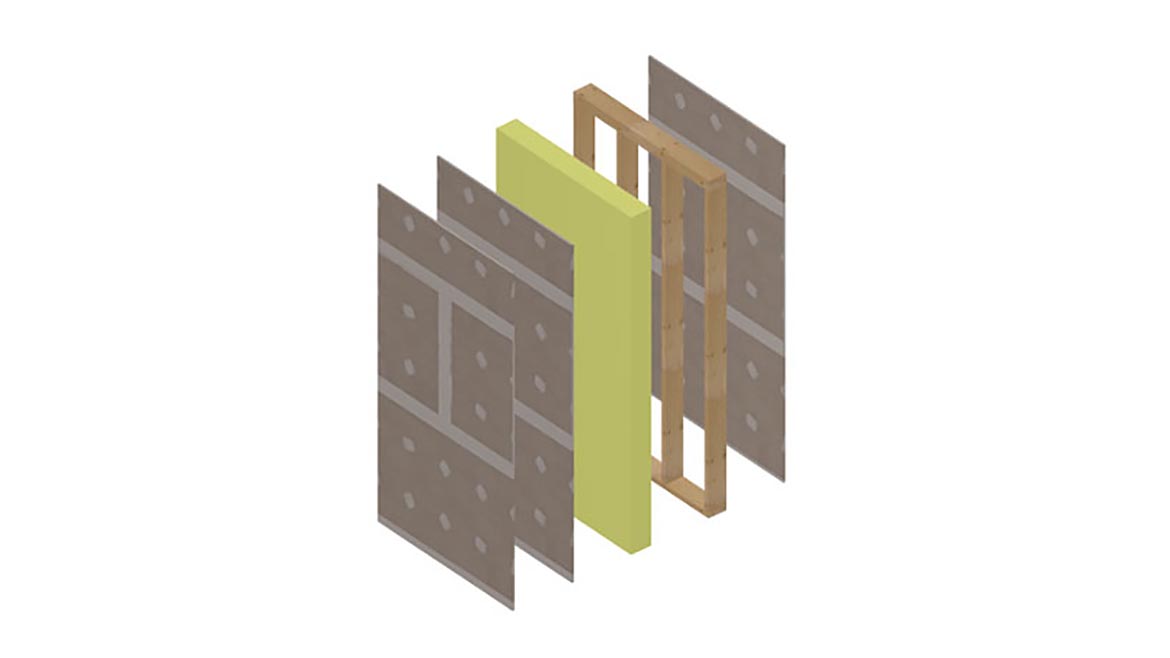
Changes to fire resistance-rated assemblies may be required or desired in certain situations. To maintain the desired fire protection, some changes can be made, some cannot, and some can be made provided modifications are also made according to the Gypsum Association and UL Solutions.

Adding Insulation

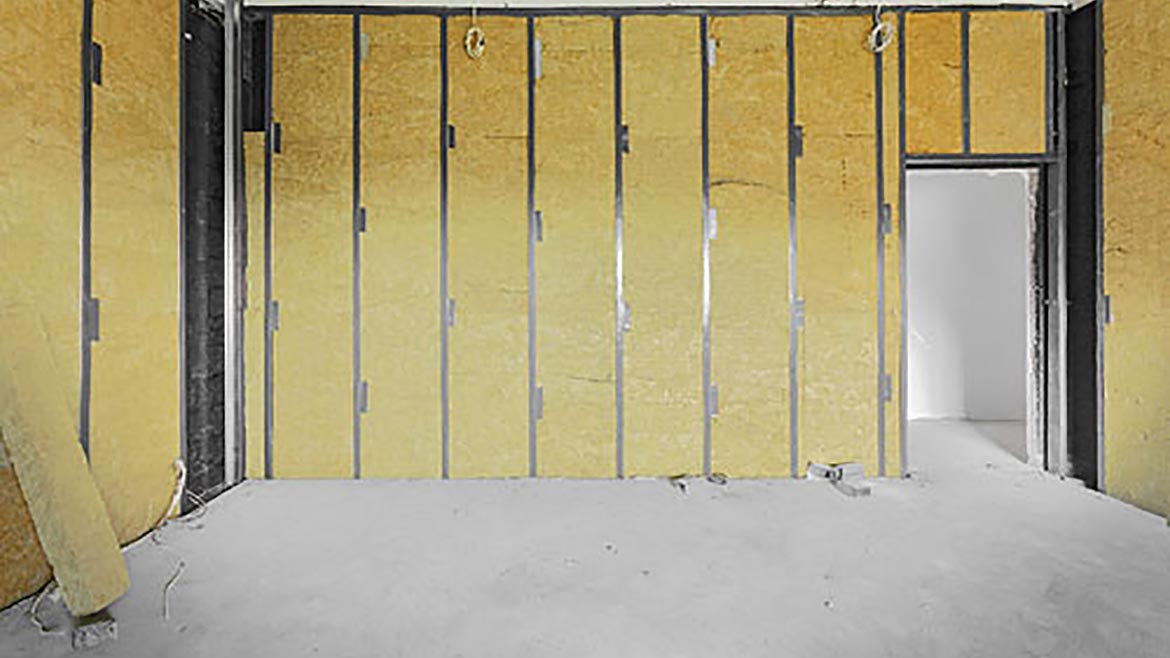
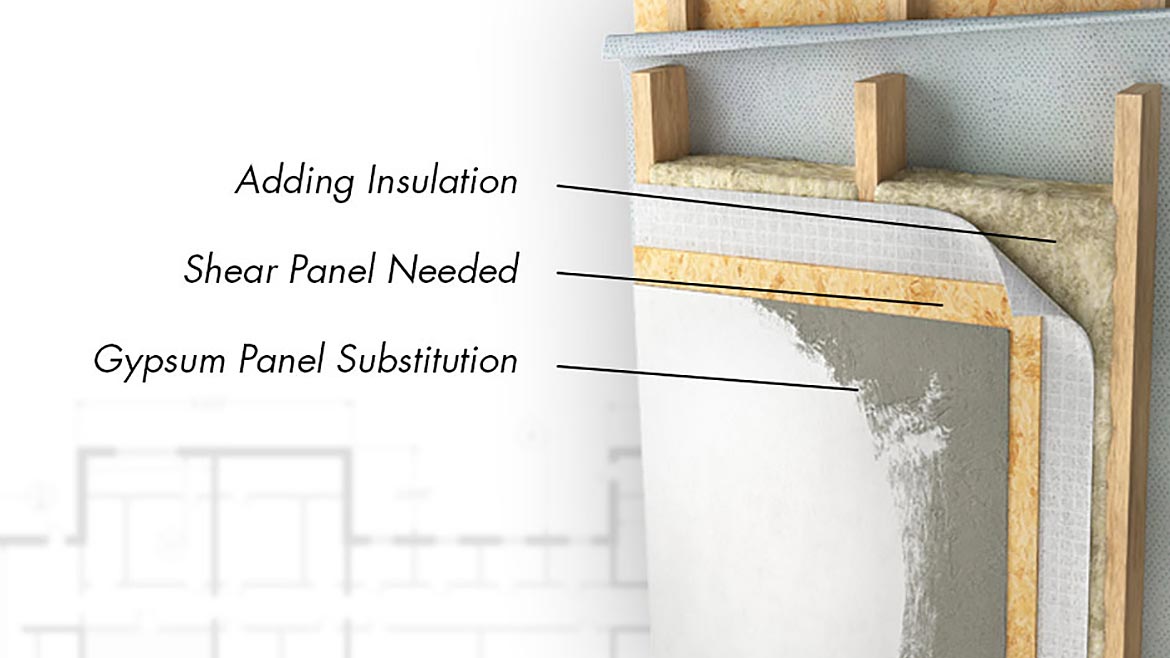
The most common change is the addition of insulation to an assembly that was fire-tested without it. In wall assemblies, faced or unfaced mineral wool, glass fiber or cellulose fiber insulation may be added to the stud cavity. The insulation must be sized to allow for a friction fit into the stud cavity. Because adding insulation may improve the acoustic performance of the wall assembly, it is one of the most common changes. If an assembly was tested with insulation, it cannot be omitted.

Care must be taken when considering the addition of insulation to a floor/ceiling or roof/ceiling assembly that was not fire-tested with it. For one-hour fire resistance-rated assemblies, glass fiber insulation (either loose-fill, faced, unfaced, batt or blanket) may be added to the plenum or joist space above the gypsum panel. However, it will require an additional layer of gypsum panel of the same type and thickness, as shown in the tested design. The base layer of gypsum board must be attached with the fastener type and spacing as described in the design; it is not necessary to tape the joints of the base layer. The face layer of gypsum board must also be attached with the fastener type and spacing as described in the individual design. However, the length of the fasteners must be increased by a minimum of the gypsum panel thickness of the additional layer. The joints in the finish layer must be finished as described in the design. 

Adding Shear Panels

In regions of seismic or wind load requirements, shear panels may be added to any wall assembly when needed. They can be added as the base layer under the gypsum panels, as a face layer over the gypsum panels or in between layers of gypsum panels. The length of the fasteners for each layer, except for the face layer, needs to be increased by the thickness of the shear panel added. Fastener spacing for the gypsum panels must be as detailed in the fire design, and the spacing for the shear panels must be determined by the amount of shear required, as determined by the building codes. Additional information, standards and other requirements for shear panels can be found in Section II Part 13 of the UL BXUV Guide for Fire Resistance Ratings.

Additional Gypsum Layers

Acoustic performance of fire resistance-rated assemblies can be improved by installing additional layers of gypsum panel products. Provided the minimum layers, thickness and type of panels required per the fire design are installed, additional layers of any thickness and type may be added to one or both sides of wall assemblies and to the face or base layer of floor/ceiling or roof/ceiling assemblies. The length of the fasteners for each layer, except for the face layer, needs to be increased by the thickness of the gypsum panel(s) added.
Fire Protection
Fire Protection
Fire Protection

Gypsum Panel Substitutions

The most common substitution question is, “Can I substitute 5/8-inch Type X for 5/8-inch Type C?” The answer here is a resounding, “NO!” Under no circumstance can any thickness type X panel be substituted for any thickness type C panel because type C panels are manufactured with enhanced fire resistance over type X. Type C panels, however, can be substituted for the same thickness type X panels in any fire resistance-rated assembly.

Also asked is if 1/2-inch gypsum panels can be substituted for 5/8-inch gypsum panels or vice versa. This one is a little tricky. Thicker panels of the same core type can be substituted, but not the other way around. For example, 5/8-inch Type C can be substituted for 1/2-inch Type C. However, 1/2-inch Type C cannot be substituted for 5/8-inch Type C. In addition, 5/8-inch Type X cannot be substituted for 1/2-inch Type C, nor can 1/2-inch Type C be substituted for 5/8-inch Type X.

Minimum Requirements

Some details in fire designs are listed as minimums, unless otherwise stated, and can be increased if desired - specifically stud thickness and depth. With increasing energy code requirements comes the need for thicker insulation materials to meet minimum regional performance. This, in turn, requires a deeper stud cavity to allow the insulation materials to perform properly or simply fit. For wood-framed walls, 2x6 studs can be substituted for 2x4 studs. However, 2x4 studs cannot be substituted for 2x6 studs. For steel framing, the depth of the stud can also be increased; 6-inch studs can be substituted for 3 5/8-inch studs of the same mil thickness. Again, the opposite is not true in that a shallower stud cannot be used in lieu of a deeper stud. Just as increasing the stud cavity is beneficial for insulation materials, it may also improve acoustic performance.

Minimums also exist for the mil thickness of steel framing, which can be increased without affecting fire performance. However, increasing non-load-bearing studs to load-bearing studs will not change the load-bearing allowance of the fire resistance-rated assembly. Each fire design is designated as non-load bearing or load bearing, depending on how it was tested, i.e., with or without simulated load. Typically, load-bearing walls are tested with minimum 33-mil steel studs, thus, 18-mil studs or thinner cannot be used. If a minimum acoustic performance is required for a steel-studded assembly, increasing the mil thickness likely will have a negative impact, depending on other factors.

Maximum Requirements

Just as some details in fire designs are minimums, others are maximums - stud spacing and fastener spacing to be exact. Because they are listed as maximums, they cannot be increased for any reason. While they can be decreased, doing so may have a negative impact on acoustic performance. Decreasing stud spacing will decrease the stud cavity and reducing the fastener spacing will create more contact points for the gypsum panels, and both can potentially decrease STC ratings.

KEYWORDS: acoustics fire resistance STC (sound transmission class)

Share This Story

Looking for a reprint of this article?
From high-res PDFs to custom plaques, order your copy today!

Wc1223 feat pabco p5 author deborah callaway 150x150px

Deborah Callaway is manager of technical services at PABCO Gypsum.

Recommended Content

JOIN TODAY
To unlock your recommendations.

Already have an account? Sign In

  • Abercrombie & Fitch

    EIFS in 2026: How Specialty Finishes Are Redefining Exterior Wall Systems

    As building codes, owner expectations, and design demands...
    Stucco/EIFS
    By: Regi Mendoza
  • proper air and vapor control

    From Energy Efficiency to Moisture Management: Why Air and Vapor Control Matter

    How proper air and vapor control within building...
    Building Envelope
    By: Benjamin Meyer AIA, LEED AP
  • Linear Metal Ceiling Beam Baffles

    Top 25 Ceiling Contractors of 2026

    Suspended ceilings demand precision, code compliance and...
    Ceilings
    By: John Wyatt and Tanja Kern
You must login or register in order to post a comment.

Report Abusive Comment

Manage My Account
  • eMagazine Subscription
  • Newsletters
  • Online Registration
  • Manage My Preferences
  • Subscription Customer Service

More Videos

Sponsored Content

Sponsored Content is a special paid section where industry companies provide high quality, objective, non-commercial content around topics of interest to the Walls & Ceilings audience. All Sponsored Content is supplied by the advertising company and any opinions expressed in this article are those of the author and not necessarily reflect the views of Walls & Ceilings or its parent company, BNP Media. Interested in participating in our Sponsored Content section? Contact your local rep!

close
  • medical professionals moving a patient on a stretcher through the halls of a medical building
    Sponsored byNational Gypsum Company

    What Does High Performance Mean When It Comes To Gypsum Boards?

Popular Stories

Linear Metal Ceiling Beam Baffles

Top 25 Ceiling Contractors of 2026

Wichita Biomedical Campus

Wichita Drywall Worker Dies After Scaffolding Fall

QXO Just Changed the Game-Here's What Contractors Are Asking

QXO Just Changed the Game-Here's What Contractors Are Asking

An interior drywalling work in progress

Boost Profits with AI Scheduling

Events

June 24, 2026

The Bright Side & Benefits of Designing with Integrated Lighting

Credits 1 AIA LU/HSW; 0.1 ICC CEU

This course will explore the pivotal role architects and lighting design play in creating safer, more sustainable spaces. Learn how to avoid common lighting mistakes and make informed decisions that create the best visual environment for occupants. 

January 1, 2030

Webinar Sponsorship Information

For webinar sponsorship information, visit www.bnpevents.com/webinars or email webinars@bnpmedia.com.

See our full library of webinars

View All Submit An Event

Products

2026 National Painting Cost Estimator

2026 National Painting Cost Estimator

See More Products

Related Articles

  • SOCIETY OF FIRE PROTECTION ENGINEERS SUPPORTS FEDERAL LEGISLATION AIMED AT ENHANCING BUILDING SAFETY

    See More
  • A building Design model using Metalcaulk products

    The Importance of Fire Protection in Modern Construction

    See More
  • fire protection

    Why Passive Fire Protection is Critical in Commercial Construction

    See More

Related Products

See More Products
  • 978-0-7643-3022-3.jpg

    Award-winning Green Roof Designs: Green Roofs for Healthy Cities

  • building codes illustated.jpg

    Building Codes Illustrated: A Guide to Understanding the 2021 International Building Code, 7th Edition

  • 2021 ibc.jpeg

    2021 International Building Code® Illustrated Handbook

See More Products

Events

View AllSubmit An Event
  • June 22, 2026

    National Fire Protection Association (NFPA) Conference & Expo

    The National Fire Protection Association has announced that it will hold its 2026 NFPA Conference & Expo in Las Vegas at the Mandalay Bay. The show features a wide variety of 400-plus exhibitors, over 8,000 attendees and 120-plus educational sessions, workshops, and presentations with attendees from 94 countries. Collaborate and network with thousands of fire protection engineers, electricians, firefighters, building and facility managers, manufacturers of safety equipment, government officials, and all other life safety professionals.
View AllSubmit An Event

Related Directories

  • National Fire Protection Assn. (NFPA)

    Known as the trusted source of safety knowledge, the National Fire Protection Association (NFPA) has been helping to solve some of the planet’s toughest safety problems for more than 125 years. To remain relevant for over a century as a knowledge and information organization, we’ve continually evolved our scope of expertise—from fire prevention, wildfire preparedness, and electrical safety to hazardous materials, community risk reduction, and public safety.
×

Connect with the industry’s leading resource for unparalleled insights and education.

Join thousands of industry professionals today. Shouldn’t you know what they know?

JOIN NOW
  • RESOURCES
    • Advertise
    • Contact Us
    • Directories
    • Store
    • Want More
  • SIGN UP TODAY
    • Create Account
    • eMagazine
    • Newsletters
    • Customer Service
    • Manage Preferences
  • SERVICES
    • Marketing Services
    • Reprints
    • Market Research
    • List Rental
    • Survey/Respondent Access
  • STAY CONNECTED
    • LinkedIn
    • Facebook
    • Instagram
    • YouTube
    • X
  • PRIVACY
    • PRIVACY POLICY
    • TERMS & CONDITIONS
    • DO NOT SELL MY PERSONAL INFORMATION
    • PRIVACY REQUEST
    • ACCESSIBILITY

Copyright ©2026. All Rights Reserved BNP Media, Inc. and BNP Media II, LLC.

Design, CMS, Hosting & Web Development :: ePublishing