FMI 2024 Labor Productivity Study: Prefabrication
Growing prefabrication: what’s in the way?

Labor productivity is the central economic engine that drives profitability for labor-intensive, self-performing contractors. FMI’s 2023 Labor Productivity Study found that contractors experienced approximately $30 billion to $40 billion in lost profits due to labor inefficiencies in 2022.
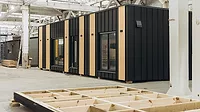
When talking about field labor productivity and producing more output with less input, the concepts of off-site construction and prefabrication are invariably part of the conversation. In FMI’s research, it sought to understand how labor-intensive firms are incorporating these industrialized construction concepts into their business models to address internal and external challenges impacting labor productivity.
While prefabrication has been around for many years and has increasingly gained popularity in addressing some of the structural challenges in the industry, the business experience for contractors has been mixed. Integrating construction and manufacturing operating models is a significant challenge, as is generating enough throughput to justify capital investments in prefabrication capabilities.
Prefabrication is commonplace for contractors in industrial and manufacturing environments in which owners know what they want; quality, safety and schedule are prioritized, and design is driven by function and practicality. In other market segments, the adoption of prefabrication has been slower. However, given the long-term craft labor trends in the construction industry, FMI anticipates seeing more receptivity to and consideration of prefabrication methods going forward.
FMI’s recent research mirrors this prediction, with respondents indicating that they expect prefabrication to increase by 100 percent or more over the next five years. Currently, participants in FMI’s study are spending 16 percent of their craft labor hours in prefabrication — but in five years, they anticipate that figure increasing to 34 percent.
The benefits of prefabrication are clear. Controlled prefabrication environments enable better safety, higher quality and improved schedule durations. Prefabrication allows for building components to be assembled in advance, enabling contractors to get a head start on scope elements, which is particularly advantageous in the context of compressed delivery schedules. Additionally, depending on the trade and scope, contractors can often utilize less skilled labor for repeatable assembly tasks, creating wage and cost advantages.
Implementing Prefabrication at Scale
Not surprisingly, then, few question whether preconstruction is a good idea. Rather, the rub for contractors has been determining how to do it at scale, profitably and in a way that is accretive to company earnings.
FMI often hears from contractors who feel they must grow their prefabrication capabilities to improve their productivity, meet client demands and remain competitive, but many don’t have substantive plans or strategies for getting started. Putting in place successful prefabrication practices requires long-term strategic thinking and planning across the organization, from the development of a comprehensive operational strategy to deliberate implementation.
In this report, FMI explores key challenges and strategic considerations for business owners looking to avoid the pitfalls associated with growing prefabrication capabilities. FMI touches on key findings from its research, including:
- The use of prefabrication methods is increasing, mostly due to lack of qualified labor and compressed project schedules.
- Key challenges associated with the adoption of prefabrication methods revolve around people and culture, quality of design documents, financial commitments and collaboration among project stakeholders.
- Survey respondents plan to double the number of hours spent in prefabrication on their projects over the next five years.
- Making prefabrication work requires a shift in thinking on how to operate the business.
- The earlier in the process that owners and designers make decisions about design and trade contractors to use, the more prefabrication can be utilized.
Missing the Mark
Prefabrication is in vogue. There are endless studies and papers on how it’s going to revolutionize construction, yet most of the market is still waiting for evolution, much less revolution. Many contractors have attempted to launch new or augment existing prefabrication capabilities because of the real or perceived benefits and advantages — but few have figured out how to do it well and make money at it consistently.
Contractors often lack a clear vision of what they want their prefabrication capabilities to become and a strategy for how to get there. To make prefabrication work, they need intentionality in change management for shifting the organization’s operating model, processes and systems, mindsets and behaviors, and culture to facilitate their company’s adoption of prefabrication.
The biggest benefit of prefabrication is “reducing the risk and variability,” said Chris McPherson, president of Central Ceilings, a framing and drywall contractor in New England. “At the end of the day, labor is the biggest variable in our business, and to be able to even out the flow of work and to have a more predictable cost is probably the single biggest driver.”
Different Approaches
To successfully adopt prefabrication processes, contractors need to adapt their enterprise strategies and business models. It’s important to understand that prefabrication is not a singular, one-dimensional solution; on the contrary, there are several different models and combinations thereof.
Manufacturing
Different approaches come with different investment perspectives and risk profiles. Off-site, single-trade prefabrication, the most common approach identified in FMI’s research, behaves like a manufacturing business, with a much different economic model than construction. The success of a manufacturing business relies on steady demand, predictable throughput and high volume. In a combined construction and manufacturing business, the workflow is often inconsistent.
Prefabrication is not ideal for all project types and delivery methods. Contractors need enough of the right kind of work to drive prefabrication volume to make the overall strategy successful.
The key, according to McPherson, is assembling the entire team on-site to talk through which framing and drywall elements will be prefabricated and how they will be implemented in the building assembly. “It has to have group buy-in,” he said. “If we’re involved earlier and treated in a more receptive environment, we can definitely do way more.”
Strategic Considerations for Successful Prefabrication
Contractors need to consider the following strategic questions when developing a plan for augmenting their prefabrication capabilities:
- Why do we want to do more prefabrication?
- What is the total addressable portion of our work mix (today) that could be prefabricated?
- What investments would need to be made to scale our prefabrication capabilities to capture that opportunity?
- When fully optimized, what does the earnings stream from prefabrication look like?
- What does the return on investment look like for the enterprise?
- Do we have alternative investment options for other initiatives in the business? How do those options stack up against our prefabrication ambitions?
- Taking a step back, will this make us a better, more profitable, more resilient business?
If your current addressable opportunity is insufficient but you are committed to doing more prefabrication long-term (because of convictions around long-term trends in the industry, labor shortages or otherwise), how can you strategically manufacture prefabrication opportunities?
Ask yourself:
- Which market segments, clients and delivery methods lend themselves to substantive prefabrication opportunities?
- How do we grow market share in these spaces or penetrate new spaces we might not currently be in?
- What are the investments, returns on investments and payback periods associated with these strategic decisions?
After understanding the commercial opportunity, firms must examine how they will adapt their operating models to successfully execute a prefabrication strategy. Executives need to evolve how they think about their organizational structure, operating processes, financial management and risk management. Running both a construction business and a manufacturing business simultaneously requires you to think through:
- Will prefabrication be a unique business unit or a separate entity altogether?
- Will we prefabricate for other contractors (third-party) to increase throughput?
- Do we intend prefabrication to be a profit generator or cost center?
- Will the project team have separate contracts with the prefabrication function or will job costs be combined?
- Can the prefabrication team say no to the construction function? Can construction say no to the prefabrication team?
- Where do responsibilities for estimating, procurement, design management, logistics and project management reside?
- Will construction projects recognize margin fade when there are cost overruns in the prefabrication shop?
- How will we track prefabrication status from queue to installation? How and when will we bill for stored or prefabricated material?
- How will we track labor productivity across prefabrication and field installation?
What’s Driving the Shift Toward Prefabrication Operating Models?
Schedule Compression
Everyone is feeling the pressure when it comes to project schedules, costs, labor shortages and eroding margins. In today’s fast-paced business environment, these time savings can become a key competitive differentiator.
As an example, Tim Whicker, president of Electric Plus, Inc., mentions a recent casino and hotel project that used 25 percent less labor in the field and cut nearly two months off the installation time using prefabrication methods.
Stephen Borrelli, president of All-Brite Electric, a Connecticut-based electrical contractor, says implementing prefabrication practices helps them keep projects on schedule and make up time when there are delays in other areas.
Case in point: on a recent precast dormitory project, Borrelli’s team encountered issues getting the building watertight and the electrical installation was delayed. By having all of the electrical boxes for the rooms ready to install, they were able to make up time and keep the overall project on schedule.
Lack of Qualified Labor (and Related Quality Issues)
FMI’s 2023 Labor Productivity Study confirmed the well-documented trend of decreased craft labor availability, with 63 percent of respondents citing a lack of qualified craft labor as a top factor negatively impacting productivity in their organization.
By employing prefabrication practices, contractors can reduce the amount of craft labor needed on job sites by moving less productive assembly hours away from the field and into controlled environments — thus improving safety, productivity, quality and control over the final product while also decreasing risk and the demand for on-site labor.
Challenges in Adopting Prefabrication
Reinventing your business model to adopt prefabrication capabilities is a tall task. It takes focus and perseverance to shift process, mindsets and expectations, both internally and externally. When asked what needs to change to increase the adoption of prefabrication, FMI’s research uncovered four main areas.
- Design and Coordination: The industry is plagued by poor design documents — something that was highlighted in the first part of FMI’s study and one of the biggest challenges to implementing prefabrication processes. Owners and designers must incorporate prefabrication considerations into their design development efforts and engage contractor partners early in the design process to optimize the potential for prefabrication.
- Stakeholder Awareness and Education: Trade contractors successful at using prefabrication are working directly with designers and owners to build relationships and provide education, outside the context of active project pursuits, on the potential value that prefabrication can bring to their projects. By helping drive adoption of prefabrication strategies, these contractors are also likely to win more prefabrication-enabled work opportunities, making the time and investment pay dividends in the long run.
- Mindset and Culture: Executives can say they want to do more prefabrication and set lofty goals for its adoption, but they must bring their entire organization along with them. Educating the workforce, from senior managers to field staff, on the benefits of prefabrication and how adopting these practices can improve the business and the work experience for everyone is a critical, often-underestimated aspect of the change effort that management needs to increase prefabrication.
- Investments in Facilities and Equipment: Augmenting prefabrication capabilities can be a capital-intensive endeavor, including investments in prefabrication facilities, equipment, leadership, staff and technology. Without clarity on the long-term demand potential, these investments are often difficult. When teams engage in deep strategic thinking and intentional planning, they can build the confidence and clarity that executives need to underwrite investments in prefabrication.
Growing Prefabrication
While prefabrication is not a new concept, FMI’s findings show that the industry is still struggling with broad adoption. And given the current and projected labor force challenges, it’s clear that prefabrication will need to become part of the solution. As noted previously, contractors will need to shift their business models and strategies to make this happen.
Zooming out, to successfully augment prefabrication capabilities, teams need to demonstrate or attain:
- A bold shared vision for what the organization can and will achieve.
- Strategic planning to clearly frame the addressable opportunity and efforts required.
- A commitment to investing responsibly in facilities and resources that enable long-term growth.
- A willingness to embrace new and different models for structure, roles and processes.
- Consistent communication across the organization to educate and create buy-in around the strategy, as well as to solicit and embrace feedback for calibrating it.
- A proactive engagement with external stakeholders to strengthen collaboration toward prefabrication opportunities on specific projects or across building programs.
See the full report here.
Looking for a reprint of this article?
From high-res PDFs to custom plaques, order your copy today!