Elevating Building Performance
The role of polyisocyanurate insulation in high-performance systems.
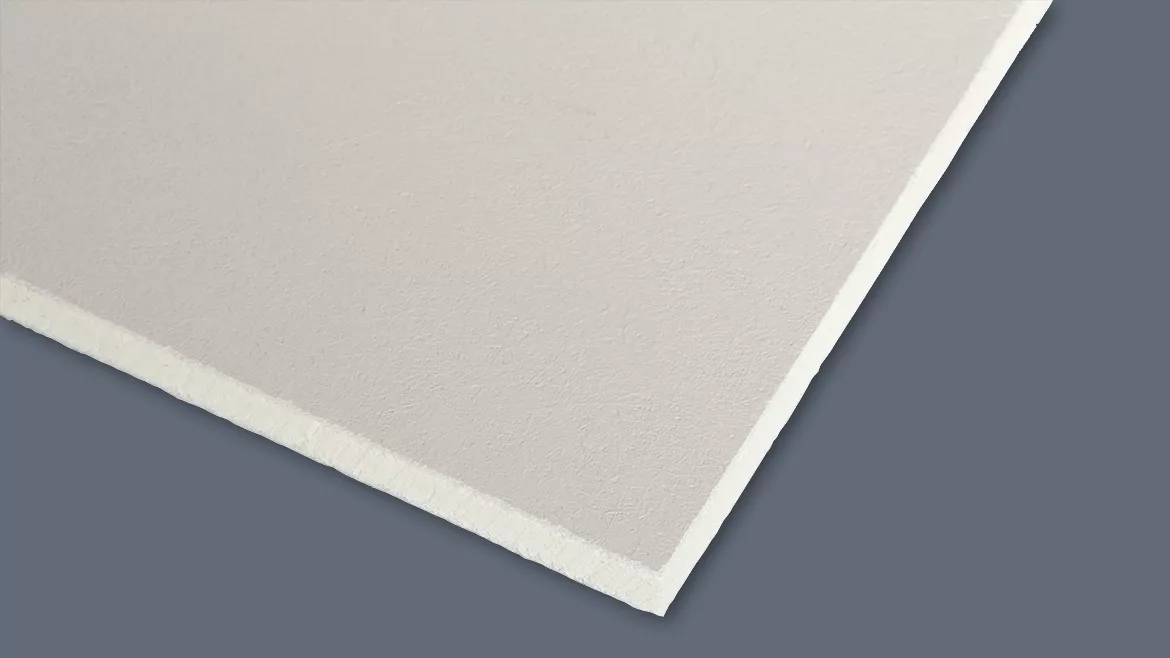
The building envelope is the critical barrier that separates the indoor environment from the outdoor elements, and it plays a pivotal role in energy efficiency, occupant comfort and structural durability. Among the various components that constitute an effective building envelope, insulation stands out as a fundamental element. In low-slope commercial systems, polyisocyanurate rigid insulation has become a cornerstone of high-performance. This article delves into the advantages of modern polyiso insulation that sets new standards in performance, especially in low-temperature conditions.
The Durability of Polyisocyanurate
Adaptability: Polyisocyanurate insulation is a highly specified choice for commercial building assemblies due to a host of unique advantages. Its versatility and compatibility with a variety of coverings make it a staple in the industry. Polyiso is commonly used under single-ply membranes and built-up assemblies, whether fully adhered or mechanically fastened, and in assemblies designed to withstand very severe hail. Its adaptability extends to green products and solar panel installations, making it an ideal solution for modern, sustainable building practices. This flexibility is critical as it allows architects and builders to design systems that meet diverse functional and environmental requirements without compromising performance.
Fire Performance: Polyiso insulation is renowned for its excellent fire performance. It meets stringent fire safety standards and has been approved for use in thousands of assemblies listed by Underwriters Laboratories and Factory Mutual. These approvals ensure that systems incorporating polyiso perform effectively under normal conditions and also provide critical protection during a fire.
In comparison, other foam plastic insulation boards also have UL and FM approvals but to a lesser extent. The difference here is the stronger fire performance of polyiso. Unlike thermoplastics that can melt, polyiso is a thermoset foam plastic that strengthens its chemical bond during curing, preventing it from being remolded or melting. This property allows polyiso to merely char in fire testing, similar to wood, enhancing its fire resistance. Consequently, polyiso is typically the preferred choice for many commercial applications where fire safety is paramount.
Thermal Performance: As energy codes evolve in response to climate shifts, the required insulation values for commercial applications are increasing, leading to thicker assemblies. Polyiso, known for its high thermal resistance, offers an impressive R-value of approximately 5.7 per inch (R-value is the capacity of an insulating material to resist heat flow—the higher the R-value, the greater the insulating power). This makes it one of the highest-performing rigid insulation materials available for applications. The high R-value per inch allows for thinner layers of insulation to achieve the desired thermal performance, which is particularly beneficial where minimizing assembly thickness is essential. By providing strong thermal performance, polyiso helps to maximize energy efficiency, reduce heating and cooling costs, and contribute to the overall sustainability of the building. This combination of versatility, fire performance, and high R-value ensures that polyiso remains a top choice for commercial projects across a wide range of climates and building types.
R-value is Not Constant
Insulation serves a fundamental purpose: reducing energy transfer. According to Newton’s Second Law of Thermodynamics, energy naturally flows from areas of high energy to low energy. In practical terms, this means heat moves from warmer to cooler areas. For insulation to effectively reduce this energy flow, there must be a temperature difference across the material, creating a hot side and a cold side. The rate at which energy flows through a material at a temperature difference is its thermal transmittance.
To simplify, this reduction in energy flow is quantified as R-value, while the temperature difference between the hot and cold sides is referred to as the mean temperature. For instance, if the hot side is 100 degrees F and the cold side is 50 degrees F, the mean temperature is 75 degrees F.
A lesser-known fact about insulation performance is that R-values change relative to mean temperature. Historically, insulation manufacturers understood this, and before regulation, they marketed products without disclosing the mean temperatures used in their calculations, leading to an unfair market. To address this, the Federal Trade Commission (FTC) implemented the R-Value Rule in 1979, mandating that all insulation manufacturers disclose their products' thermal performance at a mean temperature of 75 degrees F. This regulation, along with standardized test methods for different materials, ensured consumers, architects, and other end-users could fairly compare insulation products.
The Heat is On
However, an unintended consequence of the FTC R-Value Rule is that manufacturers typically reported just the 75 degrees F mean temperature and no longer informed consumers of their products' performance at varying mean temperatures. At the time, most insulation products exhibited increased R-values as the mean temperature dropped, meaning they performed better in colder conditions when energy efficiency was crucial. This remained true until the polyiso industry transitioned to its third and current generation of blowing agents, specifically pentane. Blowing agents are gasses deliberately trapped within the cellular structure of foamed plastic to provide insulation’s R-value.
The industry adopted pentane for its sustainable properties, including zero ozone depletion potential and low global warming potential. Unfortunately, pentane has a relatively high condensation point, which causes a decrease in R-value at lower mean temperatures. This occurs because energy transfers more easily through liquids than gasses. While the FTC R-Value Rule ensures confidence in the equality of insulation products at a standard mean temperature, the importance of understanding insulation performance across a range of temperatures remains paramount. Incorporating R-values that change with the mean temperature into the design can significantly impact energy efficiency in buildings, especially in regions with colder climates where optimal insulation performance is crucial.
Understanding these dynamics is essential for making informed decisions about insulation materials in building design, ensuring that buildings remain energy-efficient and perform as expected regardless of external temperature variations.
Modern Polyiso Solutions for Low Temperatures
Data from independent testing and publicly available sources confirm that typical roofing polyiso insulation, like other types of insulation, increases in R-value as the mean temperature drops from 75°F. However, roofing polyiso diverges from other insulation products and starts to lose R-value when the mean temperature falls between 50°F and 65°F, depending on the manufacturer. This downward trend continues as the mean temperature drops further, often measured at a 40°F mean. For roofing, a 40°F mean temperature in real-world conditions could be similar to a 70°F conditioned interior and a cold 10°F exterior nighttime temperature on the roofing surface.
What sets some modern polyiso offerings apart is their enhanced performance at low mean temperatures – continuing to increase in R-value as the mean temperature drops – in some cases, all the way through 40°F. Today’s leading roofing polyiso has achieved a third-party tested R-value of 6.2 per inch at a 40°F mean, which is up to 40 percent greater than competitive polyiso products*. This represents a dramatic improvement, providing superior thermal resistance when it is most needed.
This performance enhancement is particularly critical for buildings that experience significant temperature fluctuations or operate in colder climates. For example, in cold storage facilities located in southern climate zones, maintaining a stable internal temperature is essential for preserving stored goods. These buildings often have the opposite environmental conditions where the inside is below zero and the roofing surface is near or above 100°F. With modern, high-performing polyiso, a higher R-value at lower mean temperatures ensures that these buildings can achieve greater energy efficiency and more consistent thermal performance compared to buildings insulated with roofing polyiso of the past.
*The thermal performance of the leading polyiso insulation is up to 40 percent better than major competitors when tested by an independent third party in cold temperature 40°F (4°C) applications according to ASTM C1289 standards. The increased R-value per inch means better thermal performance from the same roofing systems using the same amount of insulation compared to leading competitive products on the market today.
Conclusion
The building envelope is a critical factor in determining a building's energy efficiency, comfort, and overall performance. Modern polyisocyanurate insulation offers significant advantages in terms of thermal resistance, fire performance, and versatility for the roofing assembly – making it an ideal choice for a variety of applications, from standard commercial buildings to specialized facilities like cold storage units.
By choosing a modern, leading polyisocyanurate insulation, building owners and architects can achieve superior energy efficiency, reduce operational costs, and contribute to sustainable building practices. As the industry continues to prioritize sustainability and performance, advanced materials like this will play an increasingly important role in shaping the future of building construction.
References/Sources
- Polyisocyanurate Insulation: Polyiso Insulation Manufacturers Association
- UL and FM Approvals: Underwriters Laboratories and Factory Mutual Global
- ISOGARD Technical Data: Elevate ISOGARD Technical Sheet
- EPA Carbon Converter
Looking for a reprint of this article?
From high-res PDFs to custom plaques, order your copy today!





