Fireproofing - It’s Not Just Materials
Fireproofing works through a system of tests and instructions.

Fireproofing materials used to protect structural building elements and assemblies include Sprayed Fire-Resistive Materials, Intumescent Fire-Resistive Materials and Boards and Wraps.
While materials are used, fireproofing is not a ‘materials’ type application. When applied to some assembly in accordance with the fireproofing manufacturer’s instructions and tested based on ASTM E119 or UL 263, fireproofing becomes part of a tested and listed design intended for compartmentation or structural fire protection.
This is whether in the U.S., Canada or other parts of the world. The building codes state this clearly, as shown in this SFRM section from the 2021 International Building Code:
704.13.1 Fire-resistance rating. The application of SFRM shall be consistent with the fire-resistance rating and the listing, including, but not limited to, minimum thickness and dry density of the applied SFRM, method of application, substrate surface conditions and the use of bonding adhesives, sealants, reinforcing or other materials in 704.13.2 manufacturer’s installation instructions. The application of SFRM shall be in accordance with the manufacturer’s installation instructions. The instructions shall include—but are not limited to—substrate temperatures and surface conditions and SFRM handling, storage, mixing, conveyance, method of application, curing and ventilation.

Fire-Resistance Basics
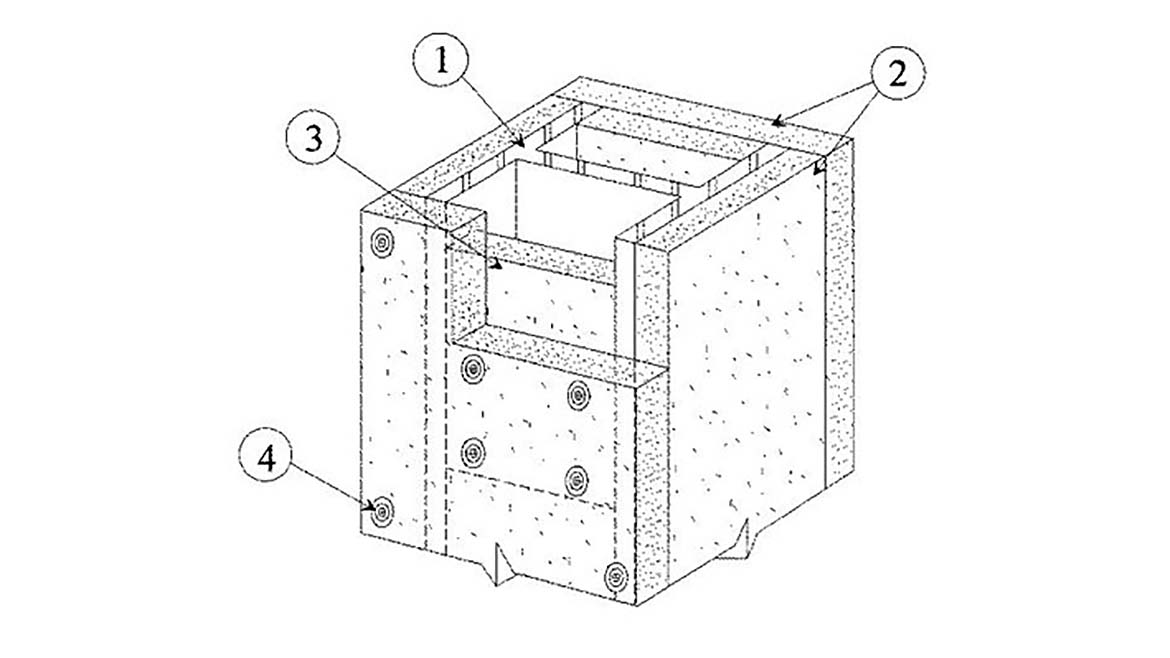
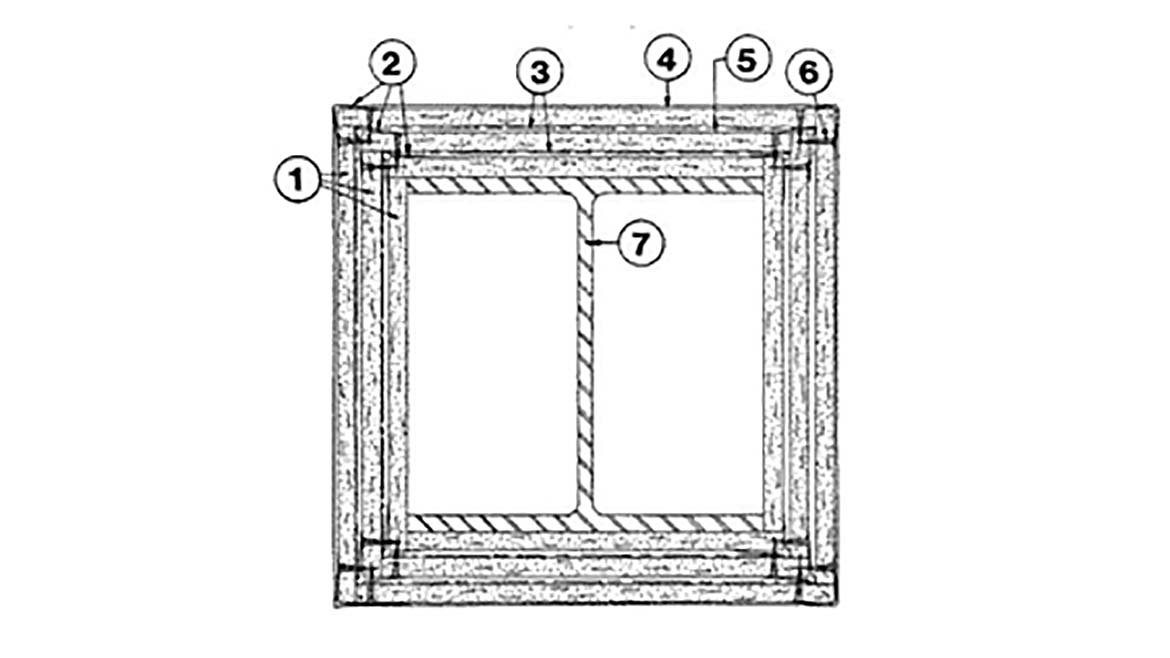
Fire-resistance is determined by furnace fire testing building elements and assemblies as a system. The beam, column or horizontal assembly are tested as an individual building element or assembly—but still constitute a system.
The fire-test procedures ASTM E119, Standard Test Methods for Fire Tests of Building Construction and UL 263 Standard for Safety of Fire Tests of Building Construction and CAN/ULC-S101, Standard Method of Fire Endurance Tests of Building Construction and Materials are examples of test methods used to determine fire-resistance for SFRM, IFRM, and Boards and Wraps in the world. During tests administered in accordance with these standards, the temperature of the structural building elements can be 1,000 degrees to 1,300 Fahrenheit.
The fire and heat exposure of the test furnace follows a standard time/temperature curve. The beam, column or horizontal assembly is exposed to the furnace temperatures starting at ambient, and then moving to 1,000 degrees F in five minutes, 1,700°F after one hour of exposure, and 2,000 F in four hours. The performance of the assembly is influenced by two factors—the heat transmission through protection materials, and the ability of the protection materials to remain in place. For fireproofing, adhesion of the fireproofing to the substrate is critical.
Fireproofing Products
There are several types of products that can be used as part of a fire-resistance-rated building element or assembly. The objective of the products is to keep the building element or assembly temperature under the point where it will lose the ability to carry a design weight, also known as a load.
Sprayed Fire-Resistive Materials: SFRM’s are gypsum or cement-based plaster like insulative materials, mixed at the jobsite with water. The materials are typically applied using spray methods for speed and production. The SFRM’s can be hand trowel applied for patching as well. The product does not need to expand to work but instead is sleeping police, insulating structural and other building elements from high heat exposures.
Intumescent Fire-Resistive Materials are coating like materials that are laced with an intumescing agent of some kind. Some are very thick, some thin film types. Some are water-based, while others are epoxy or solvent-based materials. Regardless of carriers, the intumescent materials in the products are designed to expand with heat of a fire, forming an insulating char that stays adhered to the structural building element for the duration of the fire-resistance-rating. The materials are installed via spray mostly, but can also be roller applied, if allowed under the manufacturer’s installation instructions.
Boards and Wraps: These materials can be gypsum panels, mineral wool boards of certain densities, calcium silicate boards, endothermic wrap materials, or ceramic fiber wrap materials. Each material must be installed in accordance with the listing and manufacturer’s instructions in order to perform as the listing suggests.
A key thing to remember about boards and wraps is that while they are fire tested under the same test standard, the acceptance criteria for fire-resistance differs – wall to structural building element.

Structural Acceptance Criteria
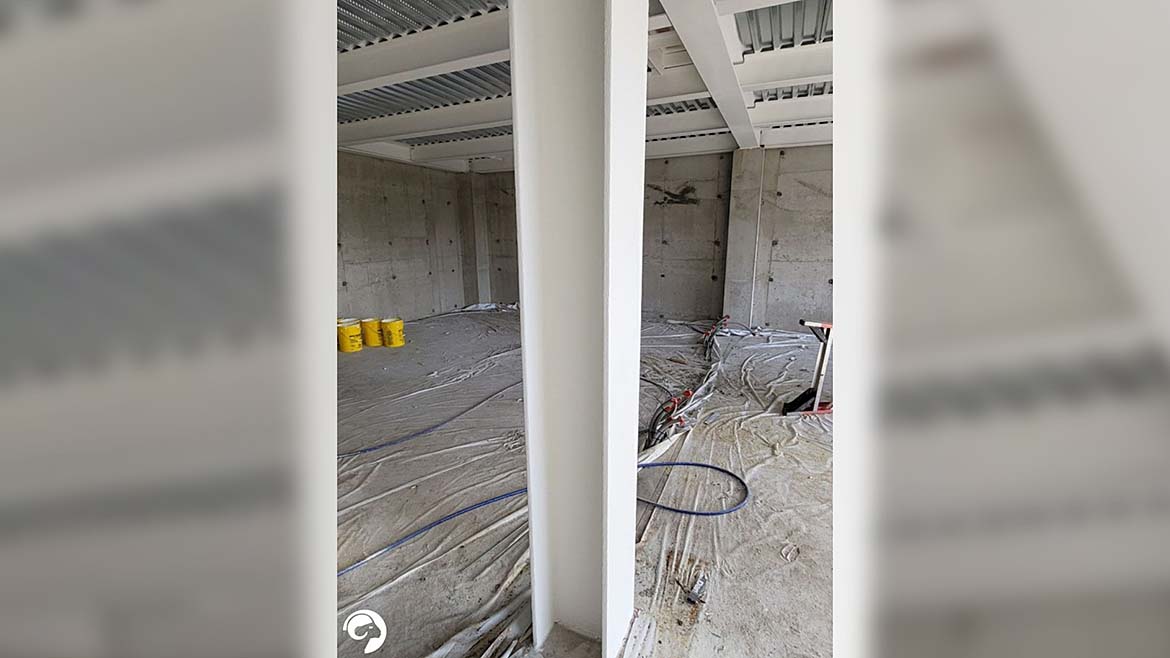
Fireproofing is very important part of a building. It’s so important that the International Building Code’s Chapter 7 has a section devoted to SFRM. Chapter 17 requires special inspection of SFRM, IFRM and other materials that are used as fireproofing in buildings. NFCA developed a Contractor Accreditation Program and UL Solutions/NFCA, reintroduced the UL Qualified Fireproofing Contractor Program. The International Fire Code’s Chapter 7 also has a separate section on maintaining protection for SFRM and IFRM Fireproofing in existing buildings.
Respecting the listings and manufacturer’s instructions is critical to success of a fireproofing project to protect people and property in buildings. Visit www.NFCA-online.org to see this discussion in a webinar format – and for contractors, special inspection agencies, manufacturers and associates that understand what fireproofing does in a building.
As can be seen below, the ASTM E119 or UL 263 fire test standards have multiple functions. The standards are used to fire test walls and floors for compartmentation purposes. The standards are also used for structural functions. Yes, there are multiple acceptance criteria, and they are not to be interchanged, unless tested for both acceptance criteria.
Wall Acceptance Criteria:
- No Passage of Flame to the non-fire exposed side of the assembly from the fire side;
- The average and individual point temperature rise on the non fire side shall not exceed 250°F and 325°F, respectively.
Structural Fire Resistance Acceptance Criteria:
-
Columns, minimum 9-foot sample size, most tested “unloaded”
- The average and individual point temperature of the steel shall not exceed 1,000°F and 1,200°F, respectively
- Support load if load bearing
-
Beams
- Tested in large scale furnace, minimum 12 feet in one direction
- The average and individual point temperature of the steel shall not exceed 1,100°F and 1,300°F, respectively
- And support a load
-
For Floor/Ceiling or Roof/Ceiling Assemblies
- Full-sized furnace, 180 square foot minimum, with 12-foot minimum dimension on one side of the assembly
- No flame passage to the non-fire-side of the assembly
- And support a load
- The average and individual point temperature rise on the non fire side shall not exceed 250°F and 325°F, respectively
Common Questions
From the construction industry that is used to ‘construction tolerances’ being acceptable, it’s important to remember that fireproofing is NOT that way. Listings will state a certain type of beam, column, assembly, size, etc. The only variances that can take place from the listing are those shown in the laboratory guide information, (www.UL.com/PiQ). Certainly there are times where an engineering judgment takes place, but those are the exception rather than the rule. Follow the listing and manufacturers instructions to be safe.
Another question comes up about insulation, air barrier materials and fireproofing. Again, in this industry, if there is no fire-test data to back up a claim, then we have no idea how the insulation or air barrier will affect the fire-resistance rating that’s been established through fire-testing without a product applied either over or under the fireproofing.
Conclusion
Fireproofing, including SFRM, IFRM, and Boards and Wraps, as mandated by building codes, are not a ‘materials’ type application for building structural fire-resistance ratings.
When applied to some assembly in accordance with the fireproofing manufacturer’s instructions and tested based on ASTM E119 or UL 263, fireproofing becomes part of a tested and listed design intended for compartmentation or structural fire protection. Structural protection is what keeps the building from collapsing during fire exposure to the building elements that hold the building up, keeping egress pathways open.
Effective compartmentation happens when six-sided fire-resistance-rated boxes are built, in accordance with the listing and manufacturer’s instructions—protecting against fire (and sometimes smoke) spread in buildings, for life safety and property protection. While some walls serve both structural and compartmentation purposes, we’ll save that for another day’s discussion.
Understanding the acceptance criteria for each—fire resistance as effective compartmentation or as structural fire resistance (based on ASTM E119 or UL 263) is critical to protecting people in buildings.
Looking for a reprint of this article?
From high-res PDFs to custom plaques, order your copy today!



