Walls & Ceilings logo
search
cart
facebook twitter linkedin youtube youtube Spotify Podcasts Apple Podcasts Spotify Podcasts Apple Podcasts
  • Sign In
  • Create Account
  • Sign Out
  • My Account
Walls & Ceilings logo
  • NEWS
  • TOPICS
    • Drywall
    • Stucco/EIFS
    • Ceilings
    • Steel Framing
    • Fireproofing
    • Interior Plaster
    • Building Envelope
    • Insulation
    • Technology
    • Interior
    • Exterior
    • Women In Construction
  • COLUMNS
    • Up Front
    • All Things Gypsum
    • Art & Craft of Plastering
    • Stucco Stop
    • Steel Deal
    • Industry Voices
  • PRODUCTS
    • Buzz Guide
  • EVENTS
    • Industry Events
    • Webinars
    • BUILD Expo
  • MEDIA
    • Videos
    • Podcasts
    • Photo Galleries
    • BUILD26 Videos
    • Take our Quiz!
    • Infographics
  • EXCLUSIVE
    • Newsletters
    • Top 50 Contractors
    • Contractor of the Year
    • State of the Industry
    • W&C Store
    • Market Research
    • CEUs
    • Sponsor Insights
    • Custom Content & Marketing Services
  • DIRECTORY
  • EMAGAZINE
    • eMagazine
    • Advertise
    • Archive Issues
  • SIGN UP!
CeilingsDrywallInteriorSteel Framing

The Importance of Fire Protection in Modern Construction

Designing buildings to be resilient against fire takes collaboration and knowledge.
By Dave Hanrahan
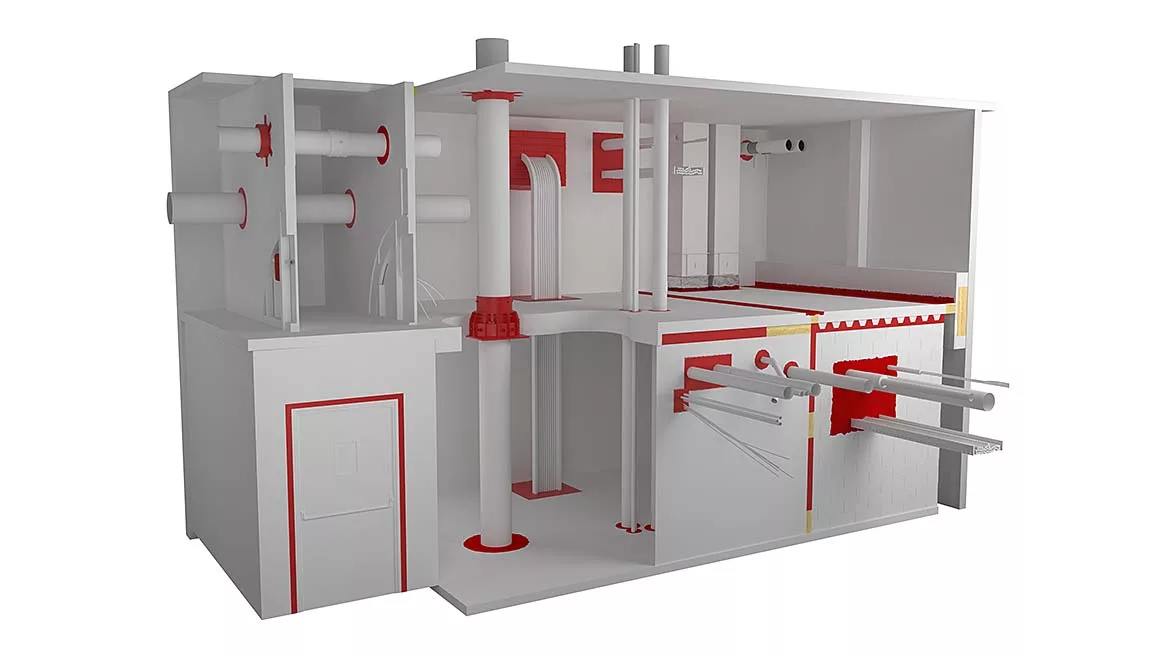
A building Design model using Metalcaulk products
Images courtesy of RectorSeal.
October 22, 2024

The importance of fire protection in modern construction cannot be overstated, especially given the potential consequences of inadequate measures. Investing in fire safety design and implementation is crucial for safeguarding lives and property.

The fire triangle, consisting of heat, fuel and oxygen, is fundamental for understanding the ignition and sustenance of fires. This model explains how fires start and continue to burn and provides insight into how they can be effectively extinguished. The fire can be controlled by removing or disrupting one of the three essential elements—heat, fuel or oxygen.

To some extent, all buildings contain enough heat, fuel and oxygen to potentially start and sustain a fire. The crucial question, therefore, is not whether a fire could occur but how we can control it and minimize the risk of life.

By recognizing how a building’s characteristics influence fire dynamics, we can identify a second critical group of essential elements: design, construction and maintenance. These elements play a vital role in controlling a fire and preventing its spread. However, a failure in any one of these areas, whether it’s through poor design that allows rapid fire to spread, standard or poorly placed/designed construction materials that lack the necessary fire resistance, or inadequate maintenance that leads to malfunctioning safety equipment, can ultimately result in the fire spreading rather than extinguishing.

A man applying Metalcaulk

Designing for Fire Protection

Architectural design can either significantly promote or inhibit the spread of fire. The way a fire develops depends on how effectively it is controlled, so most designers adopt a holistic approach to fire prevention. This approach involves considering all aspects of the building’s design to create an environment that minimizes the risk of fire spread.

By incorporating fundamental concepts, such as active and passive fire protection systems and adhering to general fire safety design principles—including thoughtful floor layouts, strategically placed egress routes and effective compartmentation—designers can create buildings that not only meet safety standards and building regulations, but also significantly reduce the potential impact of a fire. These measures work together to slow the spread of fire, facilitate safe evacuation and ensure that the building remains as secure as possible in the event of a fire, ultimately enhancing overall safety and resilience.

Active vs. Passive Fire Protection

The balance between active and passive fire protection systems is key for creating a fire-safe environment. These systems should be designed to work harmoniously, enhancing each other’s effectiveness. Active systems, both detection and suppression, immediately respond to a fire incident, quickly identifying and addressing the threat. In contrast, passive fire protection is focused on preventing fire spread through the building, using fire-resistant materials and compartmentation to contain the fire and protect structural integrity. This dual approach ensures that buildings are designed not only with aesthetics in mind but also with a strong emphasis on life safety, prioritizing the protection of occupants and the preservation of the building.

Compartmentation is a globally applied principle that denotes the dividing of the structure into fire compartments by means of fire-rated assemblies. Fire-resistant walls, floors and ceilings are designed to prevent the fire from spreading vertically and horizontally throughout the structure for a designated period. These assemblies are highly effective in containing a fire; however, their effectiveness can be significantly compromised when they are breached by building services, such as mechanical, electrical or plumbing systems. While these services are necessary for a building to be functional and habitable, their passage through fire-rated assemblies can create potential weak points, rendering the fire-resistant barriers ineffective if not adequately addressed.

A collar enforced with Metalcaulk

Installing Firestopping Systems

Using appropriate firestopping solutions is critical to maintaining the integrity of these fire-rated assemblies where services penetrate them. These solutions, including fire-resistant sealants, collars and sleeves, are designed to restore the fire resistance of the breached assembly, ensuring that the compartmentation remains intact. Proper installation and maintenance of these firestopping measures are vital to ensure that they perform as expected in the event of a fire, thereby maintaining the safety and effectiveness of the building’s compartmentation strategy. Key considerations for effective firestopping include:

  • Identifying areas where firestops are necessary.
  • Ensuring material compatibility with the surrounding construction materials.
  • Adhering to local, state and national fire safety codes.

It’s also essential to provide accessibility for maintenance to ensure that firestop systems can be inspected and maintained over time.

Additionally, integrating firestop measures seamlessly with other crucial building systems, such as HVAC, plumbing and electrical systems, is essential to maintain the overall safety and functionality of the building. By addressing these considerations, designers and builders can create a comprehensive fire protection strategy that effectively mitigates the risks of fire spread while ensuring long-term safety and compliance.

A Metalcaulk box guard

Firestop Testing

With the wide variety of construction materials and the numerous types of services that can penetrate them, designers often face challenges in selecting the appropriate firestop solutions. Although firestop manufacturers invest significant resources—hundreds of thousands or even millions of dollars annually—in testing their products, it is impossible to cover every possible scenario. For example, a firestop system designed and tested for a combustible pipe made from PVC may not directly apply to an HDPE pipe. The amount of material required or the installation method may differ significantly, even when using the same firestop product.

This variability highlights the importance of thorough fire testing, specific to each application, to ensure compliance with safety standards. Designers must carefully consider the unique characteristics of the materials and services involved in each penetration. Consulting with firestop manufacturers and referencing tested and certified systems for specific materials and configurations is crucial to ensure the firestop solutions are practical and compliant. Ultimately, this approach helps to mitigate the risk of fire spread and ensures that the building’s fire protection measures function as intended.

Other Firestop Resources

When considering firestop solutions for your project, it is advisable to collaborate with a reputable firestop manufacturer. These manufacturers offer valuable support and guidance, drawing from their extensive experience in the field. Many provide design consultations or web-based platforms to assist in selecting the most appropriate firestop systems for specific applications. By leveraging their expertise and resources, you can ensure that the firestop solutions chosen comply with relevant safety standards and are tailored to your project’s unique requirements, enhancing overall safety and effectiveness.

KEYWORDS: architectural design building codes FCIA (Firestop Contractors International Association) firestopping NFPA (National Fire Protection Association) RectorSeal

Share This Story

Looking for a reprint of this article?
From high-res PDFs to custom plaques, order your copy today!

Wc0324 feat rectorseal p5 fireprevent author dave hanrahan headshot

Dave Hanrahan, director of sales and technical for RectorSeal’s international firestop division, oversees operations across Europe, the Middle East and Southeast Asia. With 16 years of experience in fire protection as a mechanical and electrical engineer, he holds certifications in passive fire protection and firestop inspection. A graduate member of the IFE, Dave has excelled in product development, fire testing and business development roles. He is based in Dubai, United Arab Emirates, and serves as general manager for RectorSeal’s rep office.

Recommended Content

JOIN TODAY
To unlock your recommendations.

Already have an account? Sign In

  • Abercrombie & Fitch

    EIFS in 2026: How Specialty Finishes Are Redefining Exterior Wall Systems

    As building codes, owner expectations, and design demands...
    Stucco/EIFS
    By: Regi Mendoza
  • proper air and vapor control

    From Energy Efficiency to Moisture Management: Why Air and Vapor Control Matter

    How proper air and vapor control within building...
    Building Envelope
    By: Benjamin Meyer AIA, LEED AP
  • Linear Metal Ceiling Beam Baffles

    Top 25 Ceiling Contractors of 2026

    Suspended ceilings demand precision, code compliance and...
    Ceilings
    By: John Wyatt and Tanja Kern
You must login or register in order to post a comment.

Report Abusive Comment

Manage My Account
  • eMagazine Subscription
  • Newsletters
  • Online Registration
  • Manage My Preferences
  • Subscription Customer Service

More Videos

Sponsored Content

Sponsored Content is a special paid section where industry companies provide high quality, objective, non-commercial content around topics of interest to the Walls & Ceilings audience. All Sponsored Content is supplied by the advertising company and any opinions expressed in this article are those of the author and not necessarily reflect the views of Walls & Ceilings or its parent company, BNP Media. Interested in participating in our Sponsored Content section? Contact your local rep!

close
  • medical professionals moving a patient on a stretcher through the halls of a medical building
    Sponsored byNational Gypsum Company

    What Does High Performance Mean When It Comes To Gypsum Boards?

Popular Stories

Wichita Biomedical Campus

Wichita Drywall Worker Dies After Scaffolding Fall

Okan Tower in Miami, Florida

OSHA Opens Investigation Into Fatal Okan Tower Column Collapse

Construction workers in safety vests install drywall

Gypsum Sales Hold Amid Market Shifts in the U.S.

data center and logos

USG, Subzero Engineering Form Data Center Alliance

Events

June 24, 2026

The Bright Side & Benefits of Designing with Integrated Lighting

Credits 1 AIA LU/HSW; 0.1 ICC CEU

This course will explore the pivotal role architects and lighting design play in creating safer, more sustainable spaces. Learn how to avoid common lighting mistakes and make informed decisions that create the best visual environment for occupants. 

January 1, 2030

Webinar Sponsorship Information

For webinar sponsorship information, visit www.bnpevents.com/webinars or email webinars@bnpmedia.com.

See our full library of webinars

View All Submit An Event

Products

2026 National Painting Cost Estimator

2026 National Painting Cost Estimator

See More Products

Related Articles

  • EIMA (EIFS Industry Members Association) logo

    Fire-Resistant Roofing and Siding

    See More
  • ALL THINGS GYPSUM

    All Things Gypsum: Firewalls

    See More
  • A ceiling coated with Sprayed Fire-Resistive Material

    Fireproofing - It’s Not Just Materials

    See More

Related Products

See More Products
  • barrys.jpg

    Barry's Advanced Construction of Buildings, 4th Edition

  • 1118749847.jpg

    The Gypsum Construction Handbook, 7th Edition

See More Products

Events

View AllSubmit An Event
  • June 22, 2026

    National Fire Protection Association (NFPA) Conference & Expo

    The National Fire Protection Association has announced that it will hold its 2026 NFPA Conference & Expo in Las Vegas at the Mandalay Bay. The show features a wide variety of 400-plus exhibitors, over 8,000 attendees and 120-plus educational sessions, workshops, and presentations with attendees from 94 countries. Collaborate and network with thousands of fire protection engineers, electricians, firefighters, building and facility managers, manufacturers of safety equipment, government officials, and all other life safety professionals.
View AllSubmit An Event

Related Directories

  • National Fire Protection Assn. (NFPA)

    Known as the trusted source of safety knowledge, the National Fire Protection Association (NFPA) has been helping to solve some of the planet’s toughest safety problems for more than 125 years. To remain relevant for over a century as a knowledge and information organization, we’ve continually evolved our scope of expertise—from fire prevention, wildfire preparedness, and electrical safety to hazardous materials, community risk reduction, and public safety.
  • Specified Technologies Inc.

    STI leads the industry in developing innovative fire protection systems that help stop the spread of fire, smoke and hot gases. For over 30 years, our team has worked hand in hand with the construction industry to create simple solutions to complex firestopping problems.
  • American Institute of Steel Construction (AISC)

    The American Institute of Steel Construction (AISC), headquartered in Chicago, is a non-partisan, not-for-profit technical institute and trade association established in 1921 to serve the structural steel design community and construction industry in the United States.
×

Connect with the industry’s leading resource for unparalleled insights and education.

Join thousands of industry professionals today. Shouldn’t you know what they know?

JOIN NOW
  • RESOURCES
    • Advertise
    • Contact Us
    • Directories
    • Store
    • Want More
  • SIGN UP TODAY
    • Create Account
    • eMagazine
    • Newsletters
    • Customer Service
    • Manage Preferences
  • SERVICES
    • Marketing Services
    • Reprints
    • Market Research
    • List Rental
    • Survey/Respondent Access
  • STAY CONNECTED
    • LinkedIn
    • Facebook
    • Instagram
    • YouTube
    • X
  • PRIVACY
    • PRIVACY POLICY
    • TERMS & CONDITIONS
    • DO NOT SELL MY PERSONAL INFORMATION
    • PRIVACY REQUEST
    • ACCESSIBILITY

Copyright ©2026. All Rights Reserved BNP Media, Inc. and BNP Media II, LLC.

Design, CMS, Hosting & Web Development :: ePublishing
