EIFS With Drainage
Why the Smartest Design Teams Are Switching to Stone Wool EIFS
Meeting demands for fire safety, durability and design versatility in exterior wall systems.
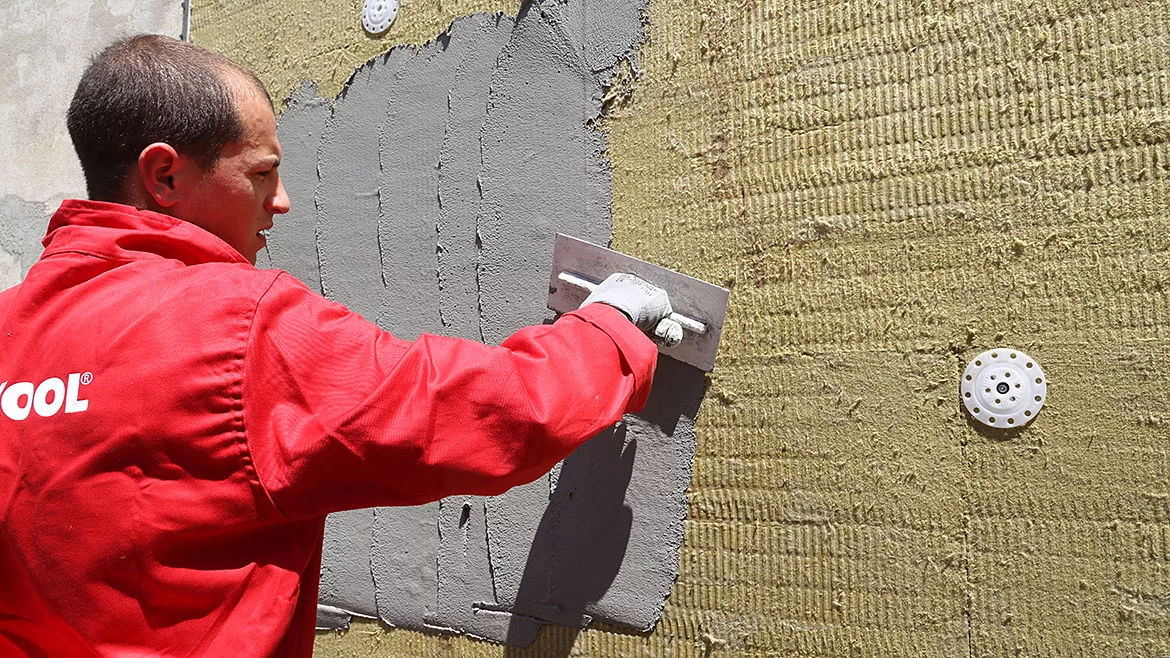
Exterior insulation and finish systems have long offered a compelling blend of energy efficiency, design flexibility, and cost-effectiveness. But as building codes evolve and performance expectations grow more demanding—particularly around fire safety, durability, and carbon reduction—so too must the systems that envelope our buildings.
Some stone wool is a noncombustible insulation material derived from basalt rock that complies with energy codes, mitigates fire risk, and enhances long-term durability.
EIFS where stone wool is integrated is not only code-compliant across all construction types (IBC Types I–V) but they also offer enhanced fire resilience, reliable drainage, acoustic dampening, and dimensional stability that foam-based systems struggle to match.
The Rise of Noncombustible Materials in EIFS
Growing interest in EIFS is reflected in projections that the U.S. market will reach $43.3 billion by 2035, based on a compound annual growth rate (CAGR) of 10.2 percent, driven by greater use in both residential, in particular multifamily, and commercial building renovations. Much of this momentum is driven by the increasing adoption of continuous insulation strategies in energy codes like IECC and ASHRAE 90.1.
Prescriptive codes require CI across nearly all climate zones, pushing design teams toward wall assemblies that perform holistically—not just thermally, but also in terms of fire resistance, moisture control, and long-term durability.
Updates to the 2024 International Existing Building Code prohibit the use of combustible exterior claddings on unsprinklered high-rise buildings (i.e., any buildings with occupied floors >75 feet above lowest fire department access; Section 309.2.1: Automatic Sprinkler Systems). And in dense urban centers such as New York City, building codes now require noncombustible materials for exterior walls exposed to fire from both sides when structures are less than 10 feet apart. These conditions are not uncommon in modern construction—especially in multifamily housing, commercial developments, and retrofits—making material and assembly selection critical.
While code is the minimum requirement, owners and architects are seeking higher performance out of their building envelope—whether new construction or retrofit applications—in order to decrease heating and cooling costs and increase occupant comfort. Owners and specifiers want a durable, resilient product with stable R-value, acoustic properties, and noncombustibility. These expectations have brought renewed scrutiny to how EIFS are designed and what materials they use.
Stone wool insulation products are made from volcanic rock and inherently noncombustible—capable of withstanding temperatures in excess of 1,000 degrees Celsius (1,832 degrees Fahrenheit). They offer a unique solution because, as an ignition-resistant building material, they help reduce flame propagation and flame impingement within exterior wall assemblies. This is particularly valuable for projects within the Wildland Urban Interface and provides IWUIC compliance. Stone wool insulation boards will not trigger NFPA 285 testing and can be specified with confidence; however, code acceptance and EIFS testing requirements may be required due to other components of the system.
Having a noncombustible product available for full systems like EIFS provides design alternatives to specifiers and owners so that they can meet the code or owner requirements. This flexibility is especially valuable in projects where fire safety is a top priority, such as mid- to high-rise multifamily buildings, schools, or buildings near property lines.
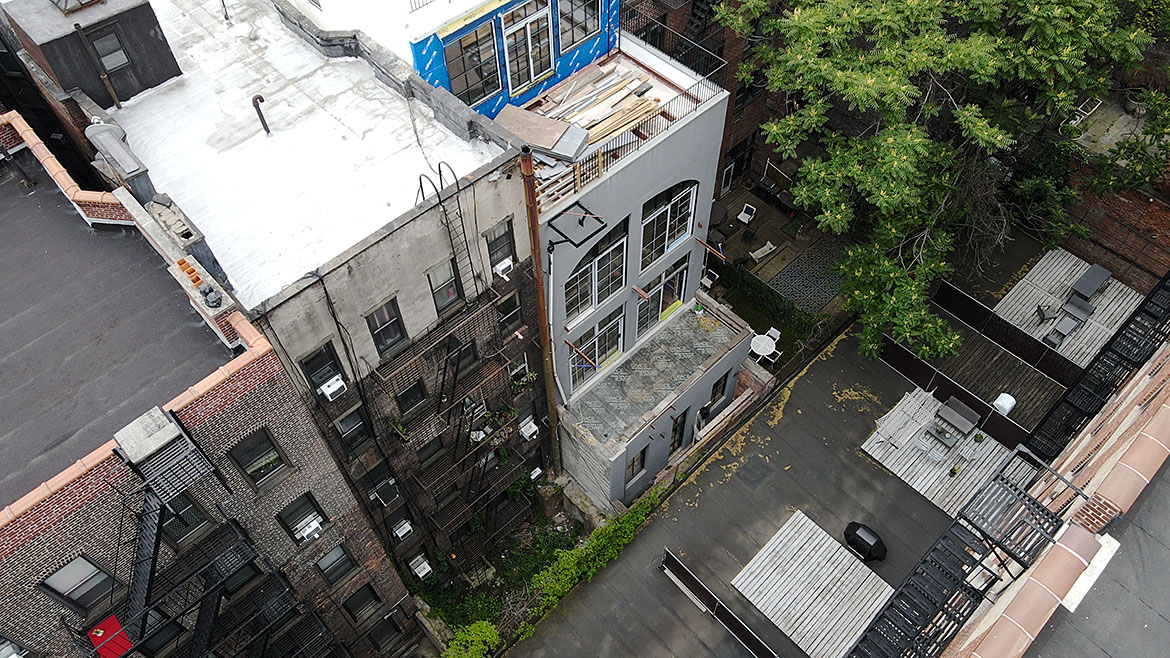
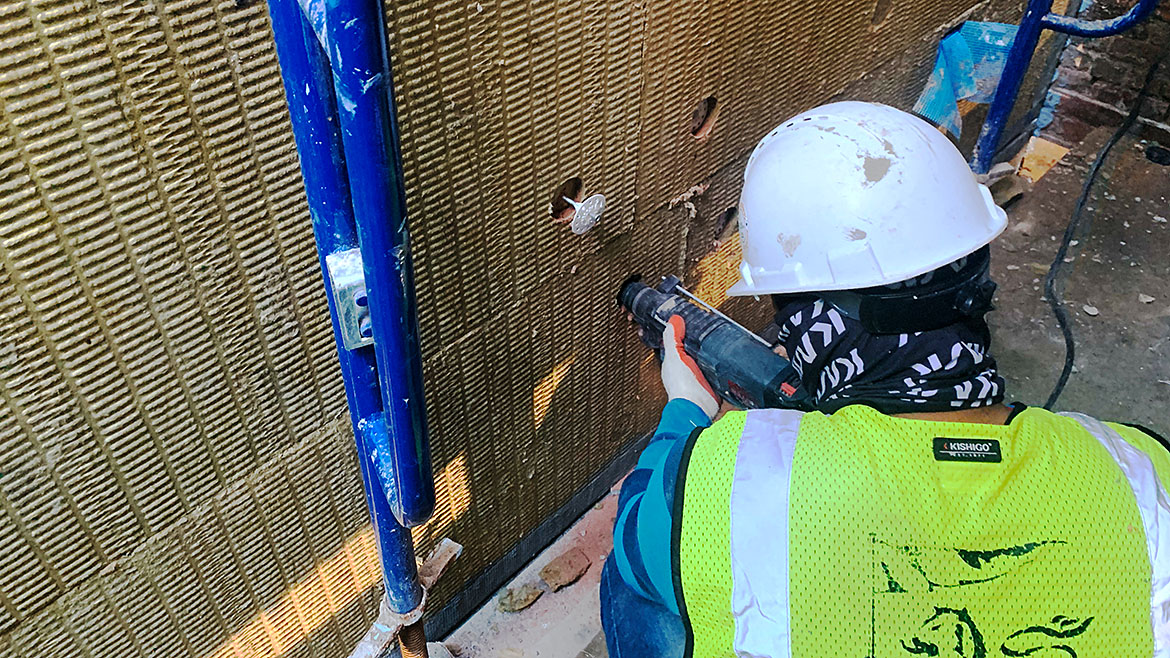
Engine 16 retrofit project was to rehabilitate the mixed-use, multi-family residential building while increasing efficiency, without compromising the historic character. Credit: ROCKWOOL NA
EIFS Wall Assemblies
The core structure of an EIFS wall assembly may appear simple: a substrate, continuous insulation, base coat, mesh, and a decorative finish. But the differences in insulation type and attachment method have significant implications for performance. Many traditional EIFS still use rigid foam plastic insulation (EPS or XPS) with an adhesive attachment.
Stone wool-based EIFS uses both mechanical fasteners and adhesive ribbons—to provide wind load resistance and long-term stability. Vertical ribbons of adhesive create drainage channels behind the insulation layer, complying with ASTM E2273 standards and allowing the wall to dry effectively. Fastener and washer types are dependent on the system holder approvals, insulation thickness, substrate, and targeted wind load resistance.
Fire, Moisture and Impact: Meeting Modern Demands
What is interesting about stone wool is its ability to solve multiple challenges simultaneously. It is:
- Noncombustible and Class A fire-rated, meaning it doesn’t detract from the base wall’s fire-resistance rating (ASTM E119) and is exempt from many flame propagation tests required for combustible assemblies.
- Vapor permeable, allowing walls to dry effectively—critical in high-humidity or leak-prone environments.
- Durable and dimensionally stable, withstanding long-term exposure to heat and ultraviolet light, freeze/thaw cycles, termites, and reflected light without warping or cracking.
- Acoustically beneficial, achieving STC values up to 51 and OITC up to 36 in tested assemblies over steel framing, helping improve occupant comfort in urban or high-traffic zones.
- Impact resistance: stone wool while less rigid than rigid foam, offers increased flexibility to rebound which may enable the product to improve impact resistance in an EIFS application, when similar basecoat and mesh laminas are used.
Real-world applications, such as the Ken Soble Tower retrofit in Hamilton, Ontario and Engine 16 in New York City, have demonstrated how EIFS with stone wool can contribute to dramatic improvements in energy performance, indoor thermal stability, and resilience during power outages. In both cases, design teams used stone wool EIFS to support deep energy retrofits, passive survivability, and code compliance without compromising fire safety or design aesthetics.
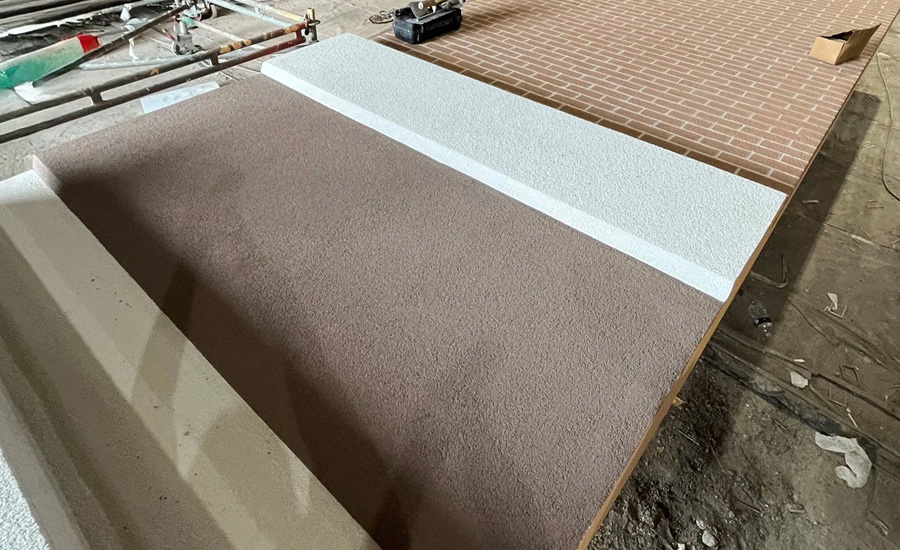
Used to attach insulation panels to the substrate.
Credit: ROCKWOOL NA
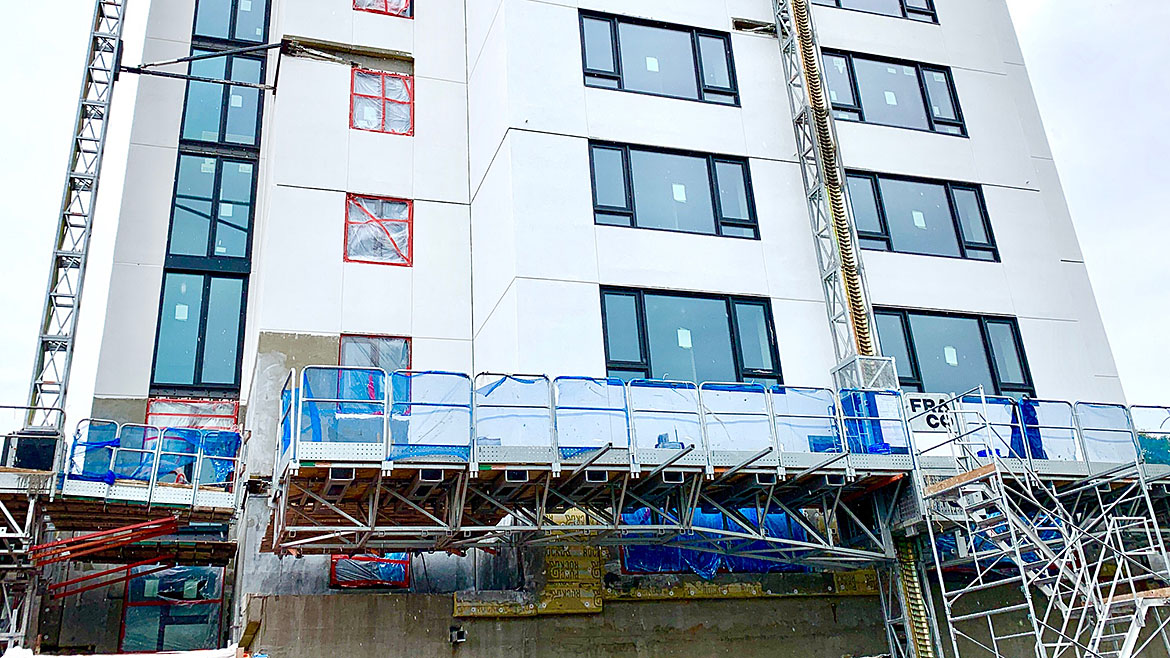
The Ken Soble Tower project sought to rehabilitate a post-war apartment in Hamilton, Ontario. The building was completely upgraded, inside and out, to achieve Passive House standard, reducing greenhouse gas emissions by an impressive 94%.
Credit: ROCKWOOL NA
Design Freedom
Modern EIFS assemblies using stone wool enable bold architectural designs—including recessed features, deep reveals, and even darker finish colors that would risk degrading traditional foam-based systems. Thanks to its high maximum use temperature of 1,200 degrees Fahrenheit (649 degrees Celsius), as per ASTM C411, Standard Test Method for Hot-Surface Performance of High-Temperature Thermal Insulation, stone wool solutions won’t warp or deteriorate under solar exposure or heat build-up from adjacent curtain walls. This figure compares to ~170 degrees Fahrenheit for some rigid foam products installed in EIFS assemblies.
Additionally, EIFS with stone wool insulation supports virtually unlimited finish options—mimicking stone, brick, wood, or metal without the weight or thermal bridging of those traditional materials. Combined with the system’s performance features, this design flexibility makes stone wool EIFS ideal for both performance-driven and visually ambitious projects.
Reveals and bands can also easily be cut into the stone wool boards, which are manufactured specific to the EIFS application. More complex profiles (e.g. trims, cornices, moldings) are often permitted through the third-party approvals from the EIFS manufacturers, to be made from EPS due to feasibility of fabrication and market availability.
A Smarter Path to the Perfect Wall
EIFS with stone wool aligns closely with the “Perfect Wall” concept, incorporating the four control layers essential to high-performance enclosures: air, vapor, thermal, and water/moisture. With the addition of a fluid-applied WRB, mechanically fastened CI, and a finish system designed to shed water while retaining drying ability, these systems check every box for modern envelope performance.
And with systems tested to more than 40 industry standards (UL, ASTM, ANSI, NFPA), specifiers can be confident they’re not trading off performance for innovation.
EIFS with stone wool insulation represents more than an incremental upgrade—it’s a forward-looking solution that directly addresses the multifactorial challenges today’s building envelopes must solve. From code compliance and safety to durability and sustainability, stone wool helps design teams create resilient, beautiful buildings that stand the test of time.
You can specify stone wool EIFS with confidence—knowing it’s a smart, safe, and high-performing choice for the next generation of wall systems.
Looking for a reprint of this article?
From high-res PDFs to custom plaques, order your copy today!

.webp?height=96&t=1757427632&width=96)