Safety Guidelines
A Guide for Using MEWPs in Wall and Ceiling Applications
Safe MEWP operation requires consistent inspections, environmental awareness, equipment maintenance, fall protection, and operator leadership to ensure safety in wall and ceiling construction.
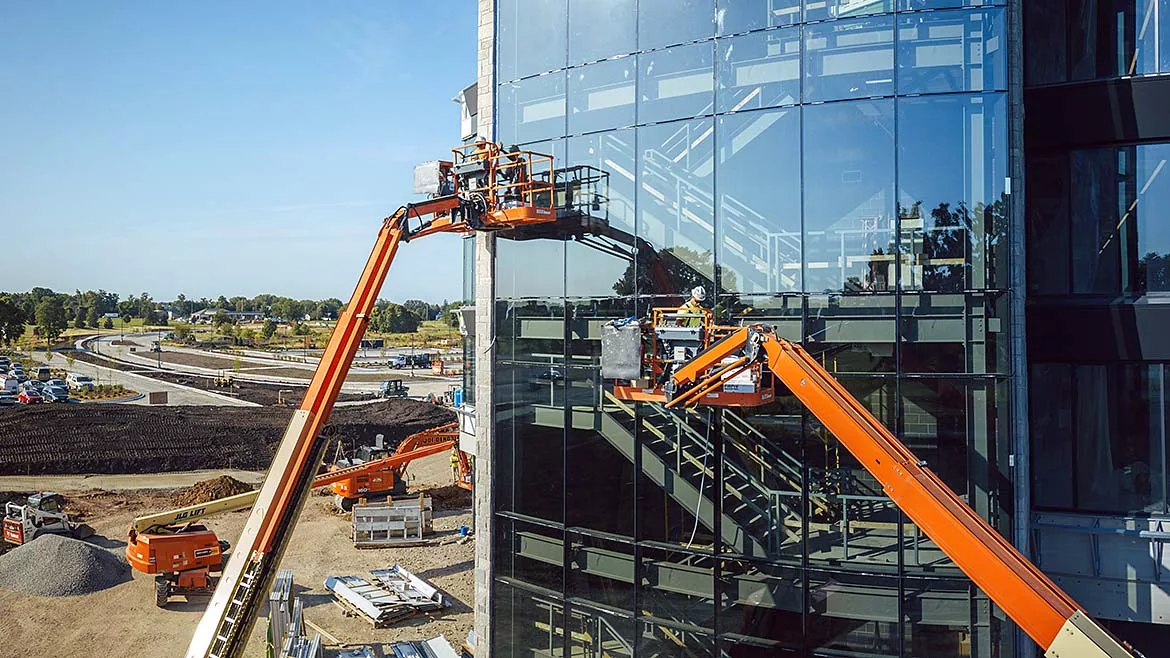
Mobile elevating work platforms are essential in wall and ceiling construction applications, but their safe use requires strict adherence to inspection routines, environmental limits, tire and rim maintenance, parking and transport procedures, fall protection, and specialized safety practices. Industry standards mandate annual machine inspections to verify safe operation, while operators must also account for weather extremes by using proper fluids and equipment packages suited to cold or hot conditions.
For contractors, architects, suppliers, and distributors engaged in drywall, plaster, ceiling, steel framing, insulation, stucco, fireproofing, and related construction technologies, the safe operation of mobile elevating work platforms is an essential priority.
These machines provide access to elevated work areas and help workers complete tasks efficiently, but they also present risks if not used correctly. Ensuring safety begins with operators, who must not only follow procedures themselves but also reinforce and communicate them to crews and other personnel on the job site. A strong safety culture surrounding MEWPs relies on consistent training, inspection, and attention to detail throughout every stage of operation.

Photo: JLG
Operator/Owner Responsibilities
One of the most critical responsibilities tied to MEWP operation is ensuring that machines undergo proper inspections. Industry standards require annual machine inspections no later than thirteen months after the previous inspection. This means every operator must verify that inspections are up to date before using equipment. It also means confirming that any open safety bulletins have been resolved and that any problems identified during prior inspections have been corrected before the machine is returned to service. Skipping or delaying these steps exposes operators and crews to unnecessary hazards.
Another key aspect of MEWP safety is awareness of environmental conditions. These machines are often called upon to perform in demanding climates and temperatures, yet each unit is designed with limits for safe operation.
Most MEWPs function properly within a range of 0 degrees Fahrenheit (-20 degrees Celsius) to 104 degrees Fahrenheit (40 degrees Celsius). Working outside this range can cause performance issues and even failure. In cold environments, operators may need to rely on special cold-weather packages and select engine and hydraulic oils designed for low temperatures. At the other extreme, high temperatures can stress hydraulic systems, making it necessary to use oil coolers and monitor temperatures carefully to prevent overheating. Operating in weather beyond the recommended range, whether extremely cold or excessively hot, compromises both worker safety and machine reliability.
Proper Maintenance
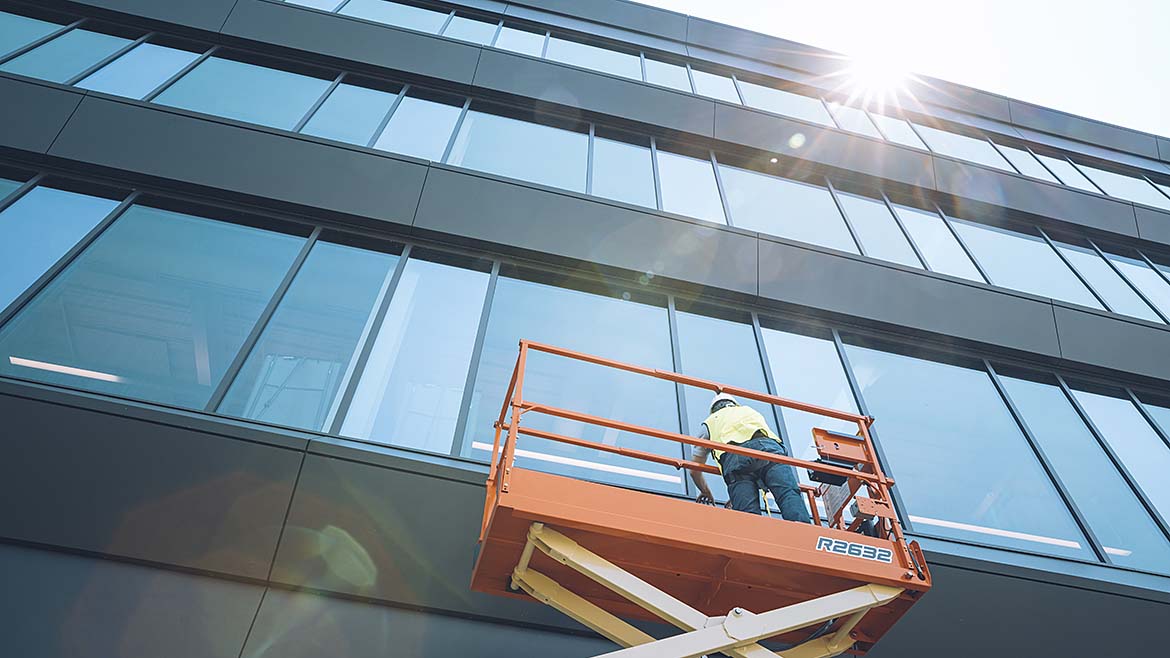
Photo: JLG
Proper tire and rim maintenance is another factor that directly affects stability and safety when working at height. Tires provide the only point of contact between the MEWP and the ground, and their condition directly influences machine balance. Operators are expected to check tire condition daily as part of pre-operation inspections, making sure pressure is maintained according to the manufacturer’s specifications and that foam-filled tires are free from cuts or damage.
Worn or damaged tires must be replaced immediately, and replacements must match original specifications for size, ply rating, and load capacity. Using unauthorized materials or substitute tires can reduce performance and create serious risks on the job site.
Once operations conclude, parking procedures must also be handled with care. Simply leaving a machine unattended without proper precautions can expose both equipment and personnel to avoidable dangers. Safe parking involves choosing a secure location, retracting and lowering the boom fully, shutting down controls systematically, and engaging emergency stops.
Operators should also switch platform and ground controls to the “off” position and protect panels from environmental exposure. In situations where space limitations require parking with a raised boom, operators must ensure it remains fully retracted to minimize hazards.
Transportation introduces its own set of safety challenges. Moving MEWPs between job sites demands careful preparation and adherence to both manufacturer guidelines and best practices. Before transport, the unit must be placed in its stowed position, with turntable locks engaged if present. Machines should only be tied down using designated anchor points and with tie-down equipment rated for the machine’s weight. All loose items must be removed before transport. When lifting a MEWP, operators must attach lifting devices only to approved points, ensure lifting equipment is rated appropriately, and keep the machine level during movement. Again, no loose materials or tools should remain on the platform during lifting.
Fall Protection is Paramount
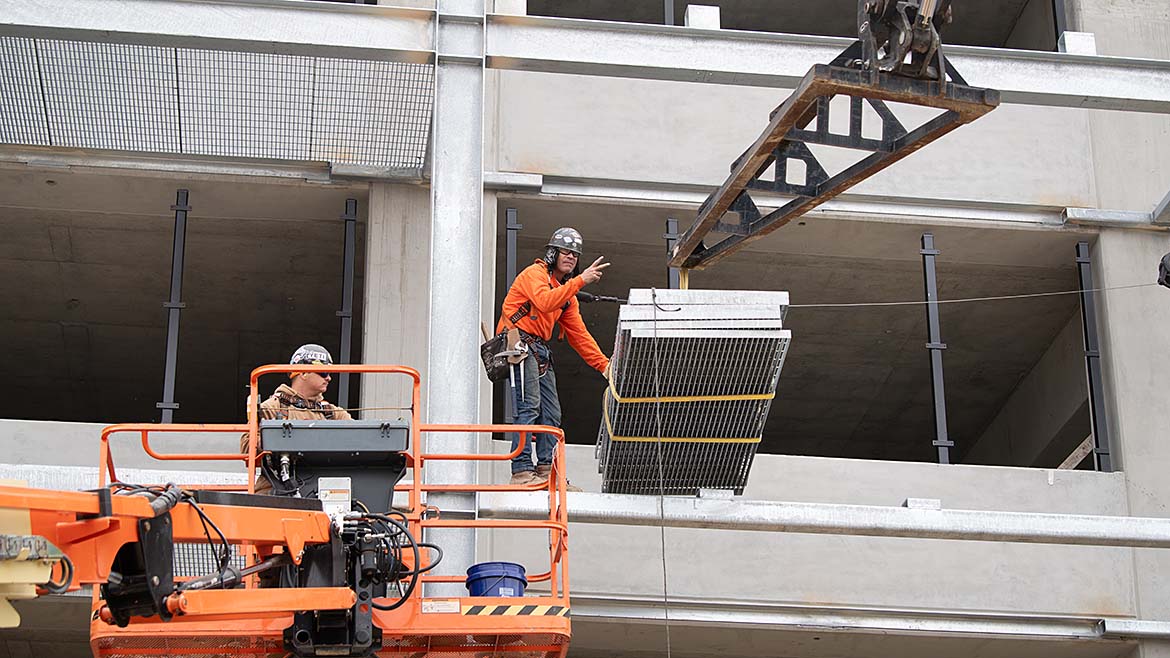
Photo: JLG
Fall protection is central to MEWP operation. These machines are designed to elevate workers, and with that comes the inherent risk of falling. On boom lifts, operators and passengers are required to wear full-body harnesses attached to manufacturer-approved anchorage points, with each person using a separate attachment point. For scissor lifts and vertical mast lifts, fall protection may not always be required by regulation, but it is strongly recommended. Operators must follow manufacturer instructions and implement restraint systems when specified, while also respecting limits on lanyard lengths.
Certain specialized applications require heightened precautions. For instance, when a MEWP is operated from a barge, additional risks come into play. The barge must be large enough to support the footprint of the machine, must remain within a one-degree list and trim, and must be secured against movement. Operators working over water must wear personal flotation devices, and all normal inspection and safety protocols still apply. In these cases, the machine should also be secured to the barge and drive functions disabled except during loading and unloading.
Another moment of heightened risk occurs during platform transfers, when operators move from the MEWP platform onto an adjacent structure. To reduce the chance of falls, the platform must be positioned no more than one foot away from the structure. Operators must use a two-lanyard system to maintain 100% tie-off during the transition, ensuring one attachment point is secure before disconnecting the other.
Job sites also frequently present uneven ground, requiring operators to use cribbing to stabilize the MEWP. Only manufacturer-approved cribbing methods should be used, and operators must confirm that the ground can support maximum loads. Slopes exceeding five degrees are unsafe for cribbing, and only two wheels on the same side or end of the machine should be raised at one time. Drive and steer lockout procedures must be engaged, and materials must meet strength and durability standards. Cribbing should never exceed manufacturer-specified height limits and should only be used when explicitly permitted by the machine’s design.
Across all of these scenarios, the operator plays a central role in ensuring safety. This role goes beyond technical operation; it includes staying current with industry standards, completing regular training, communicating clearly with team members, and ensuring procedures are documented and enforced. By maintaining high standards and prioritizing consistent, safe practices, operators protect not only themselves but also their coworkers, creating a safer and more productive job site overall.
Looking for a reprint of this article?
From high-res PDFs to custom plaques, order your copy today!