Designing a Dream: How One Building Science Expert Built a Climate-Resilient Home in the Arizona Desert
Smart building envelope design and the right fastening approach made this desert home efficient and resilient.
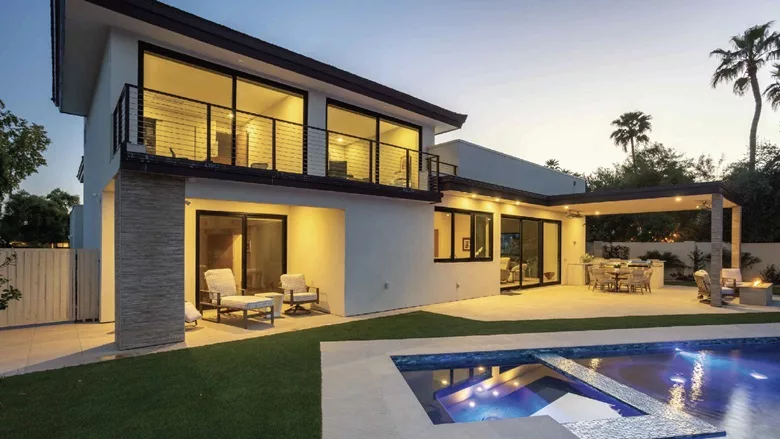
When Steve Easley, an internationally recognized building science consultant, set out to renovate his personal residence in Scottsdale, Arizona, it put his decades-long career spent both in the field and as an educator championing high-quality, efficient, sustainable building practices to the test. Easley and his wife, Susan Raterman, an indoor air quality expert, envisioned a home that could thrive in the Southwest’s unforgiving climate while setting a new standard for design.
They aimed to transform their 4,400-square-foot home into a model of efficiency, health, and climate resilience, which Easley calls a “net-zero demand” house. It would not only generate its own energy but use it efficiently, leveraging demand-side energy management systems that can shift loads by doing things like preheating spaces and water. This goes beyond a “net-zero” energy house by optimizing how and when energy is used. Their ultimate goal was to build a home that could stand up to the extreme heat and long dry seasons for decades, while keeping indoor temperatures stable and utility bills low.
“When it comes to living in Arizona, the goal is to always beat the heat, but the challenge is doing that efficiently,” Easley said.
Indeed, building a sustainable dream home in the Arizona desert comes with unique challenges. With searing summer temperatures that routinely top 105°F, Scottsdale is no place for shortcuts. A resilient, high-performance building envelope was necessary. And with a local construction labor shortage, every element had to be fast, intuitive, and low-maintenance.
A Building Envelope Designed for the Desert
Easley designed a high-performance building envelope comprised of 2x6 walls insulated to R35 with 3 inches of open-cell foam and 2 inches of closed-cell foam. Continuous exterior insulation and a drainable weather-resistant barrier completed the envelope, capped off with synthetic stucco cladding attached through a wire lath system for a clean aesthetic.
Integrating all these high-performance layers required thoughtful detailing, especially when it came to fastening. Traditional fasteners like crown staples or generic screws often fall short in high-performance construction. They can compress materials like lath, degrade weather barriers, and allow air or water to sneak in—issues that snowball into bigger problems over time. Improperly installed fasteners can have the same effect, reducing energy efficiency and long-term durability. That wasn’t a risk Easley was willing to take.
Another challenge was that Scottsdale’s rapid growth has fueled a construction boom, but the local labor pool hasn’t kept pace. That meant every product used in the build had to be installed quickly, reliably, and with minimal risk of error.
“I needed a product that would not only maintain the integrity of the building envelope but also something that would be easy to install and not be a strain on labor,” Easley said.
Fastening Complex Envelope Layers Without the Fuss
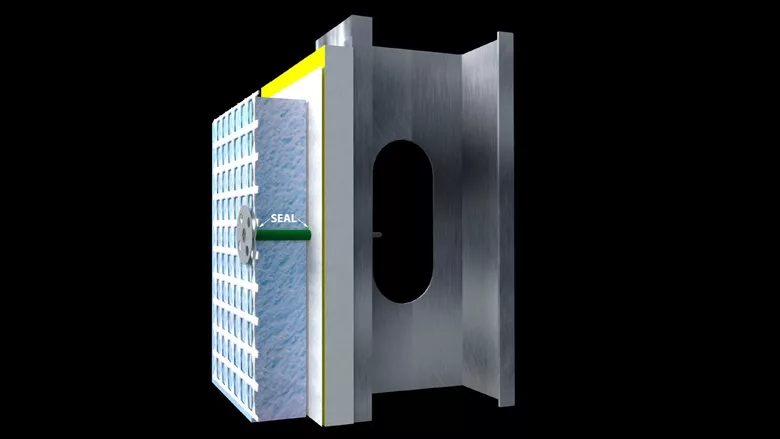
He turned to TRUFAST’s Thermal-Grip TubeSeal for the insulation attachment and Grip-Plate TubeSeal for the lath attachment because he’d seen firsthand how their products performed in the field and how they simplified complex installations without compromising on performance. “The solution works perfectly for insulation and lath applications,” Easley stated. “The way these products are designed shows a deep understanding of building envelopes and the current state of the construction industry.”
The fasteners proved to be a good fit for the project’s needs. Their UV resistance made them well-suited for prolonged exposure during construction in Arizona’s climate. The integrated TubeSeal feature helped maintain the integrity of the building envelope by reducing the potential for air and water intrusion at fastener points. Pre-assembled with self-drilling or HiLo screws, they also simplify installation into both steel and wood substrates, helping to make the most of the available labor.
Easley and Raterman put their building science expertise to work to build smarter. Their renovation shows how a well-thought-out design, combined with the right materials and approach, can lead to a sustainable, efficient home even in a tough climate like Arizona.
Looking for a reprint of this article?
From high-res PDFs to custom plaques, order your copy today!