Walls & Ceilings logo
search
cart
facebook twitter linkedin youtube youtube Spotify Podcasts Apple Podcasts Spotify Podcasts Apple Podcasts
  • Sign In
  • Create Account
  • Sign Out
  • My Account
Walls & Ceilings logo
  • NEWS
  • TOPICS
    • Drywall
    • Stucco/EIFS
    • Ceilings
    • Steel Framing
    • Fireproofing
    • Interior Plaster
    • Building Envelope
    • Insulation
    • Technology
    • Interior
    • Exterior
    • Women In Construction
  • COLUMNS
    • Up Front
    • All Things Gypsum
    • Art & Craft of Plastering
    • Stucco Stop
    • Steel Deal
    • Industry Voices
  • PRODUCTS
    • Buzz Guide
  • EVENTS
    • Industry Events
    • Webinars
    • BUILD Expo
  • MEDIA
    • Videos
    • Podcasts
    • Photo Galleries
    • BUILD26 Videos
    • Take our Quiz!
    • Infographics
  • EXCLUSIVE
    • Newsletters
    • Top 50 Contractors
    • Contractor of the Year
    • State of the Industry
    • W&C Store
    • Market Research
    • CEUs
    • Sponsor Insights
    • Custom Content & Marketing Services
  • DIRECTORY
  • EMAGAZINE
    • eMagazine
    • Advertise
    • Archive Issues
  • SIGN UP!
InsulationInterior

Continuous Insulation and Code Requirements: How Codes Address Continuous Insulation

Continuous insulation creates a continuous thermal barrier around a building’s exterior, reducing thermal bridging, improving energy efficiency, and meeting modern code requirements in many climate zones.

By Clark Larson
A man installing an insulation panel
Photo: welcomia / iStock / Getty Images Plus via Getty Images.
November 19, 2025

Building codes such as the International Energy Conservation Code address exterior continuous insulation by requiring specific R-values based on climate zones. A continuous layer of CI helps prevent thermal bridging, reduces condensation in wall cavities, and improves overall energy efficiency. Designers and builders can meet thermal performance requirements either by installing the prescribed amount of exterior continuous insulation or by combining cavity insulation with CI. 

Recent versions of the IECC and ASHRAE Standard 90.1 require one to four inches of exterior continuous insulation depending on climate zone—even in warmer regions where foam board insulation was not previously mandated. 

So, is continuous insulation required by code? The answer is yes in many areas that have adopted the IECC 2021. Under this version, continuous insulation is mandatory for uninsulated wood-frame walls across most climate zones.

A map detailing 7 different U.S climate zones

Map: Master Wall Inc.

Energy Codes

  • Codes
    • IBC/IRC (2018)
    • ASHRAE 90.1 (2019)
    • IECC (2018)
  • Establish standards for air and water barriers
  • Also requires continuous insulation in certain climate areas

The International Energy Conservation Code (IECC) sets the minimum R-values for continuous insulation, and you can find summaries and information on the U.S. Department of Energy's website.

Climate Zones

Building codes divide the U.S. into climate zones based on temperature. Colder zones require more insulation, while warmer zones require less. 

Prescriptive vs. Performance Paths

The IECC allows two approaches to compliance: 

Prescriptive Path: Specifies exact insulation values for cavity and continuous insulation by wall type. 

Performance Path: Provides flexibility by allowing energy efficiency targets to be met through alternative methods, which may or may not include CI. 

The critical distinction of continuous insulation is that it wraps the “entire” exterior of the wall, including the studs. By enclosing framing members, CI eliminates or greatly reduces thermal bridging. 

Different options for continuous insulation

Image: Master Wall Inc.

Continuous Insulation Options

  • Extruded Insulation (Type X)
    • Slightly better R-value at R-5/inch
    • Must be shaved for adhesion
    • Limited availability, much higher cost
  • GPS (Graphite)
    • Slightly better R-value at R-5/inch
    • Costs more
    • Greater attention to detail required due to movement (must be fastened)
  • Polyisocyanurate
    • R-value of 5.7/inch
    • Must be mechanically attached
    • More expensive/cannot be rasped
  • Mineral Wool
    • The newest option, noncombustible
    • Expensive/cannot be installed the same way

IECC and ASH RAE set requirements for Cl via performance or prescriptive means Type II, Type IV better compressive and R-values. GPS and XPS is the original Cl in Cl stucco assemblies and the most commonly used

Why Continuous Insulation Matters

  • Reduces Thermal Bridging: In standard framed walls, wood or metal studs act as "thermal bridges," allowing heat to bypass the insulation. CI provides a continuous layer of insulation on the exterior of the framing, creating an unbroken thermal barrier.  
  • Boosts Energy Efficiency: By minimizing thermal bridging, CI significantly improves the overall thermal performance of the building envelope, leading to lower heating and cooling costs.  
  • Enhances Durability: CI keeps the building's sheathing warmer, especially in cold climates, which reduces the risk of condensation forming behind the sheathing. This prevents moisture-related problems like mold growth and structural deterioration. 

Thermal bridging significantly reduces a wall’s effective R-value. For example, a wall insulated to R-20 with steel studs can perform closer to R-5 once thermal bridging is accounted for. Adding CI dramatically increases effective performance by maintaining a continuous thermal barrier. 

Key Benefits of CI:

  • Eliminates thermal bridging 
  • Improves energy efficiency and reduces heating/cooling costs 
  • Keeps sheathing warmer, reducing condensation and moisture risks 
  • Enhances building durability and lifespan 
  • Integrates air, vapor, and weather-resistive barriers 
  • Ensures compliance with modern energy codes 
Different options for continuous insulation

Image: Master Wall Inc.

Conclusion

Continuous insulation is applied to the exterior framing of a building rather than between studs, creating an uninterrupted thermal barrier around the structure. By addressing energy efficiency, moisture protection, and code compliance, CI provides significant advantages over traditional insulation methods.
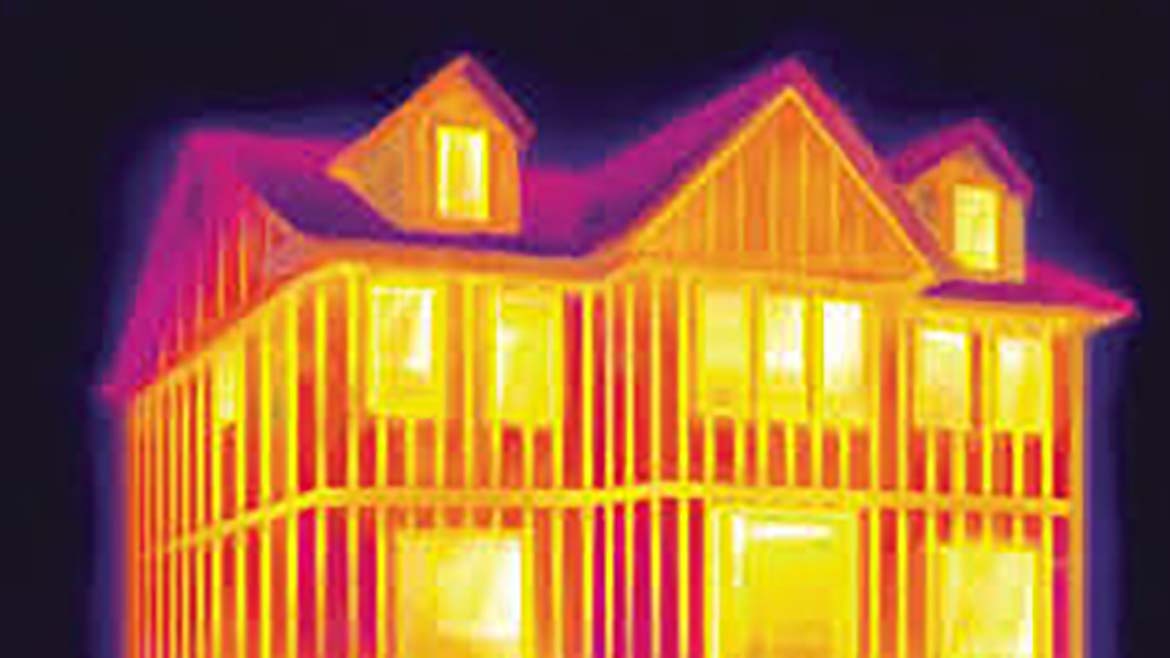

Thermal Imaging Thermal Imaging

Image: Master Wall Inc.

KEYWORDS: building codes CI (continuous insulation) energy efficiency environmental impacts IECC (International Energy Conservation Code) R-value thermal barrier thermal bridging

Share This Story

Looking for a reprint of this article?
From high-res PDFs to custom plaques, order your copy today!

Wc1125 feat masterwall author clark larson cl head shot color (2)
Clark Larson is Southeast Architecture & Design Manager/Co. Director Strategic Partnerships U.S. for Master Wall Inc. Since entering the construction industry, he has held various positions, including area sales rep, architectural specialist, construction design manager/strategic accounts manager. In his current role, Larson has been assigned to the southeast team within Master Wall Inc., whose job is to service the top Architectural firms across the U.S. This support extends to helping these internationally recognized firms with Master Wall Products and solutions for its work both domestically and abroad. He is an active member of CSI, AIA, FPC and FWCCA.

Recommended Content

JOIN TODAY
To unlock your recommendations.

Already have an account? Sign In

  • Abercrombie & Fitch

    EIFS in 2026: How Specialty Finishes Are Redefining Exterior Wall Systems

    As building codes, owner expectations, and design demands...
    Stucco/EIFS
    By: Regi Mendoza
  • proper air and vapor control

    From Energy Efficiency to Moisture Management: Why Air and Vapor Control Matter

    How proper air and vapor control within building...
    Building Envelope
    By: Benjamin Meyer AIA, LEED AP
  • Linear Metal Ceiling Beam Baffles

    Top 25 Ceiling Contractors of 2026

    Suspended ceilings demand precision, code compliance and...
    Ceilings
    By: John Wyatt and Tanja Kern
You must login or register in order to post a comment.

Report Abusive Comment

Manage My Account
  • eMagazine Subscription
  • Newsletters
  • Online Registration
  • Manage My Preferences
  • Subscription Customer Service

More Videos

Sponsored Content

Sponsored Content is a special paid section where industry companies provide high quality, objective, non-commercial content around topics of interest to the Walls & Ceilings audience. All Sponsored Content is supplied by the advertising company and any opinions expressed in this article are those of the author and not necessarily reflect the views of Walls & Ceilings or its parent company, BNP Media. Interested in participating in our Sponsored Content section? Contact your local rep!

close
  • medical professionals moving a patient on a stretcher through the halls of a medical building
    Sponsored byNational Gypsum Company

    What Does High Performance Mean When It Comes To Gypsum Boards?

Popular Stories

Linear Metal Ceiling Beam Baffles

Top 25 Ceiling Contractors of 2026

Wichita Biomedical Campus

Wichita Drywall Worker Dies After Scaffolding Fall

Construction workers in safety vests install drywall

Gypsum Sales Hold Amid Market Shifts in the U.S.

QXO Just Changed the Game-Here's What Contractors Are Asking

QXO Just Changed the Game-Here's What Contractors Are Asking

Events

June 24, 2026

The Bright Side & Benefits of Designing with Integrated Lighting

Credits 1 AIA LU/HSW; 0.1 ICC CEU

This course will explore the pivotal role architects and lighting design play in creating safer, more sustainable spaces. Learn how to avoid common lighting mistakes and make informed decisions that create the best visual environment for occupants. 

January 1, 2030

Webinar Sponsorship Information

For webinar sponsorship information, visit www.bnpevents.com/webinars or email webinars@bnpmedia.com.

See our full library of webinars

View All Submit An Event

Products

2026 National Painting Cost Estimator

2026 National Painting Cost Estimator

See More Products

Related Articles

  • Meeting Energy Code Requirements with Continuous Insulation

    See More
  • Air Cavities as Continuous Insulation

    See More
  • W&C Hosts Continuous Insulation Webinar

    See More

Related Products

See More Products
  • building codes illustated.jpg

    Building Codes Illustrated: A Guide to Understanding the 2021 International Building Code, 7th Edition

  • 2021 ibc.jpeg

    2021 International Building Code® Illustrated Handbook

See More Products

Related Directories

  • ATLAS Roof & Wall Insulation

    With decades of proven performance, Atlas EnergyShield continuous wall insulation provides an uninterrupted thermal barrier over an entire wall, not just in wall cavities between studs. Atlas polyiso creates a versatile, effective barrier for thermal, air, moisture, and vapor control. Whether building a single family home or a high-rise, Atlas EnergyShield wall insulation will meet energy codes and ensure the best building performance.
  • International Code Council (ICC)

×

Connect with the industry’s leading resource for unparalleled insights and education.

Join thousands of industry professionals today. Shouldn’t you know what they know?

JOIN NOW
  • RESOURCES
    • Advertise
    • Contact Us
    • Directories
    • Store
    • Want More
  • SIGN UP TODAY
    • Create Account
    • eMagazine
    • Newsletters
    • Customer Service
    • Manage Preferences
  • SERVICES
    • Marketing Services
    • Reprints
    • Market Research
    • List Rental
    • Survey/Respondent Access
  • STAY CONNECTED
    • LinkedIn
    • Facebook
    • Instagram
    • YouTube
    • X
  • PRIVACY
    • PRIVACY POLICY
    • TERMS & CONDITIONS
    • DO NOT SELL MY PERSONAL INFORMATION
    • PRIVACY REQUEST
    • ACCESSIBILITY

Copyright ©2026. All Rights Reserved BNP Media, Inc. and BNP Media II, LLC.

Design, CMS, Hosting & Web Development :: ePublishing
