Nonresidential Construction Adds 15,700 Jobs in May
Nonresidential construction gained 15,700 jobs in May as demand and public projects drive hiring.
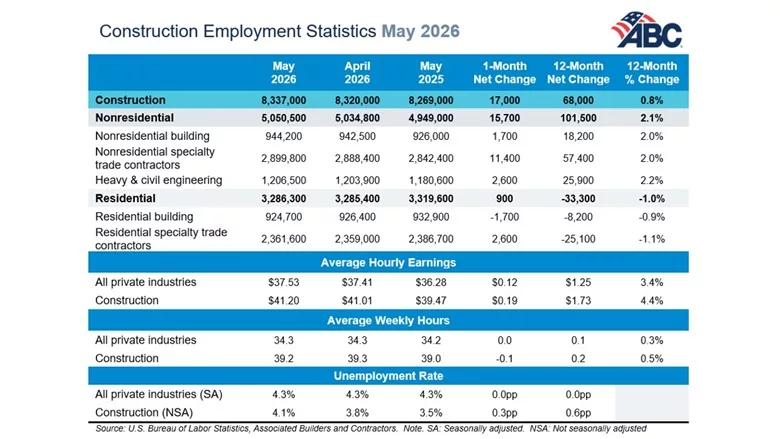
Nonresidential construction employment continued its upward trajectory in May, adding 15,700 jobs as the broader construction industry posted a net gain of 17,000 positions, according to an analysis by Associated Builders and Contractors of newly released U.S. Bureau of Labor Statistics data.
Industrywide construction employment has increased by 68,000 jobs over the past 12 months, representing annual growth of 0.8 percent. Within the nonresidential sector, all three major categories recorded gains during May. Nonresidential specialty trade contractors led the way, adding 11,400 jobs, while heavy and civil engineering construction increased by 2,600 positions and nonresidential building construction added 1,700 jobs.
The construction unemployment rate stood at 4.1 percent in May, remaining below the national unemployment rate of 4.3 percent, which was unchanged both month over month and year over year.
"The construction industry posted healthy job gains in May, especially within the nonresidential segment," said ABC Chief Economist Anirban Basu. He noted that strong demand for data centers and continued investment in publicly funded construction projects are helping fuel employment growth. According to ABC's Construction Confidence Index, contractors also remain optimistic about expanding staffing levels during the next six months.
Basu pointed to a larger trend emerging from the latest employment data: continued strength across the broader U.S. labor market. Economy-wide hiring accelerated to a pace not seen since early 2024, while unemployment remained stable.
At the same time, that resilience may present challenges for construction. Basu cautioned that persistent inflation coupled with a steady labor market could reduce the likelihood of interest rate cuts in the near term. Elevated borrowing costs and restrictive lending conditions are expected to continue pressuring construction activity, particularly for privately financed projects.
Compared to Last Year
While construction employment remains positive, the pace of growth has moderated from a year ago. In May 2025, many contractors were benefiting from the early stages of large-scale federal infrastructure spending, manufacturing reshoring projects and an accelerating wave of data center development. Those drivers remain in place today, but hiring growth has become more targeted rather than broad-based.
The biggest difference from a year ago is the financing environment. In 2025, many contractors were anticipating interest rate relief that could unlock additional private-sector projects. Today, a resilient labor market and lingering inflation concerns have pushed those expectations further out. As a result, publicly funded work, infrastructure projects and data center construction are carrying a larger share of industry momentum than traditional commercial development.
What This Means for Wall and Ceiling Contractors
For wall and ceiling contractors, the strong performance of nonresidential specialty trades is particularly encouraging. The addition of 11,400 specialty trade jobs in May signals continued demand for skilled craft labor and supports a healthy backlog of institutional, healthcare, manufacturing, infrastructure and mission-critical projects. Contractors serving data centers, advanced manufacturing facilities and publicly funded construction programs are likely to see the strongest opportunities through the remainder of 2026.
However, the outlook is not without challenges. Higher borrowing costs continue to slow portions of the private commercial market, making project financing more difficult and extending decision timelines for owners and developers. Wall and ceiling contractors should continue focusing on labor retention, productivity improvements and strategic bidding opportunities while maintaining flexibility to capitalize on growth sectors. The current environment favors firms that can navigate labor constraints, deliver specialized expertise and position themselves in markets supported by long-term public and private investment.
Looking for a reprint of this article?
From high-res PDFs to custom plaques, order your copy today!





