When Designing for Health, Don’t Forget to Look Up
Indoor air, sound, and light shape health more than we realize—smart ceiling materials like stone wool help create safer, more comfortable, high-performing spaces.
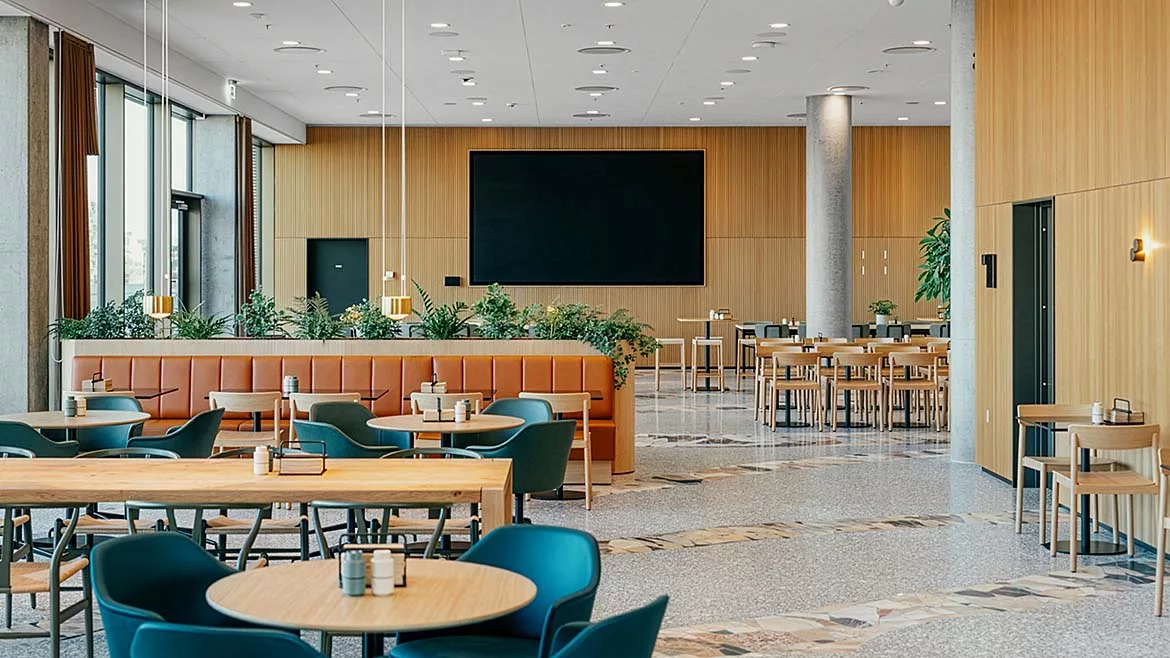
We spend about 90 percent of our lives indoors. If a building isn’t performing well, our bodies and brains notice long before we realize what’s wrong: headaches, fatigue, lack of focus. That’s why the building industry is increasingly treating material choices as health decisions.
Indoor Air Quality
Indoor air can be two to five times more polluted than outdoor air, a startling statistic until you consider all the sources of pollutants:
- Volatile organic compounds
- Humidity and condensation issues
- Mold and mildew hidden in ceiling tiles
Seeing a leak is never ideal, but the upside is that there are materials designed to handle moisture. The right ceiling solutions keep moisture under control with inherent properties without any sustenance for mold and mildew growth. This is where materials can support human health. Opt for a material like stone wool that is mold- and mildew-resistant, water-repellant, humidity-resistant, and fire-resistant. Low-emitting products certified for VOC performance, like stone wool, help keep pollutants out of interior spaces.
Clear testing and documented performance is essential if we want peace of mind from what’s above our heads. One way to ensure performance is by choosing products that are GreenGuard Gold certified and Class A fire-rated.
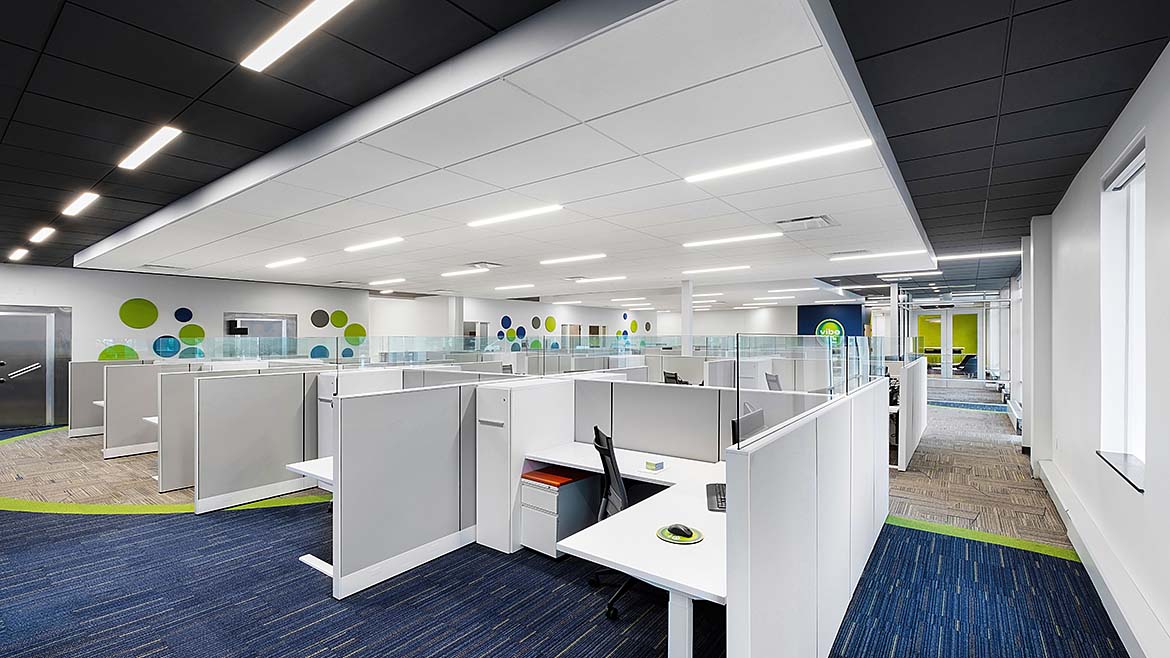
Rockfon Tropic, and Rockfon Color-All in Concrete are thoughtfully layered to provide both aesthetics and acoustics at this bank’s retail space.
Photo: John Magnoski
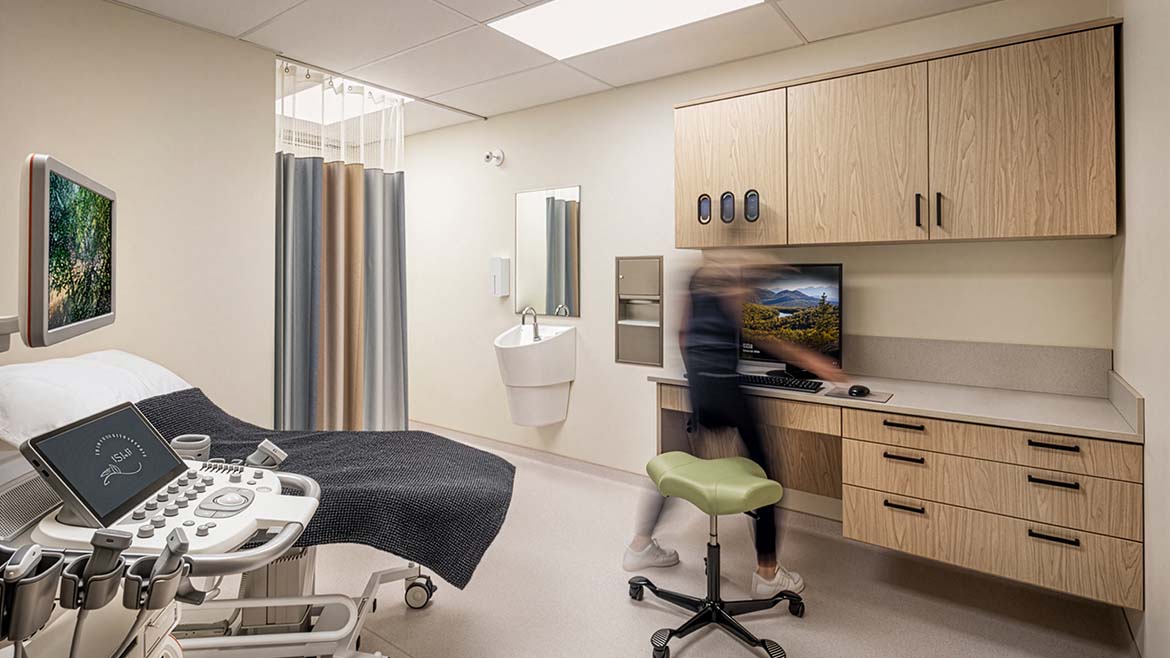
Rockfon Medical Plus ceiling tiles are designed for ISO Class 4 cleanroom environments. They are cleanable, do not support MRSA growth, and meet FGI guidelines ensuring optimal hygiene and performance in demanding healthcare spaces.
Photo: Claude-Simon Langlois
Acoustics
When people think of indoor environmental quality, they sometimes overlook acoustics. People need to feel comfortable in spaces where they live, work, or study. When a space feels right, it’s easier to focus and learn. But if it’s too stressful or overstimulating, it can result in absenteeism, illness, and mental health issues.
In the past decade, designers have focused on environmental sustainability, which is great but cutting back on finishes like soft flooring and suspended ceilings can impact indoor environmental quality and sound. Ceilings play a vital role in managing these acoustical challenges. Perforated metal systems with stone wool infills provide sound absorption without sacrificing design, as part of an acoustic strategy that also includes blocking. Because today, comfort and productivity are very real design outcomes that owners increasingly expect.
Daylight
Sunlight influences everything from mood to circadian rhythm to how alert we feel mid-meeting. Increasing daylight reduces the need for artificial lighting, leading to meaningful energy savings.
Smart specification of stone wool ceiling tiles and panels can help here, too. High light-reflective materials distribute daylight deeper into spaces, reduce glare, and support visual comfort. In education, workplace, and healthcare environments—where people spend long hours indoors—that’s not a minor perk. It’s a strategy for well-being.
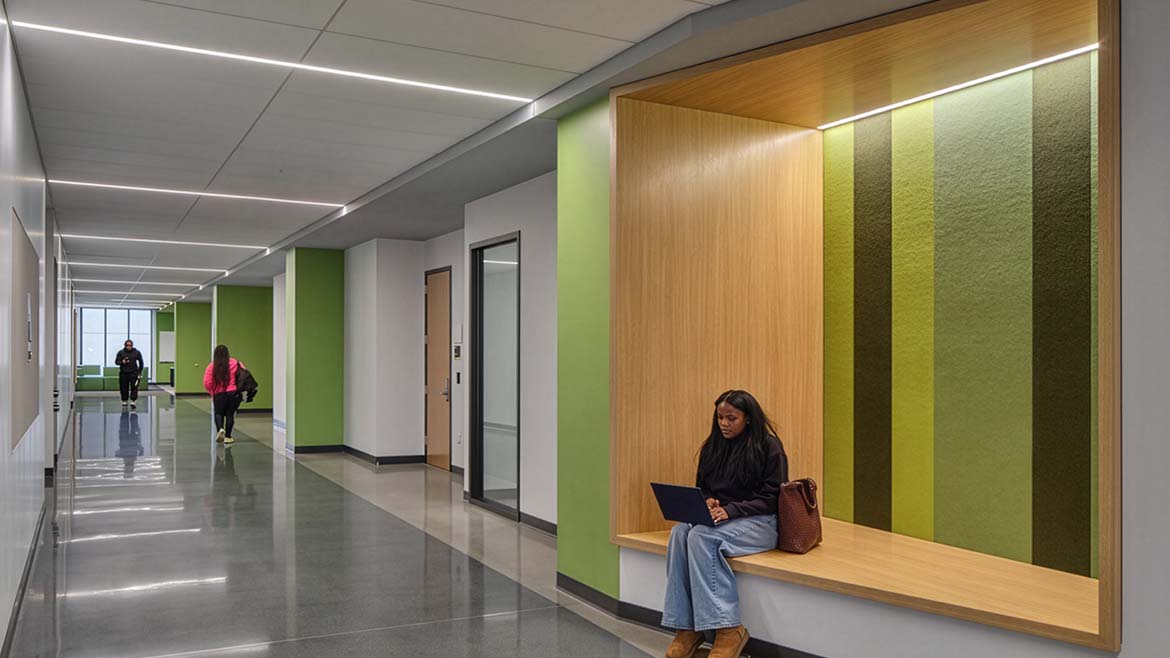
Rockfon Sonar stone wool ceiling panels deliver smooth modern, aesthetics with an excellent acoustic experience. Providing best-in-class sound absorption, Rockfon Sonar and Hygienic Plus acoustic ceiling tiles have a Noise Reduction Coefficient (NRC) of up to 0.90 and higher. The white surface of the panels offers high light reflectance.
Architect & Photo Credit: Perkins & Will
Moving Toward Holistic Sustainability
Sustainability focuses on material transparency and embodied carbon. But focusing on one metric at a time can accidentally create new problems. A low-carbon material that emits more VOCs? A healthy material that’s impossible to recycle? Not so helpful.
Holistic design isn’t about doing more. It’s about making smarter choices that perform well in multiple ways. The ceiling is one of the best places to start. Questions worth asking include:
- How does this product affect air quality?
- Are there any harmful additives or ingredients?
- Can it absorb sound where needed?
- Does it support daylighting strategies?
- What’s the embodied carbon profile?
- Can it be recycled or reused?
Look for a material that answers all of the above positively, like stone wool, and you’re already driving sustainability forward.
Circularity
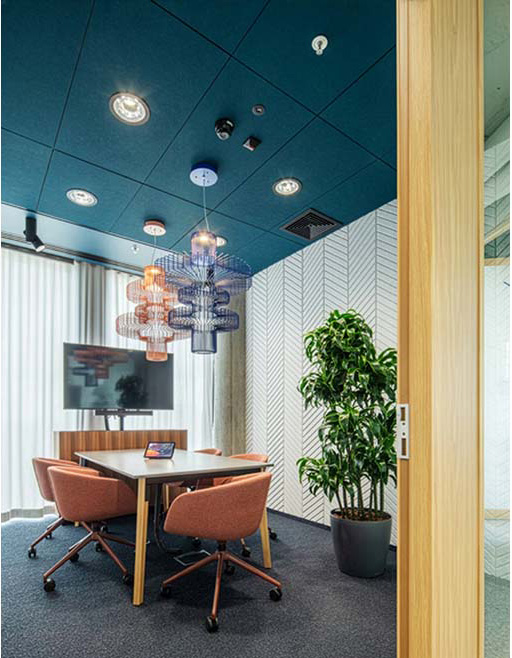
This stone wool ceiling tile features a concealed edge in the biophilic shade Space to support calm, focused office space.
Photo: Rockfon
In a traditional “linear” process, building materials take a one-way trip from manufacturing to jobsite to landfill. The built environment is responsible for 30 to 40 percent of the global waste generation. A circular approach reimagines the journey:
- Use ingredients that are safe and durable.
- Design products that can be repaired, reused, or disassembled.
- Keep materials cycling through multiple lifecycles.
Stone wool is a prime candidate for circularity. It can be recycled into new products without sacrificing performance.
Less landfill waste. Fewer replacement cycles. Lower long-term costs.
Start Simple
The most impactful approach is to start with a few thoughtful material choices. Ceilings are a smart place to start because one specification can influence acoustics, air quality, fire safety, lighting, and long-term durability simultaneously.
Here are practical starting points that support healthier indoor environments:
Look for verified low-VOC materials. Choose verified low-VOC materials made with a substrate that contains no added antimicrobials and no added flame retardants.
- Choose materials that inherently resist mold and moisture. Ceiling products exposed to moisture or high humidity can quietly harbor mold and bacteria over time. Hydrophobic materials—such as stone wool—help minimize that risk without relying on added antimicrobials.
- Prioritize acoustic performance. Materials with high sound-absorbing performance, like stone wool, help reduce unwanted noise, increase speech intelligibility, and improve privacy.
- Consider resilience and safety. Fire-resistant ceiling materials that maintain performance under humidity or wear help ensure buildings remain safe throughout their lifespan, not just the day they open.
- Plan for circularity early. Ask about take-back programs, recyclability, and whether a product can be removed, reused, or reprocessed at end-of-life.
- Use established frameworks as guidance. Standards like WELL, LEED and Mindful Materials offer helpful benchmarks for thinking holistically—beyond single-issue sustainability metrics.
Looking for a reprint of this article?
From high-res PDFs to custom plaques, order your copy today!
-200.webp?height=96&t=1781238071&width=96)