Designing for Resilience: How Gypsum Systems Support Fire, Moisture, and Sound Performance
Gypsum panels, when integrated into complete systems, give architects and builders practical, code-compliant solutions that strengthen safety, durability, and occupant comfort.
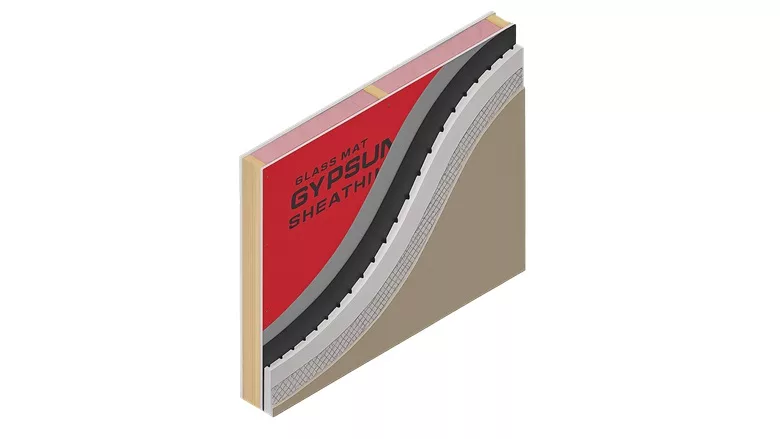
Photo courtesy of Gypsum Association
In today’s built environment, expectations for wall, roof/ceiling, and floor/ceiling assemblies are higher than ever. Architects, engineers, and contractors must deliver buildings that are not only visually appealing and structurally sound, but also resilient to fire, moisture, and acoustic challenges. When properly specified and installed, gypsum panels provide a reliable solution that meets these needs across diverse project types.
Fire Resistance: A Critical First Line of Defense
Fire safety remains a fundamental design consideration. Gypsum panels are core components of code-compliant fire-rated systems. Type X gypsum panels, for example, help compartmentalize fire, protect structural integrity, and slow flame spread. Their reinforced cores withstand high temperatures, buying valuable time in an emergency.
Resources such as the GA-600 Fire Resistance and Sound Control Design Manual guide professionals in selecting tested wall, ceiling, or shaftwall assemblies. Still, performance depends not only on panel choice but also on fasteners, framing, and installation practices.
Pro tip: Verify that the complete assembly—including wall height, stud spacing, and penetrations—matches tested conditions.
Moisture Resistance: Strengthening the Building Envelope
Modern gypsum products perform well in moisture-prone areas. Glass mat gypsum panels, for instance, are widely used as exterior sheathing in areas with intermittent exposure to water or humidity. They combine mold and moisture resistance with easy installation, and when paired with air- and water-resistive barriers, create tight, durable exterior walls.
Best practice: Use ASTM C1177-compliant panels for exterior sheathing and specify mold-resistant products for bathrooms, kitchens, and utility spaces.
Acoustic Performance: Meeting Privacy and Comfort Needs
Acoustic control is vital for occupant comfort in healthcare, education, and multifamily housing. Gypsum assemblies can be designed for high Sound Transmission Class (STC) ratings, especially when paired with insulation, resilient channels, or multiple layers. Tested systems make it easier to reach STC 50 or higher with cost-effective solutions.
Pro tip: Choose assemblies tested under ASTM E90 and E413, and maintain performance by sealing gaps and properly aligning framing during construction.
A System-Based Approach
The true value of gypsum lies in its role within complete systems. Whether for fire-rated corridors, moisture-resistant exterior walls, or quiet partitions between units, gypsum assemblies help projects meet critical performance targets.
For the A/E/C community, staying current on product innovations, installation methods, and evolving codes is essential. Organizations such as the Gypsum Association, ASTM International, and UL provide resources to support resilient, code-compliant, and lasting design.
Looking for a reprint of this article?
From high-res PDFs to custom plaques, order your copy today!