Safety First
Safety Standards Must Hold Across Every Jobsite
Consistent safety practices reduce risk, protect crews, and improve performance across all job types.
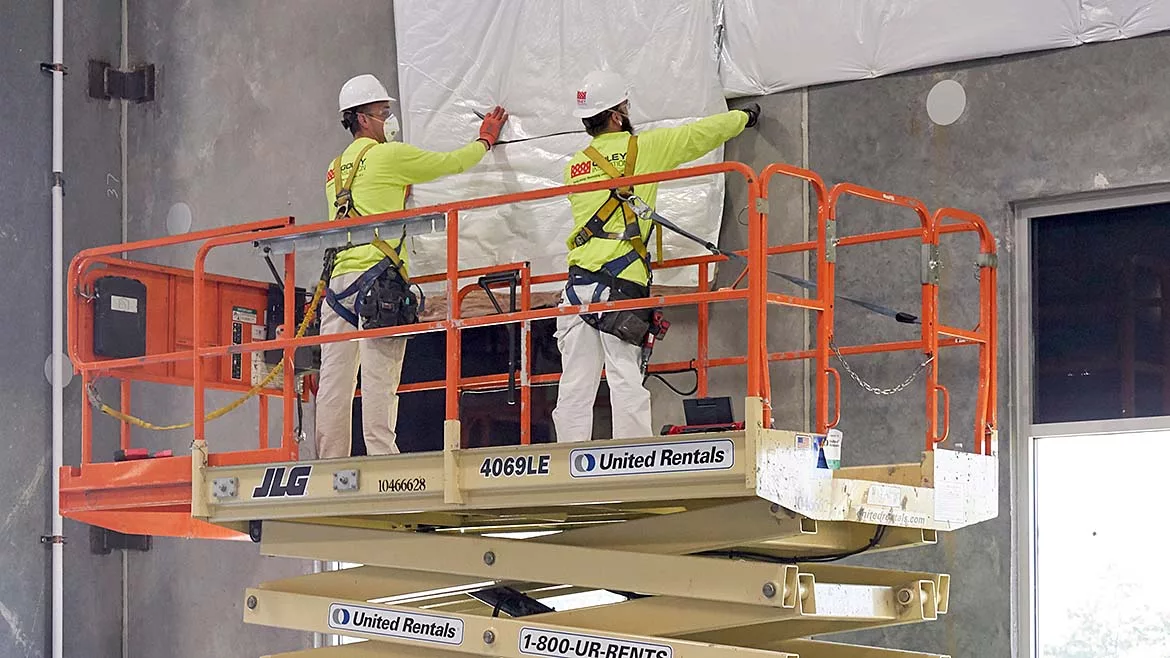
Most conversations about jobsite safety start with experience modification rate, insurance costs, and bid eligibility. Those pressures are real, especially on large, complex projects. But across residential, multifamily, and commercial work, field leaders know those aren’t the core drivers for putting safety first.
The reason is straightforward: every worker should leave the job in the same condition they arrived.
When that principle anchors your safety program, it changes field decisions. Safety shifts from a compliance exercise to an operational priority. Crews respond to clear expectations, and foremen are better positioned to hold the line when schedule pressure or site conditions introduce risk.
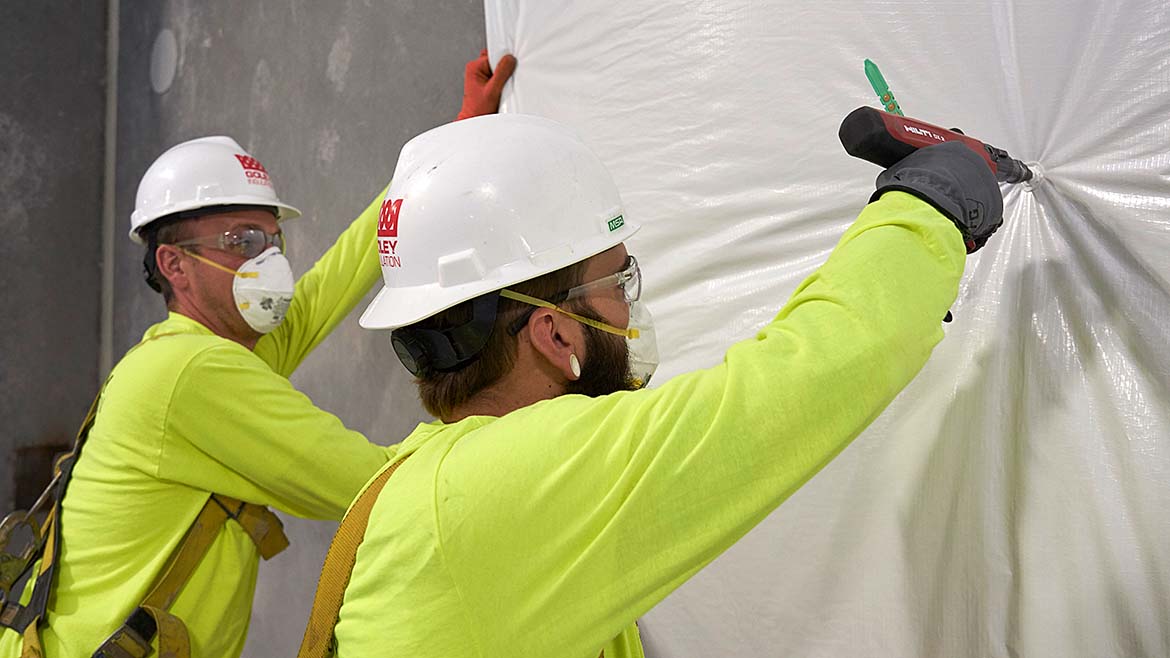
Precision fastening and proper PPE demonstrate how safe installation practices are built into every step of the process.
Photo: Dan Donovan Photography
Safety as a Continuous Field Practice
Safety is not a checklist tied to a single task or phase. It is a continuous practice that begins at dispatch and carries through installation, cleanup, and travel. For wall and ceiling contractors, that includes material handling, board staging, overhead work, and access systems such as ladders and scaffolds.
An effective approach addresses how crews think, move, and sequence work. It also requires a culture where workers are supported when they slow down, call out hazards, or stop work. Without that reinforcement, even well-written programs fail in execution.
A consistent standard should apply whether crews are hanging board in a hospital corridor or insulating an attic. Project scale does not determine safety performance; consistency does.
On active jobsites, interior trades routinely encounter uncontrolled conditions:
- Overhead work from low-voltage or mechanical trades
- Material staged in egress paths
- Corridor congestion from equipment or lifts
- Improperly stored gypsum board or unsecured stock
- Incomplete temporary protection or guardrails
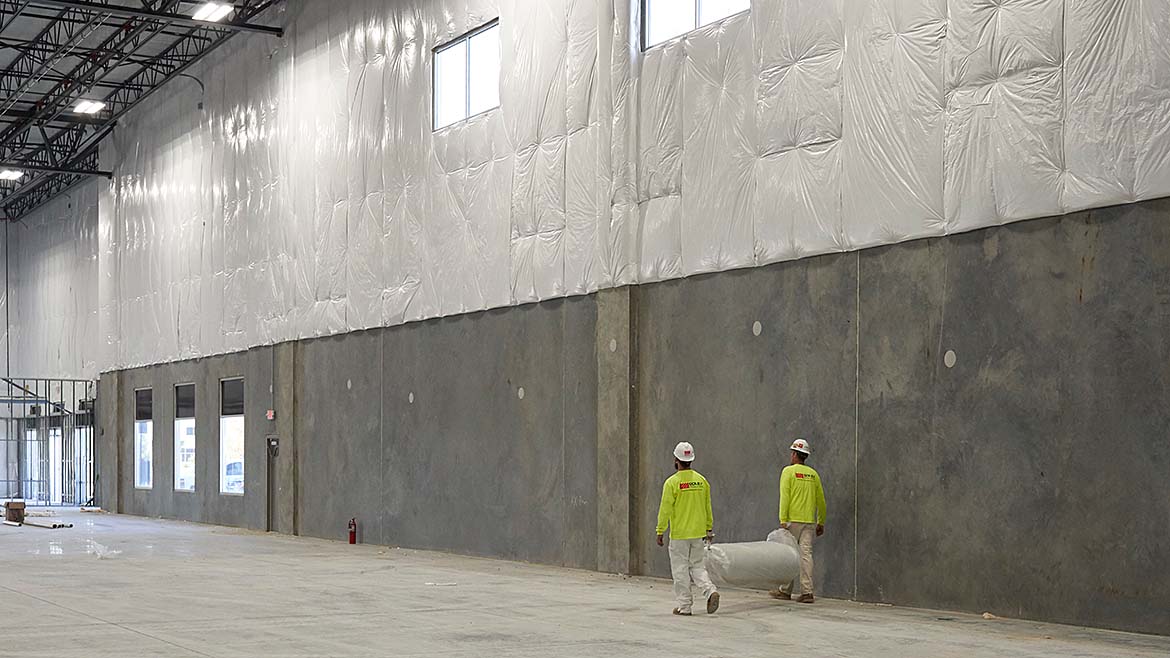
Coordinated crew movement and staging support consistent, large-scale installation while maintaining safe workflow across the jobsite.
Photo: Dan Donovan Photography
These issues occur across all project types. The differentiator is whether expectations are clearly defined and enforced.
Contractors maintaining strong safety outcomes typically implement:
- Consistent standards across all crews, branches, and partners
- Pre-dispatch safety huddles
- Mobile-based microlearning for repeatable training
- Field-driven training using real incidents and near misses
Without consistency, minor hazards—like unsecured board stacks or blocked access—can escalate into recordable incidents or lost-time injuries.
The rule is simple: set your standard, then evaluate whether the jobsite meets it.
The Three-Second Rule in Task Transitions
One practical tool used in the field is the Three-Second Rule. Before starting or changing a task—cutting board, repositioning materials, climbing scaffolding, or entering a lift—workers pause and assess:
- What’s above me?
- What’s around me?
- Who else is affected?
- Where could this go wrong?
This brief pause directly targets common interior trade risks: ladder instability, overhead contact, scaffold missteps, cuts, trips, and vehicle movement incidents.
For drywall and ceiling crews, these moments often occur during transitions—moving between rooms, adjusting lifts, or handling stock. Building a consistent pause into those transitions improves hazard recognition without slowing production.
From initial install to final completion, coordinated teams ensure safety and execution standards are maintained across every phase of the project.
Photo: Dan Donovan Photography
What Contractors Can Implement Immediately
You don’t need a large safety department to improve outcomes. Field execution improves with clarity, consistency and accountability.
Start with these actions:
- Define a minimum standard and enforce it: Do not relax requirements based on site conditions or other trades.
- Extend safety beyond installation tasks: Include driving, loading, fatigue management, and material handling.
- Implement the Three-Second Rule: Make it a required pause during all task transitions.
- Make safety discussions routine: Integrate them into daily operations, not just post-incident reviews.
- Empower stop-work authority: Support field decisions to halt unsafe conditions.
- Treat incidents as system failures: Evaluate gaps in training, planning, or supervision—not just individual actions.
Safety performance improves when it is embedded in daily operations rather than managed as a separate function. For wall and ceiling contractors, that translates directly to fewer disruptions, more predictable production, and reduced exposure to risk.
Looking for a reprint of this article?
From high-res PDFs to custom plaques, order your copy today!


As the Vice President and third-generation leader of The Goley Companies, Joseph Goley has worked for the Dupo, Illinois-based insulation contractor since February 2019. He is a member of the Owens Corning CEE Customer Advisory Council, the Knauf Insulation Customer Advisory Board, Home Builders & Remodelers Metro East Association Board, and Southern Illinois University Edwardsville’s Construction Management Industry Advisory Board. The Goley Companies specialize in delivering building performance solutions — insulation, air sealing, firestopping, energy testing — for new and existing homes and commercial buildings.