Anniversary
PAC International Celebrates 50 Years of Acoustical Innovation
Founded by the Gernhart family in 1976, PAC International grew from a drywall supply business into a leading manufacturer of noise-control and vibration-isolation solutions
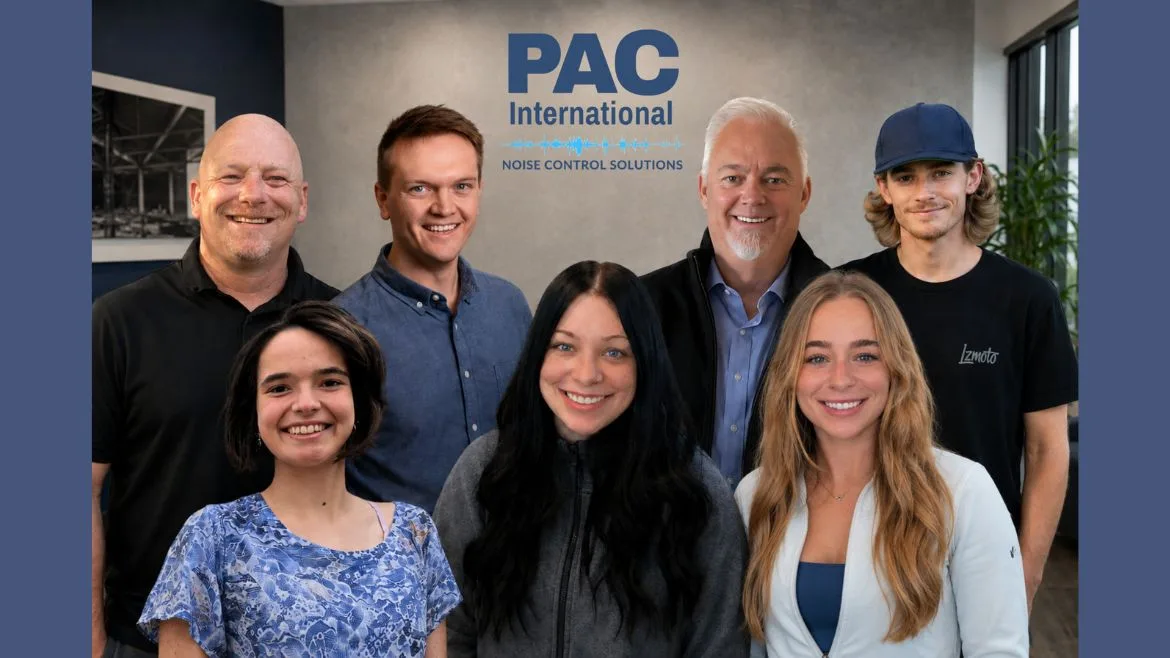
The team at PAC International.
On July 4, 1976, Carmen and Elzo Gernhart sat on an Oregon beach and decided they no longer wanted to work for anyone else. That Independence Day decision launched the family enterprise that eventually became PAC International, which is celebrating its 50th anniversary this year.
“They declared their independence,” says their son Michael Gernhart, COO of PAC International and the second generation to lead the family’s businesses.
Today, PAC International is headquartered in Las Vegas, with its primary warehouse and manufacturing operation in Canby, Ore. The company is marking the milestone with a commemorative logo, a third generation in the business and a product line that has grown from two items to 59—or more than 100 when variations are counted.
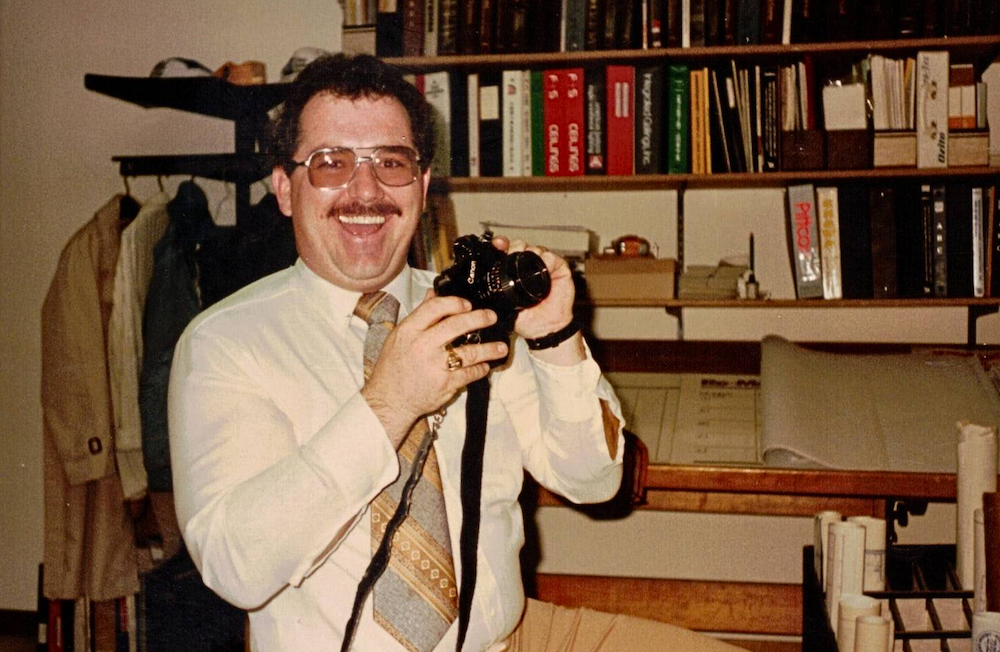
Elzo Gernhart at 30 years old at PAC’s first warehouse office in Hillsboro, Ore. Photo: PAC International.
From Drywall to Decibels
The Gernharts’ first venture was a drywall installation company in Portland. Elzo and his brother later launched an insulation business, while Carmen created a commercial tenant-improvement company specializing in acoustical tile ceilings.
Elzo eventually joined Carmen’s operation, and together they developed it into a drywall supply business that the family ran for 26 years.
In the early 1990s, the Gernharts also helped develop AMAROK, a purchasing cooperative that gave independent drywall distributors buying power comparable to national chains. The relationships formed through the cooperative still support PAC’s distribution strategy.
Professional Acoustics Co. began in 1980 as an installer of acoustical ceilings, drywall and interior finishes. PAC Supply followed during the 1982 recession. PAC International LLC emerged as the company pursued opportunities across the Pacific Rim, including Guam and Saipan.
During those trips, the Gernharts met an Australian inventor who had designed a resilient sound-isolation clip.
“We secured the exclusive manufacturing and distribution rights for North and South America while we were there,” Gernhart says. “We brought it back to the U.S., redesigned it, got it patented to U.S. standards—and it took off from there.”
The product became the RSIC-1 Resilient Sound Isolation Clip, now PAC’s core product. Its patent was filed in 1999. The RSIC-1 was the first rubber-based noise-control product that could be used with gypsum board to provide both fire resistance and noise control.
 Elzo Gernhart's office desk. Photo: PAC International.
Finding the Gap
At the time, the noise-control market offered two extremes: resilient channel, a decades-old commodity costing roughly 25 cents per square foot, and spring isolators costing as much as $25 per square foot.
“There was a huge void there,” Gernhart says. “We designed our product specifically to fit in that gap, priced it to fit in that gap, and then started hammering the market. It took us two years to sell our first project; a lot of smashing your head against the wall, talking to acoustical engineers every day, doing the testing you need to do to get to market in the U.S.”
Success eventually attracted imitators, including clips without the same UL listings and fire ratings. About a year ago, PAC began painting the steel on every RSIC-1 clip red so contractors could quickly identify the genuine product.
“People contact us all the time with pictures, and we say, ‘That clip’s not red,’” says Taylor Gernhart, a third-generation family member and PAC’s marketing manager.
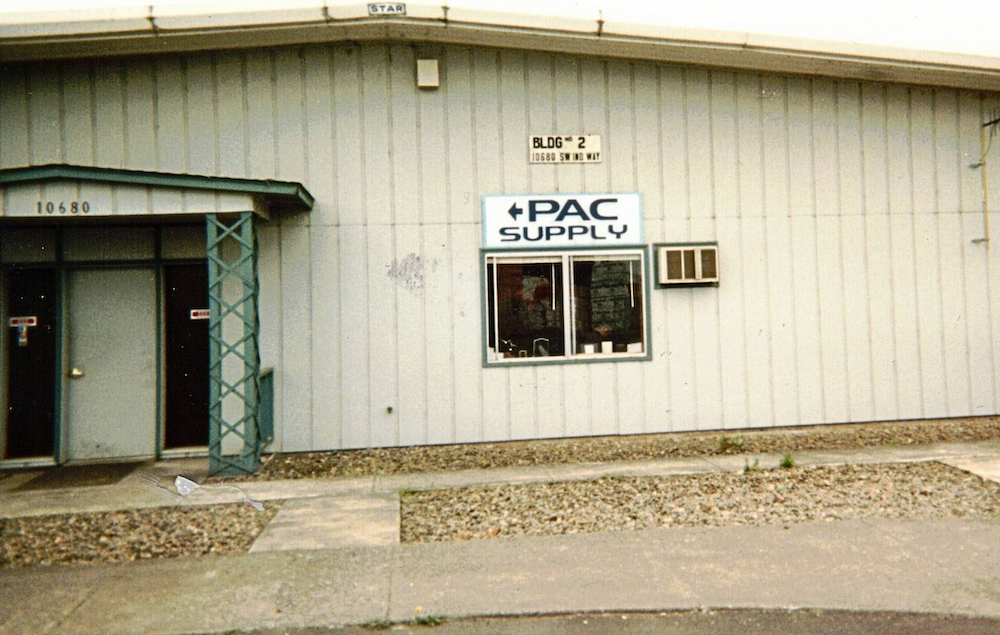 The showroom and office entrance at PAC’s Tualatin warehouse, the company’s third facility in less than two decades. The site featured rail access and loading docks for high-volume transloading of bulk goods serving domestic and international customers. Photo: PAC International
Bridging Three Disciplines
PAC focuses on connecting acoustical, fire protection and structural engineering requirements.
“When we bring a product to market, we’ve got the acoustical test, a fire test that matches it, and the engineering study that says ‘yes,’ this will hold this much weight at this spacing,” Gernhart says.
The company maintains an online assembly-selector database and works with acoustical engineers, architects, general contractors and major multifamily and hospitality developers, often years before construction begins.
PAC also tests its clips with products from competing underlayment and topping manufacturers, allowing other companies’ sales teams to recommend compatible PAC systems.
“It’s a cohabitated environment,” Gernhart says. “If we do that, other people do the same thing for us.”
PAC products have been installed in recording studios for major entertainment companies, studios of famous musicians and viewing rooms for Academy Award nominees. Recent projects include a New York City production soundstage and the conversion of Canada’s first bank into a boutique hotel.
“It all gets treated the same,” Gernhart says. “A big special job gets the same energy as a guy building a home theater in his garage.”

One of PAC Supply's annual fundraising golf tournaments. Photo: PAC International.
PAC’s Next Chapter
PAC International operates with 12 employees, including five family members and an in-house acoustical engineer. Carmen and Elzo retired about a year and a half ago. Michael now works alongside his wife and three adult children.
He credits the company’s longevity partly to allowing each generation to choose its own path. His children were encouraged to attend college and pursue other careers, knowing the business would remain available should they decide to return.
“I think the fact that they know they can be their own person is important,” he says. “This business is here for the family.”
PAC is targeting growth of 10% to 20% in 2026 despite a softer construction market. Gernhart sees opportunities in Canada, where recent building code changes have expanded the market; in the Southeast, particularly Florida; and in the emerging mass timber sector.
“As a mature business, most of PAC’s growth has been through product development and innovation,” he said. “PAC has made it a focus to listen to our clients. Our clients have given PAC the most difficult challenges, resulting in the most innovative products.”
This year, the company introduced RSIC Adapt, which Gernhart calls a revolutionary alternative to traditional spring isolators. Spring ceiling systems typically require custom engineering, six- to eight-week lead times and redesigns when other trades interfere with the layout. RSIC Adapt is an off-the-shelf product that can be top- or side-mounted on wood or concrete while providing the same acoustical performance, according to the company.
Within the next two years, PAC also plans to consolidate more of its operations at its Las Vegas headquarters, citing lower operating costs and access to the city’s trade-show circuit. Several employees will continue working remotely from Oregon and other locations.
For Gernhart, however, the company’s 50th anniversary is less about products than personal service.
“America has turned into big corporations owning everything—customer service is dead. We're the polar opposite of that,” he says. “I was raised that when the phone rings, you answer it. Half the time the call isn’t for me, but I pick it up anyway. If someone has a question, we give them an answer, even if it’s ‘You don't need our product on this job, go talk to this person.’ That’s what business used to be.”
Looking for a reprint of this article?
From high-res PDFs to custom plaques, order your copy today!