Walls & Ceilings logo
search
cart
facebook twitter linkedin youtube youtube Spotify Podcasts Apple Podcasts Spotify Podcasts Apple Podcasts
  • Sign In
  • Create Account
  • Sign Out
  • My Account
Walls & Ceilings logo
  • NEWS
  • TOPICS
    • Drywall
    • Stucco/EIFS
    • Ceilings
    • Steel Framing
    • Fireproofing
    • Interior Plaster
    • Building Envelope
    • Insulation
    • Technology
    • Interior
    • Exterior
    • Women In Construction
  • COLUMNS
    • Up Front
    • All Things Gypsum
    • Art & Craft of Plastering
    • Stucco Stop
    • Steel Deal
    • Industry Voices
  • PRODUCTS
    • Buzz Guide
  • EVENTS
    • Industry Events
    • Webinars
    • BUILD Expo
  • MEDIA
    • Videos
    • Podcasts
    • Photo Galleries
    • BUILD26 Videos
    • Take our Quiz!
    • Infographics
  • EXCLUSIVE
    • Newsletters
    • Top 50 Contractors
    • Contractor of the Year
    • State of the Industry
    • W&C Store
    • Market Research
    • CEUs
    • Sponsor Insights
    • Custom Content & Marketing Services
  • DIRECTORY
  • EMAGAZINE
    • eMagazine
    • Advertise
    • Archive Issues
  • SIGN UP!

The Truth About Spray-Foam
By Daniel Overbey
January 26, 2015

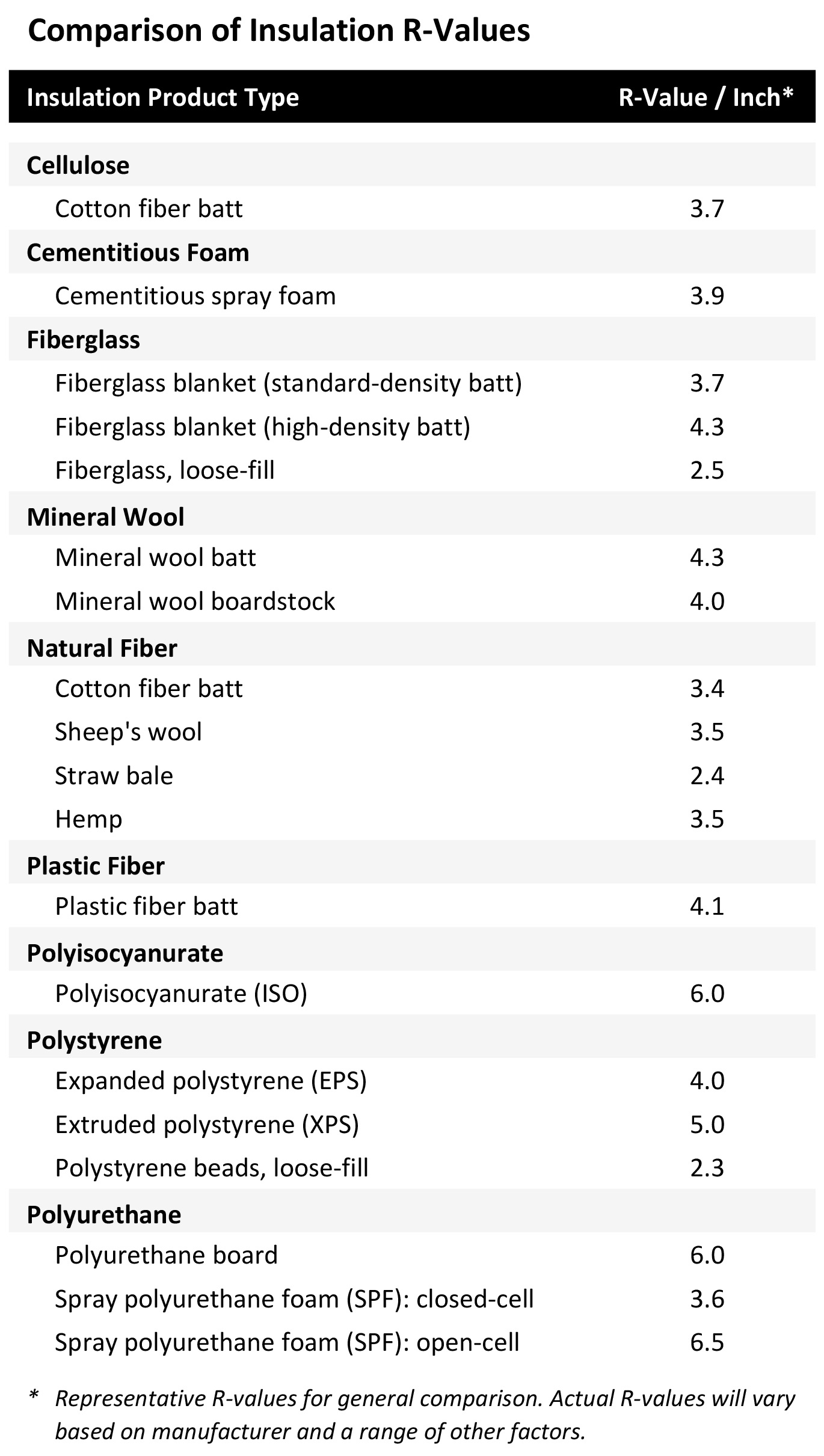
Spray-foam has a reputation of providing superior insulating qualities compared to fiberglass batt, mineral wool, cellulose, and other insulation alternatives.

The truth is that spray-foam does not necessarily perform better than other types of insulation when it comes to conductive heat transfer. Think about the insulation products you’ve seen at your local home-improvement store. Remember that big number on the label that started with an ‘R’ (the roll of batt insulation might have read R-13, for instance)? That number identifies the thermal resistance value - or R-value - and it is used to communicate the rate of heat flow through a material. The greater the R-value, the smaller the rate of heat flow (but beware, this is not a linear relationship).

Inch-per-inch, the R-value of spray-foam insulation is not much different than some other common alternative insulation options. Spray-foam helps a structure perform more efficiently because it reduces another form of heat gain/loss—air leakage.

Figures vary, but it is not an overstatement to suggest that infiltration accounts for up to 40 percent of a home's total heat loss. Spray-foam expands to fill in cavities and crevices in a stick-framed structure—clinging to studs and reducing air leakage due to its “air tightness” versus alternatives like blown cellulose and fiberglass batt insulation, which can also settle over time. This is the primary differentiator in thermal performance when it comes to spray-foam.

So, does this distinction leave spray-foam alternatives in the cold? Not at all. But you have to adjust your thinking. Instead of considering the thermal resistance and air leakage in terms of a single dedicated product in a wall or roof, think about the entire assembly as a complete system. Air barriers, foam sealants, and good construction practices can help structures that use spray-foam alternatives to control air leakage comparably well. In such cases, a combination of tapes, gaskets, foams, caulks, and mastics will be necessary to bridge the gaps and cracks in those materials to make the assemblies airtight.

Recall the adage, “build tight and ventilate right.” As our energy-conscious building design and construction industry adopts practices that drastically reduce air leakage, do not lose sight of the fact that homes need to account for some outdoor air exchanges for healthy indoor air quality. This can be accomplished in many different ways.

However, it is increasingly common for air-tight structures to utilize high-efficiency heat recovery ventilation units.

KEYWORDS: R-value spray foam spray foam insulation

Share This Story

Daniel Overbey is the Director of Sustainability for Browning Day Mullins Dierdorf Architects in Indianapolis. His practice and writing focuses on high-performance building design and construction, environmental systems research, LEED-related services, and energy modeling. He has been published in High Performance Buildings,EcoBuilding Pulse, Environmental Design + Construction, as well as other trade publications and media outlets. Overbey is also a building science educator at Ball State University's College of Architecture and Planning and the Boston Architectural College's Sustainable Design Institute.
You must login or register in order to post a comment.

Report Abusive Comment

Blog Topics

Living Sustainable

A Day in the Life

Racing the Tide

On your mark, get set, go!

Tool Talk

Something to Consider

The Trowel Talk

Finish Line

Job Site Tech

Recent Comments

I appreciate the deep dive into the trickle-down...

The emphasis on measurable outcomes really resonates with...

I appreciate the insightful connections you drew between...

Really interesting perspective on how small business optimism...

The part about the 1 percent increase per...

Manage My Account
  • eMagazine Subscription
  • Newsletters
  • Online Registration
  • Manage My Preferences
  • Subscription Customer Service

More Videos

Sponsored Content

Sponsored Content is a special paid section where industry companies provide high quality, objective, non-commercial content around topics of interest to the Walls & Ceilings audience. All Sponsored Content is supplied by the advertising company and any opinions expressed in this article are those of the author and not necessarily reflect the views of Walls & Ceilings or its parent company, BNP Media. Interested in participating in our Sponsored Content section? Contact your local rep!

close
  • medical professionals moving a patient on a stretcher through the halls of a medical building
    Sponsored byNational Gypsum Company

    What Does High Performance Mean When It Comes To Gypsum Boards?

Popular Stories

Linear Metal Ceiling Beam Baffles

Top 25 Ceiling Contractors of 2026

Wichita Biomedical Campus

Wichita Drywall Worker Dies After Scaffolding Fall

QXO Just Changed the Game-Here's What Contractors Are Asking

QXO Just Changed the Game-Here's What Contractors Are Asking

An interior drywalling work in progress

Boost Profits with AI Scheduling

Events

June 24, 2026

The Bright Side & Benefits of Designing with Integrated Lighting

Credits 1 AIA LU/HSW; 0.1 ICC CEU

This course will explore the pivotal role architects and lighting design play in creating safer, more sustainable spaces. Learn how to avoid common lighting mistakes and make informed decisions that create the best visual environment for occupants. 

January 1, 2030

Webinar Sponsorship Information

For webinar sponsorship information, visit www.bnpevents.com/webinars or email webinars@bnpmedia.com.

See our full library of webinars

View All Submit An Event

Products

2026 National Painting Cost Estimator

2026 National Painting Cost Estimator

See More Products
×

Connect with the industry’s leading resource for unparalleled insights and education.

Join thousands of industry professionals today. Shouldn’t you know what they know?

JOIN NOW
  • RESOURCES
    • Advertise
    • Contact Us
    • Directories
    • Store
    • Want More
  • SIGN UP TODAY
    • Create Account
    • eMagazine
    • Newsletters
    • Customer Service
    • Manage Preferences
  • SERVICES
    • Marketing Services
    • Reprints
    • Market Research
    • List Rental
    • Survey/Respondent Access
  • STAY CONNECTED
    • LinkedIn
    • Facebook
    • Instagram
    • YouTube
    • X
  • PRIVACY
    • PRIVACY POLICY
    • TERMS & CONDITIONS
    • DO NOT SELL MY PERSONAL INFORMATION
    • PRIVACY REQUEST
    • ACCESSIBILITY

Copyright ©2026. All Rights Reserved BNP Media, Inc. and BNP Media II, LLC.

Design, CMS, Hosting & Web Development :: ePublishing