Walls & Ceilings logo
search
cart
facebook twitter linkedin youtube youtube Spotify Podcasts Apple Podcasts Spotify Podcasts Apple Podcasts
  • Sign In
  • Create Account
  • Sign Out
  • My Account
Walls & Ceilings logo
  • NEWS
  • TOPICS
    • Drywall
    • Stucco/EIFS
    • Ceilings
    • Steel Framing
    • Fireproofing
    • Interior Plaster
    • Building Envelope
    • Insulation
    • Technology
    • Interior
    • Exterior
    • Women In Construction
  • COLUMNS
    • Up Front
    • All Things Gypsum
    • Art & Craft of Plastering
    • Stucco Stop
    • Steel Deal
    • Industry Voices
  • PRODUCTS
    • Buzz Guide
  • EVENTS
    • Industry Events
    • Webinars
    • BUILD Expo
  • MEDIA
    • Videos
    • Podcasts
    • Photo Galleries
    • BUILD26 Videos
    • Take our Quiz!
    • Infographics
  • EXCLUSIVE
    • Newsletters
    • Top 50 Contractors
    • Contractor of the Year
    • State of the Industry
    • W&C Store
    • Market Research
    • CEUs
    • Sponsor Insights
    • Custom Content & Marketing Services
  • DIRECTORY
  • EMAGAZINE
    • eMagazine
    • Advertise
    • Archive Issues
  • SIGN UP!

Analog Analysis

By Daniel Overbey
August 25, 2015

Digital tools are vital (I rely on them virtually everyday), but sometimes in order to really understand a phenomena we have to get a bit closer. That's where analog analysis tools come in handy. Something special happens when we connect our brains to our hands. In essence, hand-on is minds-on. Moreover, these analog analysis tools can help us readily engage with and record phenomena in our environment. We can adequately record and/or verify without complicated instruments.

When I took a research internship at Natural Energies Advanced Technologies (NEAT) Laboratory at the University of Nevada, Las Vegas in 2004, its Director, Alfredo Fernández-González (an eventual mentor of mine), introduced me to a number of instruments for analog analysis that he had experience with through the Agents of Change program at the University of Oregon.

Over a decade later, I am using many of the same instruments to educated students through the Boston Architectural College's online Master of Design Studies (MDS) in Sustainable Design program. We deployed many of the instruments this summer during a study abroad program in Malta. This Fall, we are working to establish an environmental systems lab through which students can borrow the analog analysis instruments.

Moreover, I have recently signed on as a Curator at Section Cut in order to more effectively disseminate knowledge of these tools through their online community of architects and various other types of design savvy leaders.


About Section Cut

In the discipline of architecture, a section cut is an essential type of drawing; a single slice of a building. Section Cut (SC) aims to be a web-parallel to this powerful drawing convention—in the same way that a drawing cuts through immense complexity to show a single moment, we aim to cut through the noise of the internet, straight to the good stuff.

Section Cut's resources range from hardcore architectural theory texts to beautifully designed products to everyday support for practicing designers. Section Cut is a community comprised of many designers and architects, but not exclusively. The only requirements for participation are a sensibility and an opinion!
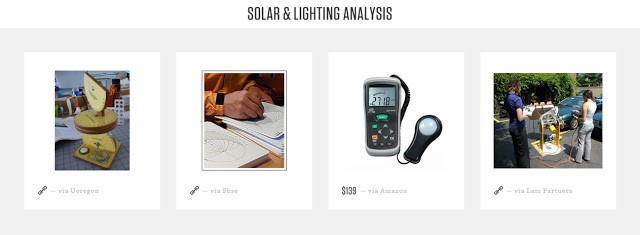


A sample of the instruments curated through the online Analog Analysis exhibit at Section Cut.
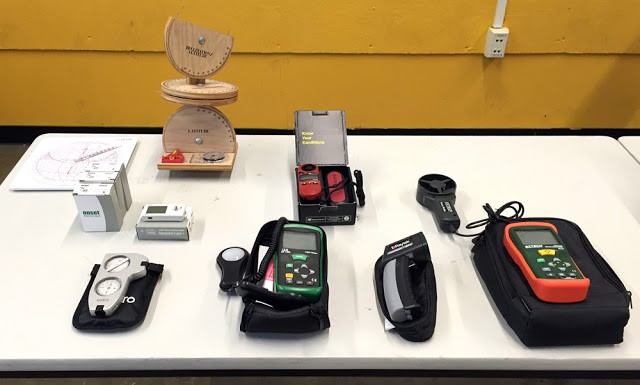


Some of the environmental systems analog analysis instruments available at the Boston Architectural College through the Sustainable Design Institute (SDI). Image by Daniel Overbey.
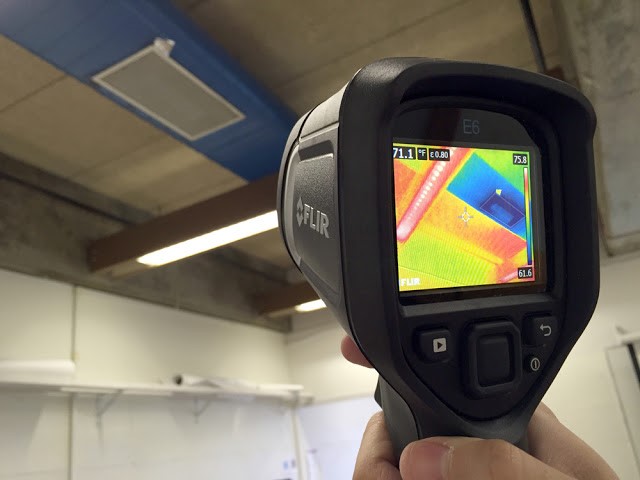


Demonstration of an infrared thermal imaging camera during the Fall 2015 Intensive Week at the Boston Architectural College. Photograph by Daniel Overbey.

KEYWORDS: architects

Share This Story

Daniel Overbey is the Director of Sustainability for Browning Day Mullins Dierdorf Architects in Indianapolis. His practice and writing focuses on high-performance building design and construction, environmental systems research, LEED-related services, and energy modeling. He has been published in High Performance Buildings,EcoBuilding Pulse, Environmental Design + Construction, as well as other trade publications and media outlets. Overbey is also a building science educator at Ball State University's College of Architecture and Planning and the Boston Architectural College's Sustainable Design Institute.
You must login or register in order to post a comment.

Report Abusive Comment

Blog Topics

Living Sustainable

A Day in the Life

Racing the Tide

On your mark, get set, go!

Tool Talk

Something to Consider

The Trowel Talk

Finish Line

Job Site Tech

Recent Comments

I appreciate the deep dive into the trickle-down...

The emphasis on measurable outcomes really resonates with...

I appreciate the insightful connections you drew between...

Really interesting perspective on how small business optimism...

The part about the 1 percent increase per...

Manage My Account
  • eMagazine Subscription
  • Newsletters
  • Online Registration
  • Manage My Preferences
  • Subscription Customer Service

More Videos

Sponsored Content

Sponsored Content is a special paid section where industry companies provide high quality, objective, non-commercial content around topics of interest to the Walls & Ceilings audience. All Sponsored Content is supplied by the advertising company and any opinions expressed in this article are those of the author and not necessarily reflect the views of Walls & Ceilings or its parent company, BNP Media. Interested in participating in our Sponsored Content section? Contact your local rep!

close
  • medical professionals moving a patient on a stretcher through the halls of a medical building
    Sponsored byNational Gypsum Company

    What Does High Performance Mean When It Comes To Gypsum Boards?

Popular Stories

Linear Metal Ceiling Beam Baffles

Top 25 Ceiling Contractors of 2026

Wichita Biomedical Campus

Wichita Drywall Worker Dies After Scaffolding Fall

QXO Just Changed the Game-Here's What Contractors Are Asking

QXO Just Changed the Game-Here's What Contractors Are Asking

Less compound

Joint Compound Market to Reach $9.7B by 2033

Events

June 24, 2026

The Bright Side & Benefits of Designing with Integrated Lighting

Credits 1 AIA LU/HSW; 0.1 ICC CEU

This course will explore the pivotal role architects and lighting design play in creating safer, more sustainable spaces. Learn how to avoid common lighting mistakes and make informed decisions that create the best visual environment for occupants. 

January 1, 2030

Webinar Sponsorship Information

For webinar sponsorship information, visit www.bnpevents.com/webinars or email webinars@bnpmedia.com.

See our full library of webinars

View All Submit An Event

Products

2026 National Painting Cost Estimator

2026 National Painting Cost Estimator

See More Products
×

Connect with the industry’s leading resource for unparalleled insights and education.

Join thousands of industry professionals today. Shouldn’t you know what they know?

JOIN NOW
  • RESOURCES
    • Advertise
    • Contact Us
    • Directories
    • Store
    • Want More
  • SIGN UP TODAY
    • Create Account
    • eMagazine
    • Newsletters
    • Customer Service
    • Manage Preferences
  • SERVICES
    • Marketing Services
    • Reprints
    • Market Research
    • List Rental
    • Survey/Respondent Access
  • STAY CONNECTED
    • LinkedIn
    • Facebook
    • Instagram
    • YouTube
    • X
  • PRIVACY
    • PRIVACY POLICY
    • TERMS & CONDITIONS
    • DO NOT SELL MY PERSONAL INFORMATION
    • PRIVACY REQUEST
    • ACCESSIBILITY

Copyright ©2026. All Rights Reserved BNP Media, Inc. and BNP Media II, LLC.

Design, CMS, Hosting & Web Development :: ePublishing