Economic uncertainty, labor constraints and AI-driven disruption are reshaping the outlook for specialty contractors, with potential impacts on pricing, hiring and project demand.
At the 2026 CISCA Summit, longtime forecaster Bob Treadway outlined what ceiling contractors should watch next—from recession risk and inflation pressures to shifting workforce dynamics and the growing role of technology.
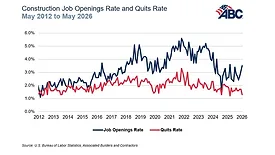
The construction industry will need to attract hundreds of thousands of new workers—349,000 in 2026 and 456,000 in 2027—largely to offset retirements and meet renewed spending growth, or risk worsening labor shortages that could drive up costs and slow critical infrastructure projects.
The construction industry will need to attract hundreds of thousands of new workers largely to offset retirements and meet renewed spending growth, or risk worsening labor shortages that could drive up costs and slow critical infrastructure projects.
Alex Chausovsky warns that while the U.S. economy is holding steady, unresolved workforce shortages and immigration policy could pose serious challenges by 2027—making employee retention a top priority now.
The U.S. construction industry is poised for modest growth in 2026, but entrenched labor shortages, tightening workforce demands, and shifting economic pressures will shape opportunities—and challenges—for contractors across all sectors.