Walls & Ceilings logo
search
cart
facebook twitter linkedin youtube youtube Spotify Podcasts Apple Podcasts Spotify Podcasts Apple Podcasts
  • Sign In
  • Create Account
  • Sign Out
  • My Account
Walls & Ceilings logo
  • NEWS
  • TOPICS
    • Drywall
    • Stucco/EIFS
    • Ceilings
    • Steel Framing
    • Fireproofing
    • Interior Plaster
    • Building Envelope
    • Insulation
    • Technology
    • Interior
    • Exterior
    • Women In Construction
  • COLUMNS
    • Up Front
    • All Things Gypsum
    • Art & Craft of Plastering
    • Stucco Stop
    • Steel Deal
    • Industry Voices
  • PRODUCTS
    • Buzz Guide
  • EVENTS
    • Industry Events
    • Webinars
    • BUILD Expo
  • MEDIA
    • Videos
    • Podcasts
    • Photo Galleries
    • BUILD26 Videos
    • Take our Quiz!
    • Infographics
  • EXCLUSIVE
    • Newsletters
    • Top 50 Contractors
    • Contractor of the Year
    • State of the Industry
    • W&C Store
    • Market Research
    • CEUs
    • Sponsor Insights
    • Custom Content & Marketing Services
  • DIRECTORY
  • EMAGAZINE
    • eMagazine
    • Advertise
    • Archive Issues
  • SIGN UP!

My Kingdom for a Tarp
October 1, 2005
The American Red Cross estimates that 275,000 homes have been destroyed by Katrina and the flooding that followed in Louisiana, Alabama and Mississippi. More than 1 million people have been displaced, their homes unlivable and likely to be demolished. Rebuilding these homes and helping these families represents a staggering challenge, especially when you attach names and faces to the evacuees.

Having just returned with a relief team from Gulfport, MS, I witnessed an equally daunting challenge. There is an enormous volume of people living in homes that eventually could be condemned if repairs are not made soon. Most are low-income people who do not have the resources for even modest repairs. Many are elderly or in poor health.

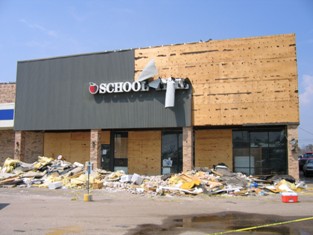
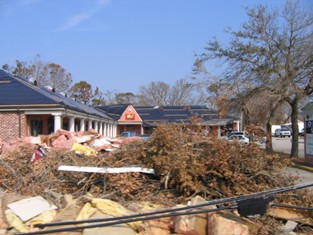
The amount of physical damage is overwhelming. Nearly every building in Gulfport and nearby communities has sustained substantial damage. Those who were able tarped their roofs and walls to cover the gaping holes. Those without resources are relying on teams like the one I joined to deliver, and in some cases install, tarps for them. Our team provided about 300 tarps.

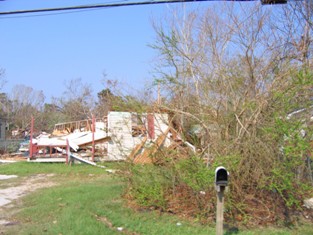
Putting tarps on homes in some of the poorest neighborhoods brought tears to our eyes because it was such a temporary fix. These homes were fragile before Katrina. Clearly some will be condemned. Losing these homes would devastate the owners and their families, many who have lived in the same house for decades and have nowhere to go.

Another problem facing homeowners is living with unsafe appliances and power sources. Wind and water have left water heaters, ranges, air conditioners, and electric supply lines in questionable condition. Similarly, damaged plumbing lines may leave homeowners susceptible to leaks, sewage backups, and tainted water.

Some homeowners with insurance are stuck in a "Catch 22" situation. They have been told by their insurance companies their roofs will be covered by their policies, but damage that takes place inside the home after Katrina may not be covered. If the insurance companies write checks immediately, it could take a year before homeowners get contractors to make repairs. Even with an excellent tarp job, it will be difficult to stave off the wind, rain and insects that will damage drywall, plaster, wood and insulation.
Hope Is In the Air

To get to Gulfport, our team drove across I-10 from Alabama into Mississippi. It's a slow drive because the eastbound bridge was knocked out by a barge. But that logjam gave us a chance to see who was stuck with us. It was inspiring. A huge army has descended upon the Gulf Coast. They've come from every corner of the country loaded with supplies, machinery, volunteers and hope. One of my crewmates likened it to a massive ant colony whose hill was wrecked, but mobilizes with massive intensity to rebuild.

The mood in Gulfport and nearby communities is surprisingly upbeat. There is no anger or finger pointing. We spoke with scores of residents and all were thankful to be alive and for whatever supplies and help we provided. We got lots of hugs from grateful residents. In one community where we distributed food, juice and hygiene items we ran into another church-based relief group like ours. It was uplifting to know that so much help is pouring in that we were starting to overlap.

Countless local organizations are taking the lead in meeting their communities' needs. Seemingly every other church was being used as a relief distribution center with workers and supplies covering their parking lots and, in some cases, tents and campers parked on their lawns. This help is offered despite damage to their own buildings and grounds.

In addition to church teams, Red Cross, FEMA, the National Guard and law enforcement personnel were highly visible. A strong sense of community is in place. Groups are sharing resources and helping each other. We're all working toward the same goal.

And yet, the needs will be ongoing. Our team brought a loaded semi and distributed about half of the supplies over two days. Other teams will distribute the remainder. Supplies and volunteers will be needed for months.
What's a Tradesperson to do?

If you've read this far, it is likely you are wondering how you can help. Lots of groups already are collecting and distributing supplies. Utilities are largely reconnected. Quality repair work is now a top priority and will be for years.

If you are a business owner, consider sponsoring a team from the skilled trades to go to the Gulf Coast region. Minimally, support your employees who volunteer for such duty.

If you are in a skilled trade, look for an opportunity to join a work team headed to the region. Partner with local groups who can direct you to homeowners without insurance or simply in great need. Bring building supplies if possible. As of mid-September, local contractors told me they were not experiencing materials shortages. However, the National Association of Home Builders is predicting shortages of plywood, lumber, and cement. Roofing and exterior cladding materials have been in tight supply since last year's hurricanes pounded Florida.

Perhaps you are looking for a business opportunity. There is a burgeoning need in the region for ethical contractors to repair roofs, walls, insulation, plumbing, HVAC, electrical, appliances, flooring and cleaning/restoration. There is an unlimited pool of potential workers who desperately need jobs. You may need to get licensed in those states and provide training, but that would be a solid investment in your future. Best of all, you just might get a hug for your efforts.

Share This Story

Looking for a reprint of this article?
From high-res PDFs to custom plaques, order your copy today!

Recommended Content

JOIN TODAY
To unlock your recommendations.

Already have an account? Sign In

  • Abercrombie & Fitch

    EIFS in 2026: How Specialty Finishes Are Redefining Exterior Wall Systems

    As building codes, owner expectations, and design demands...
    Stucco/EIFS
    By: Regi Mendoza
  • proper air and vapor control

    From Energy Efficiency to Moisture Management: Why Air and Vapor Control Matter

    How proper air and vapor control within building...
    Building Envelope
    By: Benjamin Meyer AIA, LEED AP
  • Linear Metal Ceiling Beam Baffles

    Top 25 Ceiling Contractors of 2026

    Suspended ceilings demand precision, code compliance and...
    Ceilings
    By: John Wyatt and Tanja Kern
You must login or register in order to post a comment.

Report Abusive Comment

Manage My Account
  • eMagazine Subscription
  • Newsletters
  • Online Registration
  • Manage My Preferences
  • Subscription Customer Service

More Videos

Sponsored Content

Sponsored Content is a special paid section where industry companies provide high quality, objective, non-commercial content around topics of interest to the Walls & Ceilings audience. All Sponsored Content is supplied by the advertising company and any opinions expressed in this article are those of the author and not necessarily reflect the views of Walls & Ceilings or its parent company, BNP Media. Interested in participating in our Sponsored Content section? Contact your local rep!

close
  • medical professionals moving a patient on a stretcher through the halls of a medical building
    Sponsored byNational Gypsum Company

    What Does High Performance Mean When It Comes To Gypsum Boards?

Popular Stories

Linear Metal Ceiling Beam Baffles

Top 25 Ceiling Contractors of 2026

Wichita Biomedical Campus

Wichita Drywall Worker Dies After Scaffolding Fall

Okan Tower in Miami, Florida

OSHA Opens Investigation Into Fatal Okan Tower Column Collapse

Construction workers in safety vests install drywall

Gypsum Sales Hold Amid Market Shifts in the U.S.

Events

June 24, 2026

The Bright Side & Benefits of Designing with Integrated Lighting

Credits 1 AIA LU/HSW; 0.1 ICC CEU

This course will explore the pivotal role architects and lighting design play in creating safer, more sustainable spaces. Learn how to avoid common lighting mistakes and make informed decisions that create the best visual environment for occupants. 

January 1, 2030

Webinar Sponsorship Information

For webinar sponsorship information, visit www.bnpevents.com/webinars or email webinars@bnpmedia.com.

See our full library of webinars

View All Submit An Event

Products

2026 National Painting Cost Estimator

2026 National Painting Cost Estimator

See More Products

Related Articles

  • W&C 2024 Subscription Hilti Giveaway

    Subscribe to Walls & Ceilings eNews for a Chance to Win a Hilti Screw Gun

    See More
  • Work Through the Winter

    New Apartment Complex in Michigan Goes For a Multi-Cladding Look From a Single-Source

    See More
  • Tru by Hilton in Pennsylvania

    A Unique Look for a Pennsylvania Tru by Hilton

    See More

Related Products

See More Products
  • bim 3e.jpg

    BIM Handbook: A Guide to Building Information Modeling for Owners, Designers, Engineers, Contractors, and Facility Managers, 3rd Edition

  • building codes illustated.jpg

    Building Codes Illustrated: A Guide to Understanding the 2021 International Building Code, 7th Edition

  • revisited.png

    Markup & Profit: A Contractor's Guide Revisited

See More Products

Related Directories

  • International Institute for Lath & Plaster

×

Connect with the industry’s leading resource for unparalleled insights and education.

Join thousands of industry professionals today. Shouldn’t you know what they know?

JOIN NOW
  • RESOURCES
    • Advertise
    • Contact Us
    • Directories
    • Store
    • Want More
  • SIGN UP TODAY
    • Create Account
    • eMagazine
    • Newsletters
    • Customer Service
    • Manage Preferences
  • SERVICES
    • Marketing Services
    • Reprints
    • Market Research
    • List Rental
    • Survey/Respondent Access
  • STAY CONNECTED
    • LinkedIn
    • Facebook
    • Instagram
    • YouTube
    • X
  • PRIVACY
    • PRIVACY POLICY
    • TERMS & CONDITIONS
    • DO NOT SELL MY PERSONAL INFORMATION
    • PRIVACY REQUEST
    • ACCESSIBILITY

Copyright ©2026. All Rights Reserved BNP Media, Inc. and BNP Media II, LLC.

Design, CMS, Hosting & Web Development :: ePublishing