High-performance building envelopes special section: Optimizing Building Envelopes
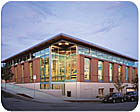
As the first and often most lasting impression, the exterior of a building is its signature. Knowing this, standard design practices emphasize a building's appearance and tend to view materials based solely on aesthetic appeal. Current practices also imitate existing designs in response to a cost-driven market and place nearly identical buildings in varying climates throughout the nation.
But a building envelope's materials are more than a visual application. They influence the environment and the people that occupy the building. For a building to be a responsible addition to its community, the design must provide more than just a pleasing façade.
The high-performance envelope
A high-performance building envelope examines function first and allows the aesthetics to evolve from this perspective. A building envelope exists to keep various elements such as moisture, wind, and temperature fluctuations out of the building. An optimized building envelope takes into account local conditions, thermal properties and environmental responsibility.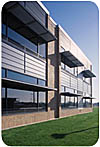
Put it in context
For a building envelope to be effective and lasting, it must respond to the surrounding climatic conditions. Choose materials based on how they will behave in the locale. Develop knowledge of the area's weather and thermal cycles to ascertain if the materials will hold up to the elements over time. Because the various envelope materials act as a single system, these components in aggregate will perform with and against each other over their useable lifespan to accommodate a variety of conditions. The system can only perform to the extent of its weakest component or material, and designing for this, will greatly benefit the performance.Look at the vernacular of the existing buildings in the region and identify the materials that have survived. Draw inspiration from these successes, but think past tradition. Refine the design to incorporate new technologies and reflect their current sense of place.
Water infiltration is a genuine problem in many parts of the country and while many are tempted to design buildings as a sealed box, this approach can be riddled with inherent risks and complications. It is nearly impossible to create an envelope assembly that will keep water out completely, and statistics bear out that the majority of building lawsuits stem from water damage.
The key is to design envelopes that allow the water that does enter to drain out and evaporate or dry out easily in order to protect the building structure from damage and the building interior from mold. Construction techniques like rain screens achieve remarkable results even in very adverse climates.
Another important issue is to have a genuine understanding of the behavior of moisture in the atmospheric air and its interaction with the selected envelope assembly. Standard rules are a great way to start a project, but as a project develops and details are being generated, it is essential to employ tools that will assist in making the right decision. The advancement of technology and building science has placed a large array of easy-to-use tools at the designer's disposal to assist in making the building truly high-performance (see "Resources" sidebar).
Current design practices employ advanced analysis only for validation of the design, rather than include analysis as part of the design process. This results in a lot of repetitive effort for the designer. The use of analysis tools in the process of developing the envelope assembly performance will save effort, time and money. Stand-alone software programs offer advanced analysis tools that deal with a very specific area of building design, such as the building envelope. Some tools look specifically at moisture migration through the envelope, while others address thermal bridging issues, allowing the designer to test different assembly types. When used with whole building analysis or energy modeling programs, these tools assist in developing high performance solutions.
Durability is greatly affected by how a material weathers. For example, copper when exposed to the elements, develops an oxidized coating or patina, which protects the copper from quickly corroding and increases its longevity. Some manufacturers offer engineered coatings on their products, which will enhance the weathering characteristics. Simple design considerations, such as shading devices or overhangs, can increase the envelope's life by limiting its exposure to sun, rain and wind.
Design for top performance
Understanding the physical science of how heat moves through a material will influence how the envelope is designed. Thermal bridging (also called transmittance) is the path of least resistance for heat to move through a material and envelope.For example, a comparison of a conventional stud-framed wall with stud spacing at 16 inches, as opposed to 24 inches, shows the effect of thermal bridging/transmittance. Heat transfers through the studs quicker than the area of insulation between the studs. With the majority of heat loss at the studs, the 16-inch spacing will ultimately loose more heat and is less efficient.
Here are some guidelines for glazing, finishes, insulation and roofing materials, but be sure to examine how the materials you select will perform as a whole.
Glazing
The performance characteristics of glazing products and how they relate to energy efficiency and daylighting are prime environmental design considerations. One aspect that shapes glazing performance is building orientation. In high performance systems, it's common for the glazing system to change on each façade and respond accordingly to the solar conditions. Energy performance can be characterized by its U-value, solar heat gain coefficient and visible transmittance. Approaches that can lower the building's energy cooling demands include specifying glazing that has low-emissivity and choosing spectrally selective coatings to limit solar heat gain.Finishes
The most important factor in finish materials is that they do not harm the surrounding environment. Reflective surfaces can affect the heat gain of surrounding buildings and create glare. Envelope consultants are experts in the analysis and study of various finishes and can be a good resource for the project team.Technology has opened up a new world of choices and changed the way in which materials are employed. For example, historically, brick was used as a load bearing system and it is an excellent material for adding mass to a building. However, today the visual attraction of brick has inspired envelope designs that treat this material as an exterior form of wallpaper. Take the time to consider what the material can really contribute to the building, both in aesthetics and performance.
Insulation
When selecting building insulation, don't simply check the thermal resistance value (R-value). Consider how it will increase a building's energy efficiency, its embodied energy and the overall environmental impacts of the manufacturing process. The insulation's recyclability and health concerns are two additional considerations commonly factored into sustainable design. Fiberglass insulation has an average recycled content of 20 to 25 percent. The Environmental Protection Agency has developed a comprehensive procurement guideline that offers useful information for determining which insulation may be appropriate for your specific project needs.For example, most fiberglass insulation is made primarily from silica spun into glass fibers and contains a phenol-formaldehyde binder that off-gases. This can be a moderate indoor air quality concern. Formaldehyde-free products are being introduced to the market and are becoming more readily available. In the past, rigid insulation typically used chlorofluorocarbons, which are known ozone-depleting chemicals in the manufacturing process, to create the foam. Currently, those processes are being phased out in favor of more environmentally responsible practices.
Roofing
The selection of roofing has a significant impact on the building's energy efficiency and in preventing a heat island effect, which is the thermal gradient differences between developed and undeveloped areas. Select light-colored roofing materials to help reflect the heat of the sun and reduce the internal temperature of the building. Two properties that influence how well a roofing material handles heat are to understand both its solar reflectance and infrared emittance. There are numerous resources available, such as Energy Star (www.energystar.gov) and the Cool Roofs Rating Council (www.coolroofs.org), that have compiled a list of manufacturers whose products meet an established performance standard before it can be considered a "cool" roofing product. Currently, single-ply membrane and metal roofing, depending on its color and finish, are considered some of the most recognized cool roofing products.Consider the environment
Although the building may be designed to stand for generations, it will eventually need repair and ultimately, deconstruction. Choose materials and systems that make these processes easier, such as using metal fasteners instead of glues, adhesives and welding. Select materials for their life cycle impact, not simply cost. Talk with manufacturers and specify materials that have a low embodied energy to produce and ones that will be able to be reused or recycled into other products after they're removed from the building.While aesthetic appeal will always be a component of building envelope design, the real challenge is to create systems that are durable and appropriate in their surroundings and provide high performance with less detrimental impacts.
Elaine Aye, IIDA, LEED-CI Faculty, Eric McDaniel, LEED AP, and Vaibhav Potnis, LEED AP, are consultants at Green Building Services in Portland, Ore., a professional consulting firm that helps clients throughout the nation successfully adopt green building and facility management practices. Green Building Services has managed the certification of ten LEED projects and has more than thirty other LEED projects in process. They can be reached at (866) 743-4277 or through www.greenbuildingservices.com.
If you read this article, please circle number 338.
Resources
Moisture migration analysis: Wufi moisture design tool for architectswww.ornl.gov/sci/btc/apps/moisture/
Moist: www.bfrl.nist.gov/863/moist.html
Rain-screen construction
www.cmhc-schl.gc.ca/en/imquaf/himu/upload/the-rain-screen-wall-system.pdf
Thermal bridging analysis: Therm: two-dimensional heat transfer modeling
http://windows.lbl.gov/software/therm/therm.html
Links
Looking for a reprint of this article?
From high-res PDFs to custom plaques, order your copy today!




