Walls & Ceilings logo
search
cart
facebook twitter linkedin youtube youtube Spotify Podcasts Apple Podcasts Spotify Podcasts Apple Podcasts
  • Sign In
  • Create Account
  • Sign Out
  • My Account
Walls & Ceilings logo
  • NEWS
  • TOPICS
    • Drywall
    • Stucco/EIFS
    • Ceilings
    • Steel Framing
    • Fireproofing
    • Interior Plaster
    • Building Envelope
    • Insulation
    • Technology
    • Interior
    • Exterior
    • Women In Construction
  • COLUMNS
    • Up Front
    • All Things Gypsum
    • Art & Craft of Plastering
    • Stucco Stop
    • Steel Deal
    • Industry Voices
  • PRODUCTS
    • Buzz Guide
  • EVENTS
    • Industry Events
    • Webinars
    • BUILD Expo
  • MEDIA
    • Videos
    • Podcasts
    • Photo Galleries
    • BUILD26 Videos
    • Take our Quiz!
    • Infographics
  • EXCLUSIVE
    • Newsletters
    • Top 50 Contractors
    • Contractor of the Year
    • State of the Industry
    • W&C Store
    • Market Research
    • CEUs
    • Sponsor Insights
    • Custom Content & Marketing Services
  • DIRECTORY
  • EMAGAZINE
    • eMagazine
    • Advertise
    • Archive Issues
  • SIGN UP!

High-performance building envelopes special section: Double Whammy

By C.C. Sullivan
May 1, 2006
Photos by Tim Griffith


They're expensive, hard to design and tricky to install. A debate rages over whether they work. And they don't seem very American-although that might be changing.

They're double-wall façades-also known as dual skins and "active envelopes"-and for some green building specialists, the Holy Grail of exteriors. They can slash energy costs, say advocates, while allowing in lots of daylight and big, unfettered views. Dual-skinned buildings can be naturally ventilated, too, in some climates without need for any air conditioning.

For the uninitiated, dual-skin means more than double-glazed. A typical system has two independent, metal-framed glass walls with an air space in between as narrow as 6 inches or as wide as 3 feet or more. The chosen depth depends on local conditions and specified performance. And the air within the cavity travels, either naturally (passive) or by means of fans and HVAC systems (active). The walls can also have operable panels or windows, as well as shades or louvers within or outside the cavity to control sunlight and heat gain.

"It's a step farther than the Trombe wall, which was big in the late '70s," says Gregory A. Mella, a sustainable architecture principal with SmithGroup, working out of the Washington office.

Trombe walls use glass and masonry to collect and evenly distribute solar warmth, Mella explains, and today's dual glass walls also trap heat in winter and counter heat gain by means of air movement in summer.

While the concept has backers, some professionals (and most U.S. curtain wall manufacturers) remain unconvinced. A few outspoken critics even hail from Germany, where strict energy codes and workplace regulations for minimum daylight levels and views make it a Mecca of dual-skin structures. Such rules and incentives are more rare in North America. So, while European dual-skins number into the thousands, only a handful exists here.
Band of builders

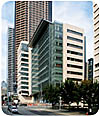
Still, a growing band of building designers and owners swear by them. For an engineering building at the University of Pennsylvania, for example, a ventilated double wall was shop-fabricated as large, unitized sections to speed installation.

The design obviated the need for fritting or tinting of the floor-to-ceiling glass, says Richard Maimon, an architect with KieranTimberlake Associates, of Philadelphia.

"You can be comfortable next to the glass on the hottest days of August and coldest days of February," he says. "And the energy use has been modest."

The engineering school was smitten with the high-tech image, yet equally concerned with energy use. The same factors attracted Manulife Financial to a comparable unitized product for its new U.S. headquarters in Boston. There, more than 200,000 square feet of clear glass, framed in stainless steel and aluminum, protect a cavity vented by fans-and integrated into the HVAC system.

"It's the first active wall system using the air-pressure differential between the ceiling plenum and the tenant space to circulate air," says Bernie Gandras AIA LEED AP, an associate partner with Skidmore Owings & Merrill, of Chicago. "So it has no ductwork on the perimeter."

Passive double walls, on the other hand, rely on convective currents in the "thermal flue" to move hot air up and out. The 14-story, LEED-NC Silver-rated Seattle Justice Center, which houses the city's police headquarters and municipal courts, has a double-skinned southwest exposure. This passive wall's 30-inch-wide air gap essentially serves as "thermal buffer," says architecture firm NBBJ's LEED-accredited Kerry Hegedus. Unlike the factory-built unitized systems used elsewhere, NBBJ designed the inner wall of storefront spanning from floor to floor, and the outer screen of steel-tube-supported, single-glazed curtain wall.

"We wanted to keep it simple, using conventional materials that wouldn't scare contractors away," says Hegedus.

Yet the wall section is packed, harboring a catwalk and automatic louvers to regulate heat and light. "Lots of glass often means you need some type of operable shading system," says Maurya McClintock, a façade engineer with San Francisco-based Arup who consulted to the engineering school and SJC. "The primary reason you use a double-wall façade is that they allow you to provide solar control while maximizing glazed area."

This was true in all three projects, in fact. The building owners and occupants wanted as much daylight as possible without wasting energy. Moreover, they were all committed to using this rare breed of envelope-in part because they had personally inspected similar installations in Europe. In countless other cases, however, the complexity and the costs-hovering at $300 per square foot-prove too much for project teams to bear.

"The payback cycles are very long, and the systems are hard to model with standard energy software," says KTA's Kevin B. Pratt AIA. "It's a tough nut to crack. Many projects don't get out of the value-engineering stage."

In America, at least, these premium façade packages often send specifiers hunting for simpler greening strategies, says SmithGroup's Mella. "Like growing deciduous vines on the outside of their buildings."


If you read this article, please circle number 337.

Share This Story

Looking for a reprint of this article?
From high-res PDFs to custom plaques, order your copy today!

C.C. Sullivan is a consultant and author specializing in building technology. He is currently writing a book on building envelopes and architectural design.

Recommended Content

JOIN TODAY
To unlock your recommendations.

Already have an account? Sign In

  • Abercrombie & Fitch

    EIFS in 2026: How Specialty Finishes Are Redefining Exterior Wall Systems

    As building codes, owner expectations, and design demands...
    Stucco/EIFS
    By: Regi Mendoza
  • proper air and vapor control

    From Energy Efficiency to Moisture Management: Why Air and Vapor Control Matter

    How proper air and vapor control within building...
    Building Envelope
    By: Benjamin Meyer AIA, LEED AP
  • Linear Metal Ceiling Beam Baffles

    Top 25 Ceiling Contractors of 2026

    Suspended ceilings demand precision, code compliance and...
    Ceilings
    By: John Wyatt and Tanja Kern
You must login or register in order to post a comment.

Report Abusive Comment

Manage My Account
  • eMagazine Subscription
  • Newsletters
  • Online Registration
  • Manage My Preferences
  • Subscription Customer Service

More Videos

Sponsored Content

Sponsored Content is a special paid section where industry companies provide high quality, objective, non-commercial content around topics of interest to the Walls & Ceilings audience. All Sponsored Content is supplied by the advertising company and any opinions expressed in this article are those of the author and not necessarily reflect the views of Walls & Ceilings or its parent company, BNP Media. Interested in participating in our Sponsored Content section? Contact your local rep!

close
  • medical professionals moving a patient on a stretcher through the halls of a medical building
    Sponsored byNational Gypsum Company

    What Does High Performance Mean When It Comes To Gypsum Boards?

Popular Stories

Linear Metal Ceiling Beam Baffles

Top 25 Ceiling Contractors of 2026

Wichita Biomedical Campus

Wichita Drywall Worker Dies After Scaffolding Fall

QXO Just Changed the Game-Here's What Contractors Are Asking

QXO Just Changed the Game-Here's What Contractors Are Asking

An interior drywalling work in progress

Boost Profits with AI Scheduling

Events

June 24, 2026

The Bright Side & Benefits of Designing with Integrated Lighting

Credits 1 AIA LU/HSW; 0.1 ICC CEU

This course will explore the pivotal role architects and lighting design play in creating safer, more sustainable spaces. Learn how to avoid common lighting mistakes and make informed decisions that create the best visual environment for occupants. 

January 1, 2030

Webinar Sponsorship Information

For webinar sponsorship information, visit www.bnpevents.com/webinars or email webinars@bnpmedia.com.

See our full library of webinars

View All Submit An Event

Products

2026 National Painting Cost Estimator

2026 National Painting Cost Estimator

See More Products

Related Articles

  • High-performance building envelopes special section: Optimizing Building Envelopes

    See More
  • High-performance building envelopes special section: The Chemistry of High Performance Buildings

    See More
  • High-performance building envelopes special section: Energy Efficiency Enhanced with Air Barriers

    See More

Related Products

See More Products
  • 1118458605.jpg

    Sustainable Facades: Design Methods for High-Performance Building Envelopes

  • building codes illustated.jpg

    Building Codes Illustrated: A Guide to Understanding the 2021 International Building Code, 7th Edition

See More Products

Events

View AllSubmit An Event
  • November 5, 2025

    RAiNA Conference 2025: Rainscreen Proficiency – The Parts, Precision and Performance

    If you’re passionate about the future of sustainable architecture and resilient construction, the RAiNA Conference 2025: Rainscreen Proficiency – The Parts, Precision and Performance is a must-attend event. This conference offers a unique opportunity to hear from top industry experts about the crucial role of rainscreens in modern construction. Attendees have the opportunity to be among the first to learn about pioneering ideas and groundbreaking projects, keeping them at the forefront of their field.
View AllSubmit An Event

Related Directories

  • High Performance Insulation Professionals (HPIP)

    HPIP is the only 501c3 in the insulation industry dedicated to establishing a unified certification for contractors and those entering the workplace. HPIP's mission is TO BETTER THE INSULATION INDUSTRY.
×

Connect with the industry’s leading resource for unparalleled insights and education.

Join thousands of industry professionals today. Shouldn’t you know what they know?

JOIN NOW
  • RESOURCES
    • Advertise
    • Contact Us
    • Directories
    • Store
    • Want More
  • SIGN UP TODAY
    • Create Account
    • eMagazine
    • Newsletters
    • Customer Service
    • Manage Preferences
  • SERVICES
    • Marketing Services
    • Reprints
    • Market Research
    • List Rental
    • Survey/Respondent Access
  • STAY CONNECTED
    • LinkedIn
    • Facebook
    • Instagram
    • YouTube
    • X
  • PRIVACY
    • PRIVACY POLICY
    • TERMS & CONDITIONS
    • DO NOT SELL MY PERSONAL INFORMATION
    • PRIVACY REQUEST
    • ACCESSIBILITY

Copyright ©2026. All Rights Reserved BNP Media, Inc. and BNP Media II, LLC.

Design, CMS, Hosting & Web Development :: ePublishing
