Walls & Ceilings logo
search
cart
facebook twitter linkedin youtube youtube Spotify Podcasts Apple Podcasts Spotify Podcasts Apple Podcasts
  • Sign In
  • Create Account
  • Sign Out
  • My Account
Walls & Ceilings logo
  • NEWS
  • TOPICS
    • Drywall
    • Stucco/EIFS
    • Ceilings
    • Steel Framing
    • Fireproofing
    • Interior Plaster
    • Building Envelope
    • Insulation
    • Technology
    • Interior
    • Exterior
    • Women In Construction
  • COLUMNS
    • Up Front
    • All Things Gypsum
    • Art & Craft of Plastering
    • Stucco Stop
    • Steel Deal
    • Industry Voices
  • PRODUCTS
    • Buzz Guide
  • EVENTS
    • Industry Events
    • Webinars
    • BUILD Expo
  • MEDIA
    • Videos
    • Podcasts
    • Photo Galleries
    • BUILD26 Videos
    • Take our Quiz!
    • Infographics
  • EXCLUSIVE
    • Newsletters
    • Top 50 Contractors
    • Contractor of the Year
    • State of the Industry
    • W&C Store
    • Market Research
    • CEUs
    • Sponsor Insights
    • Custom Content & Marketing Services
  • DIRECTORY
  • EMAGAZINE
    • eMagazine
    • Advertise
    • Archive Issues
  • SIGN UP!

High-performance building envelopes special section: Energy Efficiency Enhanced with Air Barriers
By Lisa Petsko
May 1, 2006


Although energy efficiency and green buildings are buzz phrases in today's society, some people may not realize how air barriers can help with energy conservation, indoor air quality, reduced mechanical load and related issues of mold and material degradation. They simply desire a comfortable and energy efficient living and working environment.

A recent study, conducted by the National Institute of Standards and Technology, determined that air barriers are a cost effective measure to be installed in buildings. Most notably, the study showed that the energy savings ranged from 30 to 40 percent for heating climates and 10 to 15 percent for cooling climates.
Air leakage has proven to be a significant potential source of condensation and moisture accumulation in building envelope assemblies, according to several studies completed in the last decade. One such study compared potential moisture contributed by air leakage vs. vapor diffusion over a period of one year. The results: Infiltration/exfiltration proved to be a significant potential source of moisture accumulation in walls and/or high relative humidity levels in interior spaces.

Water vapor diffusion, on the other hand, was shown to be a much less significant potential source of moisture than once thought. In this study, air leakage was 228 gallons, which equals 45.6 five gallon buckets vs. less than 6 ounces of vapor diffusion.*

Designing and constructing an airtight building envelope reduces the risk of moisture problems-mold growth, decay, corrosion, loss of insulation value and IAQ problems-that can occur because air leakage and condensation are minimized. Controlling moisture helps to control mold growth in wall assemblies and makes the building or home more energy efficient.
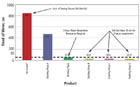
Chart: Water penetration resistance of Sto Guard Spray-On Waterproofing/Moisture Barrier Material compared to building wraps and building paper.

Airtight construction

At the same time, airtight construction is likely to be less capable of drying than "air-porous" construction in the event of water leakage or other unforeseen circumstances that cause water to enter a wall assembly. The designer then must strive to prevent rainwater penetration into the wall assembly, to construct an airtight building envelope assembly of compatible air barrier materials, and to enhance the drying potential of the wall assembly in the overall design strategy. Luckily, a number of connecting air barrier materials are on the market to make transitions from one material to the next.

Construction detailing is a critical component for the success of any wall assembly. Aside from minimizing and controlling the condensation that may occur via air leakage or water vapor diffusion, the designer must also create construction details that prevent rainwater penetration.

An important advantage of a breathable spray-on waterproofing/air barrier in the wall assembly is that it can mitigate or eliminate one of the major forces that causes water infiltration into walls-pressure difference. A waterproofing/air barrier, in combination with venting and compartmenting, enables the pressure behind the cladding material to equalize with the pressure outside and prevent rainwater penetration caused by pressure differentials.
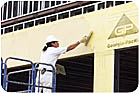
Sto Guard, a spray-on waterproofing/air barrier, effectively resists water penetration for up to 75 minutes when subjected to water spray equivalent to 8 inches of rainfall per hour driven by an approximate 50-mile-per-hour wind. The air and water barrier, tested in accordance with ASTM E-331, also has the ability to allow water vapor to pass through, yet keeps damaging moisture from penetrating the sheathing. The product has been proven to resist mold growth when tested in accordance with ASTM D 3273. With a spray-on structural moisture barrier, a builder has minimized risk of damage from water intrusion during or after construction.

When thinking about choices in air barriers, it's also important to think about what type of cladding will be used. By using a stucco or EIFS cladding, combined with a waterproofing/air barrier, a more energy efficient cladding can be created.

When making these choices, we need to think what's best in the long-term and what's best for our environment, including IAQ. There are organizations that help us to think green. The U.S. Green Building Council is working to promote buildings that are environmentally responsible, profitable and healthy places to live and work. Council members work together to develop LEED products and resources, the Greenbuild Annual International Conference and Expo, policy guidance, and educational and marketing tools that support sustainable building. LEED certification recognizes projects that have demonstrated a commitment to sustainability. The LEED standard has been adopted nationwide as the guideline for sustainable building.

Notes:

Independent testing by Cerny & Ivey Engineers

Sto Guard spray-on waterproofing/moisture barrier material did not leak but met limit of testing fixture.

Materials tested in accordance with AATCC-127 (American Association of Textile Chemists and Colorists Test Method 127-Water Resistance: Hydrostatic Pressure Test [modified]). A column of water 21.6 inches tall is placed over the moisture barrier material and sealed to the surface. The moisture barrier material spans a 1/8-inch-wide joint in supporting sheathing. Building wraps and building paper are not penetrated with fasteners. Time to water penetration is then measured. For the materials that met the 5-hour criteria, the height of the water column was increased to determine the limits of the material.

*Extrapolation of data from "Preventing Indoor Air Quality Problems in Educational Facilities: Guidelines for Hot, Humid Climates," by CH2MHill in cooperation with Disney Development Co.


If you read this article, please circle number 336.

Share This Story

Looking for a reprint of this article?
From high-res PDFs to custom plaques, order your copy today!

Lisa Petsko is product manager for Sto Corp.

Recommended Content

JOIN TODAY
To unlock your recommendations.

Already have an account? Sign In

  • Abercrombie & Fitch

    EIFS in 2026: How Specialty Finishes Are Redefining Exterior Wall Systems

    As building codes, owner expectations, and design demands...
    Stucco/EIFS
    By: Regi Mendoza
  • proper air and vapor control

    From Energy Efficiency to Moisture Management: Why Air and Vapor Control Matter

    How proper air and vapor control within building...
    Building Envelope
    By: Benjamin Meyer AIA, LEED AP
  • Linear Metal Ceiling Beam Baffles

    Top 25 Ceiling Contractors of 2026

    Suspended ceilings demand precision, code compliance and...
    Ceilings
    By: John Wyatt and Tanja Kern
You must login or register in order to post a comment.

Report Abusive Comment

Manage My Account
  • eMagazine Subscription
  • Newsletters
  • Online Registration
  • Manage My Preferences
  • Subscription Customer Service

More Videos

Sponsored Content

Sponsored Content is a special paid section where industry companies provide high quality, objective, non-commercial content around topics of interest to the Walls & Ceilings audience. All Sponsored Content is supplied by the advertising company and any opinions expressed in this article are those of the author and not necessarily reflect the views of Walls & Ceilings or its parent company, BNP Media. Interested in participating in our Sponsored Content section? Contact your local rep!

close
  • medical professionals moving a patient on a stretcher through the halls of a medical building
    Sponsored byNational Gypsum Company

    What Does High Performance Mean When It Comes To Gypsum Boards?

Popular Stories

Linear Metal Ceiling Beam Baffles

Top 25 Ceiling Contractors of 2026

Wichita Biomedical Campus

Wichita Drywall Worker Dies After Scaffolding Fall

QXO Just Changed the Game-Here's What Contractors Are Asking

QXO Just Changed the Game-Here's What Contractors Are Asking

An interior drywalling work in progress

Boost Profits with AI Scheduling

Events

June 24, 2026

The Bright Side & Benefits of Designing with Integrated Lighting

Credits 1 AIA LU/HSW; 0.1 ICC CEU

This course will explore the pivotal role architects and lighting design play in creating safer, more sustainable spaces. Learn how to avoid common lighting mistakes and make informed decisions that create the best visual environment for occupants. 

January 1, 2030

Webinar Sponsorship Information

For webinar sponsorship information, visit www.bnpevents.com/webinars or email webinars@bnpmedia.com.

See our full library of webinars

View All Submit An Event

Products

2026 National Painting Cost Estimator

2026 National Painting Cost Estimator

See More Products

Related Articles

  • High-performance building envelopes special section: The Chemistry of High Performance Buildings

    See More
  • High-performance building envelopes special section: Optimizing Building Envelopes

    See More
  • High-performance building envelopes special section: Double Whammy

    See More

Related Products

See More Products
  • 1118458605.jpg

    Sustainable Facades: Design Methods for High-Performance Building Envelopes

See More Products
×

Connect with the industry’s leading resource for unparalleled insights and education.

Join thousands of industry professionals today. Shouldn’t you know what they know?

JOIN NOW
  • RESOURCES
    • Advertise
    • Contact Us
    • Directories
    • Store
    • Want More
  • SIGN UP TODAY
    • Create Account
    • eMagazine
    • Newsletters
    • Customer Service
    • Manage Preferences
  • SERVICES
    • Marketing Services
    • Reprints
    • Market Research
    • List Rental
    • Survey/Respondent Access
  • STAY CONNECTED
    • LinkedIn
    • Facebook
    • Instagram
    • YouTube
    • X
  • PRIVACY
    • PRIVACY POLICY
    • TERMS & CONDITIONS
    • DO NOT SELL MY PERSONAL INFORMATION
    • PRIVACY REQUEST
    • ACCESSIBILITY

Copyright ©2026. All Rights Reserved BNP Media, Inc. and BNP Media II, LLC.

Design, CMS, Hosting & Web Development :: ePublishing
