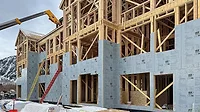
Building Envelope Transitions
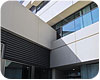
Building envelope transitions may occur regularly on projects but each transition needs to be addressed individually.
When a building leaks, the design, workmanship and material of the building envelope are all suspect. The exterior walls, roofing, windows, doors, balcony decks and below-grade waterproofing are all potential culprits. Oftentimes, however, a leak cannot be attributed to just one building envelope component. The way in which the building envelope systems come together is critical to the overall waterproofing performance. As such, the building envelope integrations, from straightforward to complex, must be addressed efficiently and effectively.
Recent building trends, most notably “integrated project delivery,” blur the lines between design and construction responsibilities. As a result, they introduce new opportunities for owners, designers, and contractors to eliminate gaps between the conceptual design and actual construction of the building envelope. The benefit of coordinated effort is seen through the ultimate performance of the building, but getting there is not always a streamlined process. There are several contributing factors, many of which are project specific, that play a key role in determining how to approach these problem transitions. Identifying lead parties and the appropriate timing for addressing wall system integrations can have a significant impact on the potential risk of failure and cost of installation or remediation. While the methods for detailing transitions are evolving, the necessity for effective field implementation remains. Successful design and coordination of even the simplest transition detail is overshadowed if the components are not installed correctly.
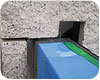
Carefully consider where wall systems transition to horizontal waterproofi ng systems, especially at parapets.
Design Factors Impacting Building Envelope Transitions
Building envelopes must be watertight and still meet the architectural design intent, as well as the owner’s performance and operational expectations. Achieving all of these requirements can be incredibly difficult where cladding components meet or integrate with adjacent roofing and waterproofing systems. The phrase “reinventing the wheel” is used often in the construction industry, especially when looking at ways to prevent water and air intrusion. This is never more evident than at cladding transitions.The parameters impacting transitions, however, vary from building to building, requiring full assessment of each new condition and development of new project specific details for the individual transition. This includes understanding the specific materials or components involved as well as understanding other factors that impact the transition such as system anchorage, structural movement and installation sequencing. Common conditions like below-grade waterproofing transitioning to wall cladding systems at grade; balcony decks extending out from the exterior wall; barrier wall systems, such as precast panels, transitioning to rain screen cladding systems; and general wall claddings intersecting plaza deck waterproofing or roofing systems, particularly at parapets, all present challenges at transition detailing. These are just a few of the system transitions that need to be considered, and while they may occur on nearly every project, they can vary greatly from one building to another.
Within each system, details must address transitions in framing elements, substrates, membranes, claddings, sealants and flashings. In addition to considering the individual materials, it is important to consider the factors that impact how the systems come together. Building movements from loading, specifically the influence of gravity loads (live and dead load deflection), lateral loads (seismic and wind loads) and thermal movement must be taken into consideration. Each system will respond to the various movements differently. The method by which a cladding system is anchored to a floor slab will also dictate its response to movement. Some wall cladding systems, including glass and aluminum curtain walls or precast concrete wall panels, can rack or slide in response to movement. The design and construction teams must coordinate these issues early in the design process.

Transition of building envelope systems depicted in axonometric detail.
Project Team Members' Roles in Addressing Building Envelope Transitions
Architects, consultants, general contractors, installers and manufacturers can all play a crucial role in addressing waterproofing system integrations. Modern project delivery methods allow project team members to work together earlier in the process to locate and address typical and atypical problem areas. The project design team, which includes the architect and various consultants, establishes the initial understanding of the intricacies of the building geometry and the required performance criteria. Oftentimes while working in two dimensions, system transitions are located on plans and elevations and detailed with a simple note drawing attention to the issue or with a full axonometric detail showing how the systems integrate.The construction team, including the general contractor, material installer and material manufacturer, will tend to have a more specific understanding of the construction approach. The general contractor, who is typically responsible for coordinating trades and delineating scopes of work, has the opportunity to review subcontractor shop drawings and bring attention to system transitions and integrations. The installers, who often prepare material shop drawings, can annotate on their drawings where transitions occur and clarify any requirements related to sequencing or tolerances for the adjacent systems. Manufacturers and waterproofing consultants have the most intimate understanding of the materials being used and can review construction documents and shop drawings to locate potential issues where specific materials will come in contact with adjacent systems. Evaluating constructability, material compatibility and performance limitations is important to preparing a long-term and watertight transition detail.
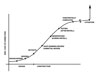
Addressing building envelope systems early is typically a risk-reducing and cost-saving approach, but close attention should be paid to changes that occur during construction.
Stage of Design and/or Construction at Which Building Envelopes Transitions are Addressed
While there are often various options for addressing material and system transitions, the common model of “early is better” may not necessarily ring true in all situations. In the design phase of a conventional design-bid-build project, where the earlier a material transition is addressed the less cost will likely be associated with its implementation, opportunities for addressing system integrations initially lie with the design team. The design team has the opportunity to locate system integrations on plans and elevations. However, some of the more complex wall systems, such as curtain walls, rain screens, and precast concrete, and the more complex roofing/waterproofing systems, such as vegetative roofs and plaza decks, may not be sufficiently defined in the design phase to accurately address the transition.In a case of transitioning between a schematic curtain wall system and a schematic metal wall panel system, efforts may be wasted attempting to fully detail the transition prior to selection of specific systems and materials. In a conventional delivery process, many specific building envelope systems are selected after bidding and pricing and the cost associated with addressing a transition begins to increase. The shop drawing phase is generally the most effective opportunity early in the construction process to address transitions. Since specific materials and systems are known, the installers are able to provide constructability input and the manufacturers are able to provide compatibility input.
Adjacent trade shop drawings can be reviewed and coordinated to determine where and how integrations will occur. This allows the project team to develop accurate integration details that best reflect expected as-built conditions. As construction begins and materials are installed on the building, the cost to redesign or modify details continues to increase. The opportunities to address integrations will continue to diminish as more materials are installed and the schedule is pushed forward.
Implementation of Building Envelope Transitions
A thorough design with active coordination and foresight by the design and construction teams can still lead to issues at even the simplest transition if the components, particularly waterproofing and flashing elements, are not properly installed. Since these transitions include various materials and installers, the performance of the integrations comes down to field execution and communication between trades. While design and construction technologies will continue to simplify coordination, if the materials are not installed effectively the building envelope may not meet the design and performance requirements of the project. The industry will continue to strive to have better performing buildings with more complex designs. In order to build these projects successfully, the design and construction teams must address cladding transitions through an effective and collaborative effort.Looking for a reprint of this article?
From high-res PDFs to custom plaques, order your copy today!