Walls & Ceilings logo
search
cart
facebook twitter linkedin youtube youtube Spotify Podcasts Apple Podcasts Spotify Podcasts Apple Podcasts
  • Sign In
  • Create Account
  • Sign Out
  • My Account
Walls & Ceilings logo
  • NEWS
  • TOPICS
    • Drywall
    • Stucco/EIFS
    • Ceilings
    • Steel Framing
    • Fireproofing
    • Interior Plaster
    • Building Envelope
    • Insulation
    • Technology
    • Interior
    • Exterior
    • Women In Construction
  • COLUMNS
    • Up Front
    • All Things Gypsum
    • Art & Craft of Plastering
    • Stucco Stop
    • Steel Deal
    • Industry Voices
  • PRODUCTS
    • Buzz Guide
  • EVENTS
    • Industry Events
    • Webinars
    • BUILD Expo
  • MEDIA
    • Videos
    • Podcasts
    • Photo Galleries
    • BUILD26 Videos
    • Take our Quiz!
    • Infographics
  • EXCLUSIVE
    • Newsletters
    • Top 50 Contractors
    • Contractor of the Year
    • State of the Industry
    • W&C Store
    • Market Research
    • CEUs
    • Sponsor Insights
    • Custom Content & Marketing Services
  • DIRECTORY
  • EMAGAZINE
    • eMagazine
    • Advertise
    • Archive Issues
  • SIGN UP!
Building EnvelopeInsulation

Building Better Enclosures

How Modern Building Envelope Materials Support New Code Requirements

Contractors are pushed toward tighter, more energy-efficient building envelopes. making continuity in insulation, air sealing, and moisture control essential and increasing the importance of integrated materials like spray foam, structural sheathing, coatings, and sealants to meet rising performance standards.
By Daniel Darling, Smitha Jayaraman, Ed Klonowski
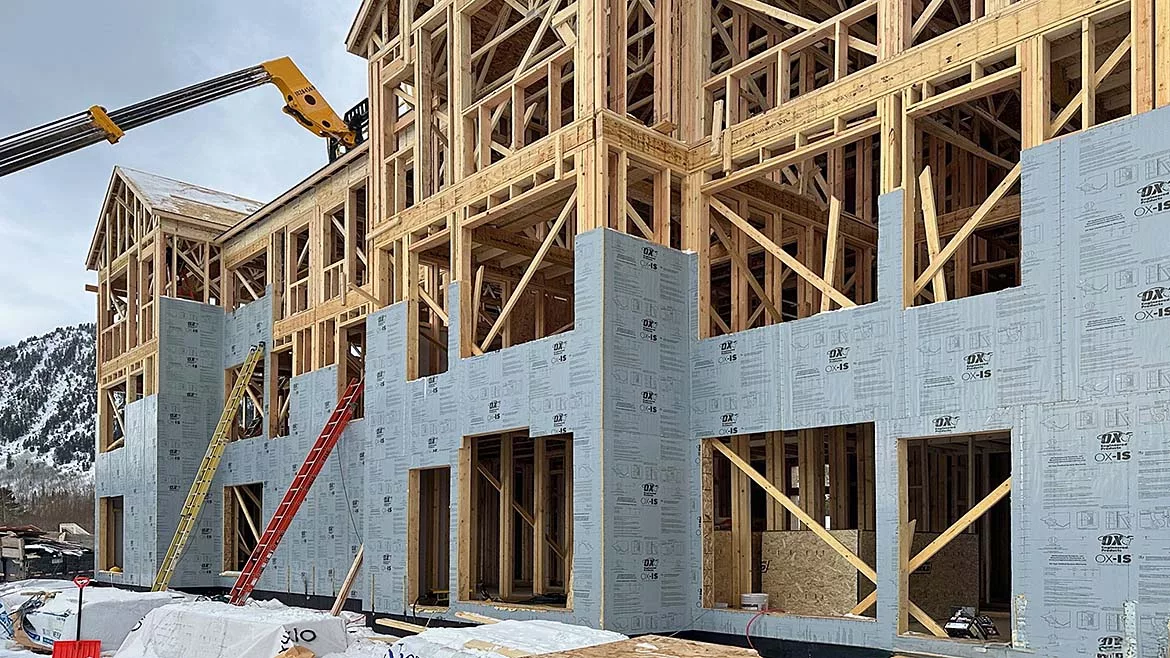
INsulation being added to the wooden frame of a building
Amrize Building Envelope
January 16, 2026

Across the country, states and municipalities are beginning to review and adopt the 2024 International Energy Conservation Code and ASHRAE 90.1-2022. While adoption will be gradual, these updates reflect a broader industry shift: buildings are expected to waste less energy while managing air and moisture more effectively. Getting real-world performance to comply with the code will require contractors to build assemblies with tighter continuity and pay greater attention to detail, particularly as it relates to coatings, sheathings, sealants and spray foam. This shift raises the importance of field execution, since small inconsistencies in transitions or detailing can now determine whether an assembly meets the latest codes.  

The Impact of New IECC and ASHRAE Updates on Contractors

Both ASHRAE 90.1-2022 and the 2024 IECC are published and available for adoption. Adoption will vary by region, but the direction is clear: expectations for tighter, more resilient building envelopes continue to rise as more municipalities move toward these standards into 2026. 

Both the IECC 2024 and ASHRAE 90.1-2022 increase expectations around three core areas that affect contractors’ work: 

Continuous Insulation

The 2024 IECC strengthens prescriptive CI requirements across additional climate zones to reduce thermal bridging. ASHRAE 90.1-2022 also increases minimum R-values for several wall types and clarifies how framing, fasteners, and transitions affect thermal performance. These changes specify that insulation must remain continuous even around framing irregularities and transitions. 

Air Leakage Control

More jurisdictions are expected to require blower-door testing or whole-building air leakage verification as they adopt these codes. The IECC tightens allowable leakage rates and emphasizes continuous air barrier assemblies. As a result, proper sealing around windows, penetrations, and cladding attachments will be even more important.  

Thermal Performance Expectations

ASHRAE 90.1-2022 raises minimum insulation levels and includes more explicit language on mitigating thermal bridging. This makes workmanship a larger part of meeting thermal targets, since gaps or unsealed joints can undermine the designed R-value of the assembly. 

Spray foam insulation will play a stronger role in meeting elevated R-value requirements, especially as assemblies must maintain consistent insulation levels across transitions and non-standard conditions. 

For many contractors, these changes do not require entirely new construction methods, but they do raise the consequences of small mistakes. Assemblies will need to be designed in a way that maintains continuity and protects the integrity of the air, moisture, and thermal layers.  
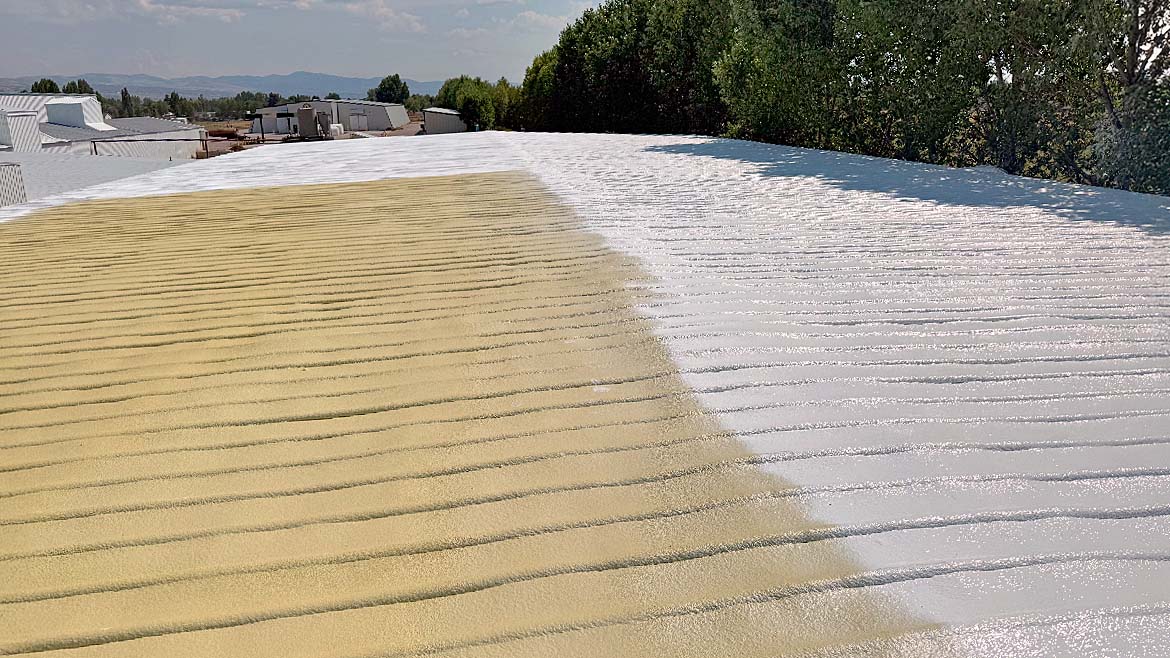
Coatings being applied as part of a comprehensive response to building energy codes

Photo: Amrize Building Envelope

Code-Compliant Building Envelope Materials

As the 2024 IECC and ASHRAE 90.1-2022 place more stringent emphasis on insulation and managed moisture, modern building envelope materials become crucial tools for ensuring assemblies perform as designed, not just on paper.  

Coatings and Insulation

Liquid-applied roof coatings applied over spray polyurethane foam create a durable, watertight surface. This benefit extends to new roofs, where fluid-applied coatings help protect the insulation below from UV exposure and support long-term envelope performance. Since both roof coatings and SPF are applied in monolithic layers, this negates seam and fastener penetrations that otherwise become weak points for air or moisture movement. 

Structural Sheathing

Beneath the exterior plane, structural sheathing that incorporates insulation forms the first continuous tier that control layers rely on. Structural insulated sheathing is a high-performance building system used for residential and light commercial construction. This provides a 4-in-1 solution with sheathing, insulation, R-value, air and water barriers all in one product. 

Sealants

For walls and transitions, sealants play a different but equally important role. The new codes assume that air barriers and thermal layers will be continuous across changes in plane, material, and system type. In practice, continuity depends on what happens at window perimeters, control joints, mechanical penetrations, cladding attachments, terminations, and interfaces between different assemblies. Properly selected and installed sealants help tie these details together so that the air and moisture control layers are not interrupted at the very points that are most vulnerable. 

Coatings and sealants also give contractors flexibility when dealing with irregular conditions. They help bridge the small field discrepancies that become more critical under tighter air leakage targets, without requiring changes to the overall wall design. While they cannot compensate for poor design or major installation errors, they can help protect areas where cutting and fitting other materials is more difficult. In this way, they support the intent of the newer IECC and ASHRAE requirements by helping create a more continuous, resilient building envelope without fundamentally changing how every wall or roof is built. 

Insulation

While spray foam and continuous insulation have dramatically improved air and moisture control, the quality of installation still determines performance. Even premium assemblies can fail blower-door verification if transition details are incomplete or inconsistent, which is why consistent sealing and detailing matter more under the new standards. 

Another ongoing concern is the perception that newer assemblies make buildings “too tight.” These issues are addressed through HVAC design rather than loosening the envelope. Still, they can create misunderstandings for homeowners or builders. 

Policy changes also influence adoption speed. For example, tax credits that helped incentivize continuous insulation were recently discontinued, slowing momentum in some regions. Builders often balance rising performance expectations with the realities of cost and labor availability.  

Why Using Sheathing, Coatings, Sealants, and Spray Foam Together Matters

As codes evolve, contractors are being asked to consider the building envelope as a system rather than a set of separate products. The latest IECC and ASHRAE standards emphasize that performance depends on how the air, thermal, and moisture layers interact across the entire assembly, not just on any single layer.

Together, these materials help maintain continuity across wall and ceiling layers under tighter code requirements. Spray foam and sheathing set a strong performance baseline, sealants keep that performance from breaking down at the edges, and coatings add durability and moisture protection over time.

Building for the Next Generation of Codes

As municipalities gradually adopt the 2024 IECC and ASHRAE 90.1-2022, contractors will continue shaping how well buildings perform for decades to come. Sheathing, coatings, sealants, and spray foam may not change the codes themselves, but they help reinforce tighter, more resilient assemblies that meet the intent of these standards.

By keeping up with material and installation practices specified by the latest codes, contractors can prepare confidently for the shift toward higher performance expectations in 2026 and beyond.

KEYWORDS: adhesives and sealants air barriers building codes CI (continuous insulation) energy codes IECC (International Energy Conservation Code) moisture R-value spray foam insulation

Share This Story

Looking for a reprint of this article?
From high-res PDFs to custom plaques, order your copy today!

Danieldarling 200
Daniel Darling is an experienced engineering leader with more than 25 years in product development, technical service, and compliance within the building materials and chemical industries. As Director of Engineering at OX Engineered Products, he drives innovation through new product development, code compliance and strategic technical initiatives. Daniel’s expertise spans raw material qualification, process optimization, and cross-functional collaboration with national building partners.
Wc0126 feat gaco p4 author smitha jayaraman headshot
Smitha Jayaraman is a product manager at Amrize Building Envelope. She manages product strategy and brand communication for the specialty segment, supporting a portfolio that includes GacoBond, GacoSeal, Tacky Tape, PolySpec, and American Safety Technologies. With a strong background in marketing, branding, and project management in the chemicals and building materials industries, Jayaraman brings a creative and strategic perspective to product development and positioning.
Wc2025 feat gaco p5 author ed klonowski headshot
Ed Klonowski is a senior product manager at Amrize Building Envelope with a background in physics and mechanical engineering. He has been with Amrize Building Envelope since 2016 filling product management roles for polyiso insulation, spray foam insulation, roof coatings, and liquid applied waterproofing. Ed has spent the last four years leading the coatings group for Gaco and its sub-brands.

Recommended Content

JOIN TODAY
To unlock your recommendations.

Already have an account? Sign In

  • Abercrombie & Fitch

    EIFS in 2026: How Specialty Finishes Are Redefining Exterior Wall Systems

    As building codes, owner expectations, and design demands...
    Stucco/EIFS
    By: Regi Mendoza
  • proper air and vapor control

    From Energy Efficiency to Moisture Management: Why Air and Vapor Control Matter

    How proper air and vapor control within building...
    Building Envelope
    By: Benjamin Meyer AIA, LEED AP
  • Linear Metal Ceiling Beam Baffles

    Top 25 Ceiling Contractors of 2026

    Suspended ceilings demand precision, code compliance and...
    Ceilings
    By: John Wyatt and Tanja Kern
You must login or register in order to post a comment.

Report Abusive Comment

Manage My Account
  • eMagazine Subscription
  • Newsletters
  • Online Registration
  • Manage My Preferences
  • Subscription Customer Service

More Videos

Sponsored Content

Sponsored Content is a special paid section where industry companies provide high quality, objective, non-commercial content around topics of interest to the Walls & Ceilings audience. All Sponsored Content is supplied by the advertising company and any opinions expressed in this article are those of the author and not necessarily reflect the views of Walls & Ceilings or its parent company, BNP Media. Interested in participating in our Sponsored Content section? Contact your local rep!

close
  • medical professionals moving a patient on a stretcher through the halls of a medical building
    Sponsored byNational Gypsum Company

    What Does High Performance Mean When It Comes To Gypsum Boards?

Popular Stories

Linear Metal Ceiling Beam Baffles

Top 25 Ceiling Contractors of 2026

Wichita Biomedical Campus

Wichita Drywall Worker Dies After Scaffolding Fall

Okan Tower in Miami, Florida

OSHA Opens Investigation Into Fatal Okan Tower Column Collapse

Construction workers in safety vests install drywall

Gypsum Sales Hold Amid Market Shifts in the U.S.

Events

June 24, 2026

The Bright Side & Benefits of Designing with Integrated Lighting

Credits 1 AIA LU/HSW; 0.1 ICC CEU

This course will explore the pivotal role architects and lighting design play in creating safer, more sustainable spaces. Learn how to avoid common lighting mistakes and make informed decisions that create the best visual environment for occupants. 

January 1, 2030

Webinar Sponsorship Information

For webinar sponsorship information, visit www.bnpevents.com/webinars or email webinars@bnpmedia.com.

See our full library of webinars

View All Submit An Event

Products

2026 National Painting Cost Estimator

2026 National Painting Cost Estimator

See More Products

Related Articles

  • Up Front: A Walls & Ceilings Editorial Column by Mark Fowler

    How Modern Building Science Is Creating “Frankenstein Walls” — And How to Stop Them

    See More
  • A man installing an insulation panel

    Continuous Insulation and Code Requirements: How Codes Address Continuous Insulation

    See More
  • Meeting Energy Code Requirements with Continuous Insulation

    See More

Related Products

See More Products
  • 0470872616.jpg

    Sustainable Renovation: Strategies for Commercial Building Systems and Envelope

  • 2021 ibc.jpeg

    2021 International Building Code® Illustrated Handbook

  • building codes illustated.jpg

    Building Codes Illustrated: A Guide to Understanding the 2021 International Building Code, 7th Edition

See More Products

Events

View AllSubmit An Event
  • October 8, 2026

    2026 IIBEC Building Enclosure Symposium (BES+)

    The Building Enclosure Symposium will be an interactive experience convening the best experts in the building enclosure industry. The two-day event offers cutting-edge information regarding the design, construction, maintenance and repair of modern and/or older building enclosures. Geared towards building enclosure professionals, architects, consultants, engineers, design professionals, contractors and specialists in waterproofing, fenestration, cladding and exterior wall systems.
View AllSubmit An Event

Related Directories

  • International Code Council (ICC)

×

Connect with the industry’s leading resource for unparalleled insights and education.

Join thousands of industry professionals today. Shouldn’t you know what they know?

JOIN NOW
  • RESOURCES
    • Advertise
    • Contact Us
    • Directories
    • Store
    • Want More
  • SIGN UP TODAY
    • Create Account
    • eMagazine
    • Newsletters
    • Customer Service
    • Manage Preferences
  • SERVICES
    • Marketing Services
    • Reprints
    • Market Research
    • List Rental
    • Survey/Respondent Access
  • STAY CONNECTED
    • LinkedIn
    • Facebook
    • Instagram
    • YouTube
    • X
  • PRIVACY
    • PRIVACY POLICY
    • TERMS & CONDITIONS
    • DO NOT SELL MY PERSONAL INFORMATION
    • PRIVACY REQUEST
    • ACCESSIBILITY

Copyright ©2026. All Rights Reserved BNP Media, Inc. and BNP Media II, LLC.

Design, CMS, Hosting & Web Development :: ePublishing