Attaching Lath for Adhered Masonry Veneer over Continuous Insulation
An added layer of insulation requires a stronger and corrosion resistant lath fastener whether for traditional three-coat stucco or adhered stone veneer.
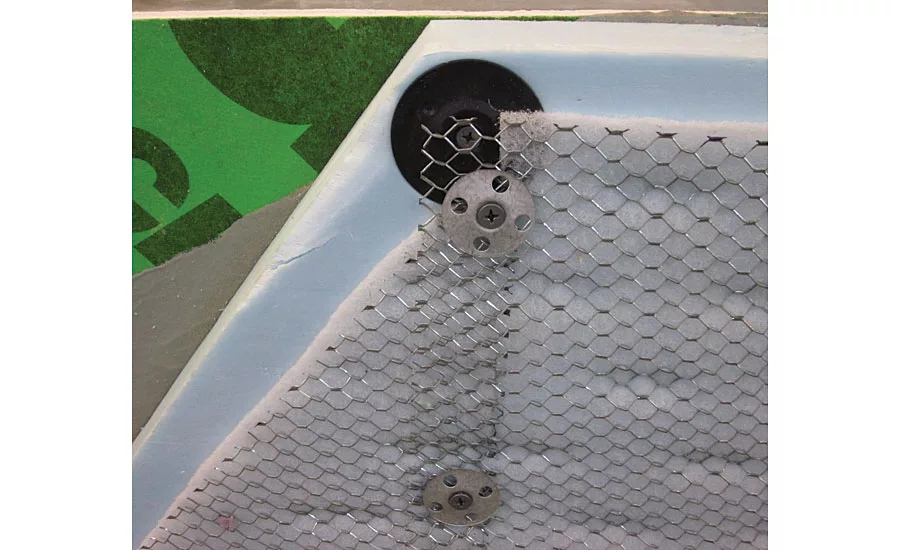
Lath attached over continuous insulation and into steel studs using 1 ¼” dia. Grip-Plate Lath & Plaster washers and Grip-Deck ci screws.
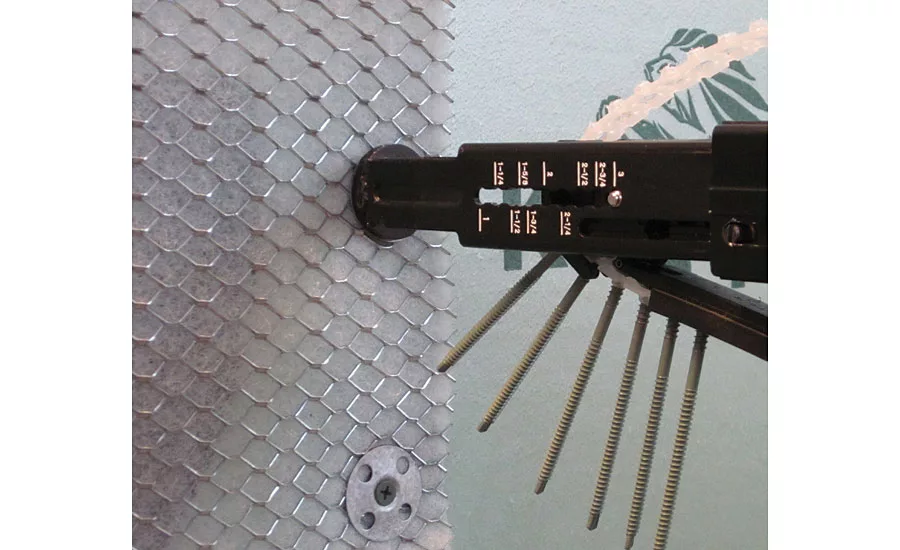
Auto-feed screw guns with magnetic nose cup adaptor to rapidly attach insulation and lath into heavy gauge steel studs.
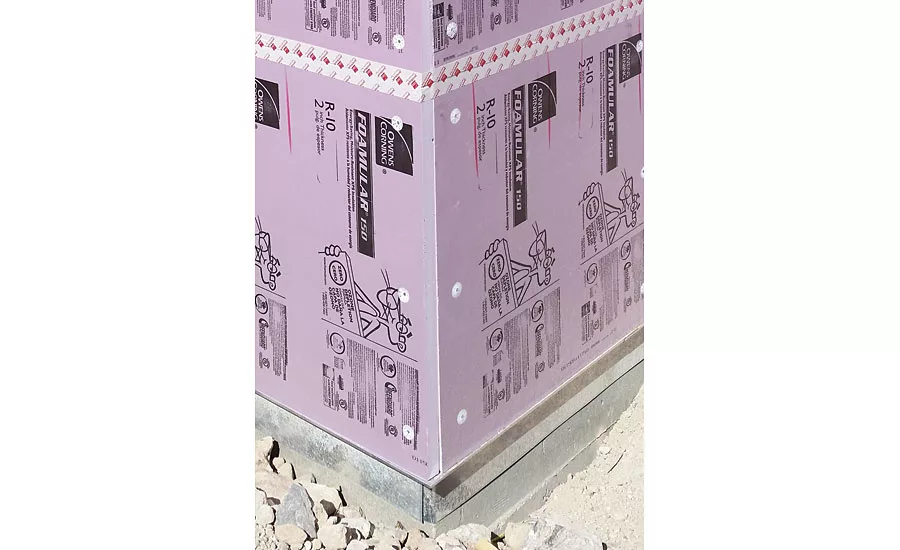
The XPS insulation on The New American Home project was first mechanically attached with 1 ¾” dia. pronged plastic washers. The dual prongs enable pre-spotting on the surface of the insulation for easy on-the-wall fastener assembly.
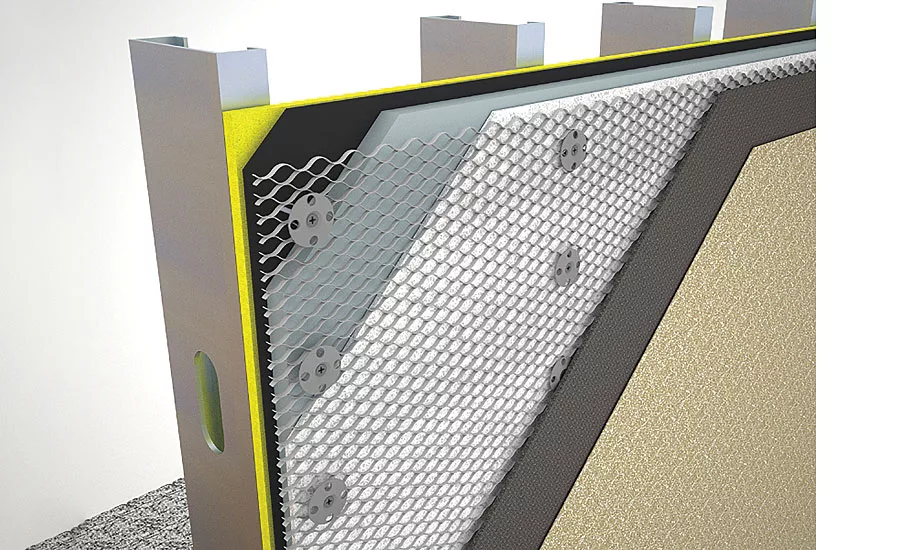
This cutaway shows a typical insulated masonry veneer cladding including steel studs, exterior gypsum sheathing, air barrier, rigid insulation, and lath with an integrated drainage mechanically attached with 1 ¼” dia. Lath & Plaster washers and ceramic coated self-drilling screws.
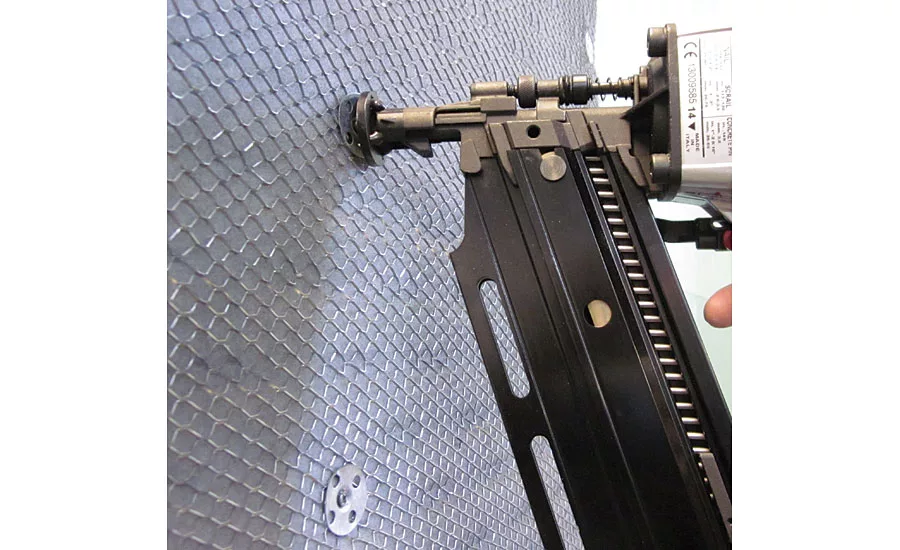
Pneumatic guns with custom magnetic nose cup adaptor to rapidly attach insulation and lath into wood studs.
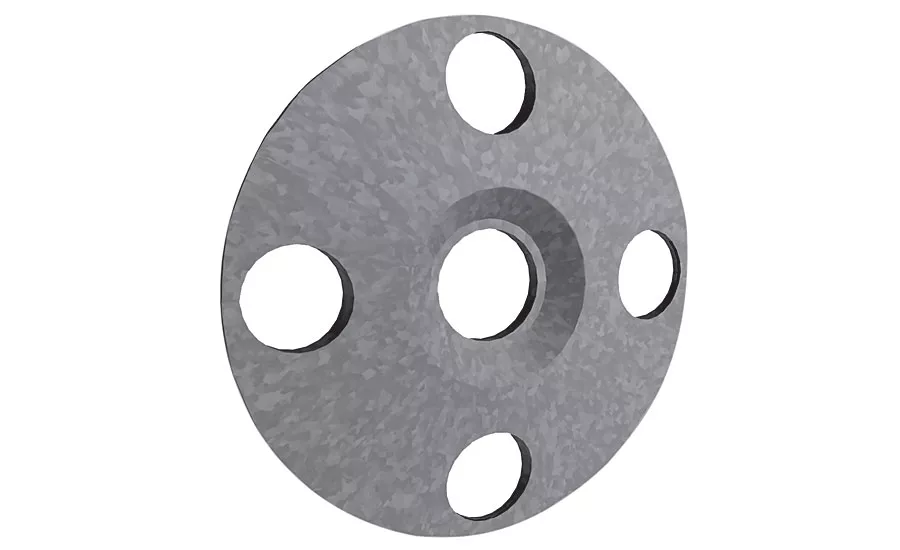
1 ¼” dia. Lath & Plaster washer
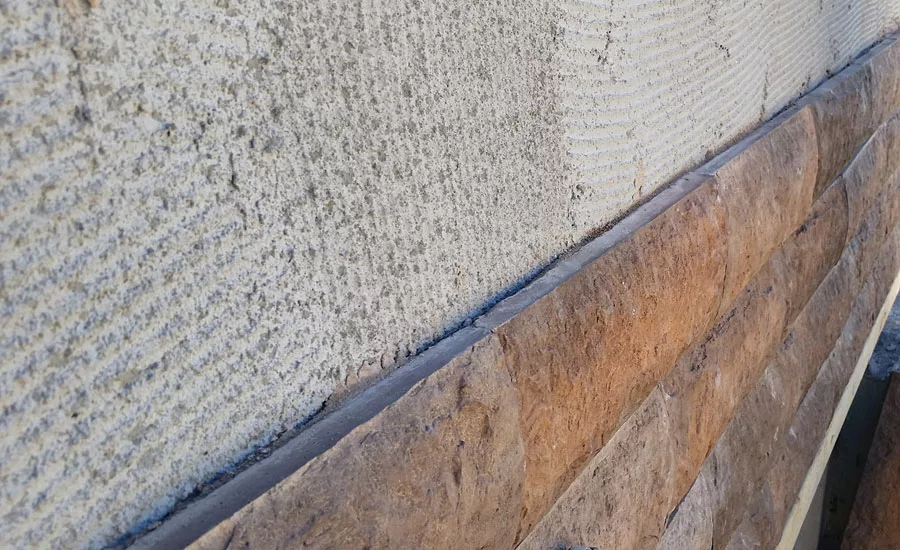
The New American Home project was showcased at the IBS show and featured adhered masonry veneer over continuous insulation. Lath & Plaster washers and galvanized screws were used to mechanically attach the lath to the wood substrate.
Adhered masonry veneer has been around for centuries in the form of three-coat stucco. When applied properly with the right materials and knowledgeable lathers and plasterers, it is durable, economical, and an aesthetically beautiful cladding. Done improperly and you may have a cladding that is vulnerable to leaks, mold, cracking, delamination, and even structural damage.
Traditionally, the lath for an adhered masonry veneer would be stapled or nailed over a double layer of building paper and directly into plywood sheathing and wood studs. In the case of steel studs and exterior gypsum sheathing, common zinc pan head screws were commonly used. These simple and readily available fasteners met the lathing code for strength and corrosion protection, as per ASTM C1063.
Times Have Changed
As you have hopefully noticed, energy codes now often require a layer of continuous insulation to help eliminate thermal shorts associated to the building frame (ASHRAE 90.1 and Title 24 in California). Continuous insulation was only a buzzword five short years ago, but now is a reality and a part of our everyday industry vocabulary. This additional layer of non-loadbearing insulation can cause serious problems if you do not change your method of adhered masonry cladding attachment. Those simple and commonly available
fasteners are not sufficient to attach lath when a layer of rigid insulation is sandwiched between the masonry and the framing. The weight of the adhered masonry veneer is cantilevered and must be supported through the layer of continuous insulation. This requires you to rethink your fastener choice. A stronger and larger diameter lath fastener is now required to ensure that the veneer cladding does not creep and crack over time.
Gravity and its downward force is not the only factor to consider. Expansion and contraction of the masonry veneer throughout the daily weathering cycles can cause movement of the veneer in all directions including away from the wall surface. This multi-directional movement is why large diameter 1¼-inch galvanized lath and plaster washers with galvanized screws are specified by smart designers and lathers. The washer captures a larger section of lath and ensures that the head of the fastener does not pull through the lath (especially important in the case of woven wire mesh). Lath and plaster washers have keyholes that allow embedment and bonding of the base coat to both the lath and the washers—not the case with common fender washers.
Guide to Installation
Help is available to determine a proper fastening solution. The leading insulation and lath fastener manufacturers can review your specific project requirements. Other industry groups have completed studies, for example, the Guide to Attaching Exterior Wall Coverings Through Foam Sheathing to Wood or Steel Wall Framing compiled by the Foam Sheathing Coalition. This guide serves as a starting point to determine the proper fastener diameter and spacing based on the cladding assembly weight and thickness.
Additional reports have been compiled by the WWCCA that detail suitable plaster assemblies over continuous insulation. Typical lath fastening patterns over CI is between 4 to 7 inches vertically on each 16-inch spaced framing member, dependent on weight and thickness of the assembly. This spacing is not much different than what was traditionally used with staples or nails. The most important update is the fastener design.
Lath and plaster contractors are of course concerned with labor costs and how much time it will take to use slower fasteners and washers. Tools with magnetic nose adaptors to hold the lath and plaster washers have been developed for rapid attachment into steel, wood, or concrete substrates. Pneumatically shot-in galvanized fasteners or screws with 1¼-inch diameter lath and plaster washers are a great choice for wood substrates. Steel studs and concrete can be a bit more challenging depending on the thickness of the continuous insulation. For thin insulation (up to 1-inch thickness) shot-in fasteners with 1¼-inch diameter lath and plaster washers may provide consistent results. When you fasten lath over thicker insulation (1-plus-inch) screws provide a much more consistent result compared to shot-in pins that will often ricochet or spall out. Auto-feed screw guns are also available with custom lath washer nose adaptors which can rapidly attach lath over rigid insulation up to 2-inch thickness, even into heavy gauge steel studs. Be sure to use a fastener long enough to penetrate the substrate to the recommended depth.
A great example of properly attached adhered masonry over continuous insulation was recently completed on The New American Home project in Las Vegas for the International Builders Show. Beneath the heavy stucco and cultured stone veneer cladding is a 2-inch thick layer of continuous rigid extruded polystyrene insulation.
For this project, the 2-inch XPS insulation was attached with 1¾-inch diameter Plasti-Grip CI prong washers. The dual prongs enabled pre-spotting of the washers onto the surface of the insulation for easy on-the-wall fastener assembly. The lath was then attached using 1¼-inch diameter Grip-plate galvanized steel lath and plaster washers with 4-inch long #10 Grip-Deck ci galvanized screws every 6 inches vertically on each 16-inch centered stud. Paper-backed woven wire mesh was used for the stucco veneer clad sections of the home while a combination of paper-backed woven wire mesh and expanded metal lath were used for the heavier cultured stone veneer clad sections. Though a common roofing nail may have initially held up the lath and the adhered masonry, it most certainly would have pre-maturely and catastrophically failed over time due to the heavy weight of the cladding and by the expansion and contraction caused by the extreme desert temperature swings. The insignificantly small added cost of galvanized lath and plaster washers and screws will ensure that this multi-million dollar home will perform beautifully for generations
to come.
It’s in the Details
Traditional roofing nails and staples are not suitable fasteners for lath attachment over continuous rigid insulation. The downward force of gravity and the multi-directional force of expansion and contraction are amplified when the veneer cladding is cantilevered over rigid continuous insulation. An added layer of insulation requires a stronger and corrosion resistant lath fastener whether for traditional three-coat stucco or adhered stone veneer. Fastening solutions are available and affordable. Various industry groups and lath fastener manufacturers provide reference guides to help you design and build durable and energy efficient plaster assemblies over continuous insulation.
Fasteners were historically an insignificant detail of a plaster assembly but are now perhaps the most important detail to consider when attaching heavy adhered masonry cladding over continuous insulation. Don’t be penny wise and pound foolish when it comes to these seemingly insignificant, rather, critical details. Build it right and build it to last.
Looking for a reprint of this article?
From high-res PDFs to custom plaques, order your copy today!





