Engineered Air and Moisture Barriers Boost Wall Performance
How engineered air and moisture barriers boost wall performance for green, resilient, energy-saving construction.

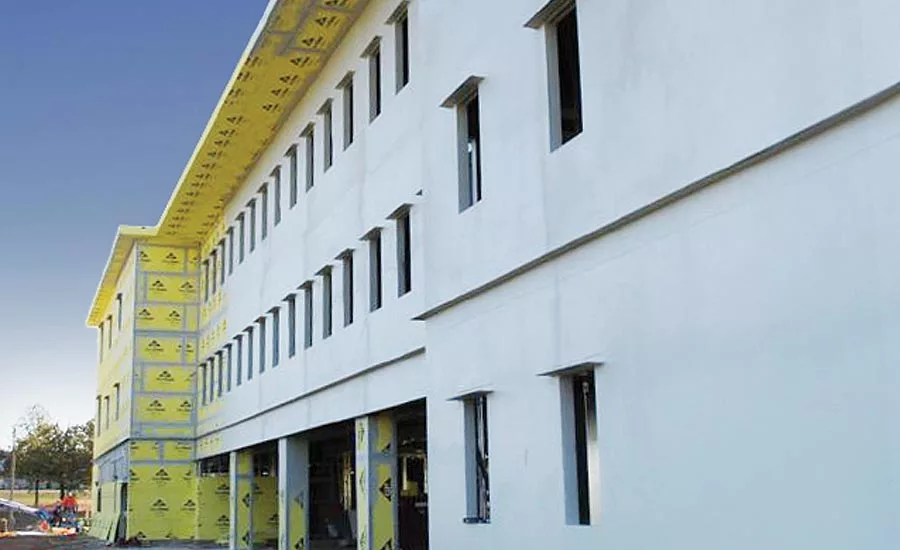
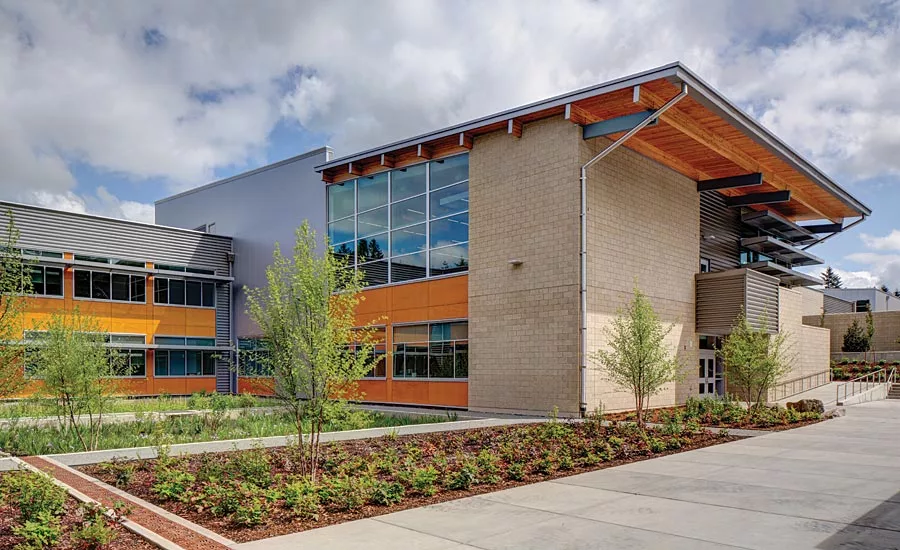
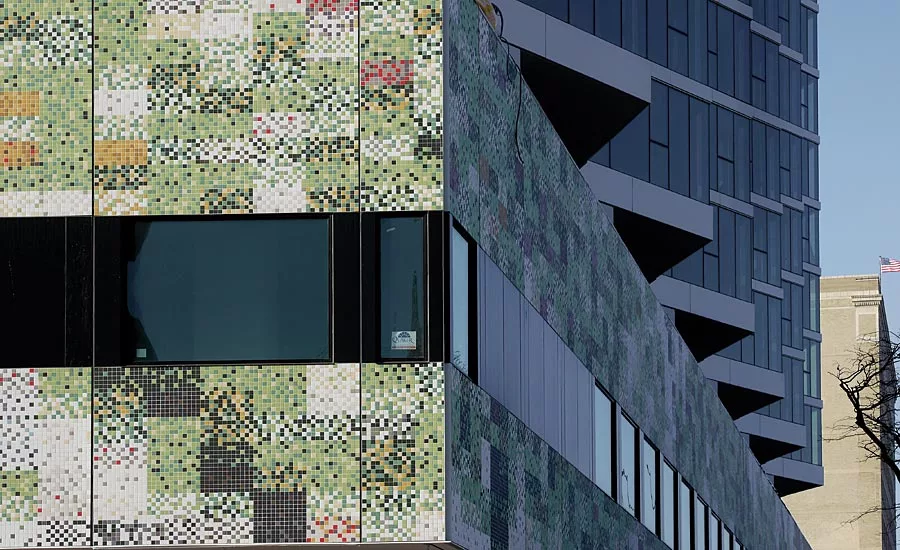
A renewed focus on better barrier wall construction has emerged recently, driven not by hypothetical ideals but by real and present demands. On the one hand, today’s building codes are pushing for more efficient envelopes, as seen in recent changes in the Washington State Energy Code and the U.S. Green Building Council’s LEED certifications, as well as almost universal adoption of the International Energy Conservation Code in U.S. jurisdictions. On the other hand, a number of building owners, tenants and designers are demanding greater energy efficiency and occupant comfort, in part as a competitive drive for more enjoyable, healthful and sustainable buildings.
These pressures have led to calls for wall systems and cladding choices that serve more needs, better. Enclosures need to minimize air leaks and thermal bridging, often called “energy bridges.” Market demands also focus more attention on the value of a superior air-and-moisture barrier, or AMB—materials and systems compatible with all varieties of cladding to serve every North American climate zone. To these ends, building project teams are asking a few pointed questions.
1. What makes for an optimal AMB?
Good question. AMBs, also called water-resistive air barriers or WRBs, must be properly located in the envelope, continuous across it, and consistently applied to resist air leakage and also provide effective moisture control. AMBs must be able to bridge cracks, joints and changes in material, always compatible with each material it contacts. It should be supported—either as applied to other materials or self-supporting—in a manner that won’t undermine its function. As with other envelope materials, the optimal AMB should be low in volatile organic compounds for healthy air and materials, and also tested for compliance with noncombustible construction per such life-safety codes as NFPA 285, ASTM E-84 and E-119. In terms of application and construction, it should be easy to work with and apply, and remain protective through any periods of outdoor exposure during buildout and operations.
2. How can AMBs meet energy codes and durability needs?
This is especially critical given today’s green building imperatives and interest in improved resiliency. First, the 2012 IECC and the current ASHRAE 90.1, baseline for most U.S. jurisdictional energy codes, now require the use of a complete air-barrier system. Other benchmarks, such as ASHRAE 189.1 and LEED version 4, include reference to those air-barrier requirements in ASHRAE 90.1 and the IECC. The key is for projects teams to specify AMB systems that meet these rules, and then monitor installation so the wall assemblies work optimally.
AMBs meet energy codes and durability needs in various ways. First, AMBs prevent air movement—infiltration and exfiltration—which the U.S. Department of Energy identifies as a top contributor to building energy losses and inefficiency. Second, they should address the transport of water vapor into and out of wall cavities and occupied interior spaces. (Water vapor movement is among the most effective ways for moisture to enter the envelope and occupied zones.) This is a primary concern regarding corrosion and other kinds of moisture damage. Third, they provide continuity and bridging—a seamless barrier system uninterrupted by structural members, material joints and cracks, and wall penetrations including even staples or fasteners.
This third feature of the uninterrupted, protective barrier answers yet another question …
3. How do AMBs protect buildings with porous cladding?
AMBs can be vapor-permeable or impermeable, depending on the needs of the wall design. Yet in addition to vapor diffusion, moisture enters buildings as bulk water (such as rain), condensation, and absorbed and adsorbed through materials. Good barriers and wall designs should prevent much of this water entry, regardless of whether the cladding system used is open (like a rainscreen), porous (such as brick veneer), or impermeable (such as face-sealed metal, glass or precast concrete).
By serving as a continuous barrier, the AMB serves as full backup protection behind even porous cladding choices. In a successful enclosure design, that substrate barrier surface also works as a drainage plane, shedding bulk water down and outward to the assembly’s exterior, according to building scientist Joseph Lstiburek, PhD, founding principal of Building Science Corp. The wall should also have an air space or gap at this drainage plane, typically about 3/8 inch in depth, to promote ventilation and drying within the enclosure, where moisture might be trapped or accumulate.
To the outside, the cladding and any insulating materials are held away from the barrier; to the inside, a layer of continuous insulation and interior materials are protected behind the AMB. In this way, according to architect Peter J. Arsenault, FAIA, LEED AP, the porous or screen cladding takes the primary hit from weather, protecting the watertight, airtight barrier behind. The barrier drains water away, prevents air infiltration, and limits inward moisture migration.
4. How can it provide air leakage resistance behind continuous insulation?
Depending on the climate zone and enclosure design, a layer of uninterrupted insulation will be located either exterior or interior to the AMB. This continuous insulation is another code-mandated element related to energy codes like IECC and ASHRAE 90.1. “In cold climates, interior air-barrier systems control the exfiltration of interior, often moisture-laden air,” according to Lstiburek, while exterior AMBs “control the infiltration of exterior air and prevent wind-washing through cavity insulation systems.”
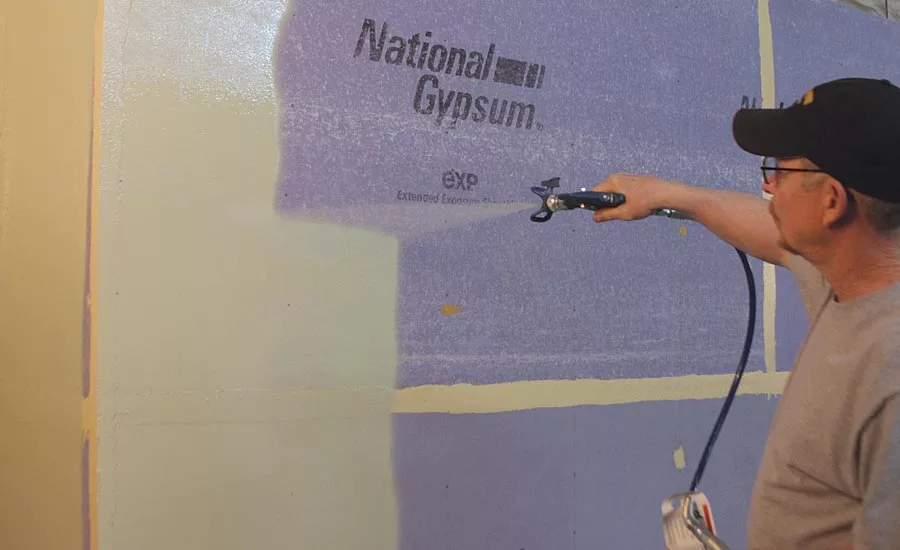
Lstiburek describes a best-in-class enclosure assembly where the cladding is held away from a layer of continuous insulation to allow for a drained cavity. Behind the uninterrupted exterior layer of rigid insulation board is a spray-applied AMB that also provides the impermeable drainage plane. The AMB is supported by the exterior face of gypsum sheathing or concrete masonry units, part of the primary structure. Key to success is minimizing or eliminating penetrations through the insulation that compromise integrity and bridge heat or cold. Same with the barrier: It should be continuous across the whole wall.
This exterior membrane approach, with the CI applied over the AMB, creates a high-performance wall that boosts energy performance through effective control of thermal movement and air movement. It’s a successful wall diagram increasingly recommended around North America.
5. What’s better: A product that’s sprayed, rolled or wrapped?
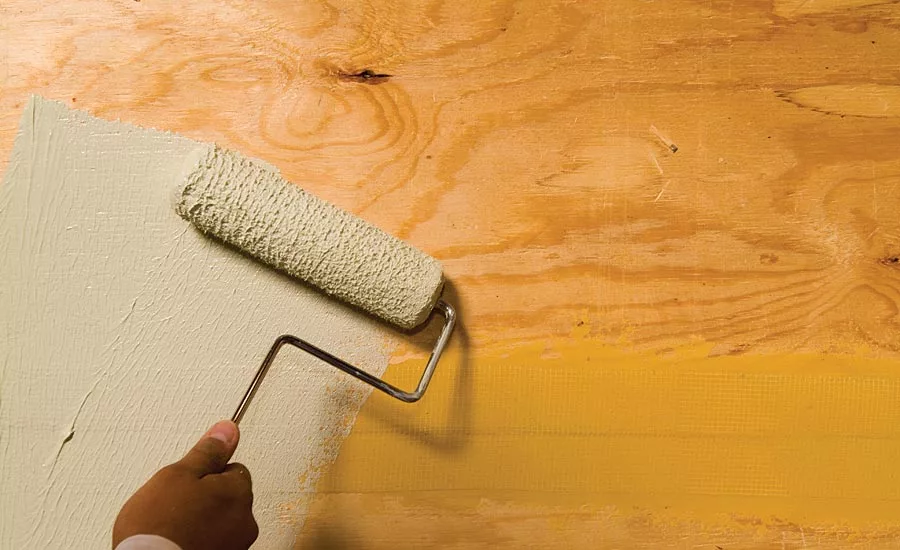
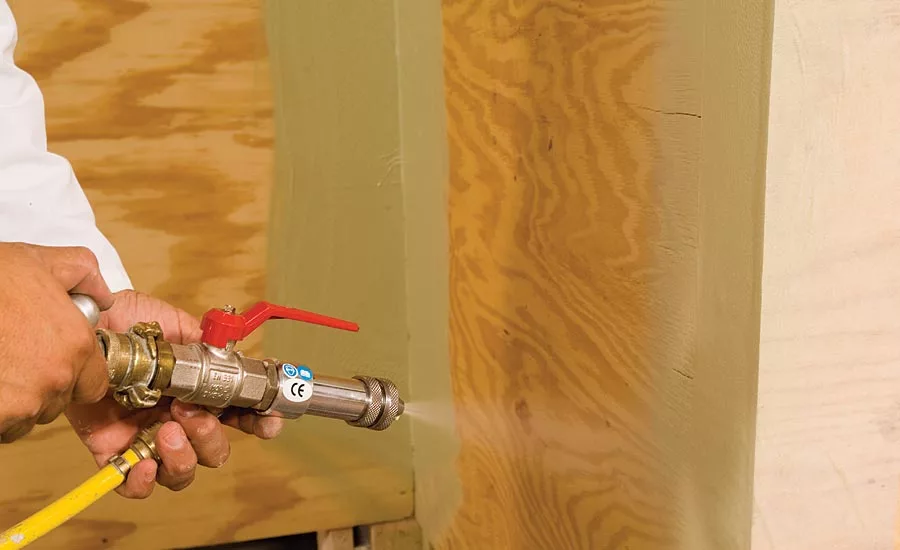
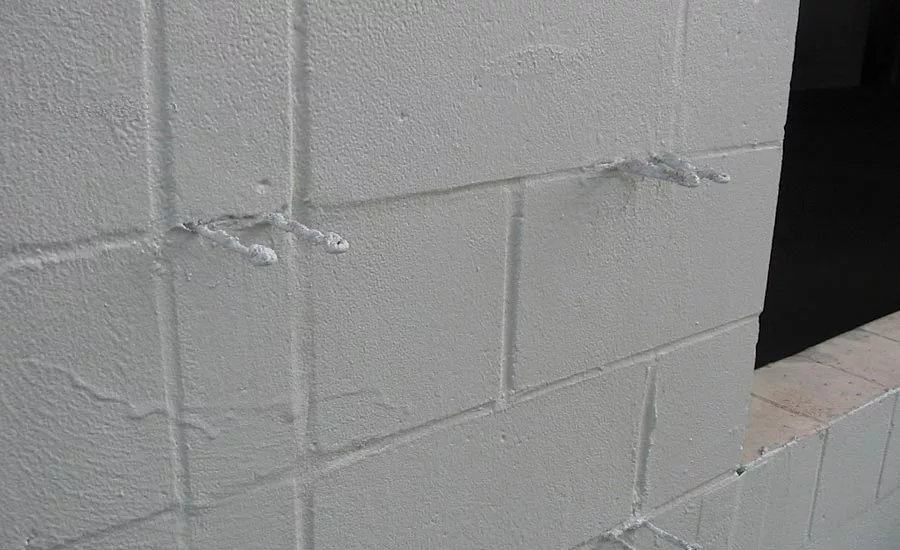
There may be some reasons to use a wrap product. But many enclosure consultants and contractors have favored spray-applied systems and rolled applications for their continuity, consistency and ability to transition over changes in substrate material. Fluid-state barrier materials can bridge small cracks and joints, often with an elastic trait that protects the openings even through building thermal, creep and seismic movements. Using compatible fill material and mesh, larger voids can be bridged effectively for the long term.
In addition, if the wrap materials are not self-adhering, they may be prone to sagging, flapping and delaminating. According to the article by Wagdy Anis, FAIA in the Whole Building Design Guide, housewraps can “displace under negative wind pressure and ‘pump’ building air into the assembly.” Plus, application techniques for wraps include stapling and other mechanical fasteners which, the instant they are applied, create bridges and compromise the barrier. This inherently undermines their function, potentially “tearing at the staples and brick anchors or rupturing under load,” Anis says.
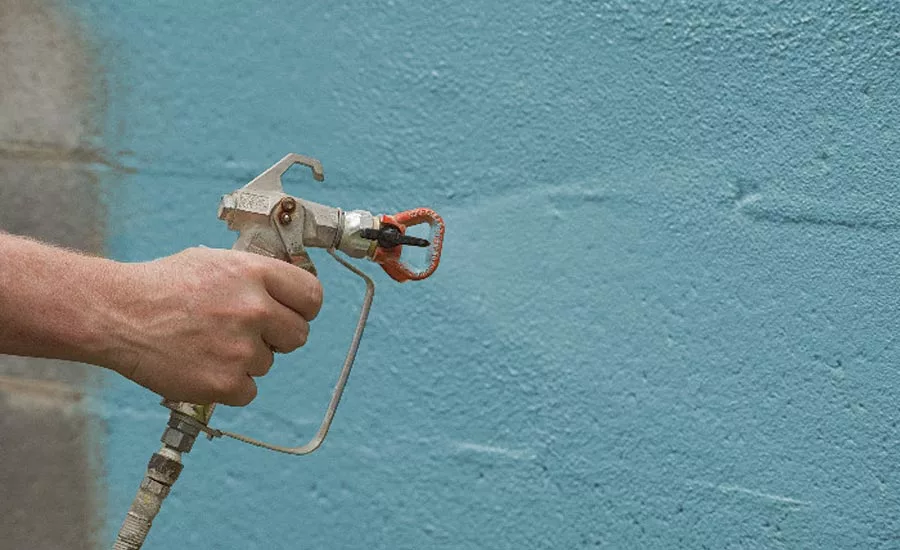
There is another reason that fluid-applied products are favored by contractors: The latest generation of fluid-applied barrier products are compatible with standard spray guns and nozzles, so most contractor crews are prepared to apply wet AMBs.
6. If it’s easy to apply, can it be high-performance?
Difficulty of application does not correlate with better trade work. In fact, consistent with other construction advances, project teams and contractors find that products that are easy to apply can often better meet the requirements of today’s high-performance buildings. More complex product suites necessitate more training, oversight, inspections and callbacks to ensure proper application, say some façade consultants. In fact, subcontractor training and skill level are most frequently cited as challenges for proper building performance.
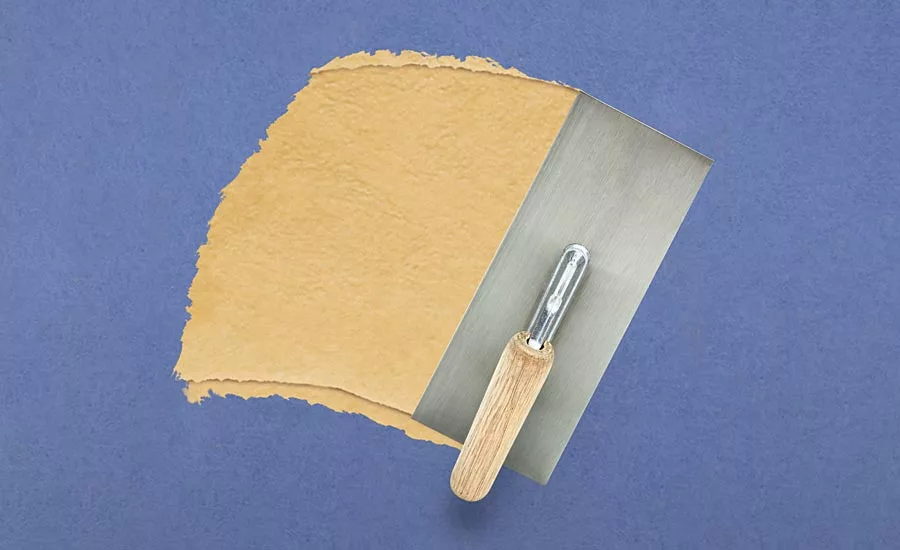
Easy-to-apply AMB products are typically single-component formulas. Spray and trowel applications can easily accommodate tricky geometries and changes in surface type. As mentioned, they can bridge small cracks and joints, reducing time needed for treating joints and filling voids. These AMB systems also tend to tolerates more errors in application.
Better application results are among the key aspects of a high-performing air-and-moisture barrier systems. Minimally, they must meet today’s rigorous energy codes and green building needs. They must also work well with every cladding type and common construction techniques used across today’s commercial and institutional buildings, while also serving the many renovation and retrofit opportunities driving the market. Effective AMBs must include joint treatments, waterproof transition membranes, and protection of rough openings that seamlessly and solidly transition to flashing and other bulk-water protections.
Today’s building codes, building owners, and project teams demanding greater efficiency and comfort. This means minimizing air leaks, moisture issues, and energy bridges. In short, it calls for optimal AMB protection, a backbone of high-performance buildings.
Looking for a reprint of this article?
From high-res PDFs to custom plaques, order your copy today!