Architects Guided by Lessons from Hurricane Katrina as Rebuilding Efforts Begin in Wake of Hurricane Florence

Katrina flooding

New Orleans
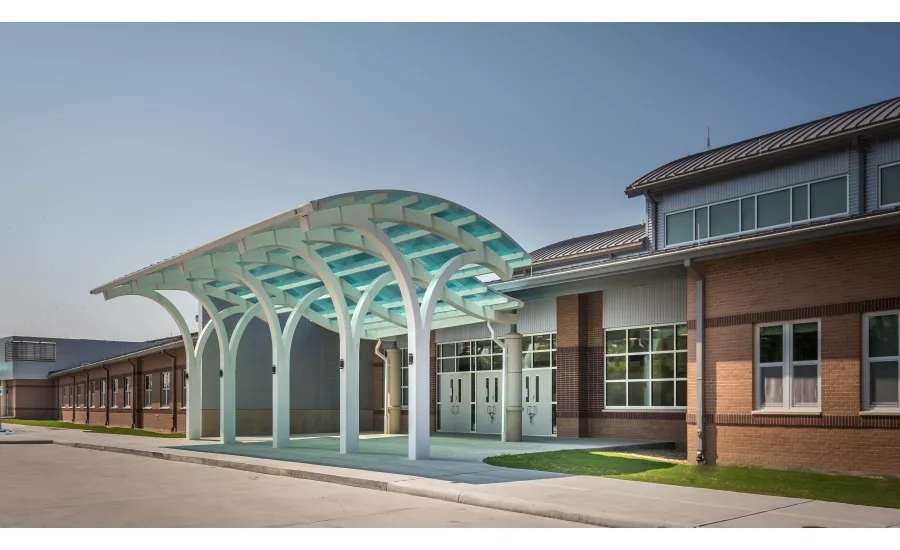
Arlene Meraux Elementary

Arlene Meraux Elementary
Hurricane season is in its full force and fury, with Hurricane Florence having ripped through the Carolinas leaving vast areas in need of time critical repairs and rebuilding in order to restore livable conditions to residents suffering in the aftermath. This and other monumental devastation from 2017’s hurricanes—Harvey, Irving, Maria and Jose-- have caused architects and building professionals to reflect back on lessons learned from Hurricane Katrina, which devastated New Orleans in August 2005. A recent report by Houzz calculates that renovations triggered by natural disasters (including wildfires in the western U.S) increased from 4 percent of jobs in 2016 to 6 percent in 2017—part of the current reconstruction boom. Most experts agree that renovation techniques are also getting smarter in the hopes that history will not repeat itself.
Large-scale devastation from Florence is still being evaluated, but there’s no question that it will take years to recover. Estimates published by the Wall Street Journal are in the $50 billion range although rivers are still cresting and severe flooding is ongoing. Moody Analytics already places Florence among the top 10 costliest hurricanes in U.S. history.
Hurricane Katrina, with a price tag of $80 billion plus, remains the costliest of all hurricanes‒and the storm with the most lessons to teach. Katrina’s damage was epic with sustained winds of 100-140 mph and storm surges close to 30 feet high; about 80 percent of the city was underwater. The storm heavily damaged or destroyed more than 120 schools from the New Orleans school district alone. Countless families were displaced—in some cases permanently. More than a decade later, The Big Easy is still rebuilding houses, businesses, and especially schools, as student populations in many districts continue to rebound.
“What’s taking place in New Orleans now is a fusion of rebirth and rebuild,” says Steve Rome, AIA, principal partner of Verges Rome Architects in New Orleans.
The firm was tasked with designing the South Plaquemines Elementary School, which was fast-tracked to open for the 2014-2015 school year to a large student population. The $30.9 million project was funded by FEMA and designed to comply with the agency’s strict mitigation requirements.
Echelon’s Trendstone Plus from Oldcastle APG was used on the school’s interior. Rome recalls, “We chose it because it provided the aesthetic we wanted, is low-maintenance, and durable.” He emphasizes the importance of choosing materials that can withstand the punishment of Katrina-like flooding. In the event of a storm, even if the building requires some cleaning and touch ups, “it still won’t constitute structural damage.” Trendstone Plus offers durability, a long lifecycle and a stylish look.
South Plaquemines Elementary was designed to accommodate up to 900 students ranging from pre-kindergarten through 6th grade. The 105,054 square-foot, two-level structure was raised 18 feet above grade to mitigate future flooding from a surge of the Gulf of Mexico. The building’s ground level is comprised of a covered outdoor play and parking area, rather than occupied areas. “We want the bottom floor to be a wash-out, so we used masonry at least from ground level up to the first floor. We then used masonry veneer and other waterproof or water-resistant materials on the face,” explains Rome.
The design separated public spaces from offices and classrooms for security and convenience. On one side of the school there is visitor access for events in the gym, library/media center. On the opposite side of the public access is the bus loading zone and entry to the school’s second floor via either stairs or ramp. Students in pre-K through second grade take classes on the second level while those in grades 3-6 attend class on the third level. Stairwells are strategically placed to direct student traffic flow away from classrooms for minimal noise infiltration.
Rome adds, “We learned many lessons after Katrina about the resistance of water and wind. The code in New Orleans now balances the potential for disaster with the realities of the construction industry.”
That need for balance is an ever-present concern for architect Peter Fortier, who was there when Katrina wreaked havoc on his city. Fortier, AIA, EDAC of Lachin Architects, APC in New Orleans, is a proponent of masonry for the rebuilding efforts because he witnessed firsthand its ability to withstand flooding. “When we first surveyed the post-Katrina damage, we took note of construction materials that survived. Glazed concrete block and glazed tile best weathered the inundation and could be cleaned and reused,” he said.
When designing Arlene Meraux Elementary in St. Bernard Parish, he was faced with a tight construction schedule and a site that faced the potential for future floods. He decided on the resilient Echelon glazed CMU from Oldcastle Architectural to help meet the district’s immediate and long-term needs.
Fortier designed all interior walls with Trenwyth Astra-Glaze SW+ glazed concrete units to a minimum of 10-feet high. He also raised all critical mechanical and electrical systems out of harm’s way to the second level. As such, the building not only met, but exceeded, the Federal Emergency Management Agency’s (FEMA) criteria for how high to raise a building’s slab, a benchmark for qualifying for flood insurance.
“With the glazed masonry wall, the elevated slab, and the raised mechanical systems, we can weather another Katrina,” explains Fortier. “Once waters recede, we’ll be able to hose everything down and have everything back in working condition quickly,” he adds, reflecting on the one of the many painful lessons learned from the mother of all storms.
Working closely with Fortier on the Arlene Meraux Elementary School, Randy Rush, owner of Rush Masonry in New Orleans, has worked on approximately 70 percent of the rebuilding projects in the New Orleans metro area. Rush typically works with designers and architects on the front end to help facilitate the design process and materials specs. “Since Katrina, we’ve been seeing a lot more glazed, ground face and interior CMU partitions because the materials are better able to withstand flooding and are easier to clean up afterward” he notes. Whenever possible, Rush encourages designers to choose Echelon’s Trenwyth products.
Because flooding is only one source of the damage inflicted by hurricanes, it was also necessary to design the structure to withstand high winds. A storm’s winds can propel objects through the building, injuring people inside, and can tear a building apart through uplift.
“Wind is not an issue when you build with masonry due to the stringent load requirements established by the International Building Code (IBC) for masonry, especially when you do steel-reinforced construction,” asserts Fortier. He adds that the masonry holds up well to the impact of another natural force—the grueling wear and tear that students can inflict on a building.
For aesthetics and practicality, Rush established a multi-color palette, available from Echelon’s various options, with a separate color theme created for each wing. “Color-coding is a better way to help K-5 students identify the different areas of the school than signage, which is another benefit of glazed masonry,” he explains.
Rush liked the glazed masonry for this application because there are no color problems with staining the CMU, since the color is glazed onto the masonry. He notes, “The masonry on this project is the best-looking aspect of the design.”
Fortier agrees about the visual appeal of the Trenwyth masonry, “The finished look of the masonry design exceeded my expectations.”
Arlene Meraux Elementary opened its doors to nearly 550 students last year, in time for the 2017-2018 school year. The 115,000 square feet, newly built, state-of-the-art facility features two courtyards, a large playground, an outdoor classroom, library, gym, music and art classrooms. The school sits on a 14.6-acre plot of land donated by The Arlene and Joseph Meraux Charitable Foundation.
Although a typical construction schedule for a school of this size would be 15 months, this project was completed in 12 months‒without incurring serious overages or overtime charges. Using Trenwyth glazed masonry was one of the value-engineering methods used to meet (and beat) the stringent timeline. “One of the advantages of glazed masonry is that once the product is in place, no painting is needed. Eliminating that step saves a good deal of time,” says Fortier.
Fortier has done as many as 20 projects for the St. Bernard Parish School Board. “Wherever there was new construction, we utilized glazed CMU, and all but one used Astra-Glaze,” he says. “I’ve been very happy with the product. I primarily use it on the interior because it performs well…and on the exterior as an accent to brick.”
These powerful examples from past hurricane damage are on the minds of FEMA officials and building professionals as they begin to wrap their minds around the 2018 hurricane season. For storm-prone coastal areas, a building’s strength, durability, and resilience are every bit as important— if not more so—than its aesthetics. The use of glazed CMU enables designers to be creative and inspiring in their designs while ensuring structural integrity that will protect clients’ long-term investments. These painfully acquired guidelines are in place as the building community begins to tackle the daunting rebuilding efforts ahead in the Carolinas, Florida, Texas and still struggling Puerto Rico. May New Orleans “rebirth and rebuild” spirit bring a sense of hope and healing to these hard-hit communities.
Looking for a reprint of this article?
From high-res PDFs to custom plaques, order your copy today!