The Ins & Outs of Specification: Part Two
A TWO-PART SERIES ON MAKING THE SPECIFICATION PROJECT WORK FOR YOU.
Depending on the type of specification on a given construction project, the flexibility general contractors and subcontractors have with materials, products, and installation approaches will vary. Proprietary specifications are rare, and the products and processes will already be dictated, leaving, in effect, no room for deviation. The same rules will typically apply to prescriptive specifications. Performance specifications may leave much more control in the hands of the contractor, even if products or brands have been specified.
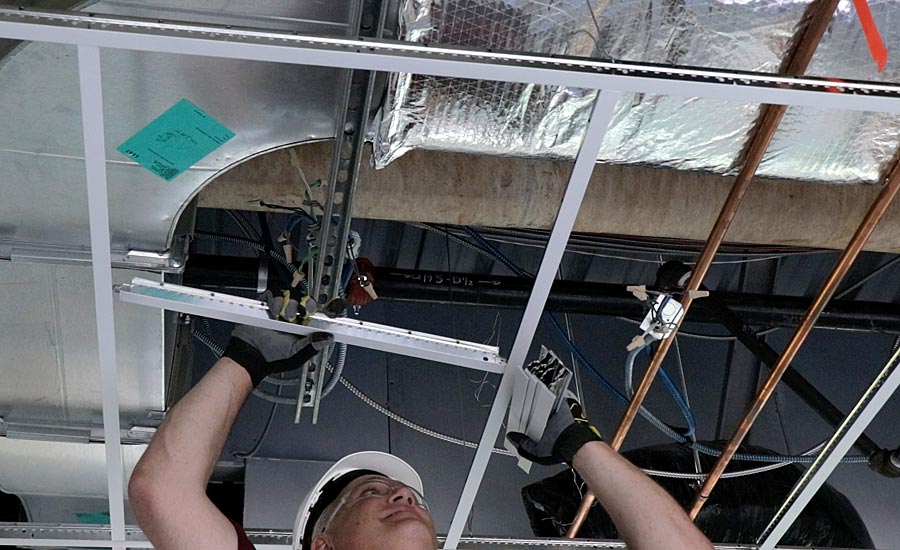
Ceiling and wall contractors are specialists in the construction industry, with installation and material expertise in a niche that features an abundance of competitive products and various methods for installing them. These specialists bring valuable perspective to projects because often they can identify systems or products that may speed up the construction schedule, improve the performance of the end result, contribute to a safer jobsite, and save valuable budget dollars.
Because commercial architecture projects often involve large quantities of ceiling and wall products, it can only benefit specification stakeholders to include experts in the decision-making process. Even small time- and cost-savings per square foot can add up to large savings over the breadth of a project; sometimes a simple specification change can save days or weeks of project time and thousands of dollars.
But with multiple stakeholders in any specification (each with a strong opinion), conflicting ideas and expectations often create challenging working relationships and tricky project processes. Part one of this series posited that ceiling and wall contractors are able to help jobs run smoother and perhaps even strengthen industry relationships by challenging specifications when circumstances call for it. This article will examine how to craft an effective specification challenge to ensure all parties benefit, and vital industry relationships remain intact.

Get In Early
Getting stakeholders to listen to suggestions after they’ve made up their mind about an appearance, performance aspect, or product brand can be difficult; once a set of plans has gone out for bid, the challenge is greater. The first key to suggesting a specification change is to offer it early in the process.
“Ideally, the earlier the better,” says Jeremy Kramer, estimator and project manager for Blasz Construction. “Usually, the during bid stage so that product can be compared, reviewed, and accepted before contracts are issued.”
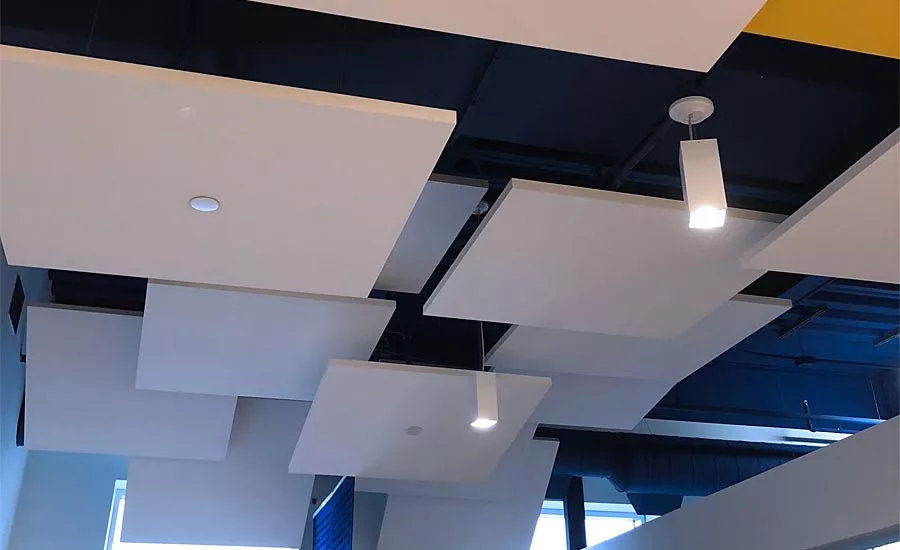
Kramer has first-hand experience. During a recent corporate office fit-out in the Mid-Atlantic region, Kramer’s team were confronted with an aggressive 12-week project timeline calling for a custom ceiling installation that, considering its size, should’ve been scheduled for 15 to 17 weeks. The problem was, as Kramer learned early in the process, the original architectural specification called for custom cloud ceiling panels of a specific brand that would’ve caused weeks of delays and increased costs in order to achieve an identified panel finish. Kramer considered panels of similar design offered by another manufacturer that featured the specified finish as a standard—and enough were in stock at a nearby distributor that they could be delivered in time to meet the project deadline.
Kramer proposed the product substitution to the GC and architectural team, which was approved. By getting it in early, the decision was easier for all stakeholders. This simple, single panel change led to a change to the entire slate of ceiling products, which enabled installation to be completed not only within budget, but ahead of the project deadline, even on the compressed timeframe.
Craft Your Message with Care
However, project realities may limit the possibility for submission of a specification challenge early in the process. In some cases, the ceiling contractor isn’t even hired until the bids are out. Of equal importance to early timing in a specification challenge may be how it is presented.
The onus is on the subcontractor to convince the appropriate stakeholders that the proposed specification change should benefit the project. If only benefits to the ceiling installer are highlighted, don’t expect a specification change to come. So, how best to convince engineers, designers, GCs, and property representatives that a specification change is in everyone’s best interest?
Two simple rules to keep in mind: first, lead with the change’s overall project value and second, support your contentions with context.
“Always offer all the facts up front,” Kramer recommends. That means address everything from cost and lead time to product features and how the specified product compares, pound-for-pound, with that from the other manufacturer.
Simply offering an educated opinion isn’t enough with the architect, interior design firm, or GC. Presenting the inherent flaws of the existing product and how each negatively impacts the project, along with viable solutions, how much those solutions cost, and how each will affect the project schedule offers all stakeholders a complete picture of challenges and solutions — and, most importantly, the peace of mind of making a well-informed decision.
That strategy has the added benefit of positioning the ceiling and wall subcontractor as a valued building partner who takes all customer needs into account, which holds the potential of a return engagement for future work.
Obtaining costs and lead times for comparable products is, in most cases, simple enough by working with a distributor. But architectural and design decisions aren’t always made on cost and lead time alone. In today’s building landscape, stakeholders often also want to know details like material makeup, sustainability information, acoustical performance ratings, and installation options before making a specification change.
Fortunately, manufacturers make comparisons easy with online ceiling product comparison programs or project–specific, side-by-side product comparisons constructed by Technical Services. These helpful resources easily size up the aesthetic, performance, and sustainability factors between different manufacturers’ products, and many include links to appropriate material safety and data sheets, which can support suggested spec changes with hard documentation.
Play the Long Game
As industry specialists, ceiling contractors can offer valuable product and installation insight on any project, so it pays to bring them into the decision-making.
It’s important to remember that any point in a project can be a moment that either leads to success and future partnerships or to missteps and stressed working relationships — or, even worse, damaged reputations.
In commercial construction, architectural firms and GCs first and foremost want to work with subcontractors they trust. But, it is better if they like working with you — it’s the “soft skills” approach to building trust and establishing value.
Bringing professionalism, along with ceiling and wall product and installation insight, is an added way to show the value of your presence and input on any job. That becomes even more important in the way you navigate a specification disagreement, whether over a preferred product or an installation method, even if you’re confident your approach is superior.
“The only thing we can do is offer the solution and answer any questions to help keep things moving,” Kramer observes. “At the end of the day, it’s the owner and architect who make the final decision.”
That often requires being gracious and even-tempered if your specification change suggestion is ultimately rejected—especially if it makes the work of installers slower and more cumbersome.
When you bring value to a project, you build trust with construction partners. And that, in turn, builds relationships over the long haul that can not only bring in more work, but also make future workflow easier—especially if a specification change is called for on a project down the line.
“When we are able to offer alternative product solutions to which the architect is receptive,” says Kramer. “We can help save money and time while providing a better product and installation overall.”
Looking for a reprint of this article?
From high-res PDFs to custom plaques, order your copy today!





