Building Better: The Road to Carbon Neutrality Through Sustainable Construction
BY BUILDING SUSTAINABLY AND LEARNING ABOUT THE PRODUCTS WE USE, WE CAN PROTECT AND PRESERVE A HEALTHY ENVIRONMENT.
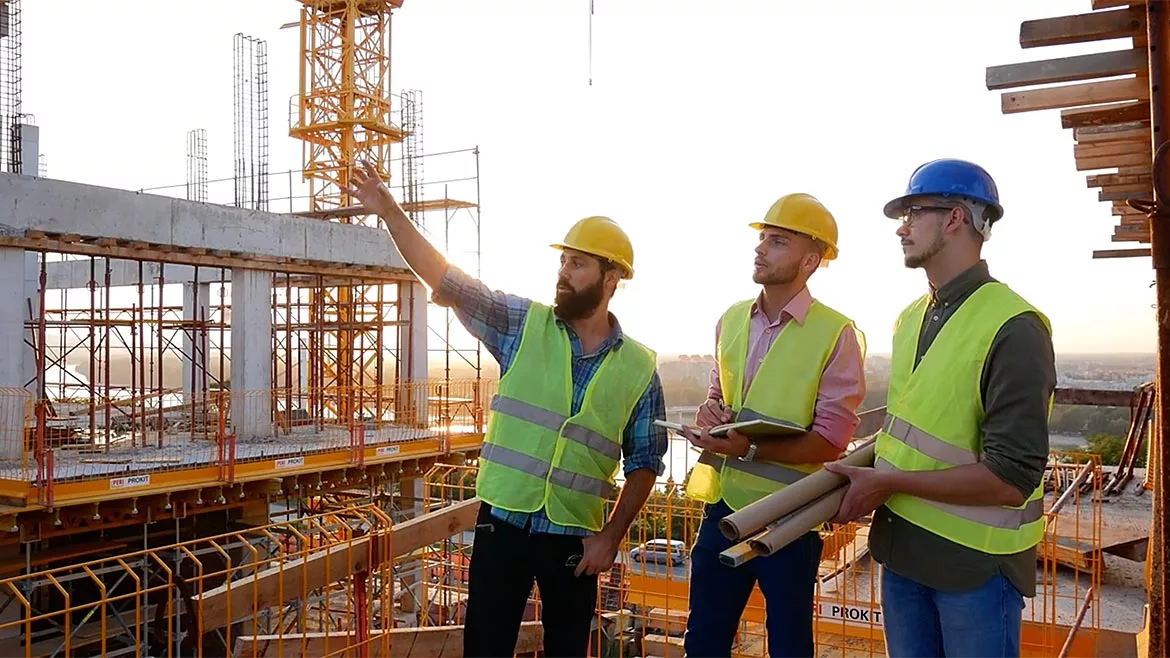
Every day, people live and work in buildings solidified by concrete foundations without recognizing the potential that material has in not only creating a more sustainable industry, but a more sustainable world. Concrete is the second most used material on earth due to its durability, resiliency, and cost-efficiency—it also makes buildings better able to withstand the devastating impacts of climate change—and can play a role in reducing emissions through the latest innovations in manufacturing and mixtures. Greenhouse gases and global warming impact all aspects of society, and the construction material industry could use new approaches and solutions when working with cement and concrete to lower their carbon footprint, while continuing to deliver long-lasting infrastructure.
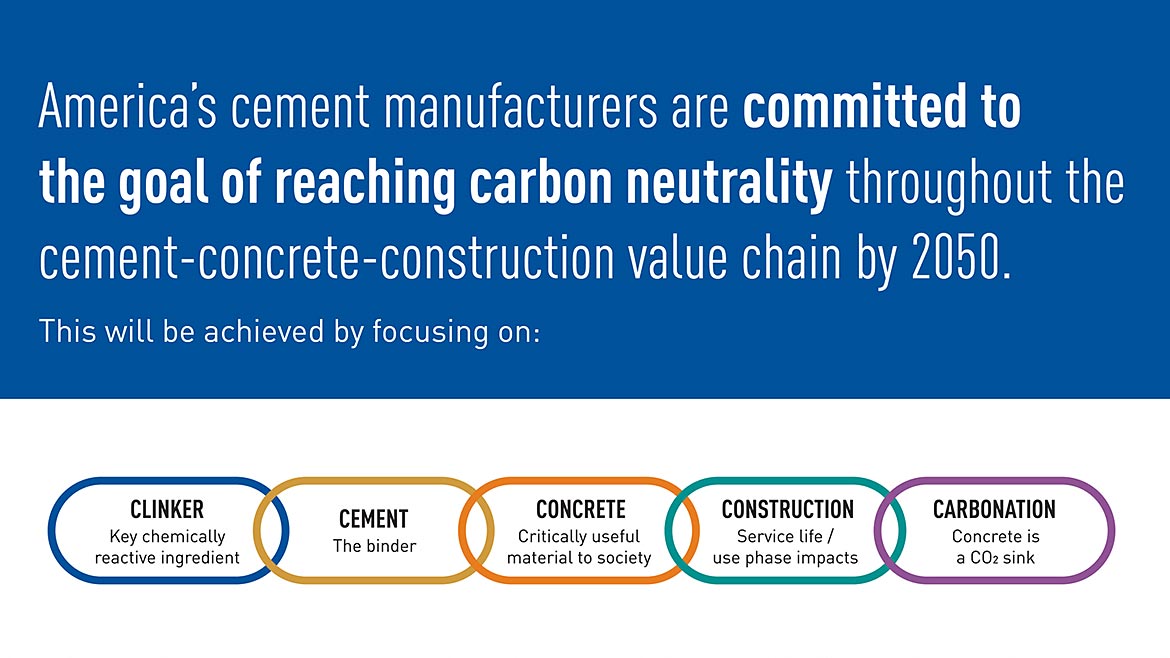
The Portland Cement Association, which represents America’s cement manufacturers, is developing a roadmap to carbon neutrality by 2050 that encompasses the entire value chain of cement and concrete: clinker, cement, concrete, construction, and the use of concrete as a carbon sink. This approach recognizes that each link in the chain has a specific role to play in addressing the reduction or avoidance of greenhouse gases, and that no individual link should be considered in isolation. Ultimately, the material produced at the cement plant will be used for roads, bridges, and buildings. While it is important to lower emissions at the cement plant, it is equally essential to optimize how cement is used to create environmentally responsible structures.
To truly measure a material’s environmental impact, it is critical to consider its full life-cycle—starting at production and looking across the value chain to availability, use, and recycling opportunities. Looking at materials in this way refocuses the emphasis of environmental product declarations to the broader importance of life-cycle assessments. EPDs are a cradle-to-gate analysis and can tell an incomplete story. It can be easy to equate the embodied carbon of materials with the environmental performance of building systems, but this approach only looks at the embodied carbon used to produce each material, rather than its performance within the built environment. While EPDs can be useful for comparing similar products, their limited scope means that they are not the best tool for making holistic building design and material choices. Instead, builders, architects, and engineers should use LCAs that include impacts from material production, construction, operation, and end-of-life, to make the most sustainable design decisions.
Taking this holistic view, the five focus areas of PCA’s roadmap—clinker, cement, concrete, construction and carbonation—are easily seen as an integral part of tomorrow’s circular economy. By optimizing clinker composition and manufacturing, enhancing cement ingredients to reduce carbon intensity, exploring infinite numbers of concrete mixture combinations, outlining opportunities in design and construction, and measuring the benefits from the natural process of concrete absorbing CO² over its lifetime through carbonation, the building industry can embark on the path to carbon neutrality while continuing to create durable structures for decades to come.
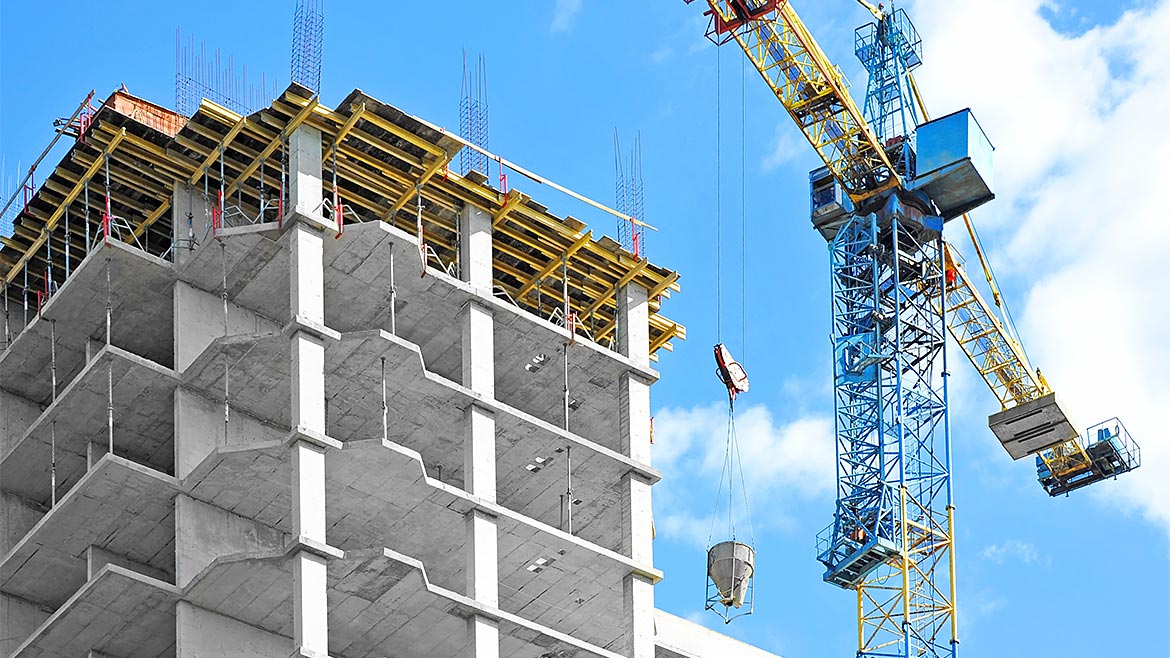 Source: unkas_photo / iStock / Getty Images Plus via Getty Images.
Reducing Emissions Through Concrete and Cement Innovation
Cement and concrete are pivotal in building resilient communities that enable people to live safe, productive, and healthy lives, creating structures that can withstand natural and man-made disasters. The renewed national focus on sustainability and action on infrastructure shines a light on the opportunities and benefits of building with concrete and the latest advancements in this space.
First and foremost, near-term solutions with a meaningful impact exist and can be accelerated through material selection and specification updates. Builders can and should adopt the use of Portland limestone cement: a low carbon cement mixture that immediately lowers emissions by about 10 percent. PLC has been used in Europe for over 40 years, meets U.S. national standards, and is accepted by nearly 40 state Departments of Transportation. Increased use of this cement will enable builders to build with a material that also provides them an opportunity to reduce CO² emissions.
Additionally, we must reduce combustion emissions through fuel switching, replacing current fossil fuels with lower emissions alternatives, including natural gas, biomass-derived and waste-derived fuels which have long been used in many other parts of the world.
Looking ahead, Carbon Capture Use and Storage technology has the potential for the greatest emission reductions in the industry and will be critical to achieving our goal. As manufacturing cement requires a chemical reaction that only occurs when limestone is heated in rotating kilns to 1,500 degrees Celsius, the inevitable byproduct of this reaction is the release of CO². CCUS technology can capture upwards of 90 percent of process and combustion emissions and counteracts these otherwise irreducible process emissions. This technology is an incredible advancement for the future of sustainable building and can be applied to many industries outside of our industry. However, it still requires significant research and funding to prove its feasibility at the scale needed.
The cement industry will continue to be heavily involved in the collaborative research and development of emerging and innovative technologies like CCUS to scale up these technologies. Yet, the industry will also need a national system of transport, utilization, and sequestration.
Spanning the entire cement and concrete industry as opposed to just one company, the PCA roadmap to carbon neutrality is ambitious to say the least, and collaboration with partners across sectors will be key in unlocking a spectrum of solutions that it outlines. While it is critical to collaborate with scientists, experts, researchers, and government decision-makers to enact change and remove restrictions, many of the opportunities identified in the roadmap are already developed and ready to be implemented. By working closely with the cement and concrete industry, construction professionals will be the driving force behind the application of solutions that allow them to build more sustainably, efficiently and to solve one of society’s biggest challenges, together.
Source: Portland Cement Association
Constructing a Greener Future
While the concretes of tomorrow are the key to reducing the carbon intensity of construction, carbon neutrality will also rely on how the material is used. Optimization across the entire manufacturing and construction process is a critical component in building environmentally responsible structures and communities. The emission reductions enacted at the cement plant are amplified when it is used for concrete that is optimized, enhanced, and improved synergistically through new solutions, technologies, and mixtures. For example, concrete manufacturing can be transitioned to renewable electricity while the transportation of concrete and concrete products can be transitioned to zero emission vehicles.
Beyond CCUS, the single greatest opportunity for carbon dioxide reductions in concrete as a material lies in mixture optimization. Each component within concrete can be customized through a variety of cement specifications and subcategories, as well as through admixtures, water use, and gradation of aggregates. Concrete producers today are transitioning from a set menu of default mixtures to designing tailor-made mixtures using AI and machine learning to select the right materials for the right application. Technology is allowing the concrete industry to discover and identify the optimal mix, sequencing, scheduling, and delivery of concrete and concrete products in a more efficient manner: benefitting the overall sustainability of structures and enabling more productive and efficient construction.
Much like earlier steps in our value chain, we can also reduce the carbon intensity through optimizing construction itself. What is commonly considered construction involves four separate phases: design, construction, use, and end-of-life.
Design
Optimization takes a whole-life building design approach that involves both an integrated design and an integrated team process. It’s a modern take on the classic, “start with the end in mind.”
Optimization in the design phase recognizes that procurement standards should be transparent and uniform. Our roadmap encourages a rational approach that eliminates unnecessary overdesign and that keep codes and standards updated with actual building performance and the latest developments in research.
Construction
Optimization in the construction phase is all about timing. Project scheduling has come a long way since the critical path method was used to build the first World Trade Center towers in the late-1960s. Real-time GPS tracking and real-time sequencing and scheduling can work within the constraints of any project schedule, in real time. Pen and paper on the jobsite are a thing of the past; RFID tags, UPC inventory control and tablet and hand-held computers are the mark of today’s intelligent jobsite.
Design tools including 3-D modeling and virtual reality will help to optimize materials specification. Zero-waste construction, already practiced in Europe, will be crucial, along with sequencing, scheduling, zero-emission delivery and materials handling.
Use
Optimized construction in the use phase means zero waste on the job site and zero returned concrete. While we recognize that buildings use tremendous amounts of energy, concrete structures are inherently sustainable and resilient. Buildings constructed with concrete have inherent advantages by their thermal mass and that can avoid large swings in the energy consumption related to heating and cooling. Structures built with concrete can remain in use throughout most natural disasters and can be back in service almost immediately.
The CO² associated with construction can be further reduced or avoided through innovative construction techniques like additive manufacturing, a zero-waste construction site, advanced sequencing and scheduling, zero-emission deliveries, and zero-emission construction material handling equipment.
End-of-Life
Optimization in the end-of-life phase is recognizing the use of concrete as a carbon sink. Concrete absorbs CO² from the air over its entire life and captures it permanently in a process called carbonation. Even when demolished, the concrete never re-releases the CO². In fact, 10 percent of CO² generated in production is absorbed through the life of the concrete structure, and demolition creates more surfaces to absorb CO².
Our roadmap envisions that optimization in the design, construction, and use phase can achieve construction efficiencies of 10 percent in 2030, 20 percent in 2040 and 30 percent in 2050.
A Better Tomorrow
Whether they are houses, hotels, hospitals or schools, sustainable and resilient construction is critical to healthy environments we live in now as well as the ones that we want to build for the future. The building sector is not just a significant component of GDP, it represents millions of high-paying jobs that indirectly support more than double that number of jobs. The cement industry’s "product" is far more than clinker, cement, concrete, and carbonation: our ultimate end-product is construction, the built environment. Concrete is the universal building material and construction is the only way that concrete can be utilized. By connecting the two, optimizing current processes and partnering with the entire value chain, we can make tremendous progress in driving down emissions and achieving environmental goals that will benefit the health of our planet and people. Our roadmap isn’t just for our industry, it’s for our society.
Looking for a reprint of this article?
From high-res PDFs to custom plaques, order your copy today!