Thorough Scaffolding/Safety Tips
INFORMATION TO KEEP IN MIND WHEN USING SCAFFOLDS
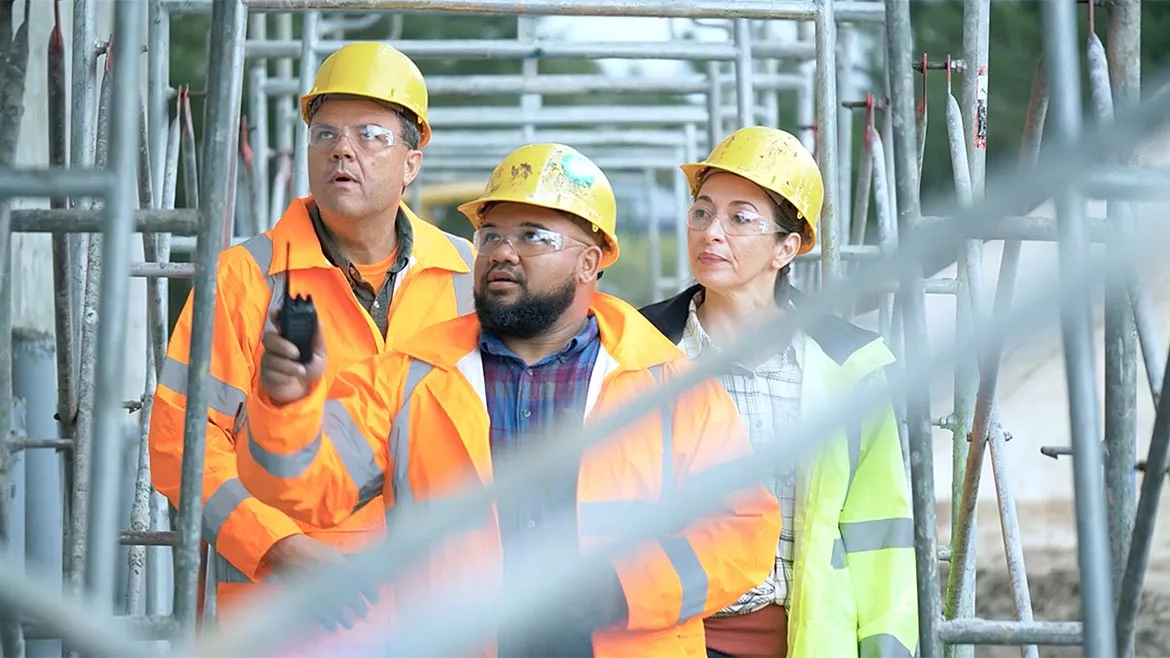
Scaffolding is one of the most functional tools companies have for fast and efficient completion of work. A drive around any community will reveal all types of scaffolding in use. In the wall and ceiling industries, several types of scaffolding are more commonly used, including supported scaffolding, mobile scaffolding and aerial lifts.
The Occupational Safety and Health Administration has regulations for scaffolding located at 29 CFR 1926.450-454. These standards range from general requirements for all scaffold types to focused requirements for specific types of scaffolding.
In 2020, there were 52 fatalities due to falls from scaffolding. Examples include an employee standing on an A-frame ladder set on top of a mobile scaffold painting ceiling beams, who fell approximately 10 feet and was killed by brain damage from head trauma. In another incident, an employee taping and floating a wall from a mobile scaffold attempted to move the scaffold when a wheel came off, causing the employee to fall approximately 14 feet. The employee incurred a head injury and died.
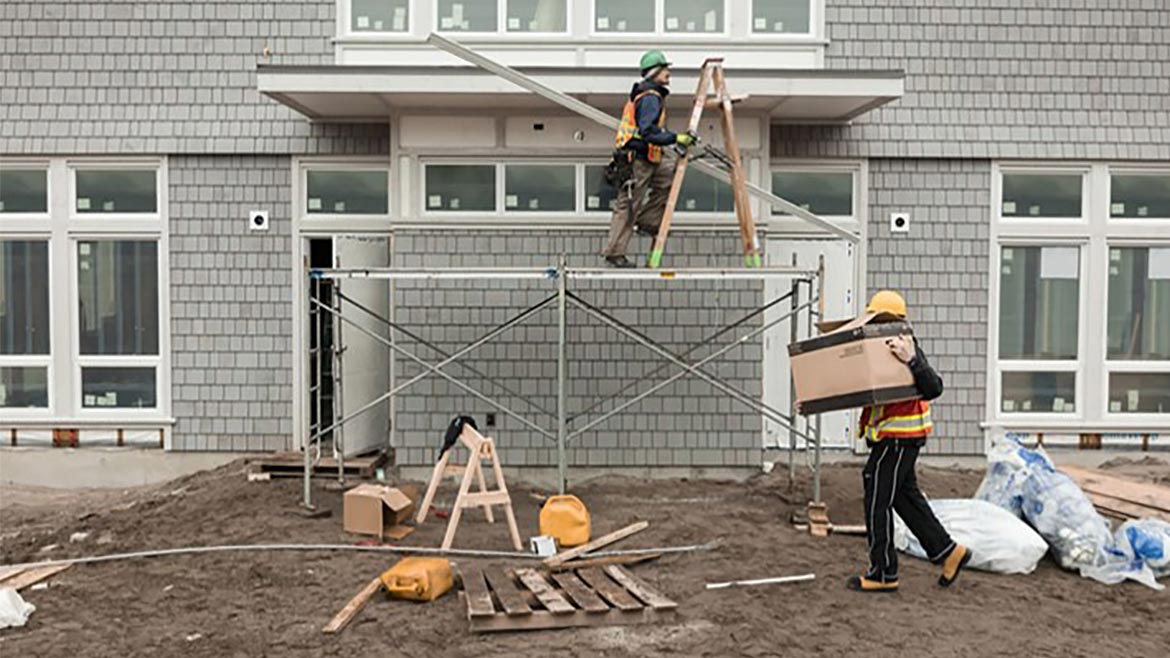
Scaffolding
In these and all workplace fatalities, employers pay hefty fines and increased insurance premiums, incur negative publicity and can even suffer possible criminal prosecution for negligence. Simple proactive procedures can help prevent these tragedies, including following the required OSHA standards for scaffolding. Highlights of these standards include:
- The footings of supported scaffolds must be level and capable of supporting the loaded scaffold.
- The legs, poles, frames and uprights must sit on baseplates and mudsills.
Supported scaffold platforms must be fully planked or decked as much as possible.
Scaffolds must be able to support at least four times the intended load, including personnel and materials.
Supported scaffolds with a height-to-base ratio of more than 4:1 must be restrained from tipping by guying, bracing, tying or an equivalent means.
- Fall protection must be provided on scaffolds over 10 feet above a lower level. Fall protection can include guardrail systems that consist of a top-rail and a mid-rail. Top-rails must be between 38 to 45 inches off the platform and mid-rails must be installed approximately halfway between the top-rail and platform. Where the cross point of cross-bracing is used as a top-rail, it must be between 38 and 48 inches above the platform. Where the cross point of cross-bracing is used as a mid-rail, it must be between 20 and 30 inches above the platform. Fall arrest systems may also be used in lieu of guardrails on supported scaffolding.
- Training must be provided to employees who work on a scaffold regarding scaffold hazards and how to control those hazards, and scaffold erection and dismantling, by a competent person.
- When scaffolds are being erected and dismantled, a competent person must determine the feasibility of providing fall protection and safe access to the work area for the operation.
- Inspections of the scaffolds for visible defects must be conducted by a competent person before each shift and after any occurrence that could affect the structural integrity of the scaffold. A competent person is defined as one who is capable of identifying existing and predictable hazards in the working conditions, and who has the authorization to take prompt corrective measures to eliminate them.
- Qualified persons are defined as those who have successfully demonstrated their ability to resolve problems related to the subject matter, the work or the project. They must either possess a recognized degree, certificate or professional standing, or have extensive knowledge, training and experience. Qualified persons are required to design and load scaffolds in accordance with the performance specifications of the scaffold design, and to train employees working on scaffolds to recognize the hazards and how to control them.
Mobile Scaffolds
Mobile scaffolds have specific requirements. The fall protection requirements are the same as supported scaffolding. Other requirements include:
- Scaffolds must be braced by cross, horizontal or diagonal braces, or a combination thereof, to prevent racking or collapse of the scaffold and to secure vertical members together laterally so as to automatically square and align the vertical members.
- Scaffolds must be plumb, level and squared. All brace connections must be secured.
- Scaffold casters and wheels must be locked with positive wheel and/or wheel and swivel locks, or equivalent means, to prevent movement of the scaffold while the scaffold is used in a stationary manner.
- Employees must not be allowed to ride on scaffolds unless the surface on which the scaffold is being moved is within 3 degrees of level and free of pits, holes and obstructions. Outrigger frames, when used, are installed on both sides of the scaffold.
- Platforms must not extend outward beyond the base supports of the scaffold unless outrigger frames or equivalent devices are used to ensure stability.
- Where leveling of the scaffold is necessary, screw jacks or equivalent means must be used.
- Caster stems and wheel stems must be pinned or otherwise secured in scaffold legs or adjustment screws and before a scaffold is moved.
- Each employee on the scaffold must be made aware of any move.
- JLG Turf Tires
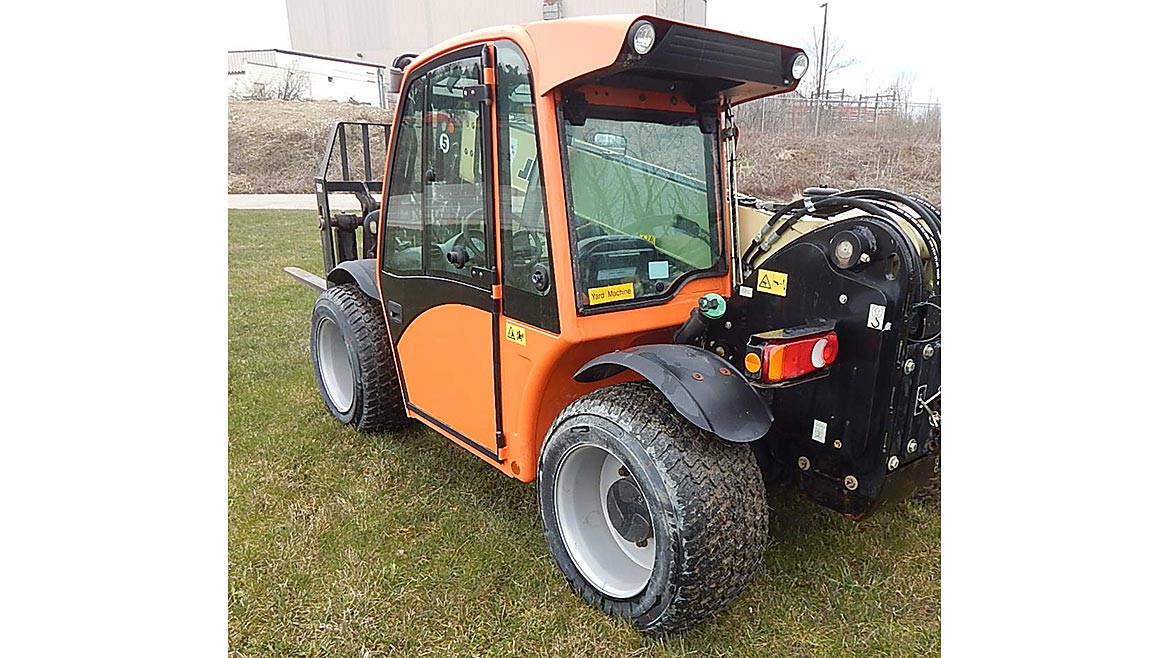
Aerial Lifts
Aerial lifts are vehicle-mounted aerial devices used to elevate personnel to work areas aboveground. They include extensible boom platforms, aerial ladders, articulating boom platforms, vertical towers and a combination of any such devices that are powered or manually operated. Important reminders include:
- Belting off to an adjacent pole, structure or equipment while working from an aerial lift is not permitted.
- Employees must always stand firmly on the floor of the basket, and not sit or climb on the edge of the basket or use planks, ladders or other devices for a work position.
- A body harness must be worn and a lanyard attached to the boom or basket when working from an aerial lift. A body belt is not acceptable as part of a personal fall arrest system. The use of a body belt in a tethering system or in a restraint system is acceptable.
- An aerial lift truck must not be moved when the boom is elevated in a working position with men in the basket, except for equipment which is specifically designed for this type of operation.
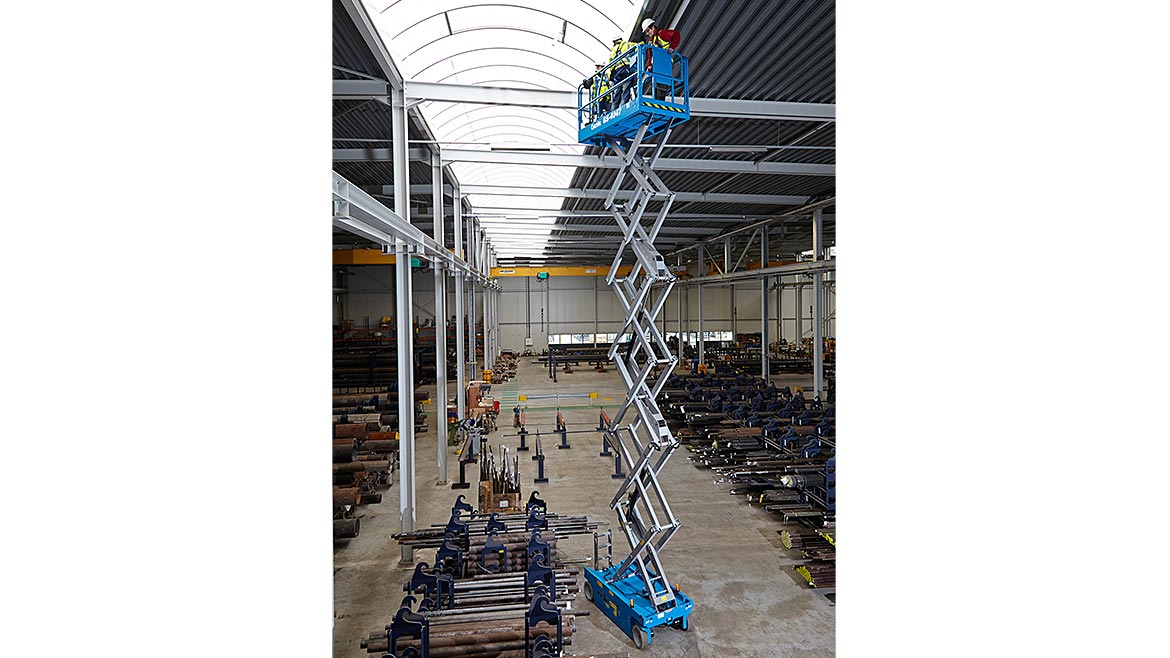
Scissor Lifts
Scissor lifts are different from aerial lifts because the lifting mechanism moves the work platform straight up and down using crossed beams functioning in a scissor-like fashion. Scissor lifts present hazards similar to scaffolding when extended and stationary. Requirements include:
- Installing guardrails to prevent workers from falling, including the chains at the entrance point of the lift.
- Training workers before using the scissor lift.
- Standing on the work platform only and never on the guardrails.
- Keeping work within easy reach to avoid leaning away from the scissor lift.
Appropriate planning and training can significantly reduce scaffolding injuries and other workplace hazards. Employees should be aware of their rights and responsibilities and play an active role in maintaining safe workplaces. Employers should never hesitate to reach out to a safety professional, who can answer questions and assist with regulatory compliance and safety programs.
Looking for a reprint of this article?
From high-res PDFs to custom plaques, order your copy today!