An Introduction to Architectural Gilding
For a long time, we've felt that there is an increasing disconnect between the trades of house painting and decorative painting. Even as little as 50 years ago, these trades used to be one and the same. Most house painting companies would offer decorative finishing services in techniques, such as graining, marbling, glazing and gilding. Nowadays, they have become two distinct trades even though they are two branches of the same tree. Our aim in the forthcoming articles is to reconcile the two trades, as they both depend on each other for the outcome of the project.
Gilding is an essential part of the tool kit of today’s decorative painter. Any serious artisan knows that proper preparation when gilding is critical to the success of the finish. In this article we are going to concentrate mostly on the gilding effect, including when to gild and when not to gild. In a follow up article, we will dive down further into the preparation and how to work hand in hand with the painting team and the decorative painter.
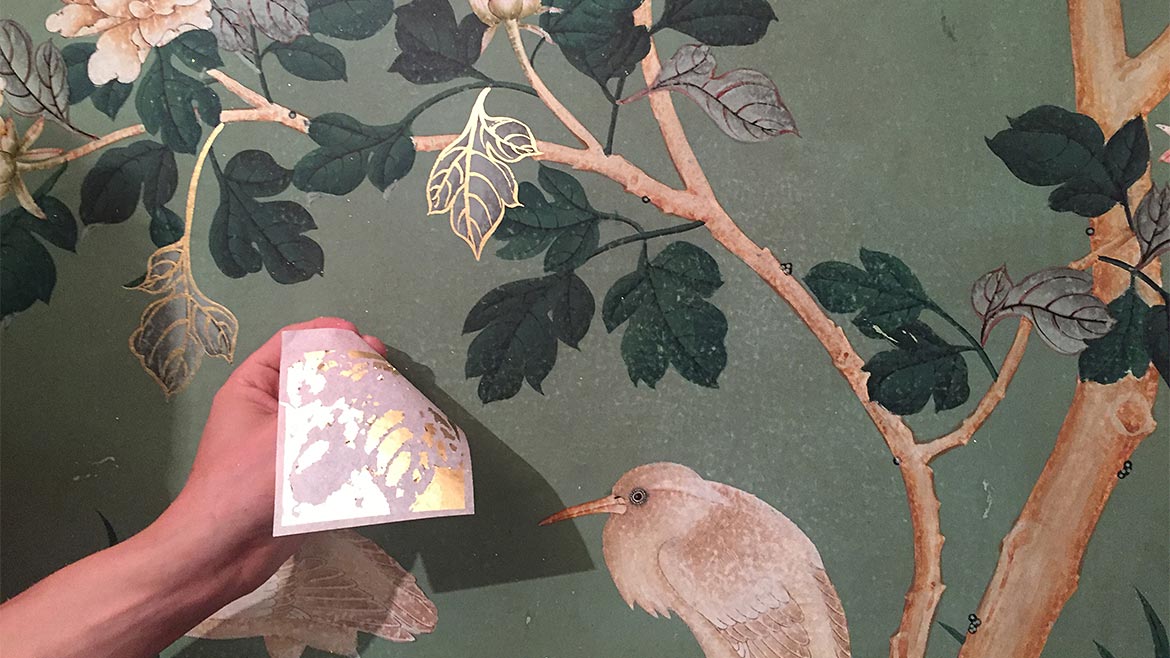
Gold leaf is an extremely thin material, measuring 1000th of an inch. With such a thin leaf being applied on top of a surface, any slight imperfection during preparation will be visible and amplified by the reflectiveness of the gold leaf. The decorative painter relies on the paint contractor to correctly prepare the surface for a Level 5. This collaboration is essential for a successful outcome in gilding.
Proper Preparation for Successful Gilding
Preparation is the first essential step prior to gilding. Proper preparation will consist of the following: one to two coats of primer (sanded) and then one to two coats of skim coating (sanded and then polished). After those steps are completed, add another thinned down coat of primer, followed by two to three coats of high-quality semi-gloss basecoat (oil or waterborne lacquer is preferred). (Look for our future article on “Oil vs Water".)
At this point, the decorative painter takes over the preparation and sands the final coat with 320-, 600- or 800-grit wet sandpaper in order to achieve a glass-like surface.
The Decorative Appeal of Gilding
If you are not familiar with the gilding process then we will give you a brief introduction into the finish. Gilding shouldn’t be done just for the sake of gilding but to enhance architectural elements. Decorative painters must look for the overall decorative appeal of spaces. The overall design must reflect the personality of the client along with the “mood” of the space. Using gold and other metallics add a very dramatic and magnetic feeling, by design, but could also feel ostentatious to some and opulent to others. It is important to understand how to play off of these effects and strike the right balance.
Gilding is most often surrounded by painted elements that must all work together, whether it be in architecture, the furnishings or the artwork. It should be simply an element of the design and not the sole purpose. It should not take over the room, but rather enhance its properties. Allow certain architectural elements to shine with the reflective accents achieved with gilding techniques. The life rule of, “less is more” applies to decorative painting and most certainly gilding techniques. Most would agree, overuse of gilding diminishes its impact.
Fusion of the Historical and Decorative Values
The use of gilding in architecture oftentimes is tied into a historical reality. Use historical context, research and references to create the base of the decorative effect. Look for decorative appeal and effect over the historical reality. It typically follows this general formula:
Historic context + decorative appeal = total ideal decorative finish: Start with the historical inspiration that best mimics the design. Then, adjust for our modern era and make the decorative value a priority. Together, we use all our skills to develop a language that can be articulated through decorative painting techniques.
We always try to go into a project where gilding is on the list with a refrained mindset. It’s easy to get carried away with gold and it tends to take over. Gilding techniques are the embellishment on an already stunning ensemble. Simply highlight what is already there, as in the case of architectural molding where details could get lost.
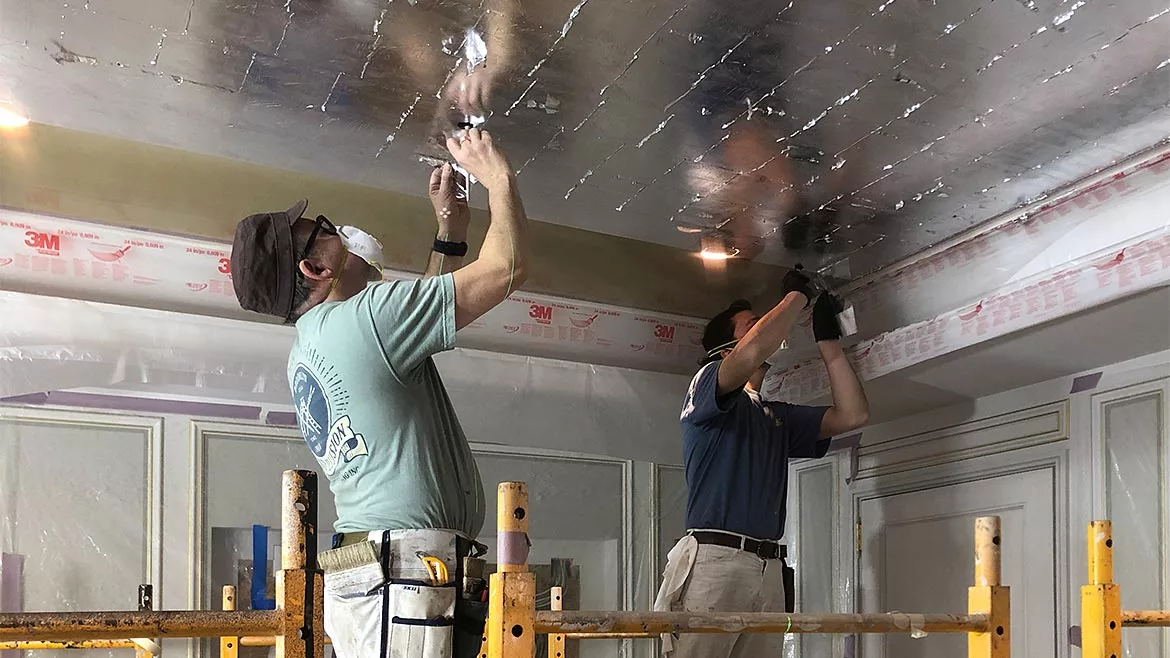
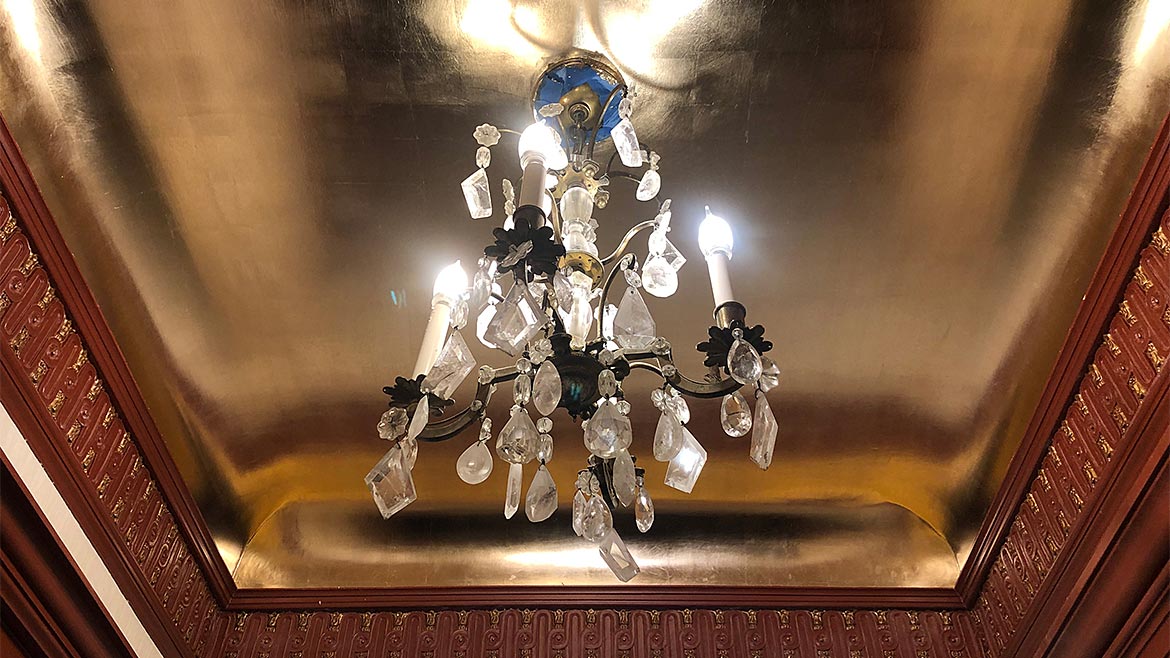
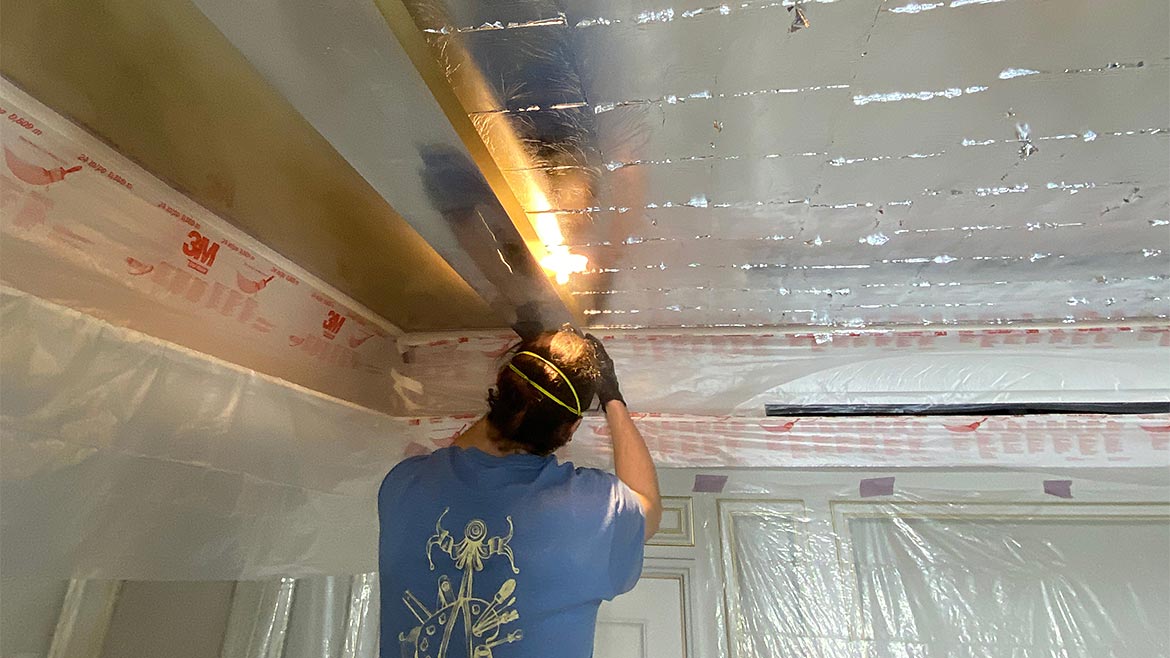
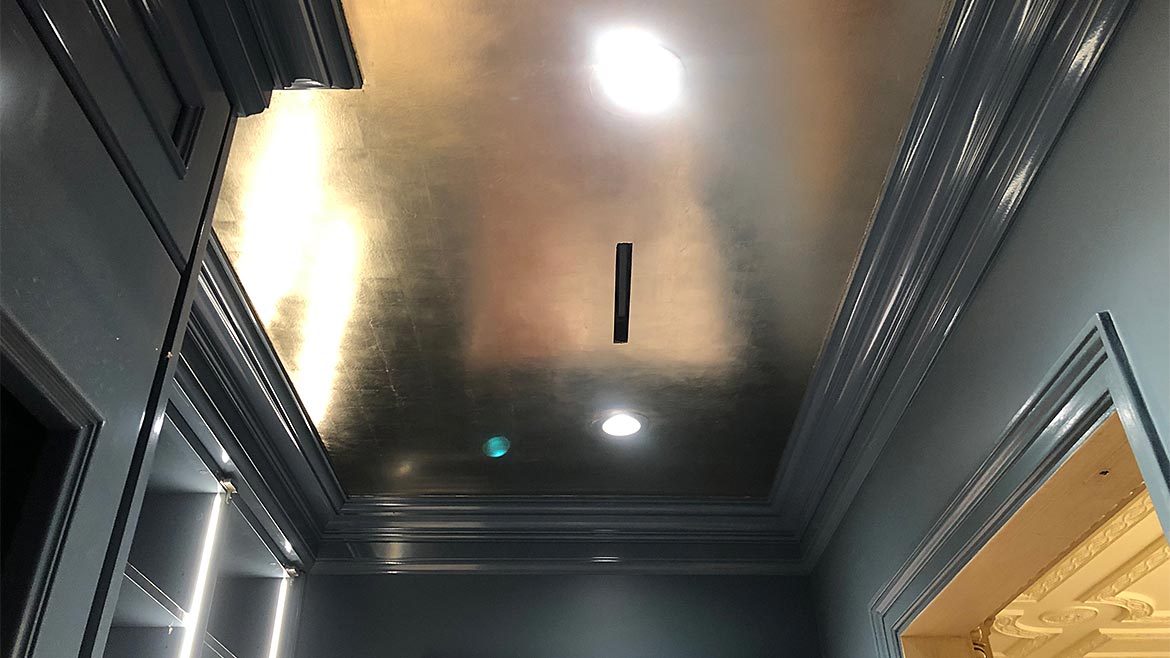
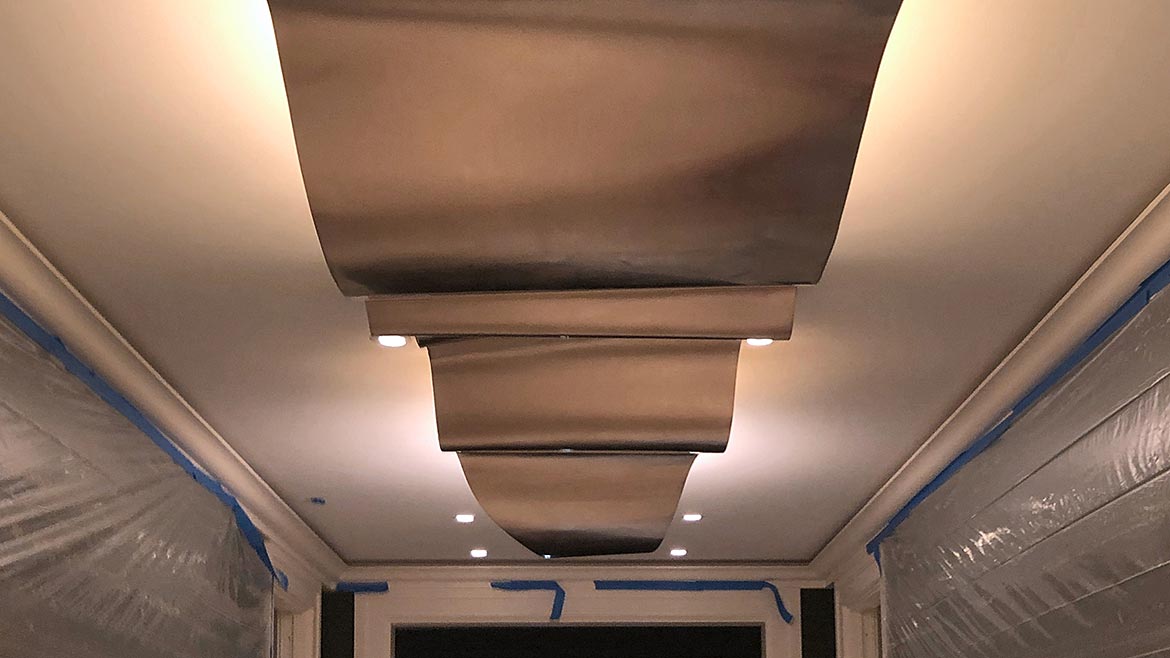
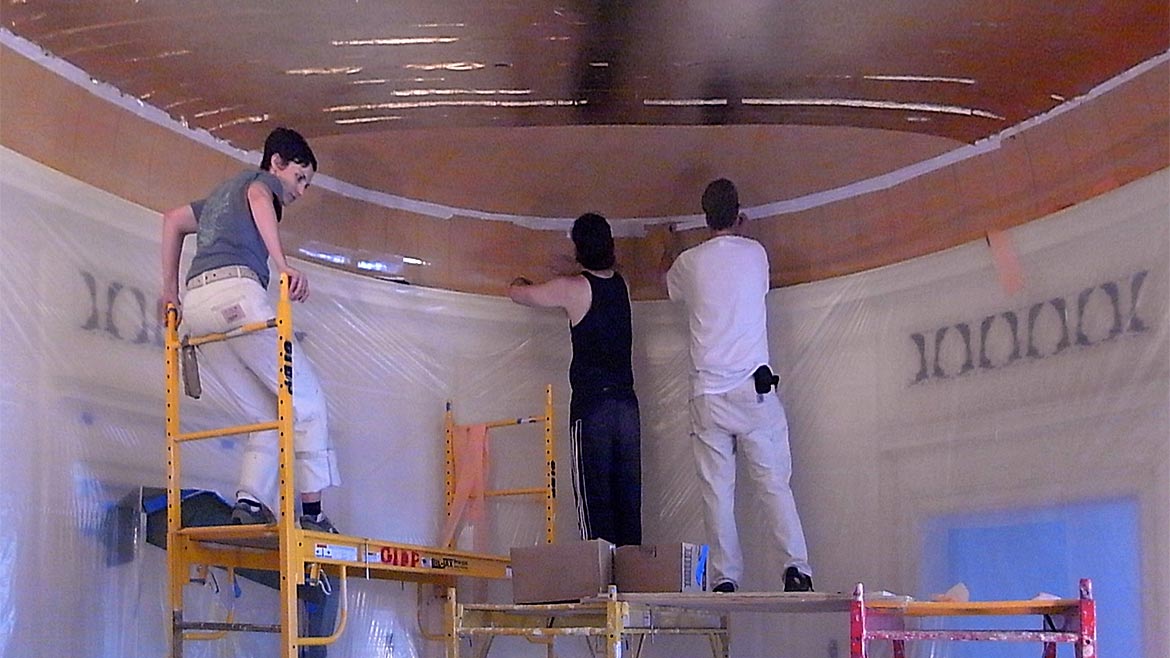
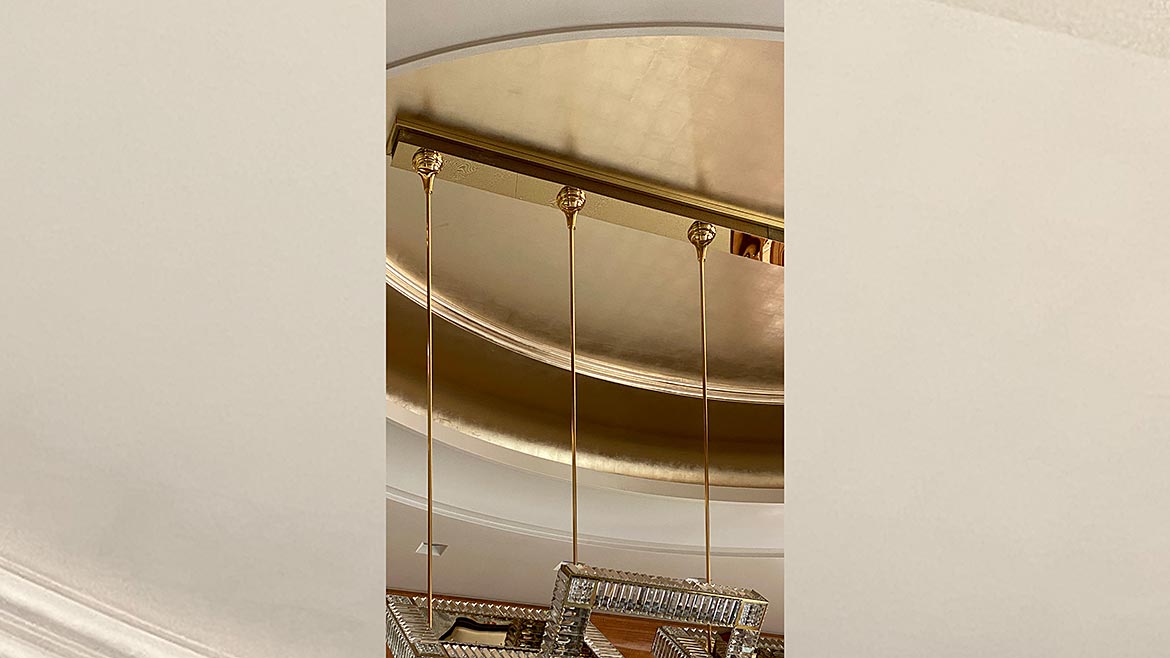
Clients typically ask for a full gilded ceiling to give a high-end look to a room. The ceiling is the "fifth wall"; and even though the square footage is large, it is still considered just a highlight or embellishment of the entire space. Ceilings are big jobs that need team cooperation in order to succeed. You must have an efficient and productive system for application. For example, you can apply leaf on a ceiling by applying a roll when using Dutch metal, copper and aluminum.
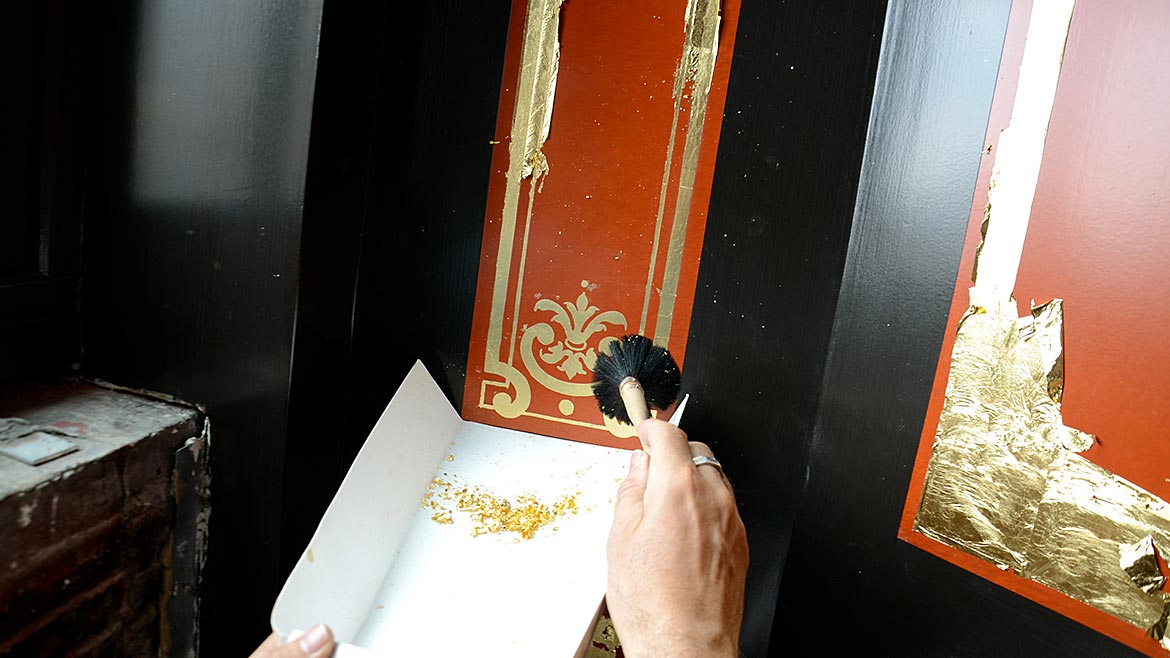
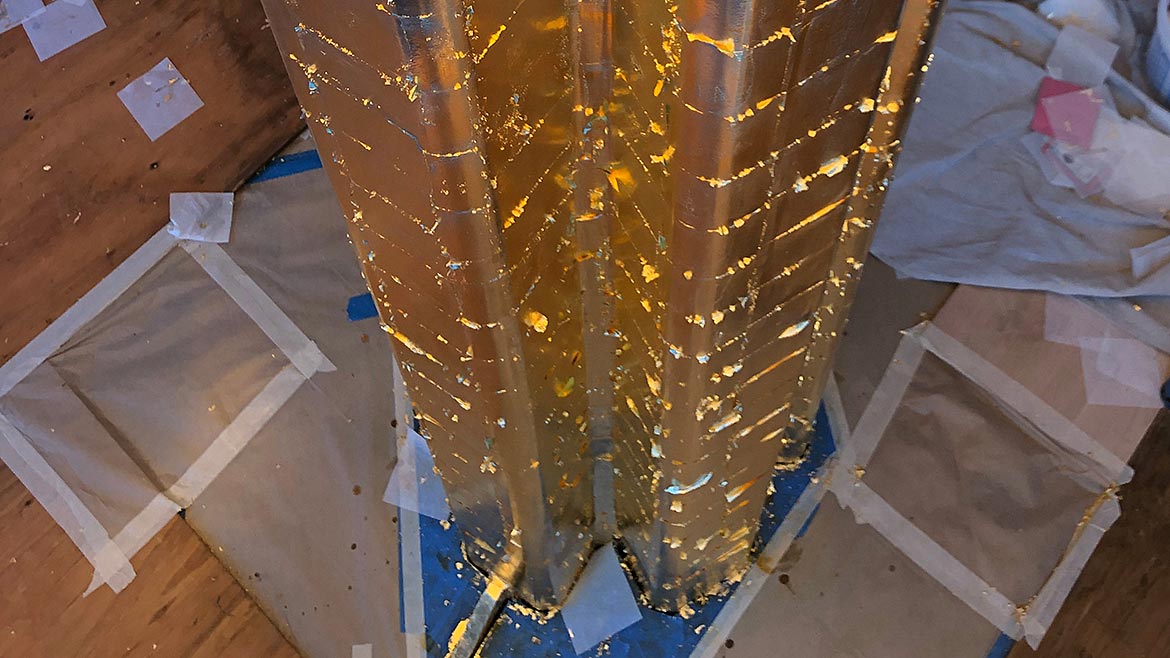
Real gold is still applied leaf by leaf. The leaf by leaf hand-done look is classic; however, it is also tedious, taking much time and skill to apply. It’s best to steer clients away from extensive cost for a ceiling. If the leaf is to be varnished or glazed over, use metallic foil (which comes on a roll) so as to not waste real gold. Foil can even look superior to gold. But no matter what material you use, the application must always be executed perfectly.
Where and When to Gild
As mentioned before, less is more in most decorative languages but definitely when it comes to adding gilding to architectural elements and furniture. Use detailed elevations provided by the architect and highlight areas that could use embellishment with a red pen to get a general feeling of the potential impact of gilding.
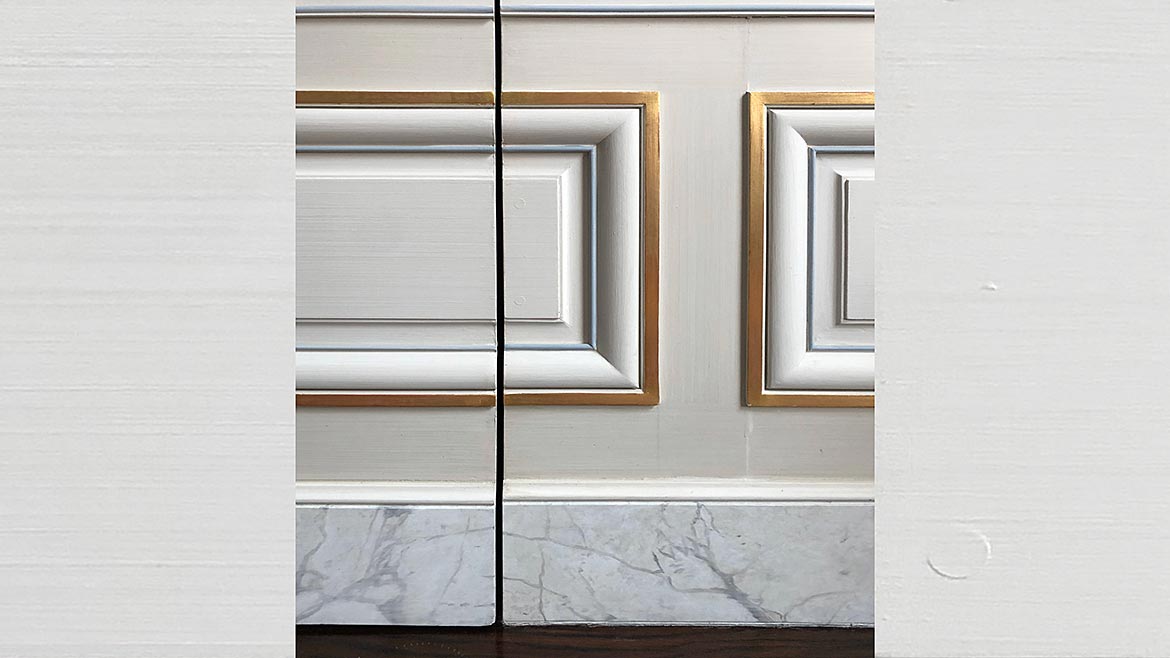
With this macro view, you can judge where and when to gild. In order to plan your embellishment and “pregild,” you can also request mock-up samples to be built for testing areas and use a red, reversible watercolor on the sample. You can use strips of blue tape, cut to size, and then place them on the architectural molding to best see where to place the final work without committing or repainting. Full molding is rarely gilded, typically the flat, the half round, quarter round section is chosen.
Going back to our desired decorative effect: It is important to choose the right shade/type of gold for the project. There are many shades to pick from and many prices; all should be taken in consideration when selecting the gold along with the painted sections.
Gilding is a fine compliment to any finishing project. It is possible that you may not do any gilding yourself, but you will most likely be asked to prepare the surface for a gilder in a hospitality, high-end residential, or commercial project. With the preparation, you will need to push to deliver the highest finish of preparation for your gilder so that the outcome will truly be the full reflection of the gilded surface (no pun intended).
Looking for a reprint of this article?
From high-res PDFs to custom plaques, order your copy today!