Spray Foam Insulation Market: Insights, Share Analysis, Size and Growth Trajectory
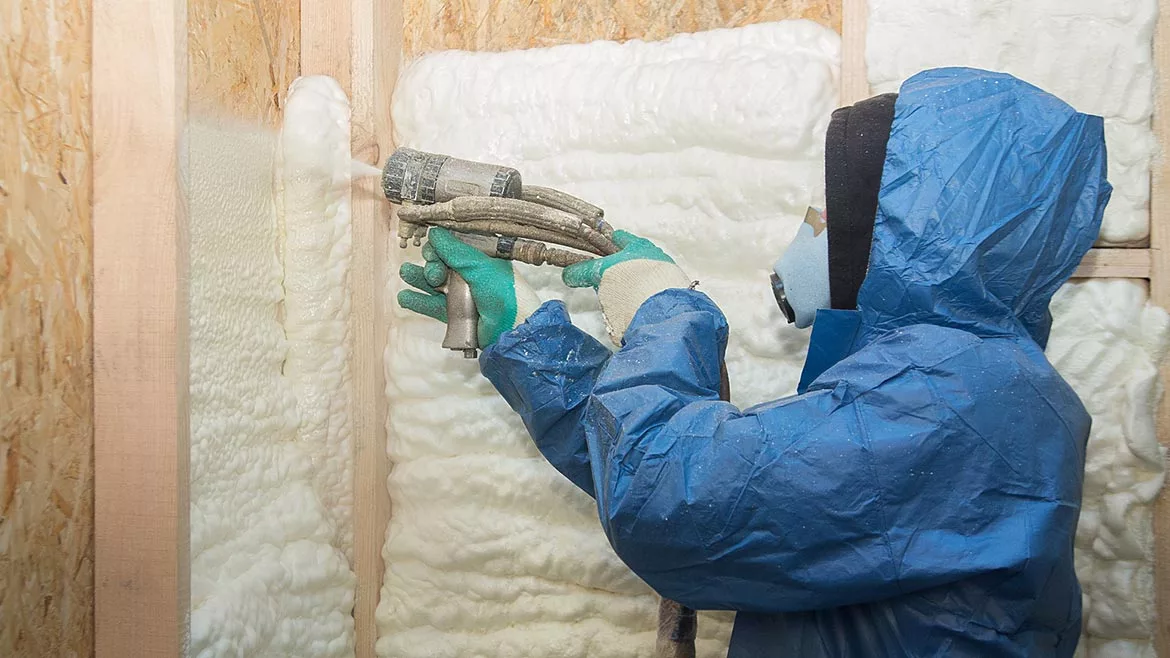
Photo courtesy of Anton Deina via iStock / Getty Images Plus Collection
The global spray foam insulation market is estimated to be valued at $2.97 billion in 2024 and is expected to reach $4.12 billion by 2031, exhibiting a compound annual growth rate of 4.8 percent from 2024 to 2031.
The latest market intelligence report published by CMI, “Global Spray Foam Insulation Market 2024: Growth Opportunities and Forecast,” provides actionable insights on the bulk chemicals industry. The report provides demand analysis, industry insights, competitive intelligence and customer databases.
The research report presents a complete judgment of the spray foam insulation market through strategic insights on future trends, growth factors, the supplier landscape, the demand landscape, year-over-year growth rate, CAGR and pricing analysis. It also provides a lot of business matrices, including Porter’s Five Forces analysis, PESTLE analysis, value-chain analysis, Four P’s analysis, market attractiveness analysis, BPS analysis and ecosystem analysis.
Key Trends in the Spray Foam Insulation Market
- Increased Demand for Energy Efficiency: With rising energy costs and growing awareness of environmental issues, there is a significant push for energy-efficient building materials. Spray foam insulation offers superior thermal performance, reducing heating and cooling costs, making it a preferred choice for both residential and commercial construction.
- Sustainability and Eco-Friendly Materials: There is a rising trend toward sustainability in construction, prompting demand for eco-friendly insulation options. Manufacturers are developing spray foam products with low global warming potential and using renewable materials, appealing to environmentally conscious consumers and builders.
- Technological Advancements: Innovations in spray foam formulations and application techniques are enhancing performance and usability. New technologies are leading to faster curing times, improved adhesion and better moisture resistance, which contribute to more efficient installation processes and overall effectiveness.
- Regulatory Support and Building Codes: Stricter building codes and regulations aimed at improving energy efficiency and indoor air quality are driving the adoption of spray foam insulation. Compliance with these regulations often encourages builders to use high-performance insulation materials, including spray foam.
- Growing Renovation and Retrofitting Activities: As older buildings are being renovated to improve energy efficiency and comfort, the demand for spray foam insulation in retrofitting projects is increasing. This trend provides opportunities for insulation contractors and manufacturers to expand their services and product offerings in the renovation market.
Detailed segmentation and classification of the report (for market size and forecast through 2031, year-over-year growth rate and CAGR):
- Type insights (revenue in billions of dollars for 2019-2031)
- Open-cell spray foam
- Closed-cell spray foam
- Application insights (revenue in billions of dollars for 2019-2031)
- Residential
- Commercial
- Industrial
- By regions and countries
- North America
- Europe
- The Asia-Pacific
- South America
- The Middle East and Africa
The following are the players analyzed in the report:
- BASF Corporation
- Demilec
- Johns Manville
- Icynene-Lapolla
- Lapolla
- Covestro
- Henry Company
- Greer Spray Foam Ltd
- Gaco Western
- Sika AG
- Foam Supplies Inc.
- CertainTeed
- Rmax
- ThermalGuard
- Tremco
- BASF’s ENERTITE
- Spray Foam Systems
- Kool Foam
- R-Tech
- Insulation Corporation of America
Deep-Dive Analysis
The report provides deep-dive qualitative and quantitative analysis on the spray foam insulation market for all of the regions and countries covered below:
- North America (the United States, Canada and Mexico)
- Europe (Germany, France, Italy, United Kingdom, SCANDIVAN, Benelux, Russia and the rest of Europe)
- The Asia-Pacific (Japan, South Korea, India, China, Southeast Asia and Australia)
- South America (Brazil, Argentina and the rest of South America)
- The Middle East and Africa (Saudi Arabia, UAE, Israel, South Africa, and the rest of the Middle East and Africa)
Each country is covered in detail, and the report provides qualitative and quantitative analysis on the spray foam insulation market in each country.
The research provides answers to the following key questions:
- What is the estimated growth rate of the market for the forecast period (2024-2031)? What will be the market size during the estimated period?
- What are the key driving forces responsible for shaping the fate of the spray foam insulation market during the forecast period?
- Who are the major market vendors and what are the winning strategies that have helped them occupy a strong foothold in the spray foam insulation market?
- What are the prominent market trends influencing the development of the spray foam insulation market across different regions?
- What are the major threats and challenges likely to act as a barrier in the growth of the spray foam insulation market?
- What are the major opportunities that market leaders can rely on to gain success and profitability?
Key insights provided by the report that could help you make critical strategic decisions:
- The regional report analysis highlighting the consumption of products/services in a region also shows the factors that influence the market in each region.
- The report provides opportunities and threats faced by suppliers in the spray foam insulation and tubes industries around the world.
- The report shows regions and sectors with the fastest growth potential.
- It is a competitive environment that includes market rankings of major companies, along with new product launches, partnerships, business expansions and acquisitions.
- The report provides an extensive corporate profile consisting of company overviews, company insights, product benchmarks and SWOT analysis for key market participants.
- The report provides the industry’s current and future market outlook on the recent development, growth opportunities, drivers, challenges and two regional constraints emerging in advanced regions.
Looking for a reprint of this article?
From high-res PDFs to custom plaques, order your copy today!





