Walls & Ceilings logo
search
cart
facebook twitter linkedin youtube youtube Spotify Podcasts Apple Podcasts Spotify Podcasts Apple Podcasts
  • Sign In
  • Create Account
  • Sign Out
  • My Account
Walls & Ceilings logo
  • NEWS
  • TOPICS
    • Drywall
    • Stucco/EIFS
    • Ceilings
    • Steel Framing
    • Fireproofing
    • Interior Plaster
    • Building Envelope
    • Insulation
    • Technology
    • Interior
    • Exterior
    • Women In Construction
  • COLUMNS
    • Up Front
    • All Things Gypsum
    • Art & Craft of Plastering
    • Stucco Stop
    • Steel Deal
    • Industry Voices
  • PRODUCTS
    • Buzz Guide
  • EVENTS
    • Industry Events
    • Webinars
    • BUILD Expo
  • MEDIA
    • Videos
    • Podcasts
    • Photo Galleries
    • BUILD26 Videos
    • Take our Quiz!
    • Infographics
  • EXCLUSIVE
    • Newsletters
    • Top 50 Contractors
    • Contractor of the Year
    • State of the Industry
    • W&C Store
    • Market Research
    • CEUs
    • Sponsor Insights
    • Custom Content & Marketing Services
  • DIRECTORY
  • EMAGAZINE
    • eMagazine
    • Advertise
    • Archive Issues
  • SIGN UP!
Interior

Rigid Sheet Wall Protection: Comparing Adhesive Application Methods

Installation options impact performance, project timing, and safety. Here's what specifiers and contractors need to know.
By Brent Hamm
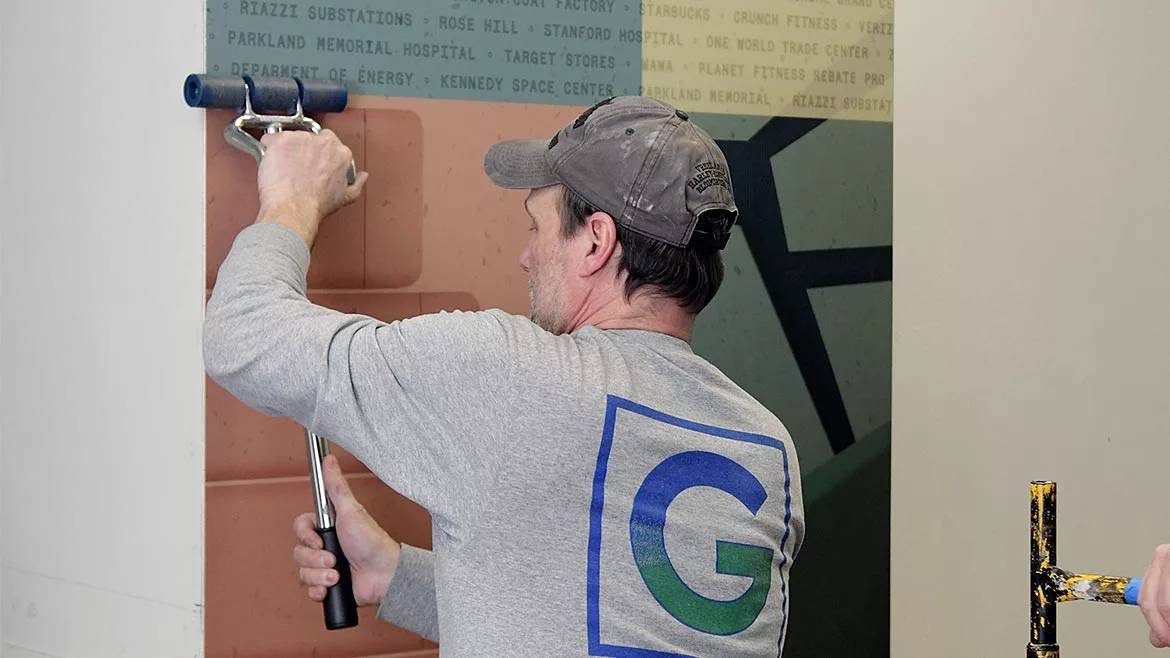
Applying Rigid sheet wall protection
Images courtesy of Construction Specialties.
June 6, 2025

In high-traffic environments such as hospitals, schools, and office buildings, rigid sheet wall protection is the go-to choice for preserving the condition of walls and corridors. This workhorse solution minimizes repairs while maintaining appearance, offering a measure of durability unavailable in simple drywall.

Installation must be considered when selecting rigid sheet protection. Advancements in adhesives and application methods have brought time- and cost-cutting benefits, however, the curing process for some adhesives could add extra time in some construction projects. On the other hand, while some processes save time, they can sacrifice the budget.

Therefore, understanding each application process is vital to making the best decision for individual projects. Here’s a look at the advantages of each method, as well as other factors that should be taken into consideration.

Using a trowel to apply Rigid Sheet Wall Protection

Trowel-On Method

Most contractors are familiar with the trowel-on method, the traditional way of applying adhesive for rigid sheet wall protection using a trowel and mastic. The application process is similar to applying adhesive for wall tile. One of the benefits of this method is that installers are able to control how much mastic is used and where it’s applied. Once the technique is mastered, waste is minimized. This method is also more forgiving because the adhesive allows installers to shift the panel, if needed, after it’s been placed on the wall. However, it’s important to note that only certain adhesives used in this application method allow this kind of maneuverability.

The downside to trowel-on is a slow cure time. The mastic has to set for 40 minutes before a sheet can be fastened. Trowel-on also requires a certain level of skill to apply the adhesive evenly and to avoid overapplication, which can create a mess.

Spray-On Method

The spray-on method uses an aerosol spray to apply adhesive, similar to using spray paint. Spraying speeds up application time as it can be applied quickly to the wall before placing the sheet.

Spray-on adhesive requires the same cure time as trowel-on mastic. While application time is cut, installers still need to wait 40 minutes before they can adhere the panels, and the panels cannot be moved once attached. Over-spraying can be an issue as well. If the construction space—including ceilings and floors—is unfinished, over-spraying isn’t as much of a consideration, but since wall protection is often one of the last products installed, finished floors and ceilings will need to be protected.

Roll-On Method

The roll-on method is a newer process that offers the best of both worlds. Using paintbrushes and rollers to apply the adhesive much like wall paint, the installer has precise control over where the adhesive is applied. The greatest benefit to this method is that the adhesive requires only 5–15 minutes to cure, drastically reducing the installation time. The technique also offers a shorter learning curve for installers as most people are familiar with rolling on paint.

There are a few limitations with this method. First, it can only be applied to a completely flat surface, meaning it is not a viable choice when working with an existing substrate such as brick or cinder block. While sheets can still be applied to these surfaces, installers will need to use the trowel-on method because the mastic will fill in any gaps in the surface. The roll-on method is also not recommended for textured wall protection.

Applying Self-Adhering Rigid Sheet Wall Protection

Self-Adhering Method

For the ultimate time-saving application, construction teams can use the self-adhering or “peel and stick” method for applying rigid sheet protection. This process uses self-adhesive on the back of the sheet with a release liner protecting it. Once the liner is removed, the sheet can be placed and will immediately adhere to the wall.

The cost of peel-and-stick tends to be significantly higher than other types of adhesives when compared to the same type of wall covering. Additionally, because each sheet has a disposable liner that is the same size as the sheet, there is a considerable amount of waste. Installers also need to be very precise when placing the sheets, as this method does not allow for any maneuverability once the sheet touches the wall.

Other Factors

Beyond determining the installation method, a few other factors should be taken into consideration when specifying wall protection. To keep building occupants safe, contractors should consider the composition of the adhesive offered by the wall protection manufacturer. Many adhesives release harmful VOCs, which can cause headaches and serious respiratory issues.

Work with a manufacturer who can verify that none of their adhesives contain Red List chemicals and that their products have passed CDPH CA Specification 01350 testing for volatile organic chemical emissions. Commercial adhesives that meet these guidelines release little to no odor and are a much healthier choice for building occupants.

Wall protection solutions should also offer a high level of fire resistance. When choosing a product, designers should ensure that it meets Class A fire testing requirements, the highest a material can receive. This rating means a material will minimize fire spread and won’t generate a lot of smoke. Additionally, plastic materials will shrink and expand depending on the temperature, and an adhesive must be able to account for those changes.

Rigid sheet wall protection is the practical choice for facilities with high traffic. Thanks to continued advancement in design, it’s available in a wide array of attractive colors and patterns, and beyond aesthetic appeal, it will help maintain the integrity of the wall. Now, with a variety of installation methods, this form of wall protection provides time-saving measures in a cost-effective, sustainable, and durable solution.

KEYWORDS: adhesives and sealants fire resistance resiliency sprayer trowel VOC (volatile organic compounds) wall system

Share This Story

Looking for a reprint of this article?
From high-res PDFs to custom plaques, order your copy today!

Wc0625 feat cs p4 author brent hamm
Brent Hamm is the technical product manager for the New Product Delivery Team at Construction Specialties. With 18 years of experience at CS, he has contributed to various aspects of the business, including product development, engineering, manufacturing, customer service, and sustainability. In his current role, Brent oversees the introduction of new products to the market while also focusing on optimizing the company’s existing product portfolio.

Recommended Content

JOIN TODAY
To unlock your recommendations.

Already have an account? Sign In

  • Abercrombie & Fitch

    EIFS in 2026: How Specialty Finishes Are Redefining Exterior Wall Systems

    As building codes, owner expectations, and design demands...
    Stucco/EIFS
    By: Regi Mendoza
  • proper air and vapor control

    From Energy Efficiency to Moisture Management: Why Air and Vapor Control Matter

    How proper air and vapor control within building...
    Building Envelope
    By: Benjamin Meyer AIA, LEED AP
  • Linear Metal Ceiling Beam Baffles

    Top 25 Ceiling Contractors of 2026

    Suspended ceilings demand precision, code compliance and...
    Ceilings
    By: John Wyatt and Tanja Kern
You must login or register in order to post a comment.

Report Abusive Comment

Manage My Account
  • eMagazine Subscription
  • Newsletters
  • Online Registration
  • Manage My Preferences
  • Subscription Customer Service

More Videos

Sponsored Content

Sponsored Content is a special paid section where industry companies provide high quality, objective, non-commercial content around topics of interest to the Walls & Ceilings audience. All Sponsored Content is supplied by the advertising company and any opinions expressed in this article are those of the author and not necessarily reflect the views of Walls & Ceilings or its parent company, BNP Media. Interested in participating in our Sponsored Content section? Contact your local rep!

close
  • medical professionals moving a patient on a stretcher through the halls of a medical building
    Sponsored byNational Gypsum Company

    What Does High Performance Mean When It Comes To Gypsum Boards?

Popular Stories

Linear Metal Ceiling Beam Baffles

Top 25 Ceiling Contractors of 2026

Wichita Biomedical Campus

Wichita Drywall Worker Dies After Scaffolding Fall

QXO Just Changed the Game-Here's What Contractors Are Asking

QXO Just Changed the Game-Here's What Contractors Are Asking

An interior drywalling work in progress

Boost Profits with AI Scheduling

Events

June 24, 2026

The Bright Side & Benefits of Designing with Integrated Lighting

Credits 1 AIA LU/HSW; 0.1 ICC CEU

This course will explore the pivotal role architects and lighting design play in creating safer, more sustainable spaces. Learn how to avoid common lighting mistakes and make informed decisions that create the best visual environment for occupants. 

January 1, 2030

Webinar Sponsorship Information

For webinar sponsorship information, visit www.bnpevents.com/webinars or email webinars@bnpmedia.com.

See our full library of webinars

View All Submit An Event

Products

2026 National Painting Cost Estimator

2026 National Painting Cost Estimator

See More Products

Related Articles

  • Proper Application Methods

    See More
  • Proper Application Methods

    See More
  • A man applying flashings to a house

    Flashing Forward: How Innovation is Changing the Game in Wall Protection

    See More

Related Products

See More Products
  • 1118458605.jpg

    Sustainable Facades: Design Methods for High-Performance Building Envelopes

See More Products

Events

View AllSubmit An Event
  • June 22, 2026

    National Fire Protection Association (NFPA) Conference & Expo

    The National Fire Protection Association has announced that it will hold its 2026 NFPA Conference & Expo in Las Vegas at the Mandalay Bay. The show features a wide variety of 400-plus exhibitors, over 8,000 attendees and 120-plus educational sessions, workshops, and presentations with attendees from 94 countries. Collaborate and network with thousands of fire protection engineers, electricians, firefighters, building and facility managers, manufacturers of safety equipment, government officials, and all other life safety professionals.
View AllSubmit An Event
×

Connect with the industry’s leading resource for unparalleled insights and education.

Join thousands of industry professionals today. Shouldn’t you know what they know?

JOIN NOW
  • RESOURCES
    • Advertise
    • Contact Us
    • Directories
    • Store
    • Want More
  • SIGN UP TODAY
    • Create Account
    • eMagazine
    • Newsletters
    • Customer Service
    • Manage Preferences
  • SERVICES
    • Marketing Services
    • Reprints
    • Market Research
    • List Rental
    • Survey/Respondent Access
  • STAY CONNECTED
    • LinkedIn
    • Facebook
    • Instagram
    • YouTube
    • X
  • PRIVACY
    • PRIVACY POLICY
    • TERMS & CONDITIONS
    • DO NOT SELL MY PERSONAL INFORMATION
    • PRIVACY REQUEST
    • ACCESSIBILITY

Copyright ©2026. All Rights Reserved BNP Media, Inc. and BNP Media II, LLC.

Design, CMS, Hosting & Web Development :: ePublishing