Choosing Between Thin-Cut Natural Stone and Manufactured Stone Veneer - A Side-by-Side Comparison
Thin-cut natural stone offers unmatched authenticity and durability with higher costs and installation complexity, while manufactured stone veneer provides a more affordable, lightweight, and customizable alternative that delivers visual consistency and easier application.
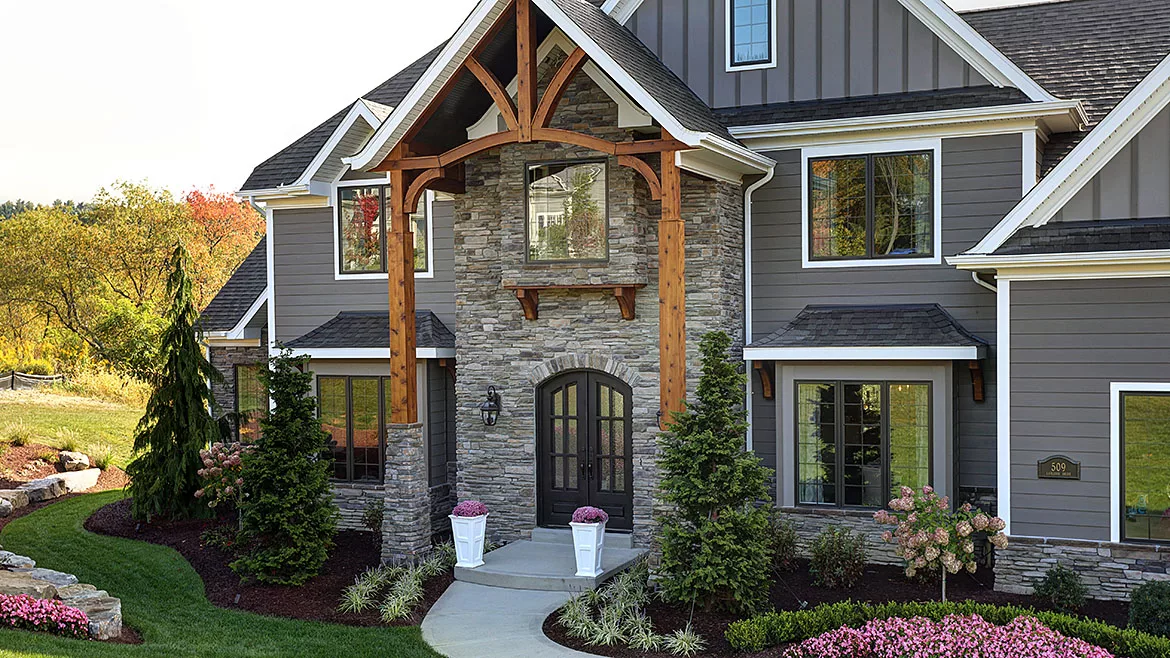
In both residential and commercial construction, stone continues to be a trusted material for creating timeless appeal and architectural character. Whether you’re refreshing a home exterior, designing a commercial façade or adding an interior accent wall, stone brings a level of texture and charm that few materials can match. But when comparing two common options—thin-cut natural stone and manufactured stone veneer (MSV)—there are key differences not only in appearance but also in installation, performance and cost that can influence what’s right for the job.
Below is a side-by-side comparison to help you decide which option makes the most sense for your next build or renovation.
Visual Appearance & Consistency
- Thin-Cut Natural Stone: Thin-cut natural stone offers the authentic look and feel of quarried stone. Each piece is one-of-a-kind with distinct shapes, patterns, colors and textures that have formed over thousands of years. This natural variation can add a beautiful, organic feel to a space. That said, the uniqueness of each piece can also make it harder to achieve a consistent look across larger installations. It often takes a skilled installer, as well as more time, to get the layout just right.
- Manufactured Stone Veneer: Unlike natural stone, MSV is made in a controlled environment, ensuring consistent color, shape and texture. Thanks to advanced molding technology, MSV can replicate the look of natural stone very well, even capturing fine details like sediment lines or fossil-like markings. For projects where a clean, cohesive aesthetic is important, MSV is a reliable choice. Plus, its consistency means faster installation and fewer surprises during the blending process.
Thin-cut natural stone offers unique variation but requires skilled installation for consistency, while manufactured stone veneer provides uniform color and texture with realistic detail, allowing for a cohesive look and faster installation.
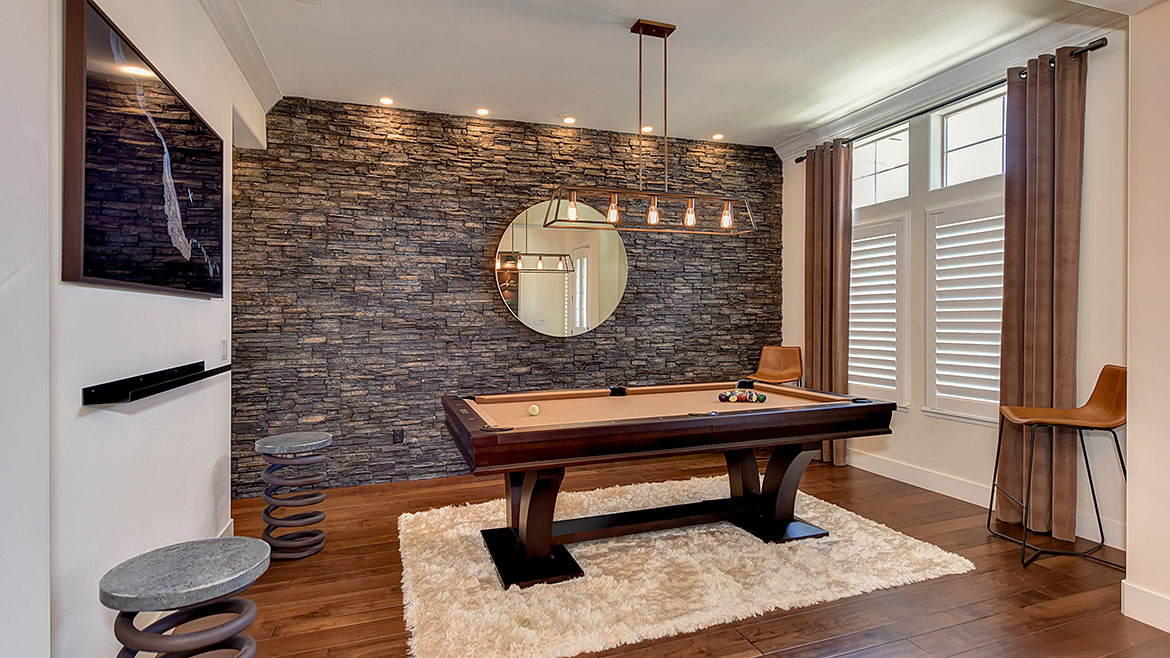
Photo: Westlake Royal Building Products
Design Flexibility & Customization
- Thin-Cut Natural Stone: While natural stone is beautiful, it can be more difficult and expensive to customize. Options are often limited by local quarry supply, and special shapes, sizes or finishes usually come with added costs and longer lead times.
- Manufactured Stone Veneer: One of the biggest advantages of MSV is its design flexibility. Because it’s manufactured, it’s available in a wide range of colors, textures, shapes and sizes—making it easier to achieve almost any look, from traditional to modern. Custom options are also available, helping builders and designers meet specific design requirements and accommodate client preferences without the costs or delays of quarry orders. Its consistency and lighter weight also make the layout and installation process simpler, allowing for more intricate patterns that can often be challenging with natural stone.
Highly versatile, manufactured stone veneer is available in a wide range of textures and colors. Shown here is a stacked stone in Black River used to elevate both exterior facades and interior features like accent walls and fireplaces.
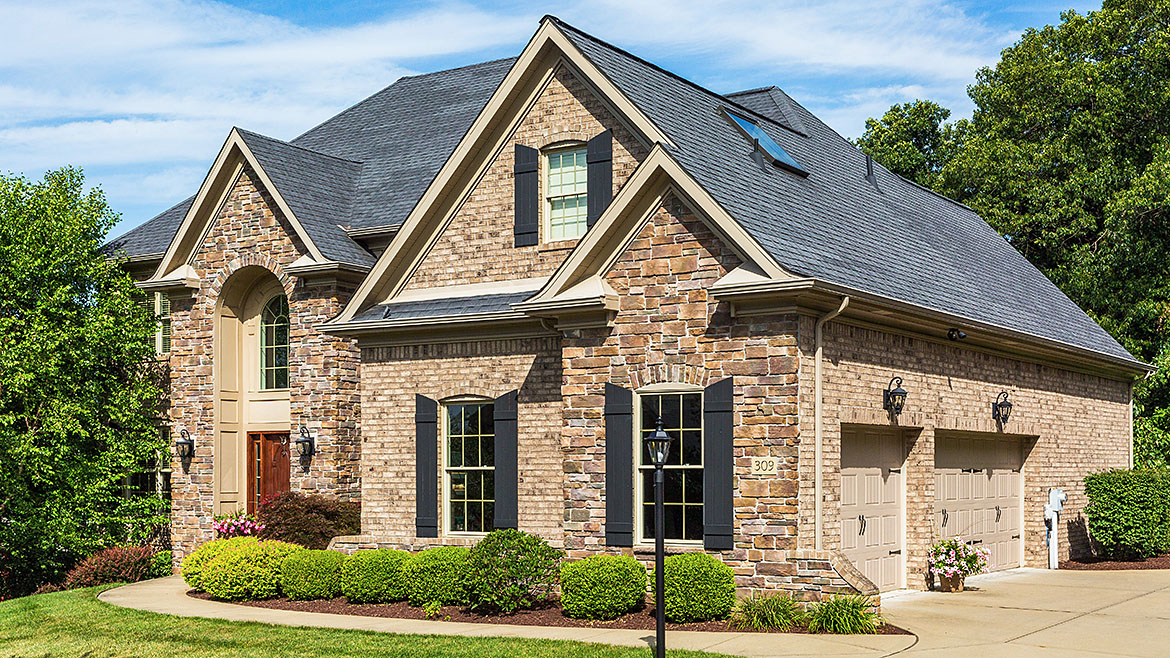
Photo: Westlake Royal Building Products
Installation Efficiency & Jobsite Safety
- Thin-Cut Natural Stone: While more manageable than full-bed natural stone, thin-cut natural stone still shares the same variations in color, texture and shape, making layout and installation more complex, especially when attempting a cohesive look. Its irregular density, texture and shape can also make cutting more difficult. Specialized tools may be required, and there can be more waste due to the difficulty in achieving precise cuts. Additionally, even when cut thin, natural stone is heavier than MSV. Installers may need structural reinforcements to handle the stone’s weight, which can add both time and cost to a project.
- Manufactured Stone Veneer: Lighter and easier to work with, MSV can be installed more quickly and efficiently than thin-cut natural stone. Its consistent color, texture, shape and density help to achieve a uniform look with less effort. MSV is also more straightforward to cut and adjust on-site. Due to its lighter weight, it can be applied to a variety of surfaces without major structural modifications, typically requiring only standard lath, scratch coat and mortar bonding. This helps to reduce strain on crews, minimize injury risk and keep projects on schedule.
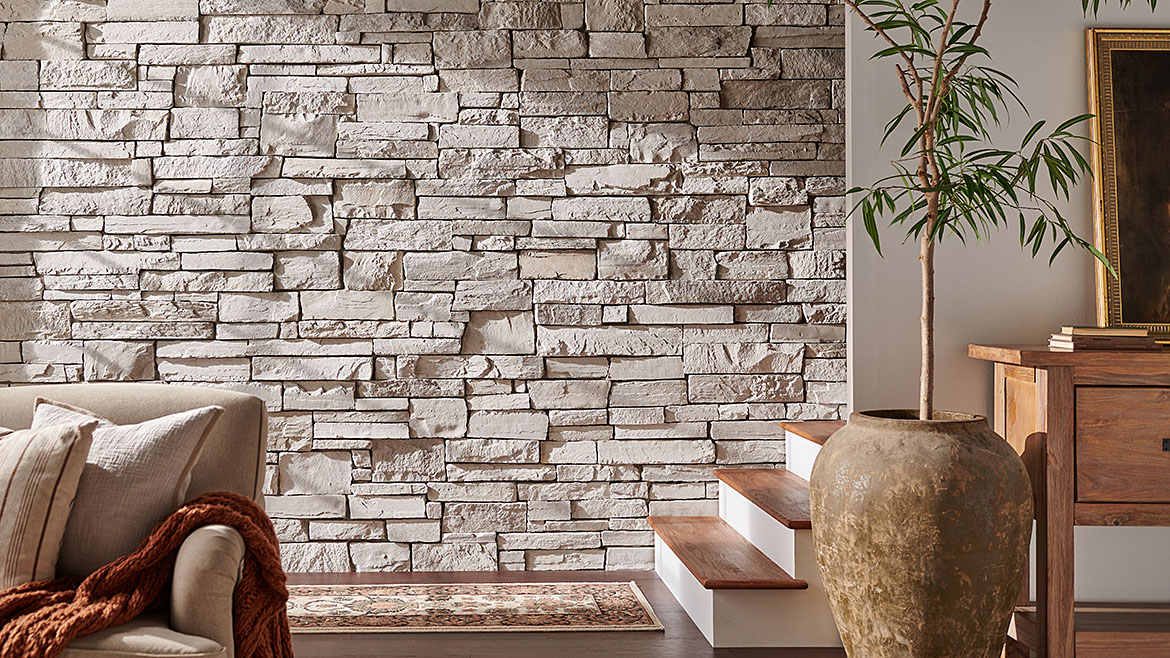
Photo: Westlake Royal Building Products
Long-Term Durability & Performance
- Thin-Cut Natural Stone: Quarried from the earth, natural stone is highly durable and resilient. Capable of lasting for centuries with minimal degradation, it can withstand extreme weather, freeze-thaw cycles and UV exposure.
- Manufactured Stone Veneer: While MSV may not yet match the longevity of natural stone, advances in production are quickly closing the gap. Its controlled manufacturing process ensures consistent quality, structural stability and reliable performance. Lightweight yet durable, MSV offers built-in resistance to UV exposure, moisture and temperature changes. It is also formulated to resist fading, cracking and water damage, delivering lasting appeal with minimal maintenance. Most MSV products come with 50-year warranties when installed according to manufacturer guidelines.
Adding thin-cut natural stone or manufactured stone veneer instantly enhances curb appeal while providing durable protection against extreme weather.
Material & Labor Cost
- Thin-Cut Natural Stone: Due to its weight, labor demands and limited availability, natural stone often comes at a higher cost. Additional expenses may arise from customization, specific stone selection or long-distance shipping from quarries, impacting both material and labor budgets.
- Manufactured Stone Veneer: MSV is typically more cost-effective than natural stone. In addition to the product itself being more affordable, MSV’s light weight reduces transportation costs and simplifies installation, lowering labor costs in the process. Overall, MSV is a good choice for budget-conscious builders and homeowners who don’t want to sacrifice style or quality.
Whether you’re drawn to the authenticity of natural stone or the versatility and cost-efficiency of manufactured stone veneer, both options offer a timeless appeal that can significantly enhance your project. The right choice ultimately depends on your budget, aesthetic preferences and performance needs, so weigh the pros and cons carefully to select the material that best aligns with your vision.
Looking for a reprint of this article?
From high-res PDFs to custom plaques, order your copy today!
.webp?height=96&t=1776266084&width=96)




