Controlled Burn: Inside the CFS10 Burn Tests
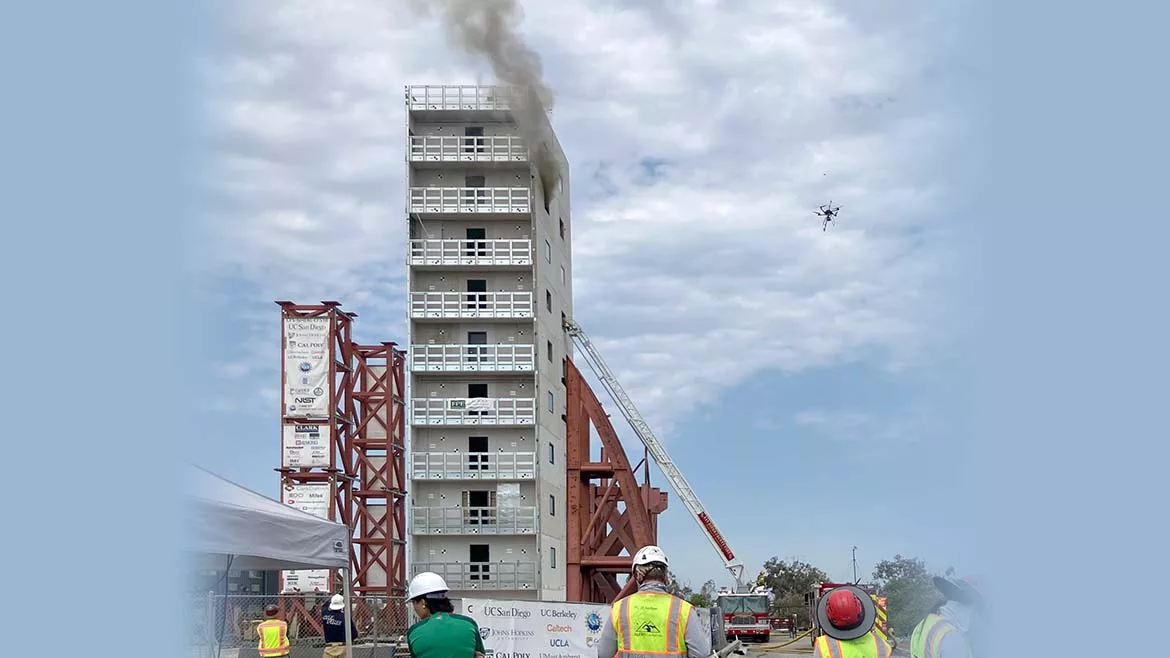
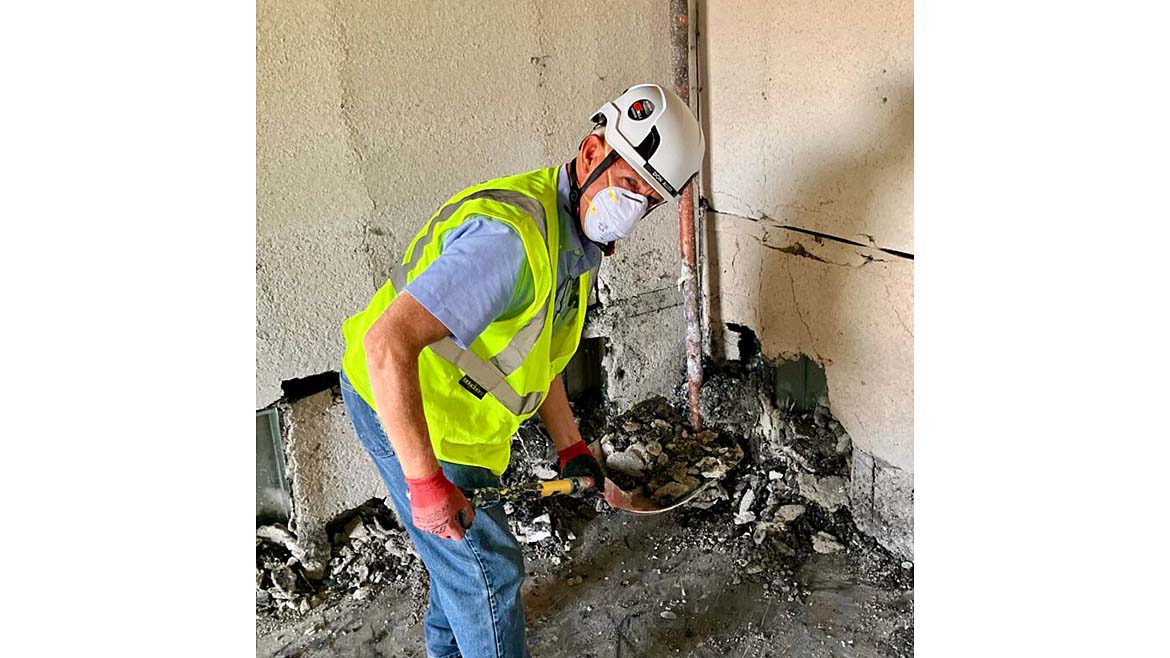
On July 17, Rick Emberley, associate professor at Cal Poly, ignited a controlled burn on the ninth floor of CFS10, a 10-story cold-formed steel structure in San Diego. CFS10 is the tallest CFS-framed structure ever placed on an earthquake simulator—the triaxial shake table at the University of California San Diego’s Englekirk Structural Engineering Center Large High-Performance Outdoor Shake Table. This was the first of two fire tests designed to evaluate how tall CFS-framed buildings perform in a fire after sustaining seismic damage.
The structure, funded in part by the Steel Framing Industry Association with major material and design contributions from ClarkDietrich, had undergone multiple severe seismic simulations during the week of July 23. Motion sensors, cameras, and drones recorded details of the shaking and resulting damage throughout testing. After dozens of shake tests, the structure was assessed, damage was marked, and most seismic sensors were removed. The fire team then installed new devices—including cameras and thermocouples—to capture fire temperatures, spread, and cool-down phases.
Photos: SFIA
Performance of Assemblies Under Seismic and Fire Conditions
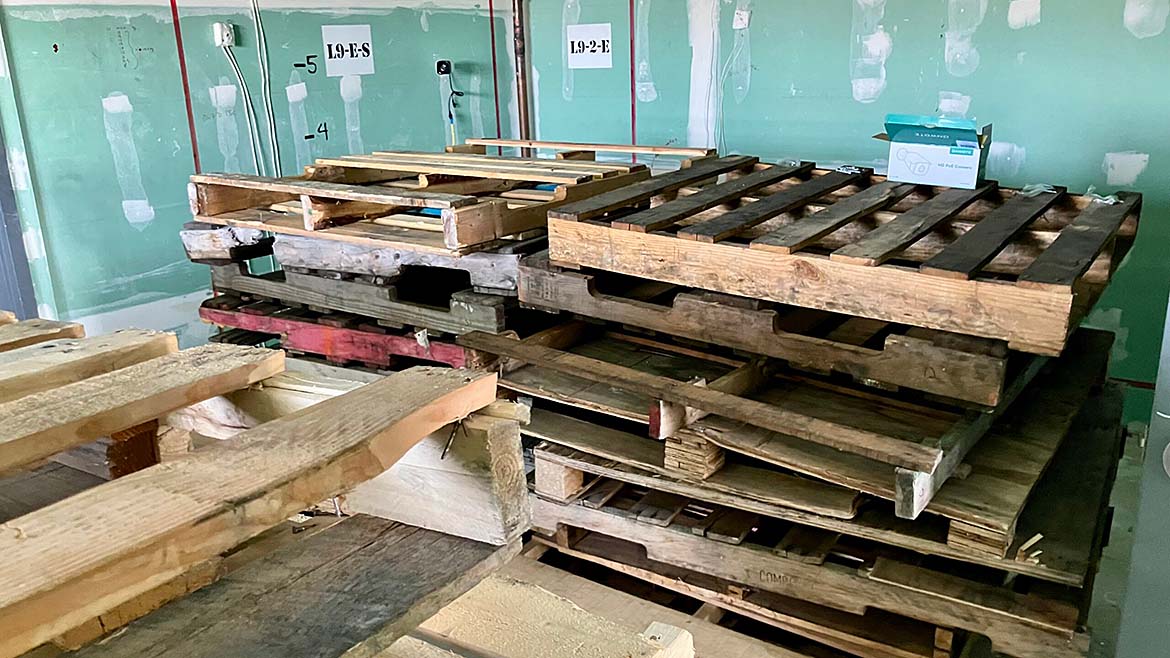
“Unlike standardized ASTM E119 testing, which is used for hourly rating of structures, this was more representative of an actual building burning,” says Don Allen, SFIA’s executive director, who witnessed the first test. “Several aspects of this test made it even more demanding than typical conditions, including the complete removal of the window and frame from the north wall and the relatively high fuel load of wood pallets stacked in four piles in the burn room.”
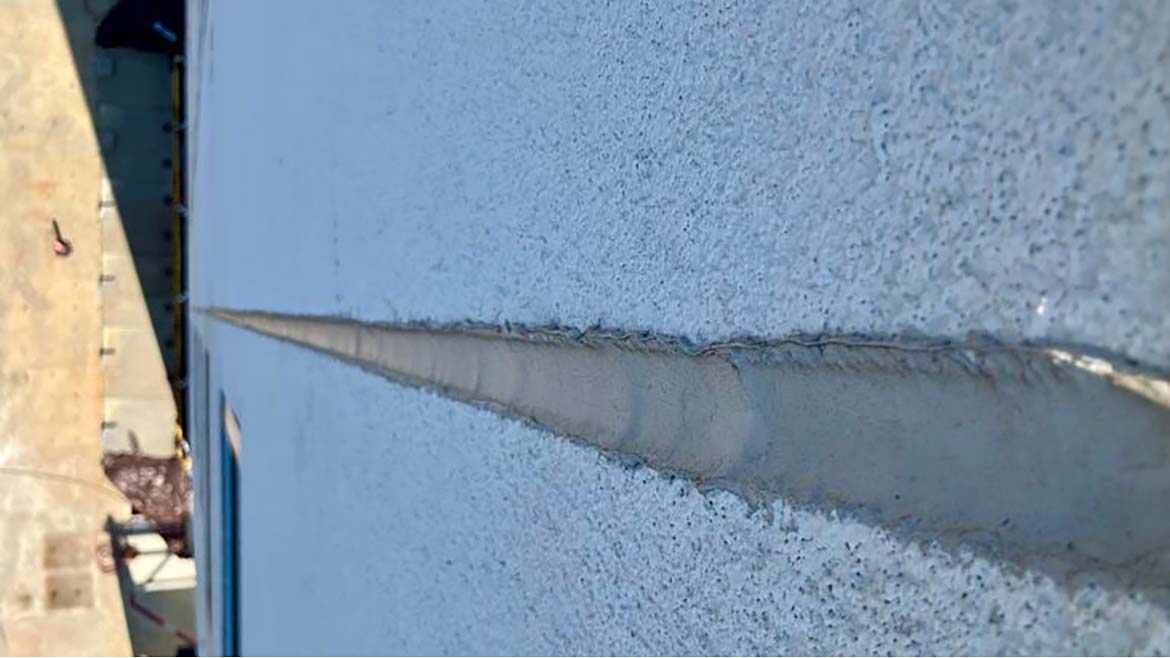
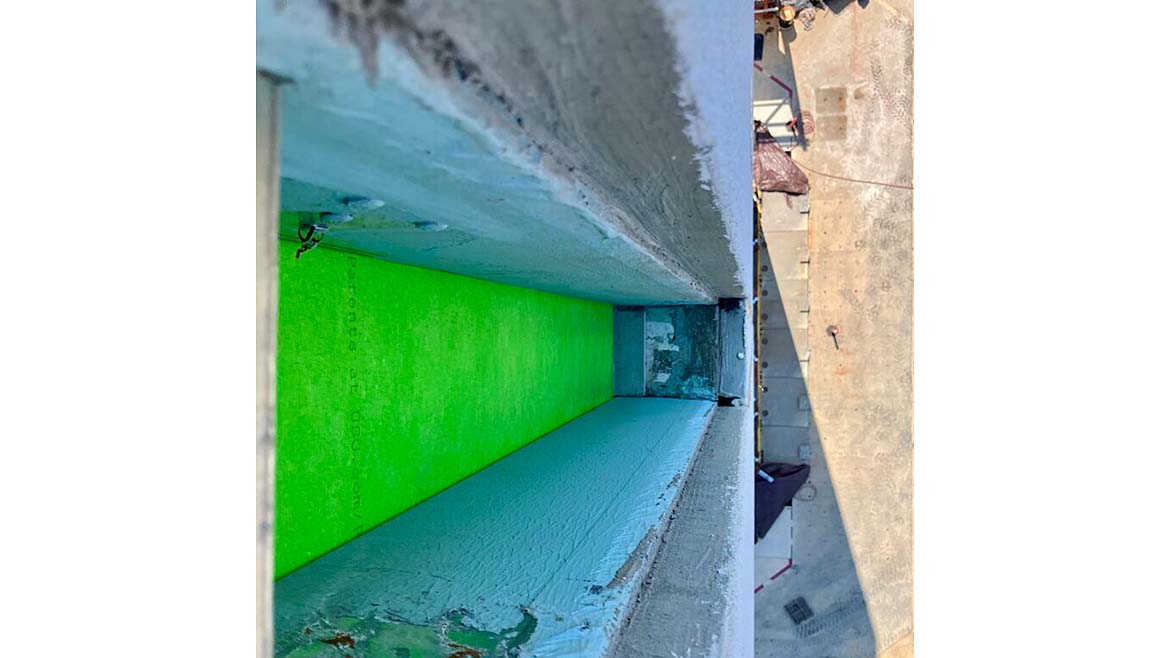
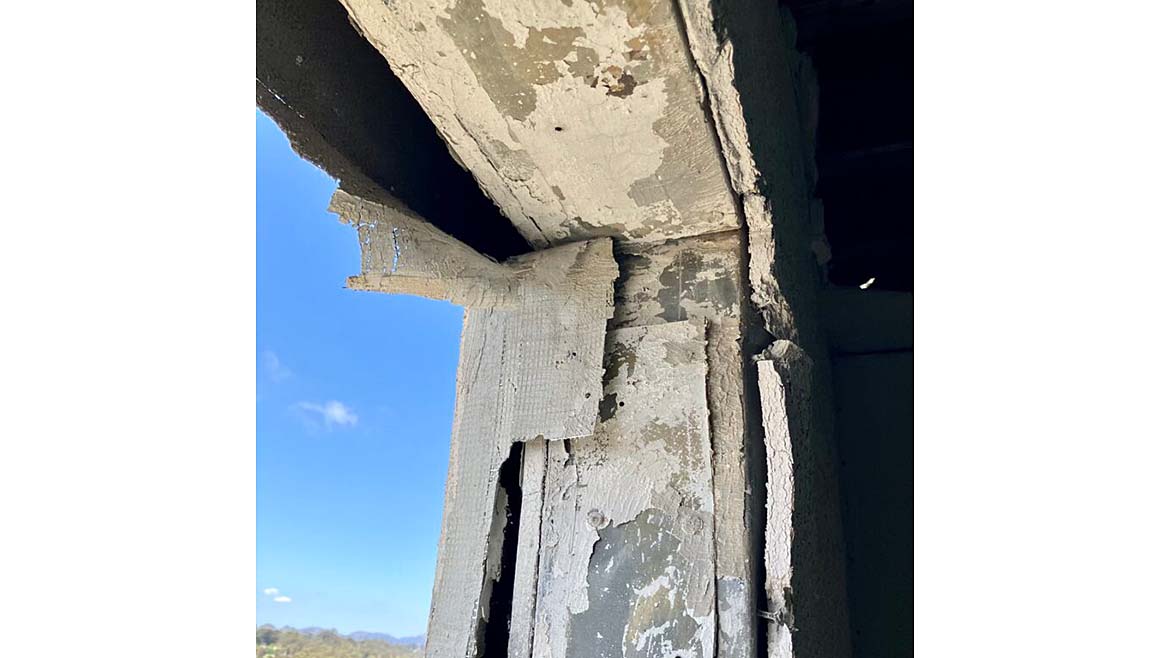
Before testing, imperfections in the floor-ceiling assemblies above and below the ninth-level burn room were documented. Earthquake simulations had caused cracks, delaminated joints, sagging joint tape, spalling of joint compound, and fastener connection damage. Some flaws were likely unrelated to seismic activity, instead caused by drying of joint treatments under suboptimal temperature and humidity conditions.
“I was surprised and pleased at how well the gypsum board and resilient channel ceiling held up through the simulated earthquakes,” Allen says. “The resilient channel support did its job of isolating the gypsum from the steel framing, so the shock and movement of the joists were only partially transmitted into the gypsum ceiling diaphragm.”
Photos: SFIA
By design, floor-ceiling and roof-ceiling assemblies have the gypsum fire protection layer attached to flexible resilient channels, rather than directly to the framing. While primarily intended to improve fire performance, this system also accommodates building movement caused by earthquakes, wind, or other forces. Resilient channels additionally enhance acoustical performance by decoupling gypsum ceilings from the primary frame.
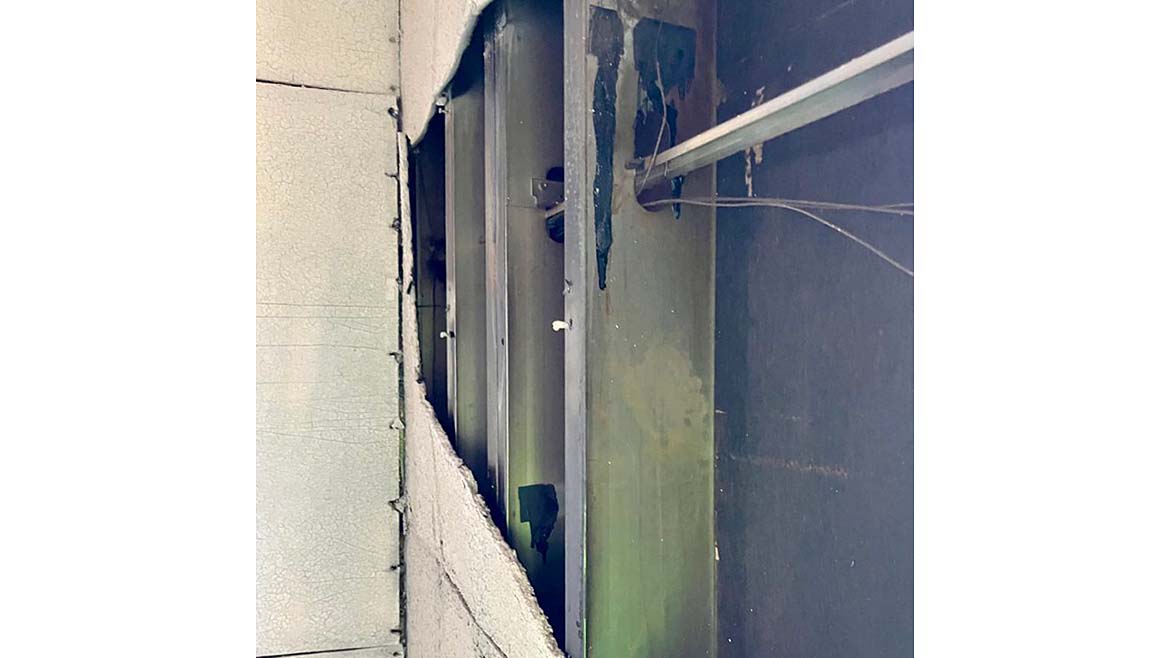
Because the CFS10 structure was built in prefab modules, ceiling framing in each lower module was separate from the floor framing of the module above. While both were made of structural CFS, the separation created cavities for electrical and mechanical systems. For the test, however, researchers intentionally routed gas lines and other services below the ceiling to study their direct exposure to fire.
Photos: SFIA
Fire Behavior, Observations, and Early Findings
In the burn room, two fire-rated hollow metal (steel) doors were installed—one opening onto an exterior balcony and the other into an interior stairwell. Both doors remained closed during the test, successfully limiting the passage of flames, smoke, and hot gases.
The open rough opening in the north wall allowed air to fuel combustion while enabling smoke and flames to escape outside. Drones stationed nearby documented these effects, recording flame behavior, smoke movement, exterior temperatures, wind speed, and wind direction. Several seismic monitors were also left in place away from the fire to measure any fire-related structural movement.
Adjacent to the opening, the building’s north façade was clad in EIFS over a gypsum base. Observations showed the EIFS performed as intended: while the expanded polystyrene insulation melted and briefly burned when exposed to flames, it self-extinguished once flames receded. The exterior base coat, fiberglass mesh, and finish coat remained essentially intact.
A second fire test, conducted on the sixth floor on July 29, produced similar results. Full analysis will take months, but early findings suggest taller CFS structures may be permitted in high-seismic regions, with fire-after-earthquake scenarios still providing reliable life-safety protection.
“The load-bearing capacity is ample reserve,” says Principal Investigator Tara Hutchinson of the University of California San Diego. “Steel-sheathed cold-formed steel shear walls did their work and resisted all of the simulated earthquakes.”
As with all National Science Foundation-funded projects, the complete data set will be made publicly available on the CFS10 website.
Looking for a reprint of this article?
From high-res PDFs to custom plaques, order your copy today!