Walls & Ceilings logo
search
cart
facebook twitter linkedin youtube youtube Spotify Podcasts Apple Podcasts Spotify Podcasts Apple Podcasts
  • Sign In
  • Create Account
  • Sign Out
  • My Account
Walls & Ceilings logo
  • NEWS
  • TOPICS
    • Drywall
    • Stucco/EIFS
    • Ceilings
    • Steel Framing
    • Fireproofing
    • Interior Plaster
    • Building Envelope
    • Insulation
    • Technology
    • Interior
    • Exterior
    • Women In Construction
  • COLUMNS
    • Up Front
    • All Things Gypsum
    • Art & Craft of Plastering
    • Stucco Stop
    • Steel Deal
    • Industry Voices
  • PRODUCTS
    • Buzz Guide
  • EVENTS
    • Industry Events
    • Webinars
    • BUILD Expo
  • MEDIA
    • Videos
    • Podcasts
    • Photo Galleries
    • BUILD26 Videos
    • Take our Quiz!
    • Infographics
  • EXCLUSIVE
    • Newsletters
    • Top 50 Contractors
    • Contractor of the Year
    • State of the Industry
    • W&C Store
    • Market Research
    • CEUs
    • Sponsor Insights
    • Custom Content & Marketing Services
  • DIRECTORY
  • EMAGAZINE
    • eMagazine
    • Advertise
    • Archive Issues
  • SIGN UP!
Interior

Using Expansion Beads in Residential Construction

While expansion beads are commonly used in commercial construction, strategically installing them in long or transitional walls and ceilings of residential homes can prevent cracks, accommodate structural movement, and even enhance fire safety, despite creating visible lines in the finish.

By J. Michael Osborne
Using Expansion Beads in Residential Construction
TrimTex
December 5, 2025

If you already know a thing or two about expansion beads and control joints, you’ve probably only ever heard about them used in commercial construction. That’s because, well, you have to use expansion beads in commercial construction, as required by most building codes, when your wall partition runs unbroken for at least 30 feet.  

But, code requirement or no code requirement, movement in drywall causes cracks (or worse) in all kinds of structures, including single-family homes. Installing expansion beads in certain key areas can prevent many of these kinds of cracks. Here’s when and where to use expansion beads in residential construction to keep your drywall finish looking great for years to come. 

What’s an Expansion Bead?

As a structure’s framing inevitably moves slightly over time, the drywall needs to move along with it, or else the stress of all that movement will cause it to crack in places. In a shorter wall partition, the drywall has some wiggle room. But the longer the wall or ceiling spans, the less the drywall is able to move, and the more likely cracks are to occur. When you install an expansion bead with a flexible center in one or two strategic areas (called “control joints”) along those long walls or ceilings, it eases the stress and allows the drywall some controlled movement to expand and contract along with the framing. 

Many manufacturers make a version of an expansion bead, but when given the option, many pro drywallers will choose one made from vinyl/PVC materials for a few key reasons. Most importantly, though, these materials are far more flexible, allowing up a certain degree of controlled movement for the lifetime of the structure. If they get dinged or dented over the years, they’ll essentially bounce back into place, keeping the control joint effective even after some extreme impacts. 
Using Expansion Beads in Residential Construction Using Expansion Beads in Residential Construction

Photos: Trim-Tex

The Case Against Control Joints

Now, when it comes to residential construction, the biggest reason expansion beads are so often avoided (other than ignorance of their existence) is purely aesthetic. It creates a long, noticeable line in the finish, and that’s not exactly something you would put on a Pinterest board for the design of your dream home.

Yet, as pro drywaller Myron Ferguson tells us, the benefits of this compromise may outweigh the risks:

“The primary concern with expansion beads in the residential setting is the visible line they create across a section of ceiling, on a stairway wall or up a wall,” says Ferguson. “However, the line created by expansion bead is a clean, straight line that looks much nicer than a ridged or cracked seam.” 

Use Expansion Beads in Large, Continuous Spaces

As with commercial construction, if you have a large expanse of drywall that goes unbroken for up to 30 feet, it’s recommended you protect your finish with an expansion bead. 

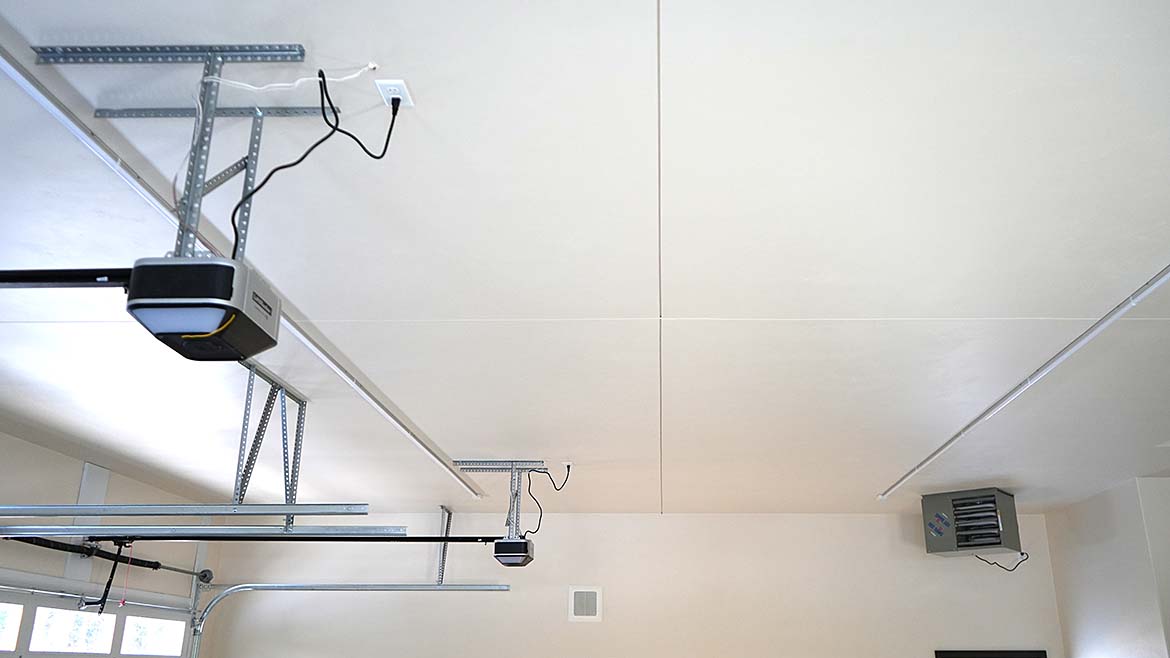
Most often, you’re going to find these massive spaces in areas like garages. In one recent home we worked on, we had a huge garage that the owners wanted to take pride in—not just use as a glorified storage facility no one would ever see. The owners were additionally concerned about fire safety.  

So, we installed two lengths of a fire-rated vinyl expansion bead, running horizontally and vertically along the ceiling. With this bead—which is outfitted with an attached intumescent tape that expands when exposed to fire, sealing off the wall joint from the spread of smoke—we were able to protect against structural movement and protect against the spread of fire and smoke (using zero additional backing materials), all in one solution.
Using Expansion Beads in Residential Construction Using Expansion Beads in Residential Construction

Photos: Trim-Tex

Use Expansion Beads in Transitional Areas

Maybe your home or your next job doesn’t have any 30-foot stretches of unbroken drywall. But these aren’t the only kinds of areas vulnerable to the stresses of expansion. Anywhere there’s excessive structural expansion and contraction, you should consider installing an expansion bead. 

For instance, if you’re living in an area with a lot of seismic activity, much shorter runs could still be at risk. But, for most folks, we’re talking about areas where there are transitions in the framing.  

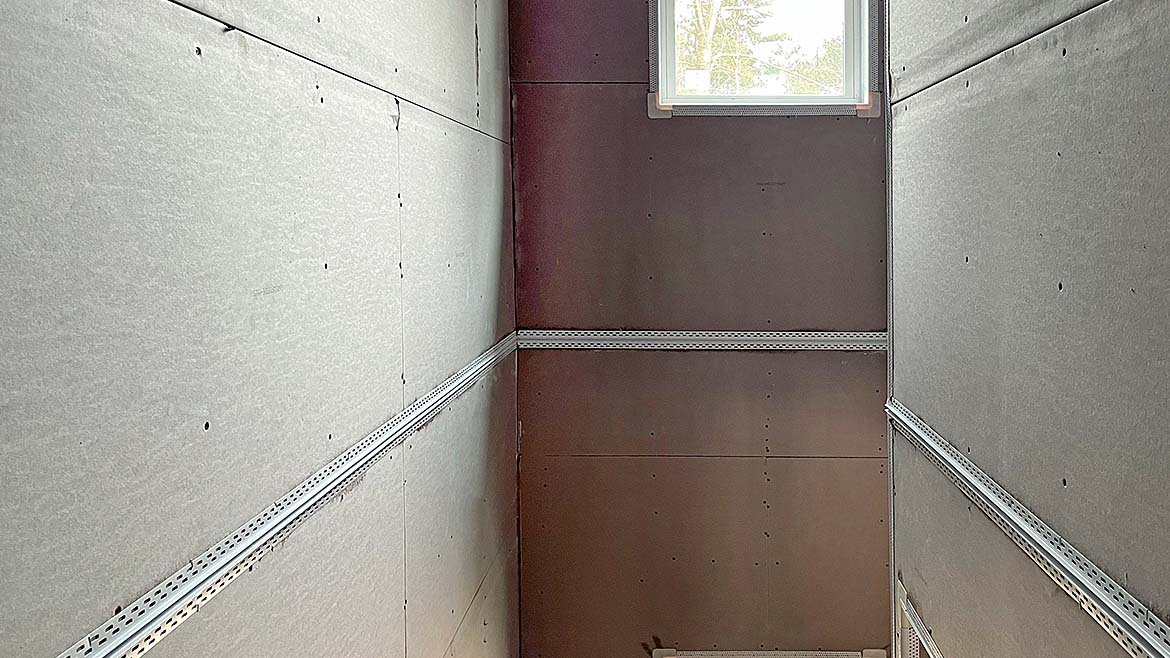
In this home, we used an expansion bead where the framing transitioned into a stairway to protect this crack-prone area. (See the photos above.) 

“Many times over the years,” says Ferguson, “I have been in someone’s house either visiting or giving an estimate for work and notice a bump in a large ceiling or on the walls going up to the second story. The homeowner may even point these out to me while stating the drywaller didn’t do a good job. These ceilings and walls are often large, over 20 feet long. An expansion joint is recommended for ceilings and walls every 30 feet, but I have found that there can be problems on shorter spans if there is excessive structural expansion and contraction.” 

Expansion beads may not be the most attractive part of your home’s interior layout, but it can prove to be a safeguard against even more unsightly cracks—or in the case of fire-rated control joints, preventing the spread of fire and smoke. Wherever there’s an extra-long, unbroken wall or transitional area in a residential construction project, think like a commercial architect: a control joint and an expansion bead can make all the difference.

KEYWORDS: beads corner bead expansion joints PVC (Polyvinyl Chloride) residential building Trim-Tex

Share This Story

Looking for a reprint of this article?
From high-res PDFs to custom plaques, order your copy today!

Wc1225 feat trimtex p6 author j michael osborne dsc00406
J. Michael Osborne is the content marketing specialist for Trim-Tex Inc. He lives with his wife and son in Chicago. To read his stories and watch his videos, you can visit Trim-Tex.com or follow Trim-Tex on Instagram and YouTube.

Recommended Content

JOIN TODAY
To unlock your recommendations.

Already have an account? Sign In

  • Abercrombie & Fitch

    EIFS in 2026: How Specialty Finishes Are Redefining Exterior Wall Systems

    As building codes, owner expectations, and design demands...
    Stucco/EIFS
    By: Regi Mendoza
  • proper air and vapor control

    From Energy Efficiency to Moisture Management: Why Air and Vapor Control Matter

    How proper air and vapor control within building...
    Building Envelope
    By: Benjamin Meyer AIA, LEED AP
  • Linear Metal Ceiling Beam Baffles

    Top 25 Ceiling Contractors of 2026

    Suspended ceilings demand precision, code compliance and...
    Ceilings
    By: John Wyatt and Tanja Kern
You must login or register in order to post a comment.

Report Abusive Comment

Manage My Account
  • eMagazine Subscription
  • Newsletters
  • Online Registration
  • Manage My Preferences
  • Subscription Customer Service

More Videos

Sponsored Content

Sponsored Content is a special paid section where industry companies provide high quality, objective, non-commercial content around topics of interest to the Walls & Ceilings audience. All Sponsored Content is supplied by the advertising company and any opinions expressed in this article are those of the author and not necessarily reflect the views of Walls & Ceilings or its parent company, BNP Media. Interested in participating in our Sponsored Content section? Contact your local rep!

close
  • medical professionals moving a patient on a stretcher through the halls of a medical building
    Sponsored byNational Gypsum Company

    What Does High Performance Mean When It Comes To Gypsum Boards?

Popular Stories

Linear Metal Ceiling Beam Baffles

Top 25 Ceiling Contractors of 2026

Wichita Biomedical Campus

Wichita Drywall Worker Dies After Scaffolding Fall

QXO Just Changed the Game-Here's What Contractors Are Asking

QXO Just Changed the Game-Here's What Contractors Are Asking

An interior drywalling work in progress

Boost Profits with AI Scheduling

Events

June 24, 2026

The Bright Side & Benefits of Designing with Integrated Lighting

Credits 1 AIA LU/HSW; 0.1 ICC CEU

This course will explore the pivotal role architects and lighting design play in creating safer, more sustainable spaces. Learn how to avoid common lighting mistakes and make informed decisions that create the best visual environment for occupants. 

January 1, 2030

Webinar Sponsorship Information

For webinar sponsorship information, visit www.bnpevents.com/webinars or email webinars@bnpmedia.com.

See our full library of webinars

View All Submit An Event

Products

2026 National Painting Cost Estimator

2026 National Painting Cost Estimator

See More Products

Related Articles

  • Susan Hines and Michael Schmeida

    Glass Mat Gypsum Sheathing in Residential Construction: A High-Performance, Code-Compliant Alternative to Traditional Materials

    See More
  • fire protection

    Fire Protection with I-Joists and Stone Wool in Residential Construction

    See More
  • Efficiency in Residential Construction

    See More

Related Products

See More Products
  • 0071489738.jpeg

    Construction Waterproofing Handbook Second Edition

  • construction estimator.png

    2024 National Construction Estimator

  • 1118749847.jpg

    The Gypsum Construction Handbook, 7th Edition

See More Products

Related Directories

  • Huntsman Building Solutions

    DEMILEC (USA) manufactures spray foam insulation products for use in residential and commercial construction.
  • Trim-Tex Inc.

    Trim-Tex is a global manufacturer of high-quality vinyl drywall corner beads and accessories. Trim-Tex offers over 200 commercial and residential drywall finishing solutions.
  • Stockton Products

    Manufacturer of welded wire products for stucco reinforcement, plaster, drywall and lathing trims, vents and reveal moldings, moisture management products, fiber cement panel trims, extruded aluminum, brake formed, roll formed and laser cut shapes in both stock and custom shapes for interior and exterior, residential and commercial construction.
×

Connect with the industry’s leading resource for unparalleled insights and education.

Join thousands of industry professionals today. Shouldn’t you know what they know?

JOIN NOW
  • RESOURCES
    • Advertise
    • Contact Us
    • Directories
    • Store
    • Want More
  • SIGN UP TODAY
    • Create Account
    • eMagazine
    • Newsletters
    • Customer Service
    • Manage Preferences
  • SERVICES
    • Marketing Services
    • Reprints
    • Market Research
    • List Rental
    • Survey/Respondent Access
  • STAY CONNECTED
    • LinkedIn
    • Facebook
    • Instagram
    • YouTube
    • X
  • PRIVACY
    • PRIVACY POLICY
    • TERMS & CONDITIONS
    • DO NOT SELL MY PERSONAL INFORMATION
    • PRIVACY REQUEST
    • ACCESSIBILITY

Copyright ©2026. All Rights Reserved BNP Media, Inc. and BNP Media II, LLC.

Design, CMS, Hosting & Web Development :: ePublishing