Walls & Ceilings logo
search
cart
facebook twitter linkedin youtube youtube Spotify Podcasts Apple Podcasts Spotify Podcasts Apple Podcasts
  • Sign In
  • Create Account
  • Sign Out
  • My Account
Walls & Ceilings logo
  • NEWS
  • TOPICS
    • Drywall
    • Stucco/EIFS
    • Ceilings
    • Steel Framing
    • Fireproofing
    • Interior Plaster
    • Building Envelope
    • Insulation
    • Technology
    • Interior
    • Exterior
    • Women In Construction
  • COLUMNS
    • Up Front
    • All Things Gypsum
    • Art & Craft of Plastering
    • Stucco Stop
    • Steel Deal
    • Industry Voices
  • PRODUCTS
    • Buzz Guide
  • EVENTS
    • Industry Events
    • Webinars
    • BUILD Expo
  • MEDIA
    • Videos
    • Podcasts
    • Photo Galleries
    • BUILD26 Videos
    • Take our Quiz!
    • Infographics
  • EXCLUSIVE
    • Newsletters
    • Top 50 Contractors
    • Contractor of the Year
    • State of the Industry
    • W&C Store
    • Market Research
    • CEUs
    • Sponsor Insights
    • Custom Content & Marketing Services
  • DIRECTORY
  • EMAGAZINE
    • eMagazine
    • Advertise
    • Archive Issues
  • SIGN UP!
Building EnvelopeSteel Framing

Optimizing Energy Efficiency with Steel-Framed Curtainwalls

Steel-framed curtainwalls combine exceptional strength, slender aesthetics, and superior thermal performance to help architects design energy-efficient, airtight building envelopes that meet modern sustainability standards.
By Chuck Knickerbocker
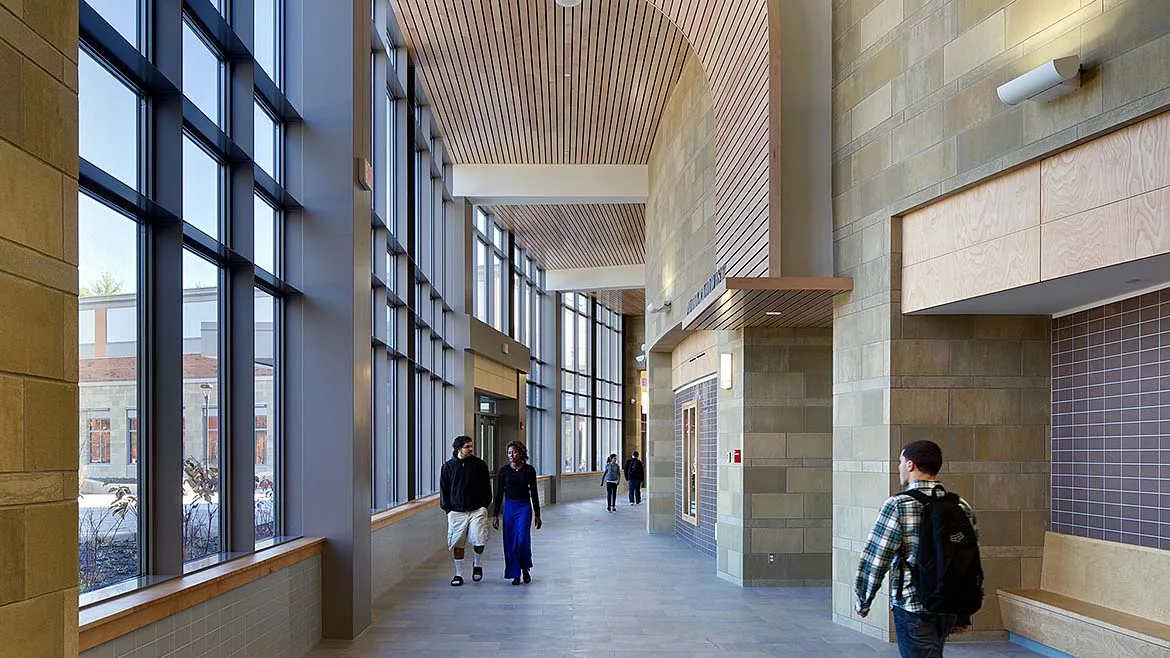
Interior view of Southbridge High School in Massachusetts, featuring steel framing
Technical Glass Products
December 12, 2025

Design professionals have long relied on curtainwalls to create monumental entrances, connect interiors to the outdoors, and introduce abundant natural light into buildings. As energy efficiency and whole-building performance become central to modern design, these sophisticated glazing systems now play a critical role in reducing operational carbon footprints and improving thermal performance.

While discussions about glazing systems often focus on selecting the right glass—low-emissivity (low-e) coatings, insulated glass units, and double- or triple-glazed assemblies—the framing system is equally important. The frame determines the possible expanse of unobstructed glass and balances daylight transmission with overall energy performance. Material selection for the framing system is therefore key.

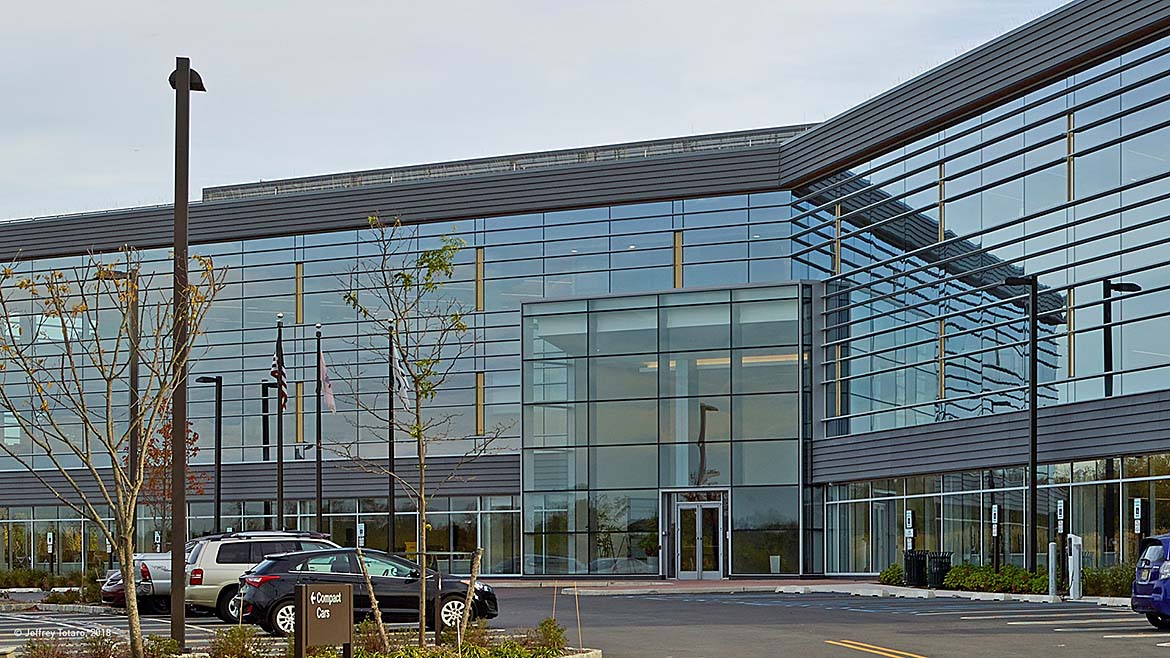
examples of Steel-Framed Curtainwalls Steel-Framed Curtainwalls

Photos courtesy of Technical Glass Products

The Role of Steel in Curtainwall Design

Among framing options, steel stands out for its superior strength and stiffness. With a Young’s modulus of 29 million psi—nearly three times that of aluminum—steel allows for longer spans between supports and larger uninterrupted glass areas. This not only enhances aesthetics by reducing the grid-like appearance but also allows more daylight to penetrate interior spaces.

Steel profiles can also be smaller than aluminum ones, since steel’s higher strength enables slimmer members even for large spans. These smaller profiles contribute to cleaner sightlines and greater design flexibility. Moreover, modern steel framing systems combine strength with advanced manufacturing and thermal design innovations, achieving energy performance without sacrificing creative freedom.
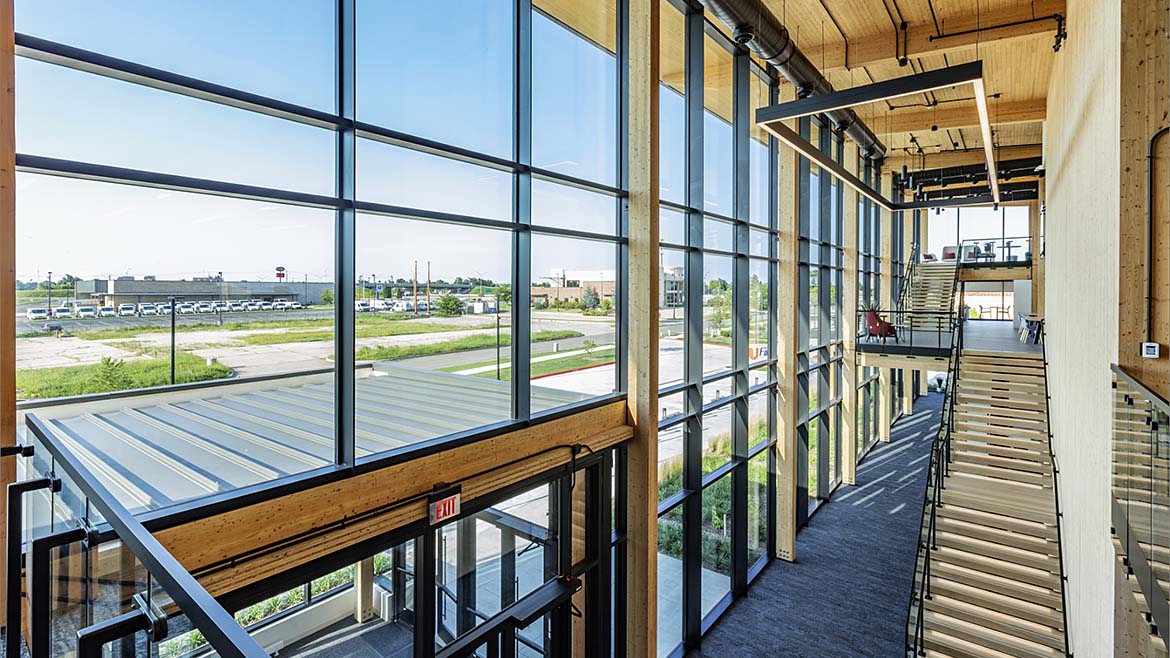
examples of Steel-Framed Curtainwalls

Photo: Simon Hurst Photography; Technical Glass Products

Improved Thermal Compatibility

Although glass dominates the visual area of curtainwalls, the metal frame often has higher thermal conductivity. For example, aluminum’s conductivity is approximately 118 Btus/hour, which readily transfers heat. Thermally broken frames can mitigate this, but they add complexity.

Steel, by contrast, has a thermal conductivity about 74 percent lower than aluminum’s (31 Btus/hour). This reduces heat transfer and simplifies design, as steel typically doesn’t require thermal breaks. Because of its strength, steel also minimizes the amount of framing material required, further enhancing the system’s thermal performance.

Computer simulations following the National Fenestration Rating Council (NFRC) 100 Procedure show that steel-framed curtainwalls with 25.4 mm (1 inch) IGUs and low-e coatings achieve U-values between 0.29 and 0.39 Btu/h·sf·°F, surpassing many aluminum systems.
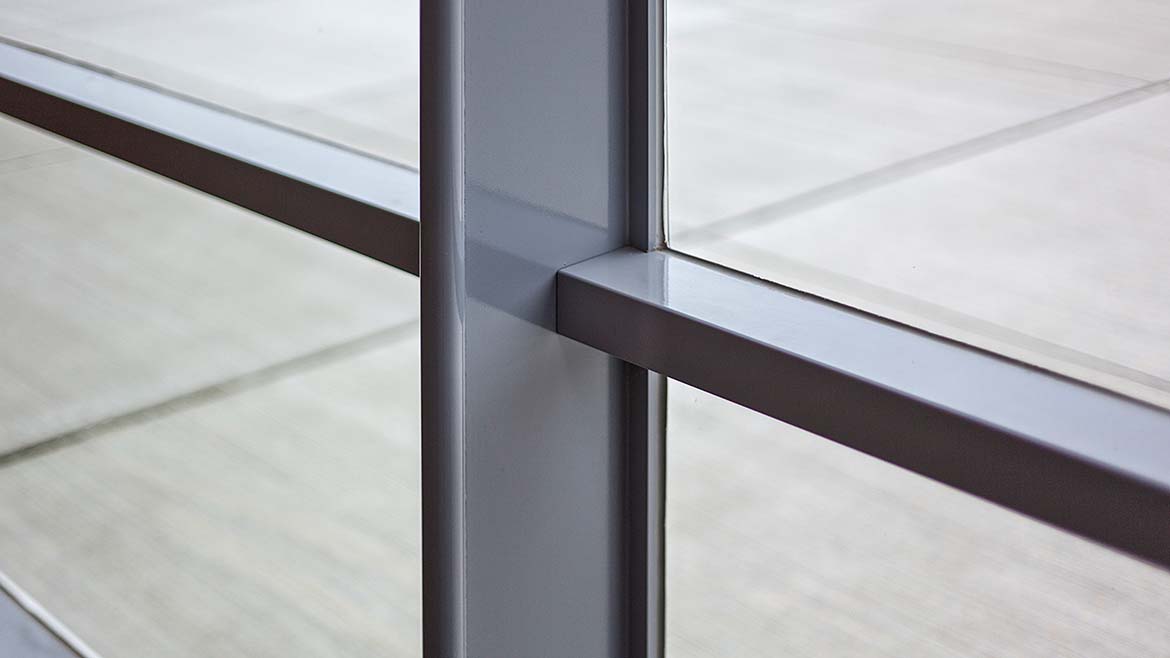
examples of Steel-Framed Curtainwalls

Photo: Technical Glass Products

Airtight Building Envelopes

Beyond thermal conductivity, airtightness is essential for energy efficiency. Steel curtainwalls excel here due to their material compatibility with glass and concrete. Steel’s coefficient of thermal expansion (12 × 10⁻⁶ m/m·°C) closely matches that of glass (9) and concrete (10), unlike aluminum (23.6). This minimizes stress and potential sealant failure from temperature fluctuations, maintaining air- and water-tight seals over time.

Continuous gasketing—typically extruded silicone—further prevents air and water infiltration by sealing joints and isolating steel from moisture. When tested per ASTM E283/E283M, steel curtainwalls demonstrate air leakage rates of less than 0.01 cfm/sf under a pressure differential of 6.24 lb/sf, making them nearly airtight and reducing HVAC loads.

Supporting Heavy Triple-Glazed Systems

In response to stricter building performance standards and colder climates, many designers now specify double- or triple-glazed systems for superior thermal control. However, triple glazing can be heavy—up to 10 lb/sf for 45 mm (1.7 in.) thick units—posing challenges for aluminum frames.

Steel’s inherent strength easily supports heavier glazing, accommodating units up to 76 mm (3 in.) thick and weighing 23 lb/sf, without requiring bulky profiles or added supports. This enables both energy efficiency and design elegance. NFRC simulations of steel frames with triple glazing show U-values as low as 0.19 Btu/h·sf·°F—a benchmark for high-performance façades.

Aesthetic and Efficient Envelope Solutions

As sustainable design becomes the norm, steel-framed curtainwalls offer architects and builders the ability to meet stringent energy codes and green building standards—such as LEED and the Living Building Challenge—while preserving architectural freedom. By combining strength, slender sightlines, and thermal efficiency, steel curtainwalls contribute to lower operational carbon and superior whole-building performance.

KEYWORDS: building envelope design building façade building performance curtain wall energy efficiency glazing LEED steel sustainability

Share This Story

Looking for a reprint of this article?
From high-res PDFs to custom plaques, order your copy today!

Wc1225 feat curtainwall author chuck knickerbocker headshot
Chuck Knickerbocker is the curtain wall manager for Technical Glass Products, a supplier of fire-rated glass and framing systems, along with specialty architectural glazing products. With over 44 years of curtain wall experience, Chuck has successfully worked with numerous architects, building owners and subcontractors from development of schematic design through installation.

Recommended Content

JOIN TODAY
To unlock your recommendations.

Already have an account? Sign In

  • Abercrombie & Fitch

    EIFS in 2026: How Specialty Finishes Are Redefining Exterior Wall Systems

    As building codes, owner expectations, and design demands...
    Stucco/EIFS
    By: Regi Mendoza
  • proper air and vapor control

    From Energy Efficiency to Moisture Management: Why Air and Vapor Control Matter

    How proper air and vapor control within building...
    Building Envelope
    By: Benjamin Meyer AIA, LEED AP
  • Linear Metal Ceiling Beam Baffles

    Top 25 Ceiling Contractors of 2026

    Suspended ceilings demand precision, code compliance and...
    Ceilings
    By: John Wyatt and Tanja Kern
You must login or register in order to post a comment.

Report Abusive Comment

Manage My Account
  • eMagazine Subscription
  • Newsletters
  • Online Registration
  • Manage My Preferences
  • Subscription Customer Service

More Videos

Sponsored Content

Sponsored Content is a special paid section where industry companies provide high quality, objective, non-commercial content around topics of interest to the Walls & Ceilings audience. All Sponsored Content is supplied by the advertising company and any opinions expressed in this article are those of the author and not necessarily reflect the views of Walls & Ceilings or its parent company, BNP Media. Interested in participating in our Sponsored Content section? Contact your local rep!

close
  • medical professionals moving a patient on a stretcher through the halls of a medical building
    Sponsored byNational Gypsum Company

    What Does High Performance Mean When It Comes To Gypsum Boards?

Popular Stories

Wichita Biomedical Campus

Wichita Drywall Worker Dies After Scaffolding Fall

Okan Tower in Miami, Florida

OSHA Opens Investigation Into Fatal Okan Tower Column Collapse

Construction workers in safety vests install drywall

Gypsum Sales Hold Amid Market Shifts in the U.S.

Polycon CEO Discusses Spray Foam

Doug Kramer: PolyCon Expands Roofing Foam Solutions

Events

June 24, 2026

The Bright Side & Benefits of Designing with Integrated Lighting

Credits 1 AIA LU/HSW; 0.1 ICC CEU

This course will explore the pivotal role architects and lighting design play in creating safer, more sustainable spaces. Learn how to avoid common lighting mistakes and make informed decisions that create the best visual environment for occupants. 

January 1, 2030

Webinar Sponsorship Information

For webinar sponsorship information, visit www.bnpevents.com/webinars or email webinars@bnpmedia.com.

See our full library of webinars

View All Submit An Event

Products

2026 National Painting Cost Estimator

2026 National Painting Cost Estimator

See More Products

Related Articles

  • Steel framed curtain walls and chnnel glass

    Balancing Daylight, Aesthetics and Energy Efficiency with Glazing Solutions

    See More
  • ICFs

    Increasing Energy Efficiency with ICFs

    See More
  • Two men at a construction site

    Cracking the Energy Efficiency Code with Polyiso CI

    See More

Related Products

See More Products
  • Optimizing Social Media from a B2B Perspective

  • guyed-steel.gif

    Guyed Steel Stacks

  • business.png

    How to Succeed With Your Own Construction Business

See More Products

Related Directories

  • Steel Framing Industry Assn. (SFIA)

    The SFIA is the industry association for all companies that manufacture steel, fabricate steel studs and connectors, make equipment and tools used in cold-formed steel construction, supply and distribute steel, steel framing and related products, design and build structures with cold-formed steel, and otherwise provide products and services to the industry.
×

Connect with the industry’s leading resource for unparalleled insights and education.

Join thousands of industry professionals today. Shouldn’t you know what they know?

JOIN NOW
  • RESOURCES
    • Advertise
    • Contact Us
    • Directories
    • Store
    • Want More
  • SIGN UP TODAY
    • Create Account
    • eMagazine
    • Newsletters
    • Customer Service
    • Manage Preferences
  • SERVICES
    • Marketing Services
    • Reprints
    • Market Research
    • List Rental
    • Survey/Respondent Access
  • STAY CONNECTED
    • LinkedIn
    • Facebook
    • Instagram
    • YouTube
    • X
  • PRIVACY
    • PRIVACY POLICY
    • TERMS & CONDITIONS
    • DO NOT SELL MY PERSONAL INFORMATION
    • PRIVACY REQUEST
    • ACCESSIBILITY

Copyright ©2026. All Rights Reserved BNP Media, Inc. and BNP Media II, LLC.

Design, CMS, Hosting & Web Development :: ePublishing