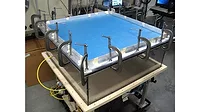
Air, Vapor & WRB Barriers: Thermal Bridging 101, a Webinar from ABAA
Learn air, vapor and WRB basics, plus thermal bridging impacts on building envelope performance.
A June 18 webinar, "What the Heck are Air Barriers, Vapor Barriers, & Water-Resistive Barriers? A Simplified Look at Air Barriers & Thermal Bridging," will provide clarity on these commonly misunderstood building envelope components. Presented by Laverne Dalgleish, executive director of the Air Barrier Association of America, the session will examine how these barriers work individually and together to protect buildings from moisture, air leakage and energy loss.
Learning objectives include defining air, vapor and water-resistive barriers; identifying the various ways water enters buildings; explaining why hidden conditions often create the greatest risk; recognizing which barriers are most important to building performance; and understanding how thermal bridging can fundamentally change barrier effectiveness. It takes place June 18.
The building envelope is one of the most important components of any structure, yet many professionals continue to struggle with the distinctions between air barriers, vapor barriers and water-resistive barriers. While these systems are often presented as simple concepts, confusion frequently arises when materials perform multiple functions or when their effectiveness changes based on where they are installed.
Participants will gain a clearer understanding of the distinct roles of air barriers, vapor barriers and water-resistive barriers, while also exploring situations in which a single material may serve more than one purpose. According to Dalgleish, this overlap is often the source of industry misconceptions and can lead to costly design or construction errors.
The webinar will also address the many ways water can enter a building and why hidden moisture conditions often present the greatest threat to long-term performance. Attendees will learn how seemingly minor vulnerabilities can contribute to significant structural, durability and indoor environmental issues when left unchecked.
Another key topic will be identifying which barriers are most critical to overall building performance and how those priorities can shift depending on climate, assembly design and installation location. The session will provide practical guidance to help building professionals better evaluate barrier strategies and make more informed decisions throughout the design and construction process.
Whether you are involved in building design, construction, specification or facility management, this webinar offers an opportunity to strengthen your understanding of building envelope fundamentals and improve project outcomes through better-informed barrier selection and installation practices.
For more information, visit here.
Looking for a reprint of this article?
From high-res PDFs to custom plaques, order your copy today!