If Walls Could Talk
Why 2025 Was a Turning Point for the Spray Foam Industry
The past year was a major stepping stone for the spray foam insulation industry. Tom Harris explains.
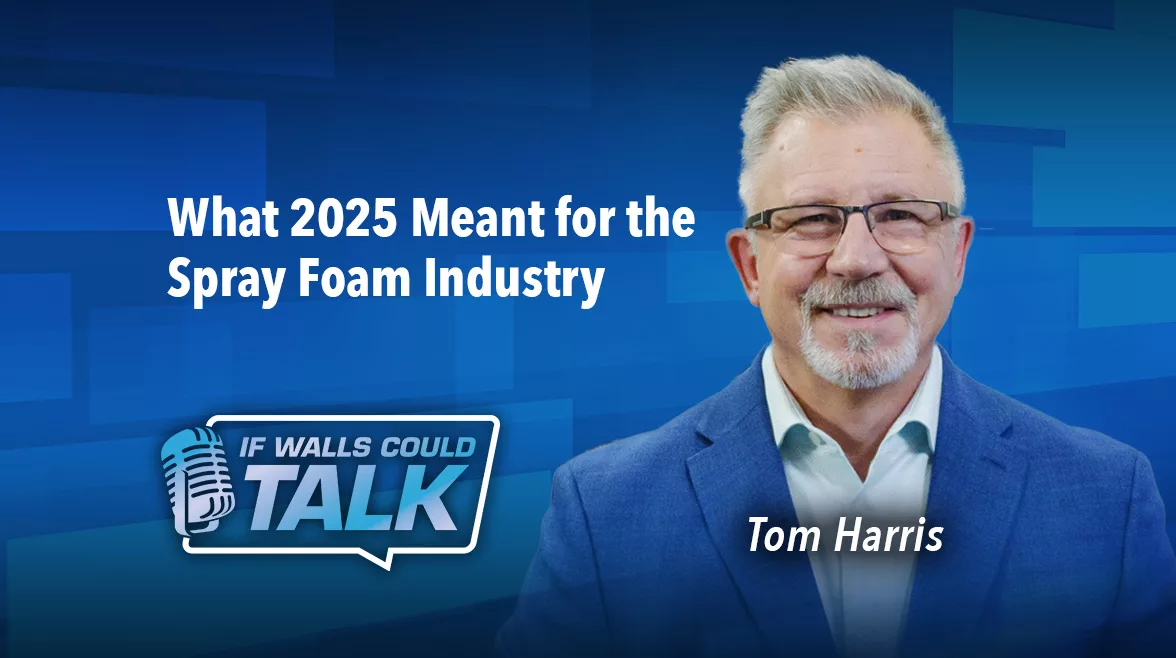
In this episode of “If Walls Could Talk,” W&C Editor John Wyatt talks with Tom Harris of Tom Harris PUR Consulting. He breaks down the technological advances, education-driven momentum, regulatory challenges, and market forces shaping the spray foam industry as it heads into 2026.
What 2025 Meant for the Spray Foam Industry
W&C Editor John Wyatt speaks with Tom Harris of Tom Harris PUR Consulting about the technological advances, education-driven growth, and regulatory forces shaping the spray foam industry as it heads into 2026.
Harris didn’t hesitate when asked to sum up the year. His verdict: an enthusiastic thumbs up. From advancements in HFO technology to better-performing resin blends, 2025 marked a turning point in both product quality and industry understanding. Chemists are dialing in formulations with improved catalysts, polyols, and water content, resulting in aged R-values exceeding 8 and shelf lives extending to six months—milestones that once felt out of reach.
But the real story, Harris emphasized, isn’t just chemistry. It’s education. Contractors and applicators are increasingly investing in building science, business development, and sales training. Manufacturer-sponsored education events are drawing stronger attendance, and SPFA certification is becoming more common across the contractor base. For the first time following the March spray foam conference, more than half of contractor/applicator members are expected to hold some form of SPFA certification—a sign of a maturing industry.
That momentum is reinforced by collaboration. Tom described the spray foam industry as a three-legged stool: the Spray Polyurethane Foam Alliance, the Spray Foam Coalition and industry-driven social media groups. Together, these groups are tackling big-picture issues, from building code reform to regulatory advocacy at both the state and federal levels. Their combined efforts have already produced meaningful wins, including changes to energy and building codes that better recognize spray foam’s performance in unvented attic assemblies.
Inclusivity and sustainability also emerged as defining themes of 2025. For the first time, the American Chemistry Council’s polyurethane conference recognized “Women in the Polyurethane Industry,” signaling a more welcoming and diverse future. At the same time, third-party studies commissioned by SPFA and manufacturers revealed that spray foam’s embodied carbon and overall environmental impact compare favorably—even outperform—materials long considered more “sustainable.”
Harris also highlighted a critical shift in contractor mindset: moving away from a “foam it and forget it” approach toward customer education. Contractors who take the time to explain heat, air, and moisture dynamics are building trust—and closing more sales. That philosophy underpins his own work, including the educational library he launched on letstalkPUR.com, designed to help building and homeowners understand what spray foam can and cannot do.
Looking ahead to 2026, challenges remain. Changes to federal energy incentives, ongoing PFAS discussions, economic pressure, and labor concerns will test the industry. Still, Tom remains confident. In uncertain times, he noted, consumers want the biggest return on their investment—and educated customers continue to choose spray foam for comfort, safety, and long-term energy savings.
As the episode wrapped up, Harris teased a return to fundamentals in the new year, starting with a fresh conversation about R-value. If the walls could talk, they’d say this much is clear: the spray foam industry is learning, adapting, and positioning itself for a smarter, stronger future.
Looking for a reprint of this article?
From high-res PDFs to custom plaques, order your copy today!