Walls & Ceilings logo
search
cart
facebook twitter linkedin youtube youtube Spotify Podcasts Apple Podcasts Spotify Podcasts Apple Podcasts
  • Sign In
  • Create Account
  • Sign Out
  • My Account
Walls & Ceilings logo
  • NEWS
  • TOPICS
    • Drywall
    • Stucco/EIFS
    • Ceilings
    • Steel Framing
    • Fireproofing
    • Interior Plaster
    • Building Envelope
    • Insulation
    • Technology
    • Interior
    • Exterior
    • Women In Construction
  • COLUMNS
    • Up Front
    • All Things Gypsum
    • Art & Craft of Plastering
    • Stucco Stop
    • Steel Deal
    • Industry Voices
  • PRODUCTS
    • Buzz Guide
  • EVENTS
    • Industry Events
    • Webinars
    • BUILD Expo
  • MEDIA
    • Videos
    • Podcasts
    • Photo Galleries
    • BUILD26 Videos
    • Take our Quiz!
    • Infographics
  • EXCLUSIVE
    • Newsletters
    • Top 50 Contractors
    • Contractor of the Year
    • State of the Industry
    • W&C Store
    • Market Research
    • CEUs
    • Sponsor Insights
    • Custom Content & Marketing Services
  • DIRECTORY
  • EMAGAZINE
    • eMagazine
    • Advertise
    • Archive Issues
  • SIGN UP!
ColumnsStucco Stop

Mastering Water-Resistive Barriers: Essential Guide for Framed Wall Construction and Building Code Compliance

Water-resistive barriers’ role, building code requirements, ASTM standards and installation best practices for framed wall construction.

By Albert Carrillo, Senior Advisor
Stucco Stop with Albert Carrillo
Background Image: Dryvit | Composition: James Hohner
January 26, 2026

I’ve spent most of my career saying yes. By that, I mean when an opportunity arose—even if I wasn’t entirely sure I could handle it—I said yes first and figured it out later. That mindset has taken me to career heights I never anticipated. Most recently, my Stucco Stop column editor asked if I could do a webinar on water-resistive barriers. My answer? Yes.

Having worked in the field as a lather and plasterer and served as a technical advisor, I knew a thing or two about WRBs. Initially, I thought I could cover the topic in under ten minutes; after all, WRBs seemed simple—they resist water. But after research and a stubborn refusal to fail, I put together a full presentation, which I later adapted for this column. So, if you already know everything about WRBs, you can stop here. But if you enjoy diving into the details of an often-overlooked exterior cladding component, read on. 

Understanding Water

Water exists as a solid, liquid, or gas. For our purposes, we’ll focus on liquid and vapor forms and their impact on framed wall construction. Water naturally follows the path of least resistance. In building construction, if you don’t guide it, water will eventually penetrate your structure. That’s where the WRB comes in—it directs water away from your walls and protects the building envelope. 

What Is a Water-Resistive Barrier?

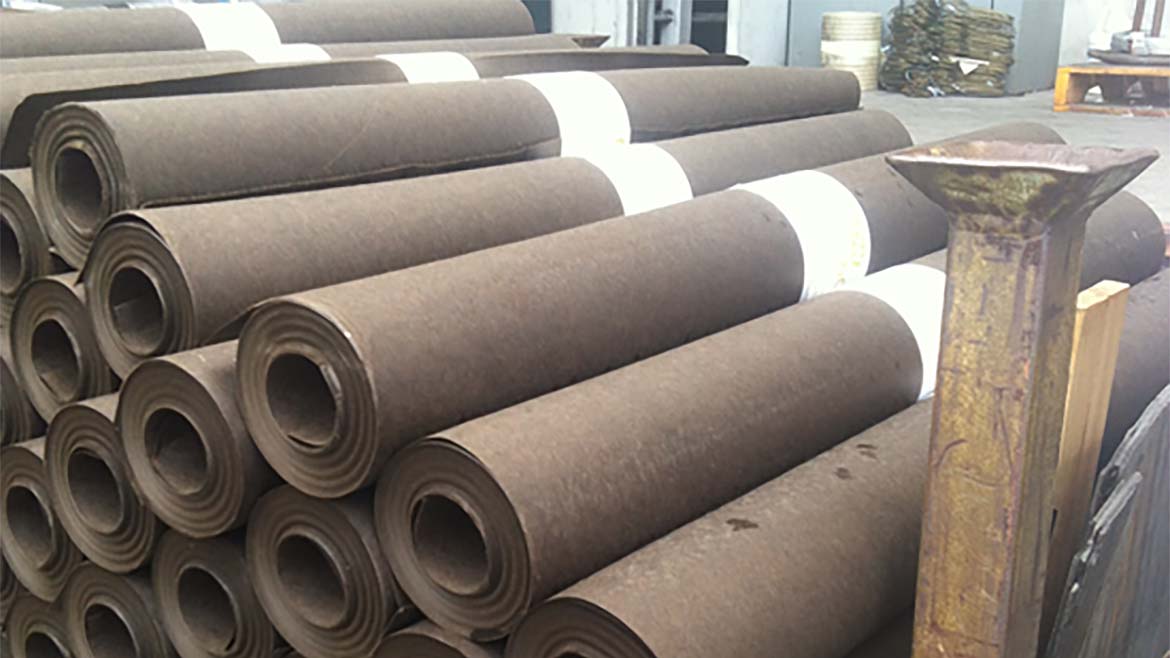
A WRB is a thin membrane designed to resist liquid water that has penetrated behind the exterior cladding. It protects the wall assembly and allows it to dry, acting as a critical layer in framed wall construction. Dating back to the early 1800s, WRBs were originally asphalt-impregnated felts, later standardized under ASTM D226. 

Water-resistive barriers Water-resistive barriers

Photos: WWCCA

WRBs fall into three categories: sheet goods, liquid-applied, or integrated systems. Their effectiveness depends on proper installation with complementary materials, such as flashings, typically applied in a “shingle” fashion to direct water downward and away from the structure.

Even the best WRB isn’t a guarantee against water intrusion. Moisture can enter from outside—through wind-driven rain, cladding failures, or leaky windows—or from inside, through everyday activities like cooking and breathing. Proper ventilation, whether passive or mechanical, complements the WRB’s function. Think of WRBs as one line of defense in a holistic moisture management strategy. 

WRBs in Building Codes

The International Building Code and International Residential Code define when and how WRBs must be used. 

  • IBC Chapter 14, Section 1402.2: Requires a weather-resistant exterior to keep the elements out and maintain indoor comfort. WRBs are referenced as part of this protection, guiding water that enters the wall assembly to an exit point. 
  • IBC Section 1403.2: Mandates at least one continuous WRB layer from top to bottom, integrated with flashings at openings. 
  • IBC Section 1404.4: Specifies that flashings must work with WRBs to direct water away from critical wall components. Flashings can be metal, vinyl, plastic, self-adhered membranes, or liquid-applied products. 

Climate zones further affect WRB installation requirements: 

  • Zone B (Dry): Two layers of 10-minute grade D paper or equivalent, or a single layer combined with a non-water-absorbing barrier. 
  • Zones A & C (Moist/Marine): Same as Zone B but must include a drainage space ≥ 3/16 inch with a minimum 90 percent drainage efficiency.

The IRC mirrors these requirements, with exceptions for masonry, concrete walls, and small detached structures like tool sheds. 

ASTM Standards

WRBs are referenced in several ASTM standards, including: 

  • D226 – Defines asphalt-impregnated sheets. 
  • E2556 – Specifies vapor permeability for mechanically attached sheet goods. 
  • E1354 – Fire testing for combustible exterior wall materials. 
  • C926/C1063 – Stucco application and lathing requirements. 

Integrated WRB sheathing products combine structure, insulation, and water resistance into a single product. However, in cases requiring two layers, an additional WRB layer must still be installed. 

Key Takeaways

  • Cement and concrete walls do not require WRBs. 
  • Flashings must integrate with WRBs and direct water to a drainage plane. 
  • WRBs perform best installed vertically in a single plane, terminating at a drainage point. 
  • WRBs are water-resistive; wall assemblies are weather-resistant. 
  • Two WRB layers are required for framed walls. 
  • No water intrusion testing is mandated by code. 
  • Climate zones dictate drainage requirements. 

I want to thank W&C for giving me the opportunity to say “yes.” The process of preparing this presentation and writing this column reinforced how much detail goes into proper WRB design and installation. Saying yes once again opened the door to new knowledge and experience.

KEYWORDS: ASTM (American Society for Testing and Materials) building codes IBC (International Building Code) WRB (weather resistant barrier)

Share This Story

Looking for a reprint of this article?
From high-res PDFs to custom plaques, order your copy today!

Wc0420 clmn stucco stop p3 author albert carrillo

Albert Carrillo is senior advisor for the Western Wall & Ceiling Contractors Association. He can be reached at albert@wwcca.org.

Recommended Content

JOIN TODAY
To unlock your recommendations.

Already have an account? Sign In

  • Abercrombie & Fitch

    EIFS in 2026: How Specialty Finishes Are Redefining Exterior Wall Systems

    As building codes, owner expectations, and design demands...
    Stucco/EIFS
    By: Regi Mendoza
  • proper air and vapor control

    From Energy Efficiency to Moisture Management: Why Air and Vapor Control Matter

    How proper air and vapor control within building...
    Building Envelope
    By: Benjamin Meyer AIA, LEED AP
  • Linear Metal Ceiling Beam Baffles

    Top 25 Ceiling Contractors of 2026

    Suspended ceilings demand precision, code compliance and...
    Ceilings
    By: John Wyatt and Tanja Kern
You must login or register in order to post a comment.

Report Abusive Comment

Manage My Account
  • eMagazine Subscription
  • Newsletters
  • Online Registration
  • Manage My Preferences
  • Subscription Customer Service

More Videos

Sponsored Content

Sponsored Content is a special paid section where industry companies provide high quality, objective, non-commercial content around topics of interest to the Walls & Ceilings audience. All Sponsored Content is supplied by the advertising company and any opinions expressed in this article are those of the author and not necessarily reflect the views of Walls & Ceilings or its parent company, BNP Media. Interested in participating in our Sponsored Content section? Contact your local rep!

close
  • medical professionals moving a patient on a stretcher through the halls of a medical building
    Sponsored byNational Gypsum Company

    What Does High Performance Mean When It Comes To Gypsum Boards?

Popular Stories

Linear Metal Ceiling Beam Baffles

Top 25 Ceiling Contractors of 2026

Wichita Biomedical Campus

Wichita Drywall Worker Dies After Scaffolding Fall

QXO Just Changed the Game-Here's What Contractors Are Asking

QXO Just Changed the Game-Here's What Contractors Are Asking

An interior drywalling work in progress

Boost Profits with AI Scheduling

Events

June 24, 2026

The Bright Side & Benefits of Designing with Integrated Lighting

Credits 1 AIA LU/HSW; 0.1 ICC CEU

This course will explore the pivotal role architects and lighting design play in creating safer, more sustainable spaces. Learn how to avoid common lighting mistakes and make informed decisions that create the best visual environment for occupants. 

January 1, 2030

Webinar Sponsorship Information

For webinar sponsorship information, visit www.bnpevents.com/webinars or email webinars@bnpmedia.com.

See our full library of webinars

View All Submit An Event

Products

2026 National Painting Cost Estimator

2026 National Painting Cost Estimator

See More Products

Related Articles

  • WATER-RESISTIVE BARRIERS IS TOPIC OF WHITE PAPER

    See More
  • SSMA Passes Code Compliance Program for Non-Structural Products

    See More
  • SFIA Bulletin Vol.1, No. 5

    SFIA Releases Tech Bulletin: Vol. 1, No. 5 to Guide Manufacturers in Code Compliance Certification

    See More

Related Products

See More Products
  • building codes illustated.jpg

    Building Codes Illustrated: A Guide to Understanding the 2021 International Building Code, 7th Edition

  • 2021 ibc.jpeg

    2021 International Building Code® Illustrated Handbook

  • bim 3e.jpg

    BIM Handbook: A Guide to Building Information Modeling for Owners, Designers, Engineers, Contractors, and Facility Managers, 3rd Edition

See More Products

Related Directories

  • Master Wall Inc.

    Our products include Fiberstucco, EIFS, Acrylic Finishes, Coatings, and Liquid Applied Barriers. Finishing strong for 30 years, you can trust and depend on Master Wall® for competitive pricing and maximum performance.
×

Connect with the industry’s leading resource for unparalleled insights and education.

Join thousands of industry professionals today. Shouldn’t you know what they know?

JOIN NOW
  • RESOURCES
    • Advertise
    • Contact Us
    • Directories
    • Store
    • Want More
  • SIGN UP TODAY
    • Create Account
    • eMagazine
    • Newsletters
    • Customer Service
    • Manage Preferences
  • SERVICES
    • Marketing Services
    • Reprints
    • Market Research
    • List Rental
    • Survey/Respondent Access
  • STAY CONNECTED
    • LinkedIn
    • Facebook
    • Instagram
    • YouTube
    • X
  • PRIVACY
    • PRIVACY POLICY
    • TERMS & CONDITIONS
    • DO NOT SELL MY PERSONAL INFORMATION
    • PRIVACY REQUEST
    • ACCESSIBILITY

Copyright ©2026. All Rights Reserved BNP Media, Inc. and BNP Media II, LLC.

Design, CMS, Hosting & Web Development :: ePublishing