JLG Outlines Autonomous Jobsite Model with Implications for Wall and Ceiling Trades
“From Access Equipment to Autonomous Work Systems” is now available on #DirectAccess.
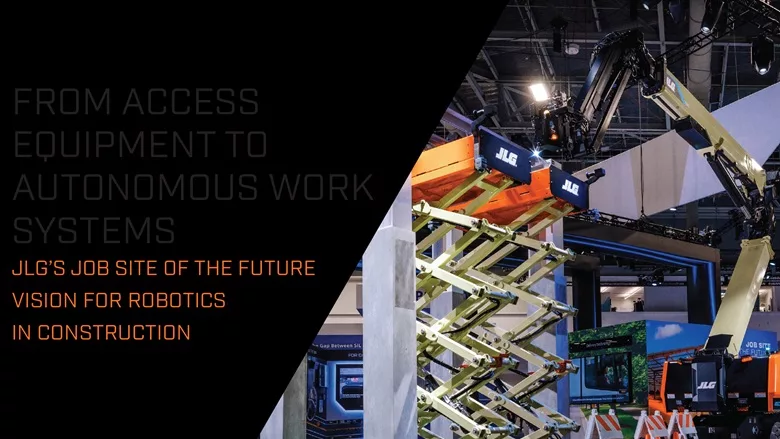
JLG Ind. has released a whitepaper outlining a transition from standalone mobile elevating work platforms (MEWPs) to connected, semi-autonomous work systems. For wall and ceiling contractors, the shift signals potential changes in how work-at-height tasks—such as board installation, finishing and overhead ceiling systems—are executed, sequenced and staffed.
The paper describes how robotics, machine perception and cloud-based connectivity could allow access equipment to move beyond positioning workers to actively supporting task execution. In drywall and acoustical ceiling scopes, that could translate into automated or assisted finishing operations, improved lift positioning accuracy and tighter coordination between trades operating in the same vertical workspace.
According to the whitepaper, these systems are intended to extend skilled labor rather than replace it. For contractors facing persistent workforce shortages, automation could reduce repetitive, high-fatigue tasks such as sanding, taping or overhead fastening, while allowing crews to focus on quality control, layout and compliance with specified assemblies.
JLG also frames connected equipment as a coordination tool. Machine-to-machine communication could help sequence work in congested interiors—aligning framing, board hanging and finishing activities while minimizing rehandling and access conflicts. For suspended ceiling installations, synchronized lifts and material handling could reduce idle time and improve installation rates.
The document highlights drywall finishing as an early application for robotic assistance. While still emerging, these systems raise practical considerations for contractors: surface tolerances, compound application consistency, drying times and inspection criteria must align with automation capabilities. Integration with existing jobsite workflows—and compatibility with specified ASTM C840 and GA-216 requirements—will be critical to adoption.
Connectivity platforms are another focus. Cloud-linked fleets could provide real-time visibility into equipment utilization, location and status, offering project managers better control over sequencing and labor allocation. For interior contractors managing multiple lifts across large commercial projects, that data could support productivity tracking and reduce downtime tied to equipment availability.
The whitepaper positions these developments as a response to increasing project complexity and schedule compression. However, contractors will need to evaluate upfront costs, training requirements and interoperability with existing tools and materials. Failure points may include inconsistent substrate conditions, variability in field-applied finishes and the need for manual correction where automated systems fall short of specified levels.
The full whitepaper, From Access Equipment to Autonomous Work Systems, is available now for download on JLG #DirectAccess: https://www.jlg.com/en/directaccess/from-access-equipment-to-autonomous-work-systems-a-new-era-for-job-sites.
Looking for a reprint of this article?
From high-res PDFs to custom plaques, order your copy today!