Specialty Gypsum Panels Expand Building Uses
Specialty gypsum panels improve fire, moisture, sound and impact performance in buildings.
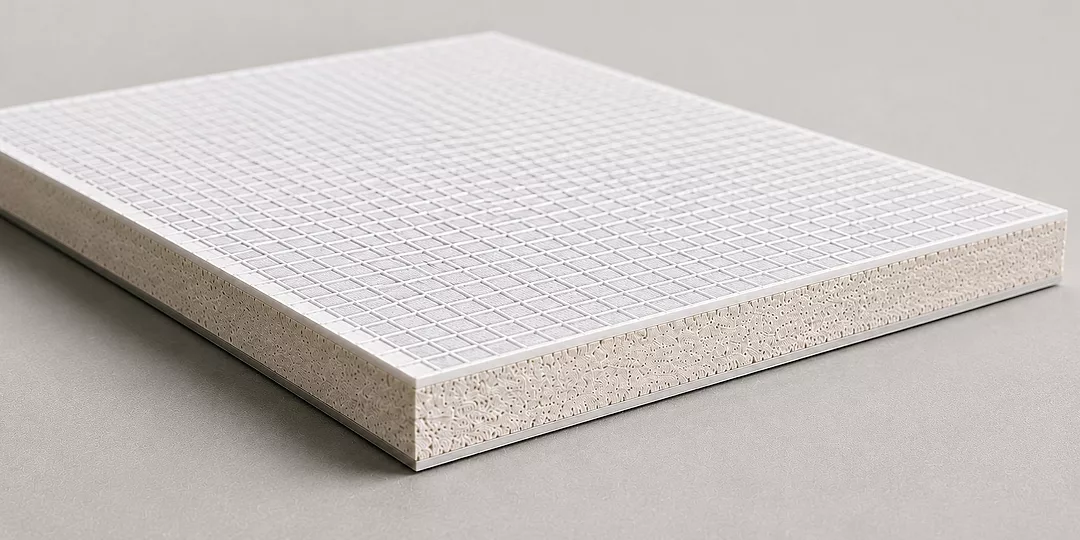
For generations, paper-faced gypsum board has been one of the most widely used building materials in North America. Its ease of installation, inherent fire resistance and cost-effectiveness have made it a standard choice for interior wall and ceiling construction.
Today, however, the gypsum panel market extends far beyond traditional drywall. In response to evolving building codes, performance demands and design expectations, manufacturers have developed a wide range of specialty gypsum panels engineered to address specific building challenges.
From moisture exposure and fire protection to durability and acoustics, these products expand the versatility of gypsum systems across residential, commercial and institutional construction.
Glass Mat Gypsum Panels
One of the most significant developments in gypsum panel technology has been the introduction of glass mat gypsum panels, which replace traditional paper facings with a nonorganic glass fiber mat.
This design improves resistance to moisture and mold while enhancing durability in demanding environments. Glass mat-faced panels are widely used in exterior gypsum sheathing, tile backer panels, shaftwall and area separation wall systems, and interior walls in high-humidity spaces.
Because glass mat facings do not contain paper, they are less susceptible to moisture-related deterioration, making them well suited for conditions where traditional drywall may not perform as effectively.
Moisture- and Mold-Resistant Panels
Moisture-resistant gypsum panels were developed to improve performance in areas subject to intermittent humidity or occasional moisture exposure. These panels typically incorporate water-repellent additives within the gypsum core, along with treated facings designed to reduce water absorption.
Common applications include bathrooms — though not showers or areas subject to continuous water exposure, where building codes require non-paper-faced substrate materials — as well as kitchens, laundry rooms and utility spaces.
While these panels are not intended for continuous water exposure, they provide improved protection compared with standard drywall in areas where humidity is expected.
Abuse- and Impact-Resistant Panels
In high-traffic environments such as schools, healthcare facilities, hotels and public buildings, interior walls are often subject to frequent impact, abrasion and surface damage.
Abuse-resistant and impact-resistant gypsum panels are engineered with reinforced cores and enhanced facings that improve resistance to dents, punctures and surface wear.
These panels are commonly specified for corridors, classrooms, patient rooms and other spaces where durability and long-term maintenance are important considerations.
Read more about when to specify abuse-resistant versus impact-resistant panels here.
Fire-Resistant Gypsum Panels
Gypsum panels have long played a critical role in fire-resistive building assemblies. Specialty panels such as Type X and Type C gypsum board are formulated to provide enhanced fire resistance when used in tested wall and ceiling systems.
Read more about the distinctions between Type X and Type C gypsum boards here.
The fire performance of gypsum panels is largely due to the chemically combined water contained in the gypsum core. When exposed to fire, this water is released as steam, helping slow heat transfer through the assembly and providing valuable time for occupants to evacuate.
These panels are commonly used in fire-rated walls, ceilings, shafts and area separation assemblies required by building codes.
Sound-Control Gypsum Panels
As buildings become denser and mixed-use developments become more common, acoustic performance has become an increasingly important design consideration.
Specialty sound-attenuating gypsum panels incorporate modified core formulations or laminated constructions that help reduce sound transmission through wall assemblies.
However, sound control is achieved by the wall or ceiling assembly as a whole, with gypsum panels contributing to — but not solely determining — overall acoustic performance.
These panels are frequently used in multifamily housing, hospitality projects, healthcare facilities and offices where controlling noise between spaces is critical for occupant comfort.
Flexible Gypsum Panels for Curved Design
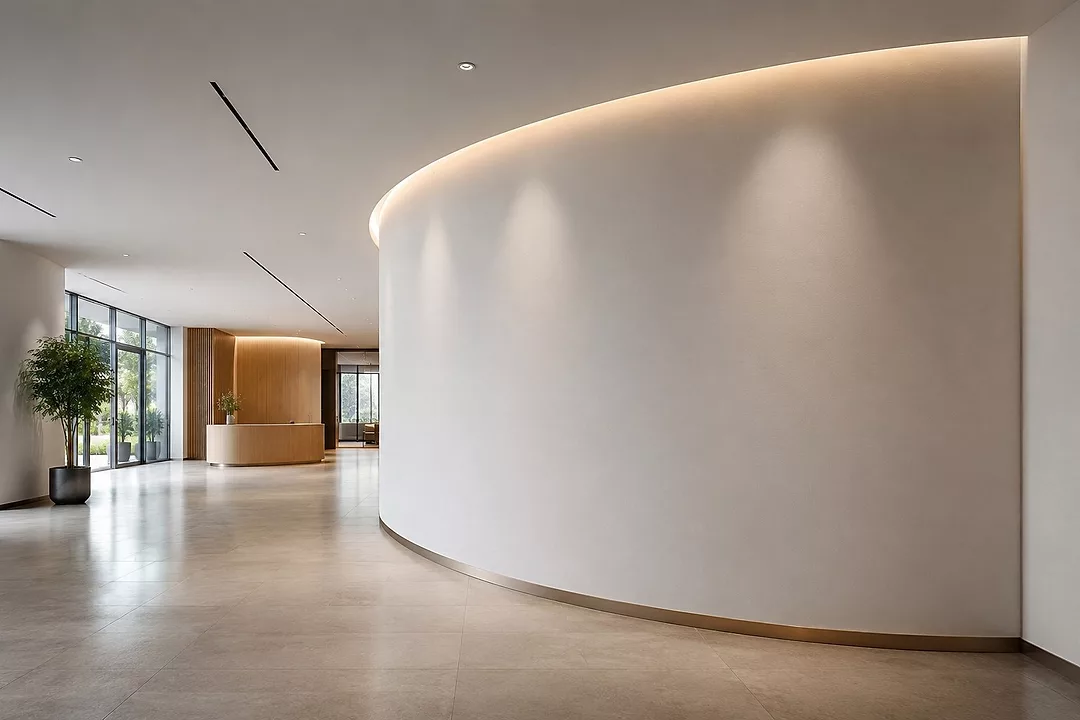
Architectural design continues to push the boundaries of interior wall systems. To support curved walls, arches and other complex forms, manufacturers have developed flexible gypsum panels capable of bending to tighter radii than conventional drywall.
These panels allow designers to create curved surfaces while maintaining compatibility with standard gypsum board installation practices.
A free downloadable copy of GA-226, Application of Gypsum Board to Form Curved Surfaces, is available through the Gypsum Association online bookstore.
Expanding the Role of Gypsum Panels
The development of specialty gypsum panels reflects the growing complexity of modern buildings and the increasing demand for materials that address multiple performance requirements.
Today’s gypsum systems can help designers and builders manage moisture exposure, improve fire safety, enhance durability, control sound transmission and support creative architectural forms.
While traditional paper-faced drywall remains a foundational building material, the expanding range of specialty gypsum panels demonstrates how the industry continues to innovate to meet the evolving needs of modern construction.
To see how specialty panels are incorporated into commercial, multifamily and single-family construction applications, visit the Gypsum Association’s interactive online reference guide.
These products are currently manufactured by Gypsum Association member companies, which are listed here.
Looking for a reprint of this article?
From high-res PDFs to custom plaques, order your copy today!





