Legal Insights
Employment Risks and Severance
Legal guidance on hiring, firing, severance agreements and workforce risk for roofers.
Labor and workforce issues remain among the most challenging aspects of running a roofing business. From hiring and onboarding to employee terminations and severance agreements, contractors face a wide range of legal and operational concerns that can significantly impact their companies.
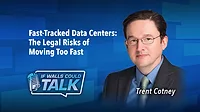
During a recent episode of Walls & Ceilings’ “If Walls Could Talk,” Jill Bloom spoke with Trent Cotney, partner at Adams & Reese and one of the construction industry's leading attorneys, to discuss employment-related challenges contractors are facing today. Their conversation covered everything from employee handbooks and documentation to severance agreements and industry outlooks for the remainder of the year.
Employment Issues Contractors Are Facing Right Now
Labor and workforce issues continue to be among the biggest challenges for roofing contractors. In this episode, Trent Cotney shares practical guidance on employee documentation, performance management, terminations and severance agreements, while explaining how contractors can better protect their businesses from employment-related disputes.
Start with Strong Documentation
According to Cotney, one of the most effective ways contractors can protect themselves is by maintaining a comprehensive employee handbook.
“Employment-related issues are always a big deal in construction,” Cotney said. “Navigating employment-related problems is one of the biggest risk mitigation things that you can do.”
A well-written employee manual should clearly outline company policies and procedures, covering everything from dress codes and social media use to timekeeping, paid time off and workplace expectations. Just as important, employees should acknowledge in writing that they have received and understand those policies.
“If you want to enforce something, you've got to have it in writing somewhere,” Cotney explained.
While handbooks provide a foundation, documentation becomes especially important when dealing with employee performance issues. Cotney noted that many contractors struggle when it comes to documenting poor performance consistently and effectively.
For employers considering termination, documentation can become a critical defense if questions or disputes arise later. Detailed records help demonstrate that employment decisions were based on legitimate business reasons rather than discrimination or retaliation claims.
Understanding Severance Agreements
The discussion then turned to one of the more complex areas of employment law: severance agreements.
While many employers assume severance is required, Cotney emphasized that federal law generally does not mandate severance pay. Exceptions may exist in specific circumstances, such as certain mass layoffs, collective bargaining agreements or employment contracts, but most employers are not obligated to offer severance.
That said, severance agreements can be valuable tools when employers are concerned about future disputes.
“If there's someone that you know might potentially give you trouble down the road, you can offer severance in exchange for the execution of a severance agreement,” Cotney said.
These agreements typically provide compensation in return for a release of claims. Once signed, the employee generally agrees not to pursue most legal claims against the employer, with limited exceptions such as workers’ compensation matters that cannot legally be waived.
Cotney explained that severance agreements generally fall into two categories: those for employees under 40 and those for employees over 40. Agreements involving employees over 40 must comply with additional age-discrimination requirements and include specific legal language.
Because of their complexity, Cotney strongly advises employers not to rely on generic templates or internet forms.
“This is not something you pull off the internet,” he said. “It is very specific.”
Remove Toxicity Before It Spreads
Another important takeaway from the discussion involved dealing with problematic employees.
While many contractors hesitate to terminate employees, especially during labor shortages, Cotney cautioned that allowing toxic behavior to continue can create larger problems throughout an organization.
“If you've got a poisonous employee, you need to get rid of them,” he said.
Problematic employees often influence coworkers, damage morale and create workplace disruptions that can ultimately affect productivity and company culture. Contractors should address concerns promptly, document issues thoroughly and make informed decisions before problems escalate.
Cotney also stressed the importance of professionalism during terminations. Employers should avoid arguments, keep conversations brief and ensure another company representative is present during the meeting.
Looking Ahead
As the conversation shifted toward the industry's outlook, Cotney expressed cautious optimism about the roofing market.
While some economic uncertainty remains, he continues to see steady demand and a healthy volume of work across the industry. Roofing, he noted, has demonstrated resilience even amid broader market fluctuations.
Potential challenges remain, particularly if global conflicts continue to drive higher energy costs and inflationary pressures on materials and labor. However, Cotney believes contractors are generally positioned for a solid year ahead.
Before closing the episode, Bloom congratulated Cotney on being recognized by Chambers and Partners as one of the leading construction attorneys in the nation for the 14th consecutive year, underscoring his long-standing impact on the construction and roofing industries.
For roofing contractors navigating workforce challenges, the message was clear: document thoroughly, establish strong policies, address problems early and seek qualified legal guidance when necessary.
Looking for a reprint of this article?
From high-res PDFs to custom plaques, order your copy today!

Jill Bloom is the innovative Executive Director of Roofing Contractor, Walls & Ceilings, Building Enclosure, Roofing Supply Pro, and the highly regarded Best of Success event. With a deep commitment to advancing the roofing, construction, and building enclosure industries, Jill oversees a robust portfolio of publications, podcasts, and events that empower professionals with knowledge, inspiration, and connections.
Her brands deliver exceptional value across multiple platforms, including:
- Techos y Más, the Spanish-language newsletter of Roofing Contractor.
- Safety Advisor, a newsletter focused on critical resources for jobsite safety.
- Thermal Talk, a newsletter focused on insights and news for the insulation contractor.
- eRock, a leading newsletter for drywall contractors.
- The Enclosure Experts podcast, offering architects deep insights into building enclosure technologies.
- If Walls Could Talk, a podcast dedicated to exploring trends and innovations for the wall and ceiling contractor.
- The Best of Success Podcast, providing thought leadership and practical advice for roofing professionals.
Jill’s passion for professional development and fostering industry connections is exemplified by the Best of Success event, a premier gathering of contractors, suppliers, and thought leaders for unmatched education and networking.